









Enterprise buyers want AI adoption in the sales story, not after it
71% of A/NZ CIOs aren't ready for an agentic workforce. Technology and AI leaders at ADAPT CIO Edge explain why vendors need adoption in the sales story.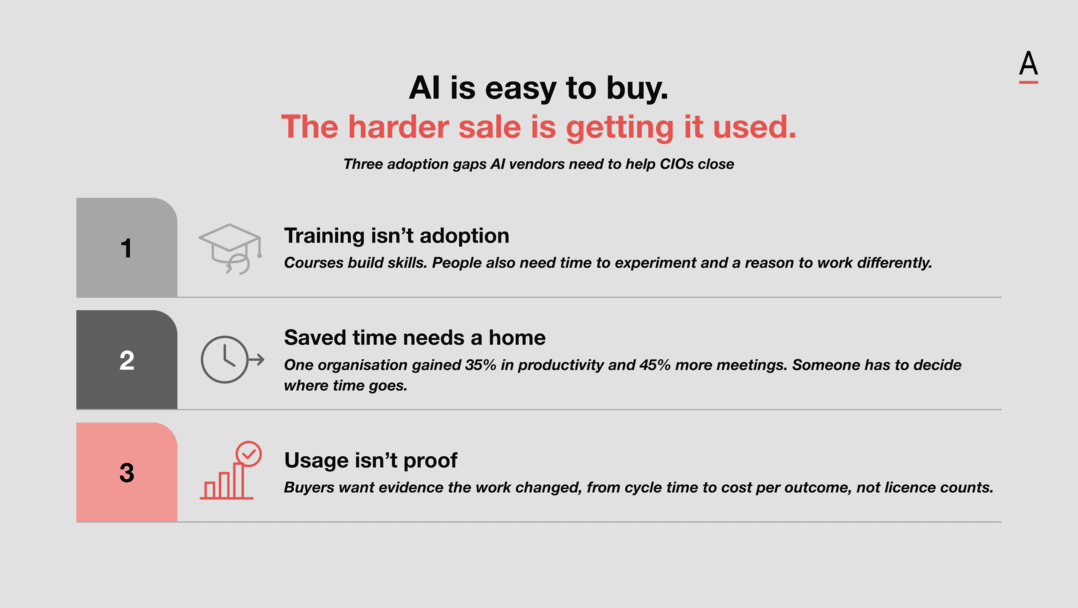


 Published Nov 5, 2026 in
Articles
Go-To-Market
Contributors
Justina Uy
AI capability is easy to buy. CIOs now need vendors that can help their workforce use it to change how work gets done.
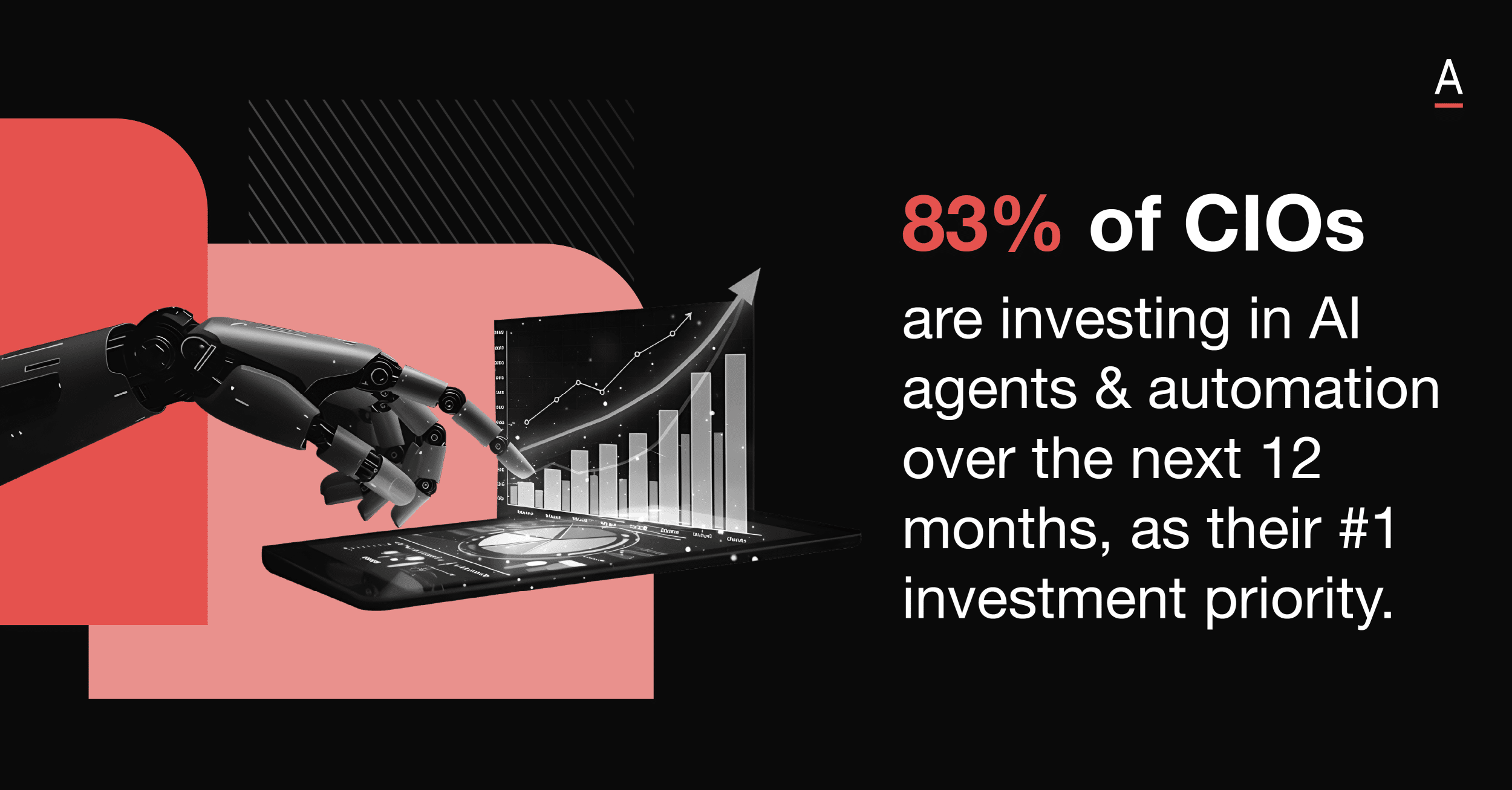
AI has moved to the top of the CIO agenda, and the money is following. ADAPT research shows 83% of CIOs are investing in AI agents and automation over the next 12 months, making it their #1 investment priority.
Boards have moved from asking whether the organisation uses AI to asking for the quantified benefits of funding it, and organisational readiness is moving far more slowly than the spend.
At ADAPT CIO Edge in Melbourne, the gap between AI investment and AI adoption came up across the keynotes, interviews and panels.
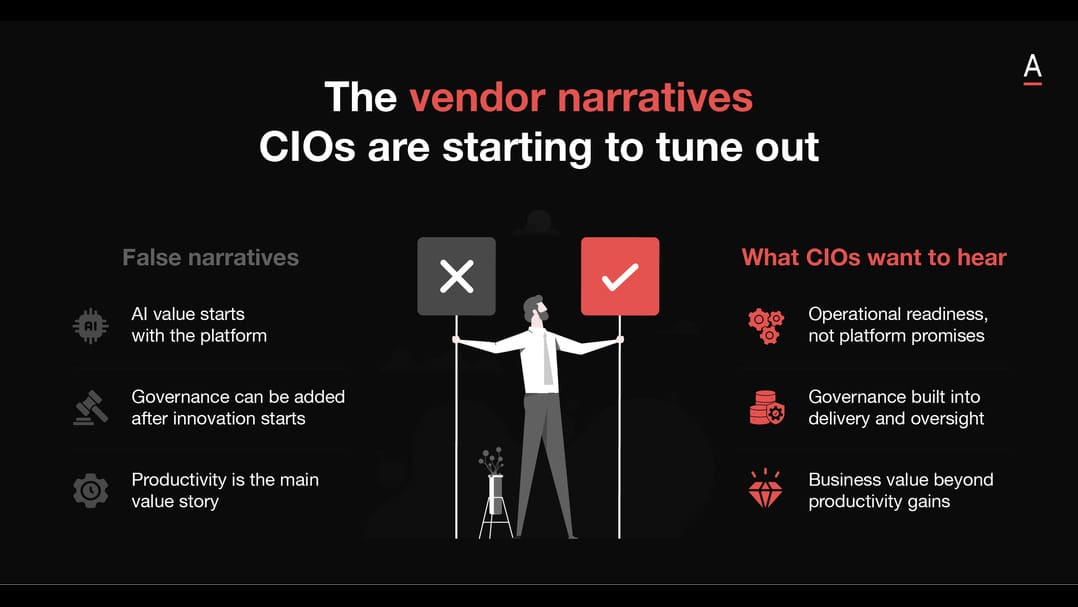
Many vendors still treat AI adoption as something that happens after implementation, handled through training modules and a launch campaign once the contract is signed.
The CIOs, advisors and AI leaders at CIO Edge described a longer chain.
Technology capability has to change how people behave, that behaviour has to change how work gets done, and the changed work has to show up as measurable business value.
A sales story that ends at deployment hands the buyer the hardest part of the problem.
In this article, we cover six questions AI vendors should be able to answer:
- Why doesn’t AI training create adoption on its own?
- How can employees experiment with AI safely?
- Why doesn’t time saved with AI turn into business value?
- What proof of AI adoption do buyers expect from vendors?
- How can AI vendors build adoption into the sale?
- Why is AI adoption becoming part of the product?
Training builds capability but rarely changes behaviour
AI training gives employees the skills to use a tool, but on its own it rarely changes how they work.
Money is not what is missing.
In ADAPT’s pre-event survey of 150 A/NZ CIOs and IT leaders, 71% said their organisation is not prepared, or only slightly prepared, to manage an agentic workforce.
When CIOs rank their biggest AI scaling gaps, data foundations and quality come first and workforce adoption second, ahead of operational readiness.
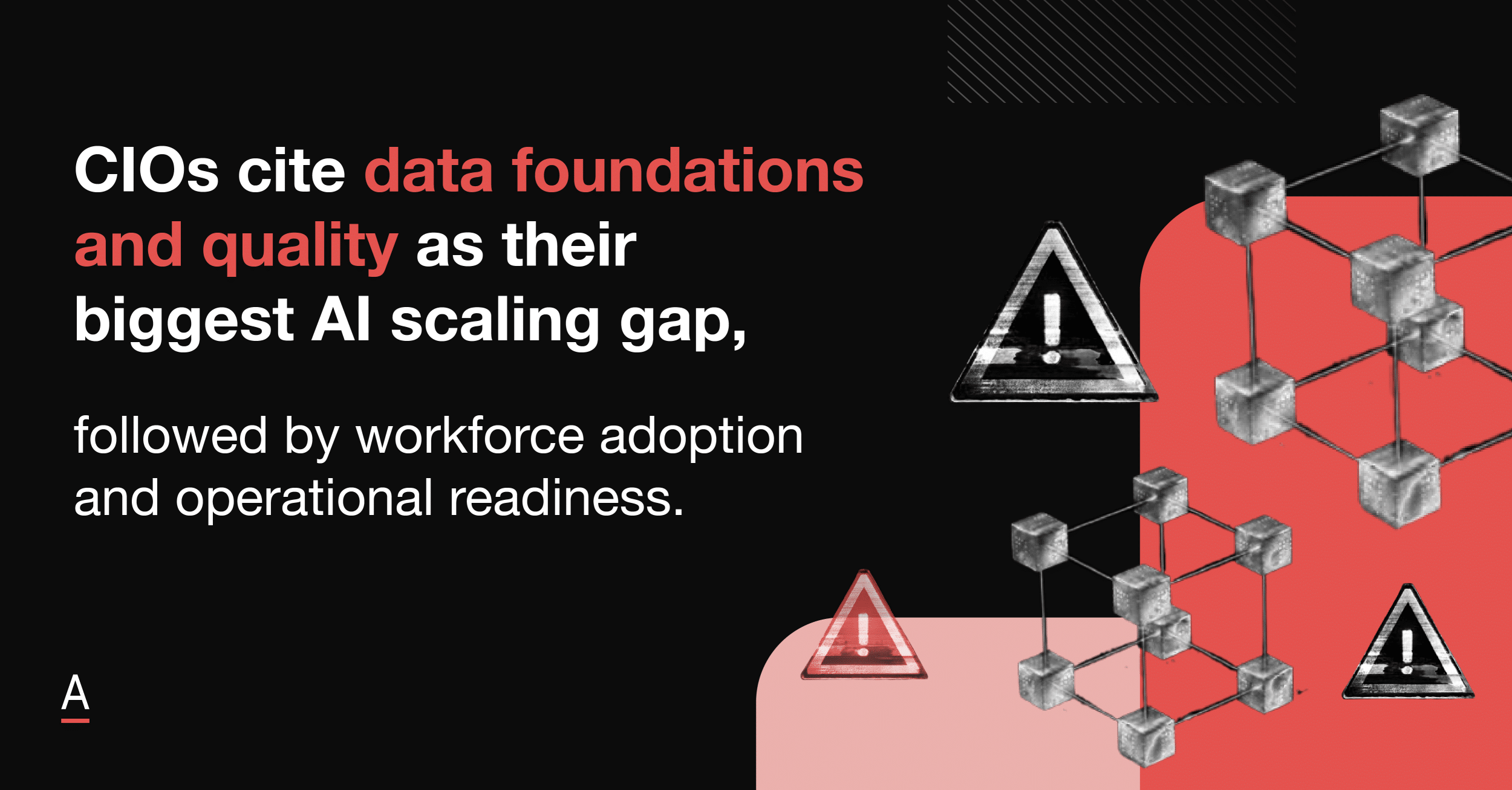
Technology and platform readiness ranks last of six areas, yet investment keeps flowing to agentic AI and enterprise architecture, the layer CIOs say is not the constraint.
Dayle Stevens OAM, Data and AI Executive at Telstra, described how the company built Ask Telstra, a tool that gives frontline staff fast answers from product, pricing and procedure manuals, in six weeks.
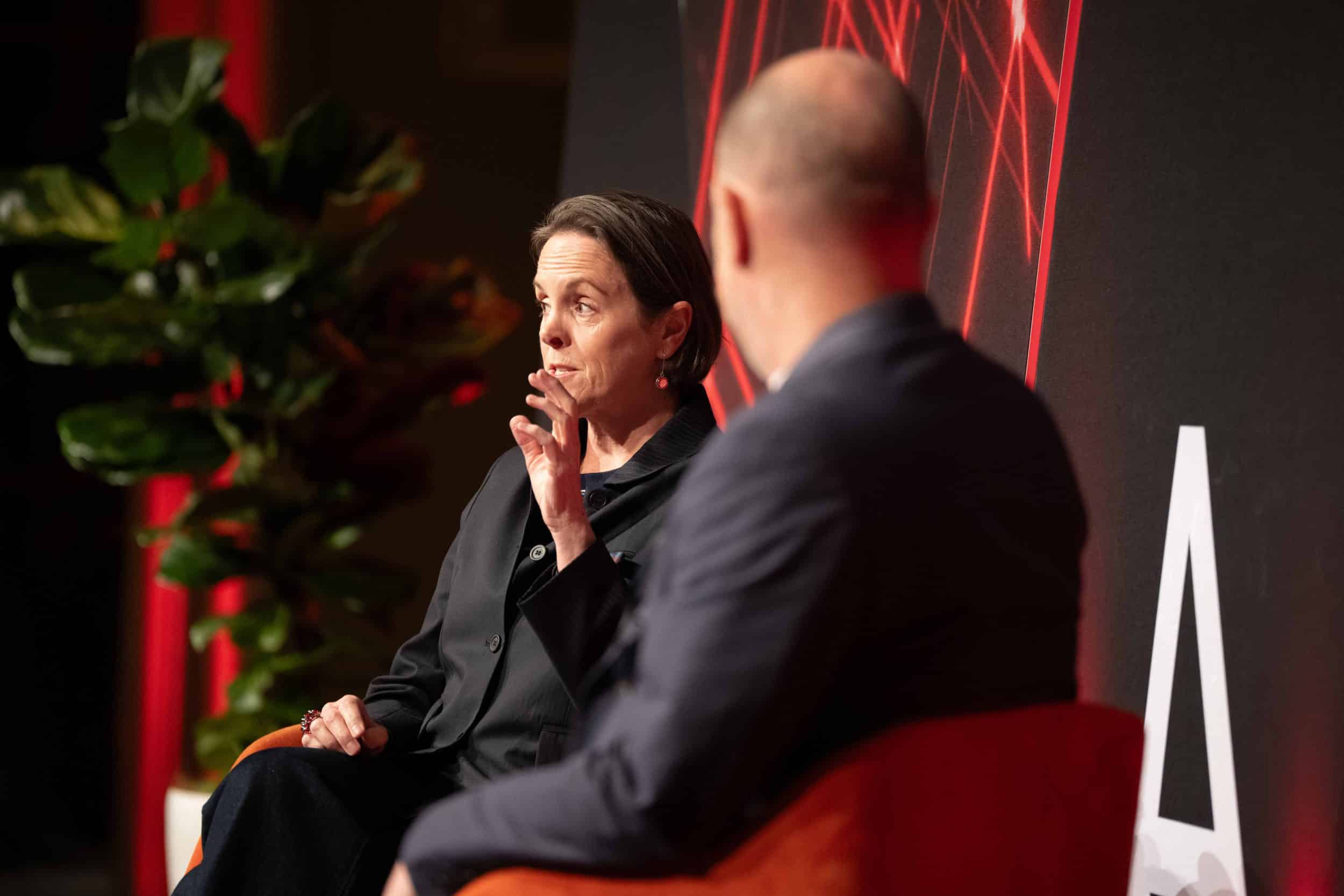
Data quality was the first blocker, and once it was fixed the people side proved the bigger one.
Telstra later built a Data and AI Academy in which around 15,000 people completed courses.
Dayle said participation alone did not guarantee people would change how they work, because habit change has to be repeated over and over rather than tied to a single release.
Dom Price, Work Futurist and Visionary at Be Luminous, breaks adoption into capability, capacity and willingness.
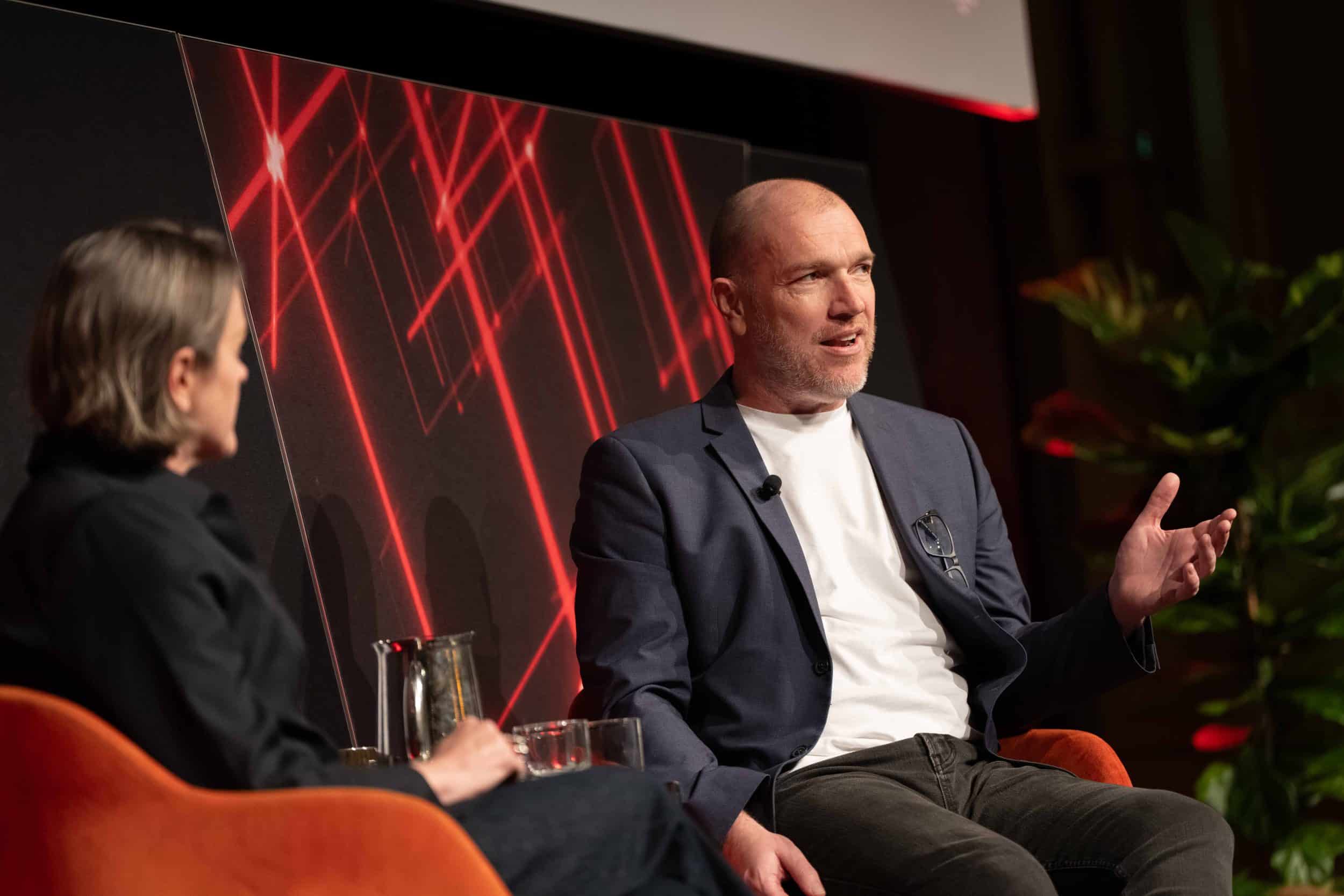
Capability is the upskilling and capacity is the time and space to try something new.
Willingness depends on whether experimenting is recognised and rewarded or simply carries the risk of failure.
Dom finds organisations double up on one or two of these and rarely address all three, most often training people and assuming they are now enabled.
A deployment plan built on licences and course completions covers only the first of Dom’s three conditions.
Capacity and willingness sit inside the buyer’s operating model, in workloads, performance reviews and incentives, and vendors often treat them as out of scope.
They still decide whether the product gets used once the training ends.
Vendors that can explain how a rollout moves people from knowing how to use a tool to working differently with it are addressing the gap CIOs rank second only to data.
Employees need a safe place to experiment
Once people understand a tool, they need somewhere to use it without exposing the organisation to unacceptable risk.
Telstra sequenced its program in three waves: tools in the hands of individuals, then business-process transformation, then the question of how AI changes the company’s strategy.
Dayle said the first wave met people inside their existing work.
Because individual use was not on display, people could build confidence privately before being asked to rethink a workflow.
Teams, including the group executives, have since added a short AI moment to meetings where people share what they have tried, and Dayle finds informal champions have more impact than a formal network.
Dom argues against waiting for enterprise-wide proof.
His challenge to leaders is to pick one idea this quarter, run it in the smallest manageable chunk, and tell as many people as possible what happened, including what a failure cost to learn.
Mansi Hasabnis, Director Digital Technology Solutions at Swinburne University of Technology, builds that safety into the operating model.
Swinburne creates small product-centric teams that own a use case, its solution and its outcomes.
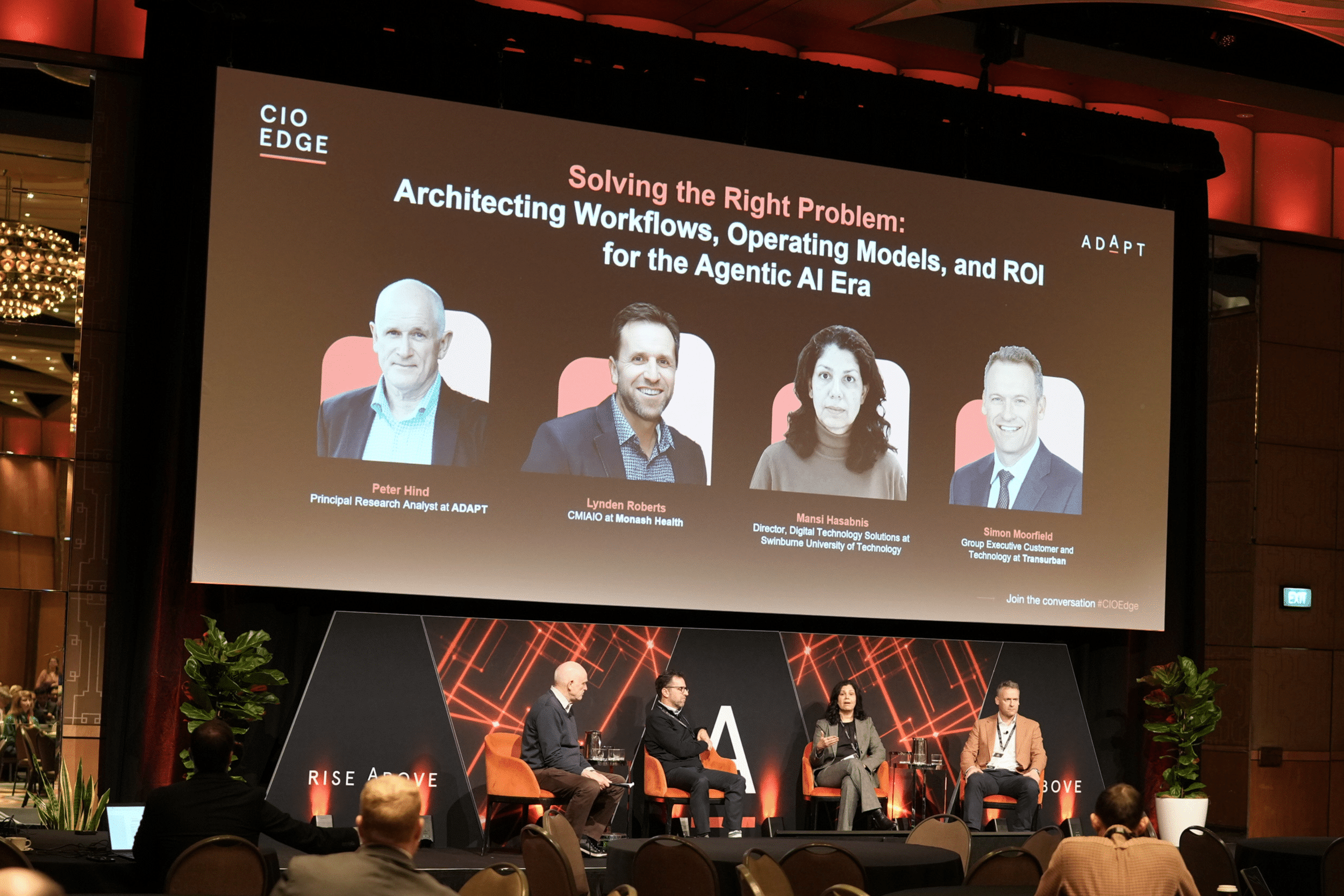
People are rewarded for surfacing edge cases, bottlenecks and customer friction instead of being held to account for them, and Mansi said that recognition is what starts to shift the culture.
Telstra and Swinburne both built that space on purpose, through staged rollout, shared learning and recognition for people who surface problems.
A vendor that pushes straight for an enterprise-wide switch-on skips the stage where that confidence forms.
Contained entry points with sensible default guardrails give the buyer a route from first use to wider rollout.
Early results shared openly give the vendor evidence for the expansion conversation.
Saved time only creates value once the workflow changes
Using AI more often does not mean the organisation performs differently.
Dom described one organisation that achieved a 35% productivity improvement alongside a 45% increase in meetings.
Employees filled the time they had saved, partly out of fear that saving more would cost them their jobs, and few individuals understand the wider system well enough to redirect it.
When Dom asked ten CEOs what they would do with seven hours saved each week, none had an answer.
David Walker, former Group Chief Technology Officer at Westpac and DBS and an ADAPT Advisor, heard the same pattern from around 30 CFOs at a recent executive lunch, who told him personal productivity gains were not reaching the bottom line.
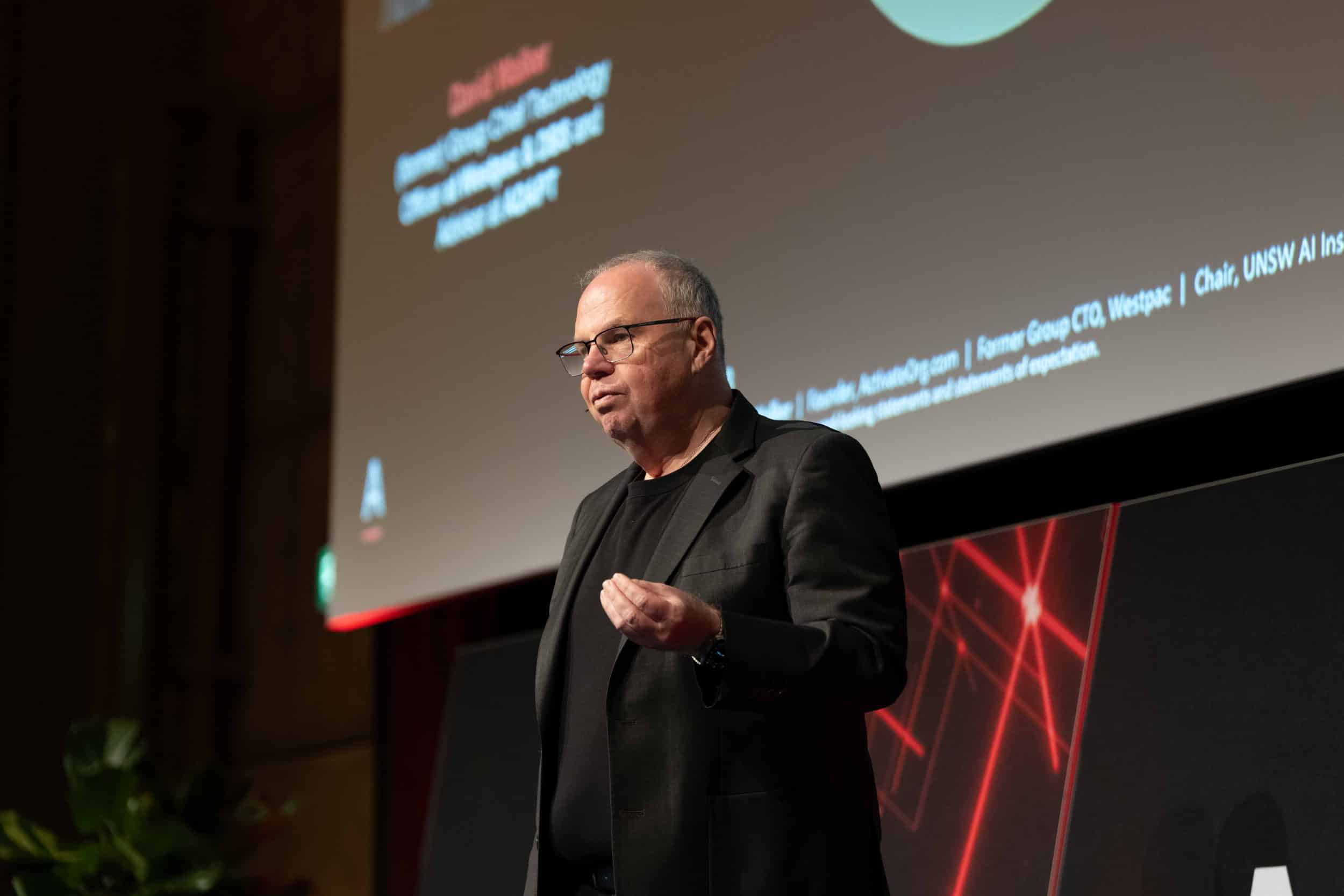
His advice is to deliberately place those savings where the company chooses.
Mansi goes further upstream, warning against automating a flawed hand-off at all, because putting agentic AI over a 20th-century workflow compounds risk at speed.
ADAPT research shows 38% of CIOs say their organisation tracks AI usage or adoption but not value.
Usage metrics show whether people are using a product, not whether the work has improved.
Released capacity has no owner until someone decides where it goes, and in most organisations that decision is still unmade.
A sales conversation that stops at how many employees will adopt a product leaves it unmade too.
Jim Berry, Founder and CEO of ADAPT, framed the sequence at CIO Edge as redesigning the work before redesigning the workforce. Vendors can make that sequence part of the proposal.
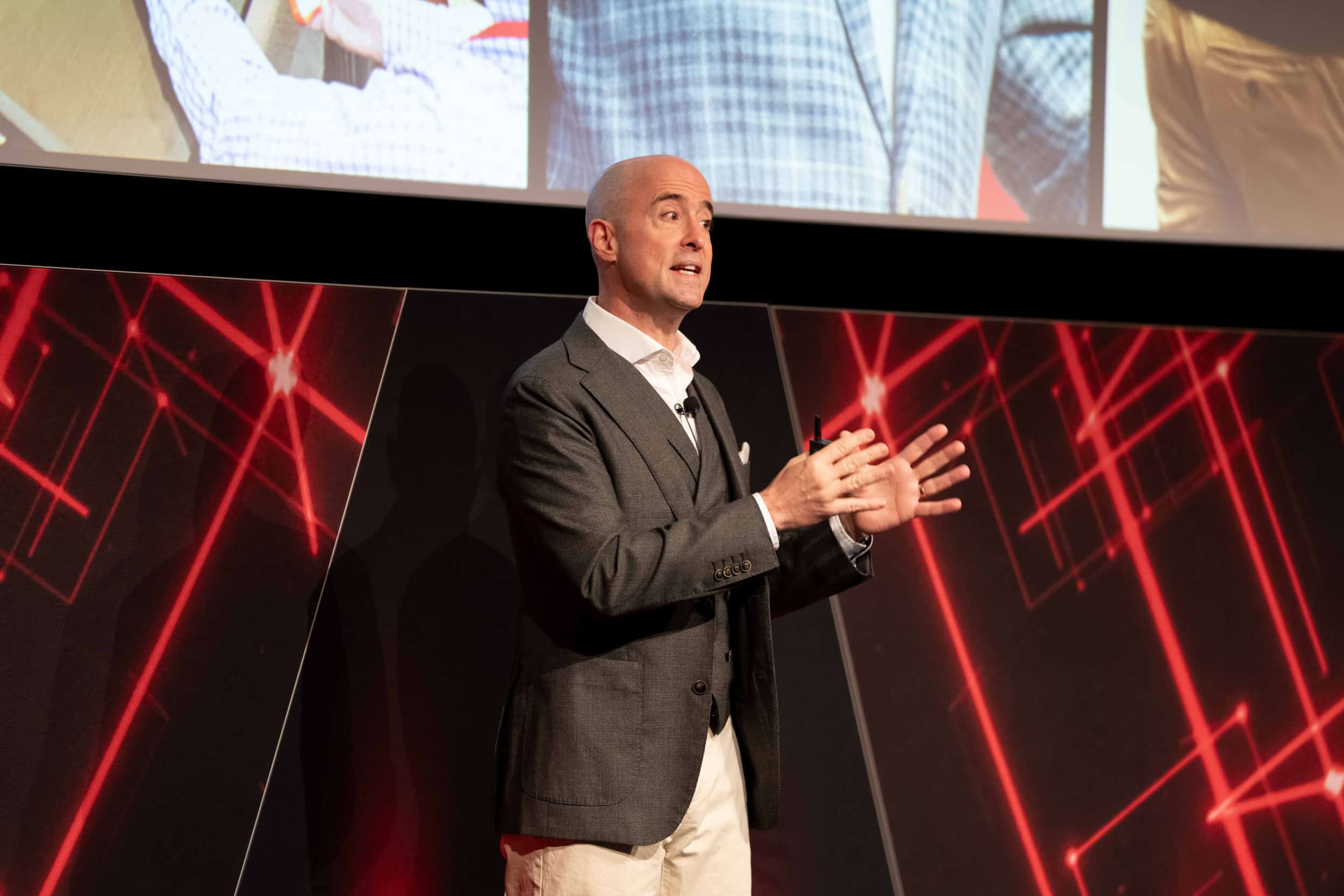
Buyers will increasingly want vendors to answer:
- which workflow the product changes
- which step in that workflow changes once people use it
- who decides where released capacity goes
- what baseline is measured before deployment
Buyers now expect proof that AI adoption changed the outcome
Enterprises that judge their own AI programs on realised benefits will judge vendors the same way.
Telstra has already moved its own yardstick beyond usage.
Dayle said part of the company-wide short-term incentive bonus calculation is now based on the deployment of AI and the benefits it delivers, not how often people use it.
Few organisations measure at that level yet, even though developing the AI strategy and roadmap has become the #1 organisational goal for CIOs in ADAPT’s 2026 research, up from #5 in 2025. No goal has climbed the rankings faster.
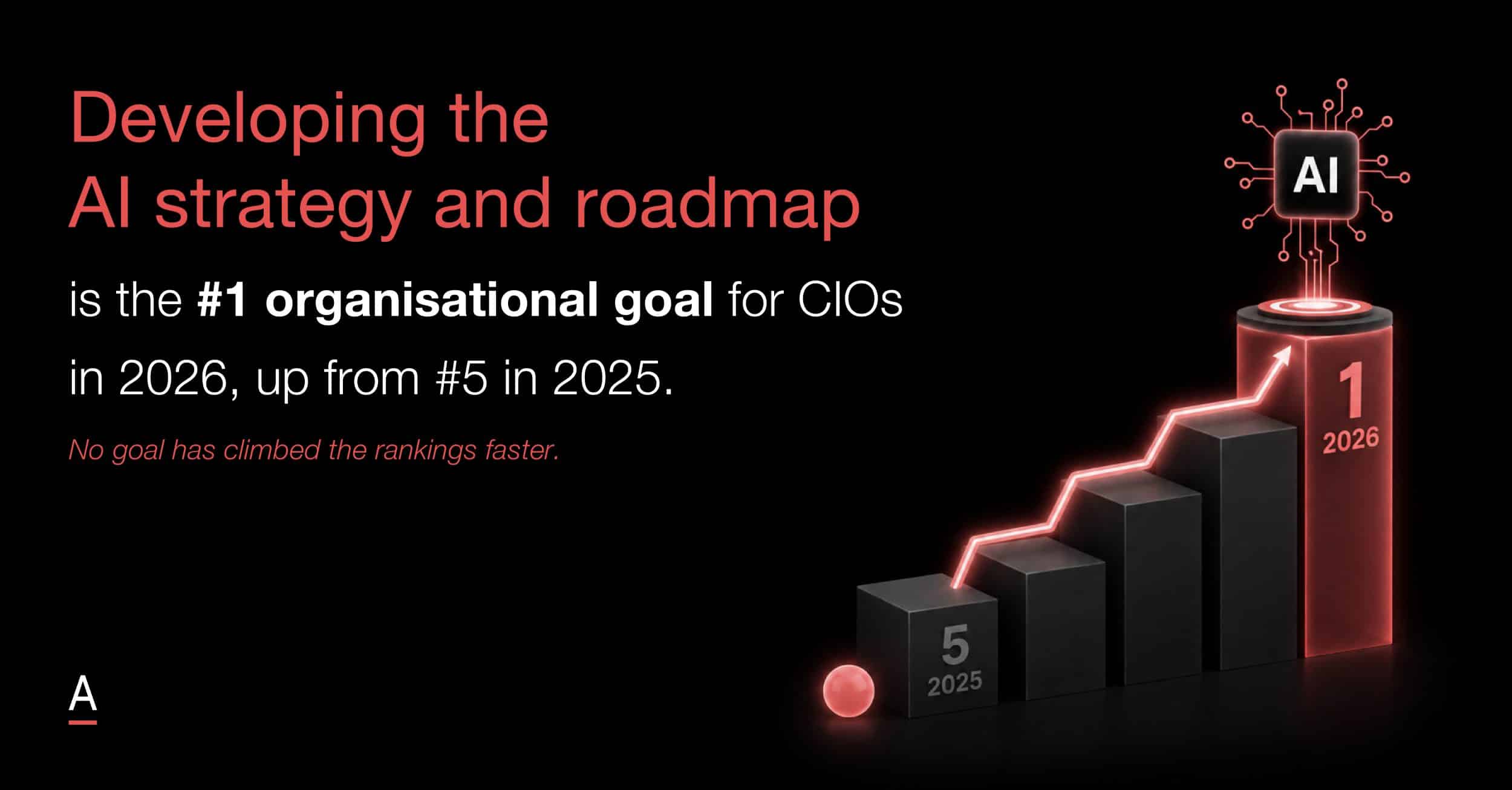
The evidence has not kept up. Just 3% of CIOs call AI a core enterprise capability, only 5% measure its value at enterprise level, and 1% do so consistently with CFO involvement.
CIOs are defending a strategy their organisations have not yet proven, and every vendor claim lands inside that gap.
Joey Meynink, Head of Strategy at ADAPT, said most organisations still treat AI like software, tracking adoption, on-time deployment and agent uptime.
Boards and CFOs want the metrics of a business asset, starting with cost per successful outcome.
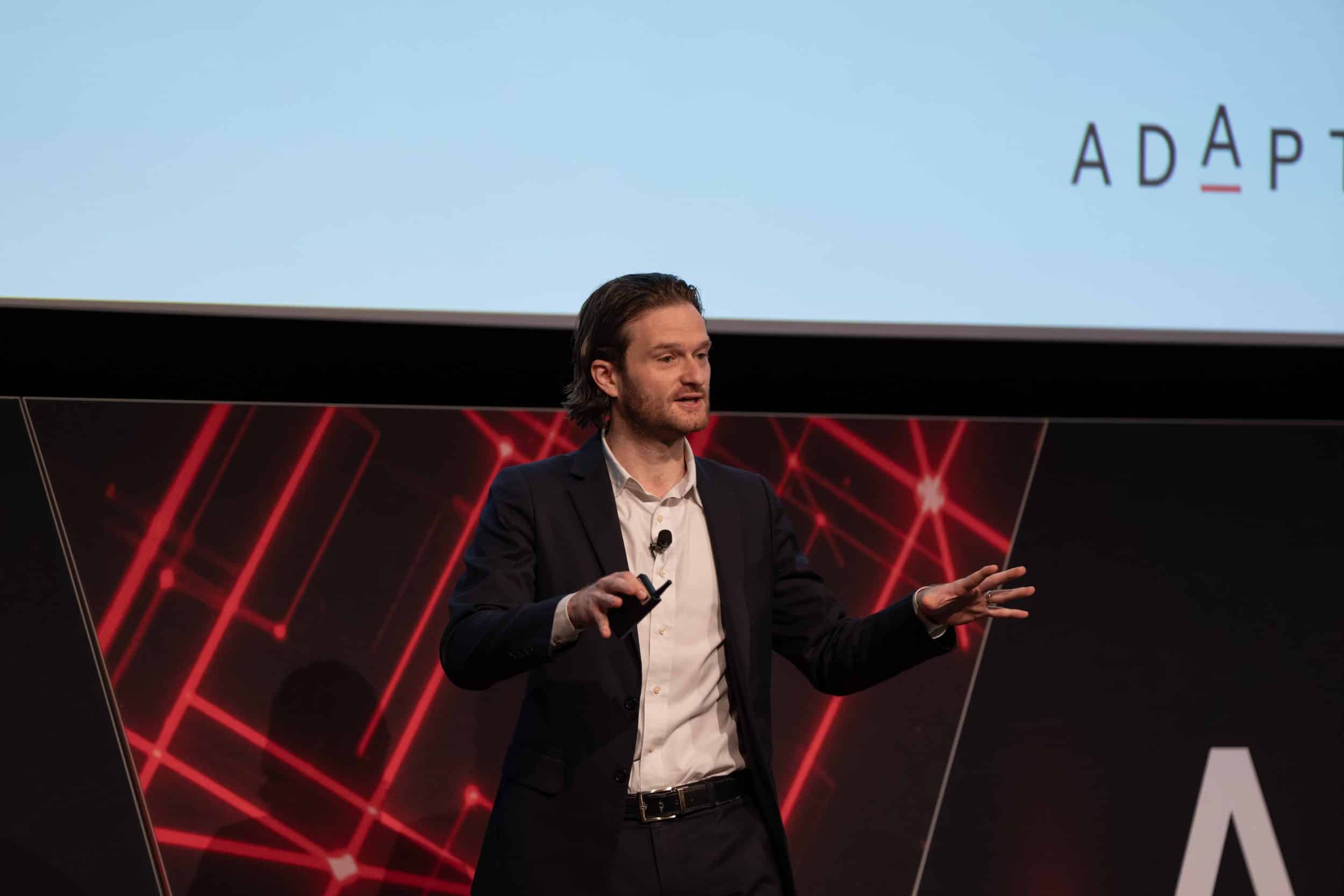
Joey’s example came from an Australian bank working with an ADAPT advisor. A customer-facing task cost eight cents per outcome when a human completed it, and the bank piloted an agent across around 200,000 of those tasks.
The agent cost $1.40 per outcome, taking the cost of that volume from $16,000 to $280,000. Uptime and deployment metrics would never have surfaced that result.
As buyers tighten what they count, vendor proof points will need to show whether AI has changed:
- cycle time
- workflow throughput
- customer or employee outcomes
- released capacity
- cost per successful outcome
- business performance
Licence utilisation can still sit beneath those measures, but it cannot stand in for them. An organisation that ties executive bonuses to realised AI benefits has little reason to accept a vendor’s utilisation dashboard as evidence of success.
How AI vendors can build adoption into the sale
- Scope adoption across capability, capacity and willingness in every proposal, setting out the time the buyer will need to free up and the behaviours the rollout depends on, alongside the training plan.
- Lead with a contained entry point: one bounded use case with default guardrails and a defined learning outcome, before any enterprise-wide switch-on.
- Name the workflow and the specific step that changes in each business case, and ask the buyer early who will decide where released capacity goes.
- Agree outcome measures and a baseline with the buyer’s finance team before deployment, starting with cost per successful outcome, cycle time and throughput.
- Move licence utilisation out of the headline of account reviews and report it beneath the outcome measures the buyer has agreed to.
Adoption is becoming part of the product
Joey expects the AI tools and platforms enterprises use to become increasingly commoditised, with competitors gaining access to the same capability within a couple of years.
As products converge on features, buyers will judge them on whether they change how their people work.
Vendors that can show which workflows their technology changes, how the workforce will take it up and how the result will be evidenced have a value story that capability alone cannot match.
Ownership inside the buyer is unsettled too.
When ADAPT asked who owns an agentic workforce once it is live, 47% of CIOs said responsibility is shared across functions, which in practice can mean no one owns it outright.
Vendors that help buyers name an owner for adoption, before and after the contract is signed, are answering the question CIOs are now asking about their own organisations.
 Justina Uy
Content Marketing Manager
Justina Uy is a data-driven content marketer that thrives on democratising elite know-how to empower Australia’s underdogs.
Skilled at translating complex ideas into a compelling story across formats and channels, she shifts seamlessly between writing long-form articles, creating viral social media posts, and producing thumb-stopping videos.
Since 2015, Justina executes her vision through a sophisticated understanding of the rapidly evolving digital and business landscape to serve entertaining and educational insights to the executive community.
Less Join the ADAPT
Insider Community
Get the latest A/NZ market research and insights on the core trends impacting leaders.