




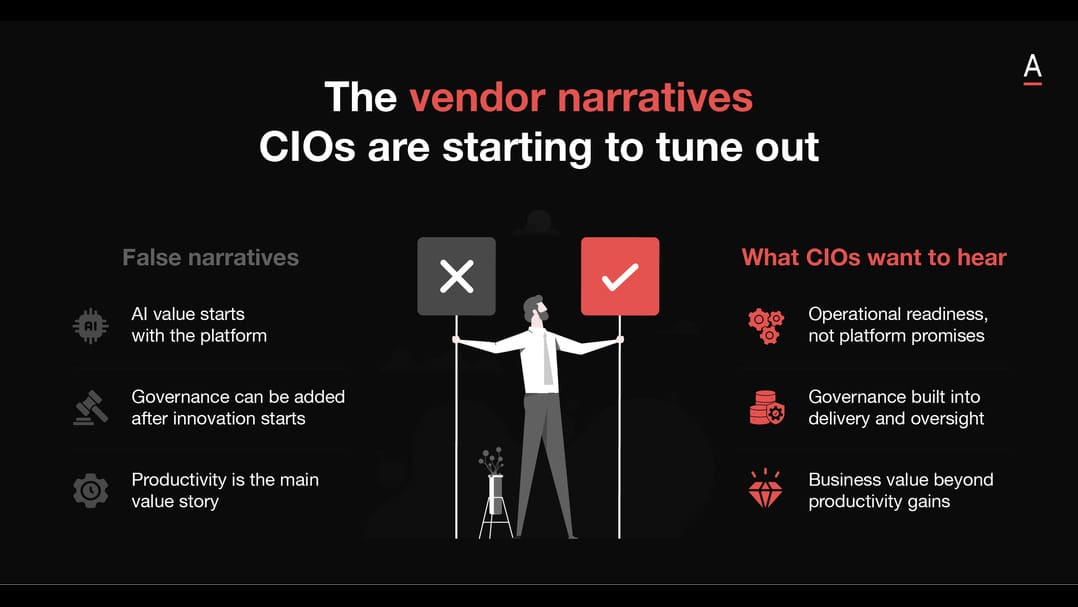





A well-secured AI model can still be a governance failure, says Silver Lining Cyber’s founder
Silver Lining Cyber founder Joe Cozzupoli sets out how AI governance should track authority, ownership, access and evidence across the organisation.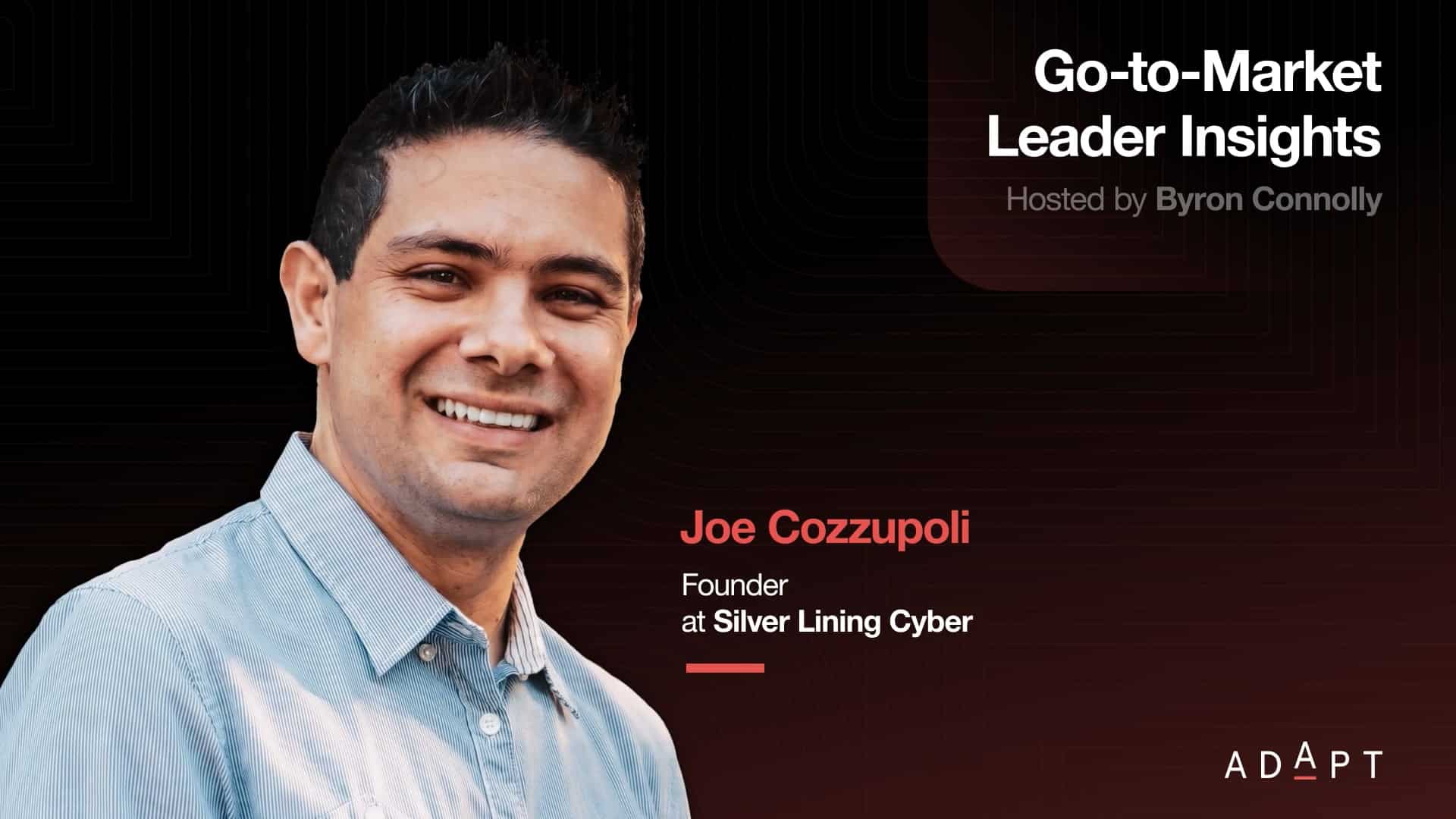


 Published Nov 23, 2026 in
Peer Insights
Security
Contributors
Byron Connolly
Joe Cozzupoli
Many AI conversations in Australian organisations take place through a cyber security lens, and for good reason. AI increases the speed and scale of attacks.
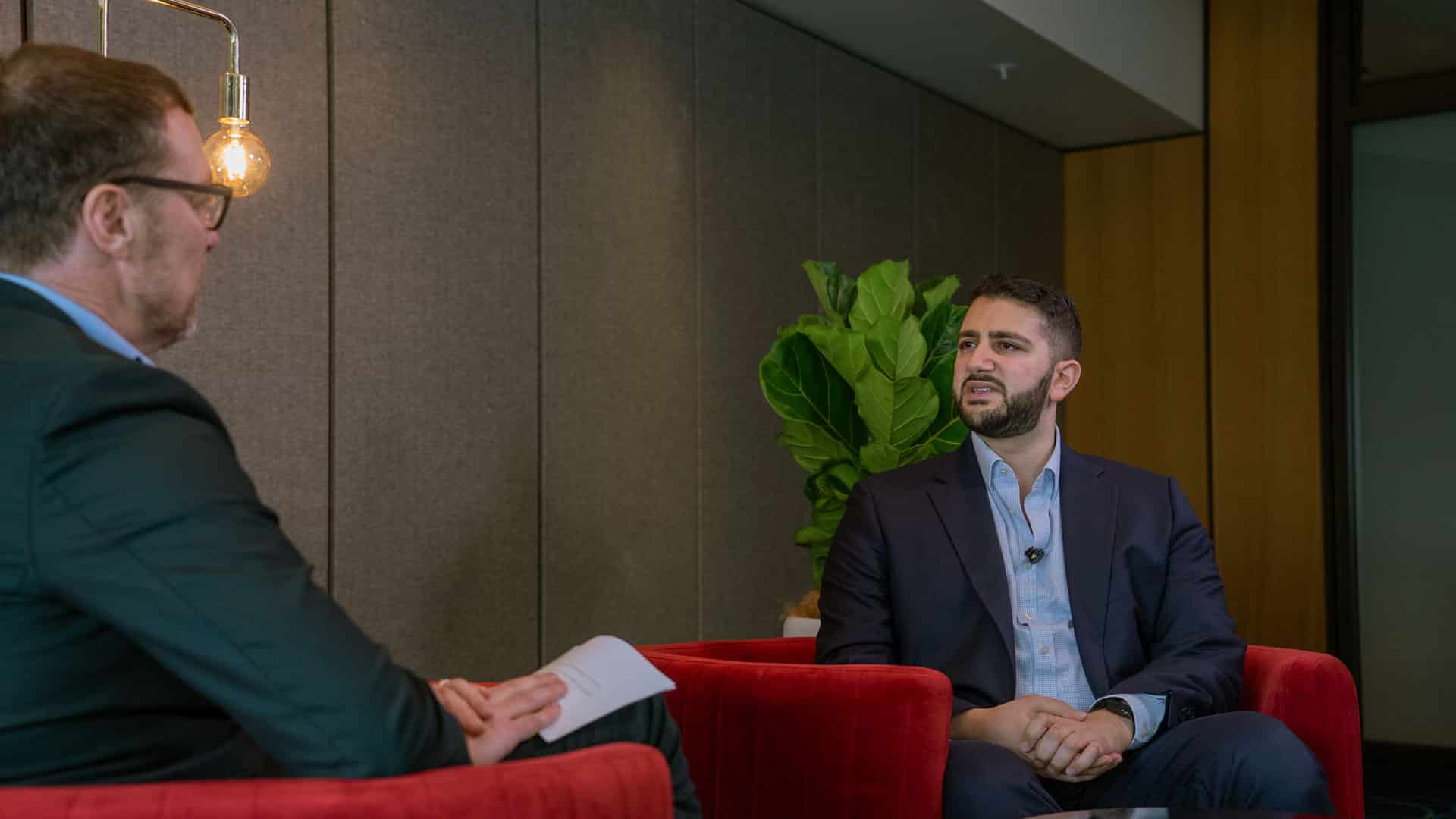
Joe Cozzupoli, founder of Sydney virtual CISO and AI governance practice, Silver Lining Cyber, says that focus is leaving a gap.
Cozzupoli has spent more than 20 years in cyber, including as a field CISO at Palo Alto Networks and in security roles at Microsoft, Cisco and Citrix.
He is also an ISO/IEC 42001 lead auditor, qualified to audit AI management systems.
“A lot of the vendors are selling AI features for an AI-powered SOC, and that’s all well and good. AI can tell you what can be attacked, what’s attacked and how secure you are. But governance actually tells you what’s making the decision, who’s controlling that and where it’s touching your organisation. That’s the real differentiator for me.”
Cozzupoli adds that risk and governance go hand-in-hand and AI agents raise the stakes.
“So, if you’re not doing the proper governance, but it’s telling you you’re secure, then where’s that gap and where does the business sit within the risk of that? Organisations are saying, Great, we’re going to use agents to help deploy, help secure our network.’ But then, where’s the governance around that? That is critical.”
Whoever says ‘yes’ first
Cozzupoli says many organisations place too much trust in AI agents and vendor claims. They may also underestimate the importance of having a good governance program.
“Governance is day-to-day. Governance isn’t just a six-month engagement”, he says.
Any new platform counts, even one unrelated to AI.
“If the agent needs to talk to it, then it’s part of the whole landscape. Does it have the authority? Is it going to give it too much authority? And then it comes back to the risk profile of the business.”
Cozzupoli says AI risk sits with whoever says ‘yes’ first. Often, that’s the CISO who gives it a signature, a tick, by default rather than by design.
But he questions if people actually sit down and take a look at governance policies.
Cozzupoli wants agentic governance treated as a team sport.
“I’m very much big on collaboration within an organisation. That’s how security is done properly, not the team of ‘no.’ GRC [governance, risk and compliance] is very stable and boring but it should involve everyone.
“It’s not just the security [department], it could be legal or it could be IT.”
Executives are accountable for AI systems, not just the technical team that deploys them.
“It’s not just, oh hey, we need a new firewall or vendor tool ‘X.’ It’s a transformation of how you do business. It goes to the operational side too so a COO should be involved.”
Before an agent goes live
Accountability gets harder once an AI system acts rather than advises. Before an agent can approve a transaction, change a record or trigger a workflow without a human in the loop, its authority needs to be clearly defined.
“Even if it’s a security manager or an IT manager, they’re still going to need C-level approval, because it is a type of digital transformation”, says Cozzupoli.
The executive who signs off then assigns operational ownership, he says.
“Maybe it is the CISO that signs it off. They might then assign one of their security managers to be responsible for it, and do that traceability, do the proper audits, do the proper tests.”
The approach depends on the organisation’s size. A larger organisation like a bank or government agency will have dedicated teams. A firm with 300 people is likely to have a flatter structure, he says.
“Maybe the IT manager reports to the CTO, so the CTO will have the sign-off, and the IT manager will have the day-to-day accountability and run with it.”
Testing needs to cover everything an agent can access.
“I like to ask the questions: what happens if this agent starts playing with that tool, or going into that specific SharePoint folder? It doesn’t have access to that. Have you tested it? Because that could have sensitive information”, he says.
The stakes also go beyond whether a model trains on company data.
If an agent is breached, an attacker could gain full access to an entire organisation, including sensitive information, he warns.
Show don’t tell
When Cozzupoli assesses an AI management system, he does not start with its policy library. He looks for evidence that the system works as described and that the organisation is following its documented processes.
He compares the process to a food safety inspector who looks beyond the ‘ticks’ in a report.
“They want to go there and say, ok, you are actually cleaning the floor. You are actually cleaning the benches. Just because you told me you are doesn’t mean you are.”
The next step is to build an inventory of the AI products in use. Cozzupoli says shadow AI is harder to contain than shadow cloud a decade ago, when it mostly came from developers.
“Everyone generally has Copilot licenses or they’ve signed up to Claude Enterprise. You’ve got staff that wouldn’t even care about IT. It’s just on their laptop; it’s a tool like Word and Excel.
“There’s your shadow AI, and it’s not coming from your DevOps guy that just put his credit card down to spin up some extra compute. It’s coming from Jenny in HR, who just wanted to run some reports quicker”, he says.
Different starting lines
The financial services sector has a head start in AI governance management. These firms already know how to govern decisions.
“If you’ve already got a good governance team because you’re regulated, then AI is just another aspect. Because it’s a very risk-averse industry, they always need independent validation of everything they do.
That includes decision trees.
“When I’m discussing this with clients, [I ask]: ‘tell me what it’s allowed to do, and then when it does this step, what else can it do after that?’”
Regulated firms already document these steps for other IT tools, so managing AI is another part of the process, he says.
Cozzupoli says that ISO 42001, the international standard for managing AI, follows a similar logic to ISO 27001, the standard for information security management systems.
“When clients realise they’re already on the journey, or they just completed the 27001 [certification], 42001 isn’t that much more hard work. You’re not starting from scratch”, he says.
Find it, own it, fix it
For technology leaders whose organisation already use AI, whether approved or not, Cozzupoli’s 90-day advice starts with restraint.
He says execs should not worry about writing a policy.
“Just find out what you’ve actually got, what’s actually running in your organisation. Find it, own it, then fix it and fix the riskiest things first. Then, you write your policy.”
The first 30 days should focus on building an inventory: What is approved or unapproved, and which AI features are already enabled in software such as Copilot.
“Don’t just ask IT. Go ask procurement, go ask finance. Are they seeing any subscriptions to OpenAI that they shouldn’t see?”
Next, organisations should identify their five or 10 highest impact uses and run a proper risk and impact assessment.
That means checking privacy and transparency obligations and, for APRA-regulated entities, CPS 230 and APRA’s guidance on AI.
Some fixes can happen early. Blocking staff across the organisation from uploading company data to public LLM websites is one of the simplest steps, he says.
In the final 30 days, he recommends a cross-functional governance group to get accountable decision-makers together on a call or in a room and start writing the policy from what has been found.
“If a team is running its own Claude instance with a manager’s approval and a genuine use case, the policy can allow it. But put monitoring on top of that too”, he says.
 Byron Connolly
Head of Programs & Value Engagement at ADAPT
Byron is a highly experienced technology and business journalist, editor, corporate writer, and event producer.
Prior to joining ADAPT, he was the editor-in-chief at CIO Australia and associate editor at CSO Australia. He also created and led the well-known CIO50 awards program in Australia and The CIO Show podcast.
Byron creates valuable insights for our community of senior technology and business professionals that help them reach their organisational and professional goals. He has a passion for uncovering stories about the careers and personal philosophies of Australia’s top technology and digital executives.
When he is not working, Byron enjoys hot yoga, swimming, running and spending time with his family. He completed the North Face 100km ultra marathon in the NSW Blue Mountains in 2012 and 2013.
Less Joe Cozzupoli
Founder at Silver Lining Cyber
Joe Cozzupoli is the founder of Silver Lining Cyber, a Sydney-based vCISO and AI governance practice, and an ISO/IEC 42001 Lead Auditor. He helps organisations build AI governance that holds up across leadership, risk, accountability and operations, not just security.
Joe brings more than 20 years across technology, cybersecurity, and enterprise architecture, including roles at Microsoft, Palo Alto Networks, Cisco, Citrix and KPMG. Today he works as a hands-on vCISO, advising executive teams and boards. He holds CISSP, CISM, C|CISO and TOGAF certifications, volunteers as President of the Global Council for Responsible AI’s Australian chapter and is Vice President of the ISC2 Sydney Chapter.
Less Join the ADAPT
Insider Community
Get the latest A/NZ market research and insights on the core trends impacting leaders.
Join the ADAPT Insider Community
Get the latest A/NZ market research and insights on the core trends impacting leaders.