
















A/NZ technology buyers give new vendors one hour a month to prove their relevance
At ADAPT’s CMO Workshop, enterprise buyers revealed what earns attention and helps internal champions carry technology decisions forward.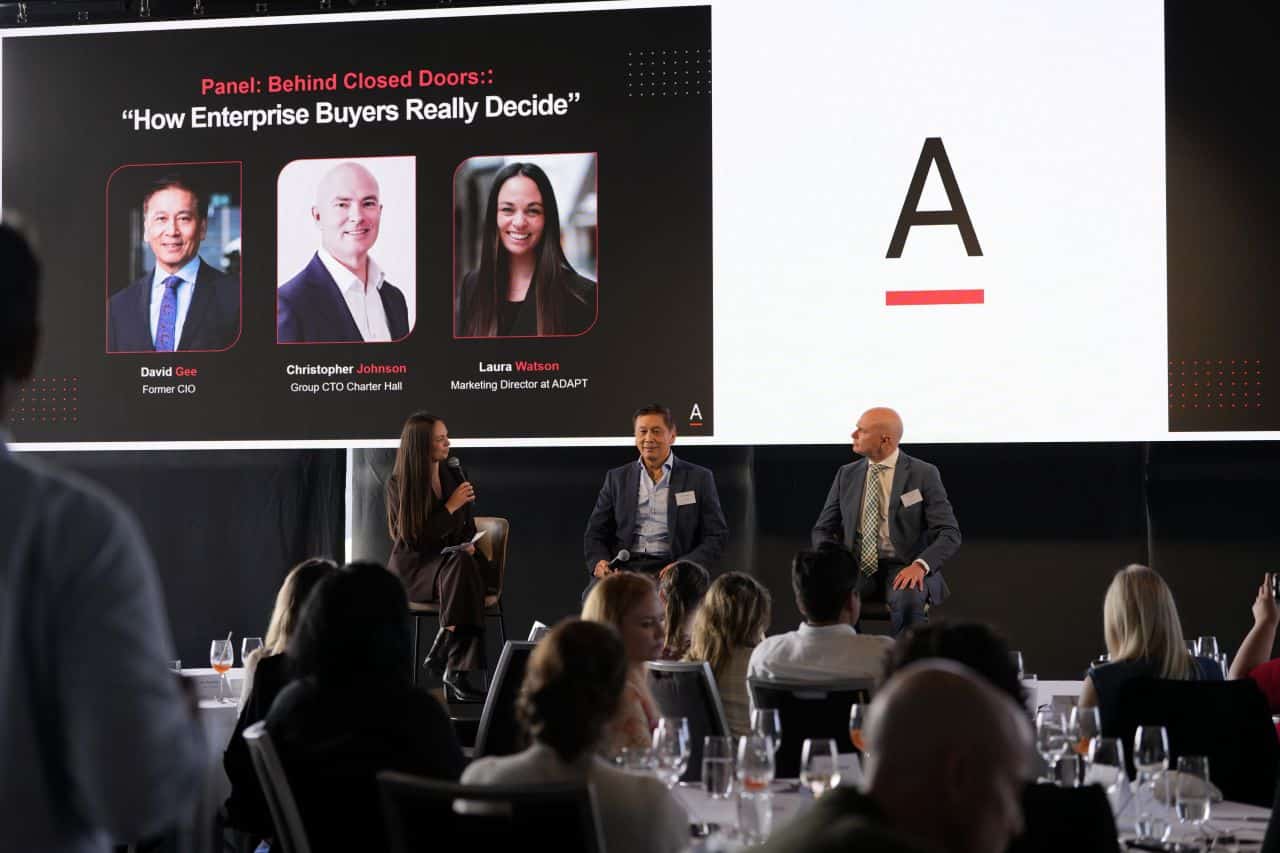


 Published Sep 29, 2026 in
Articles
Go-To-Market
Contributors
Justina Uy
Published Sep 29, 2026 in
Articles
Go-To-Market
Contributors
Justina Uy
Buyers are filtering providers before formal contact, then testing each investment across a wider group of business, finance, risk, and technology leaders.
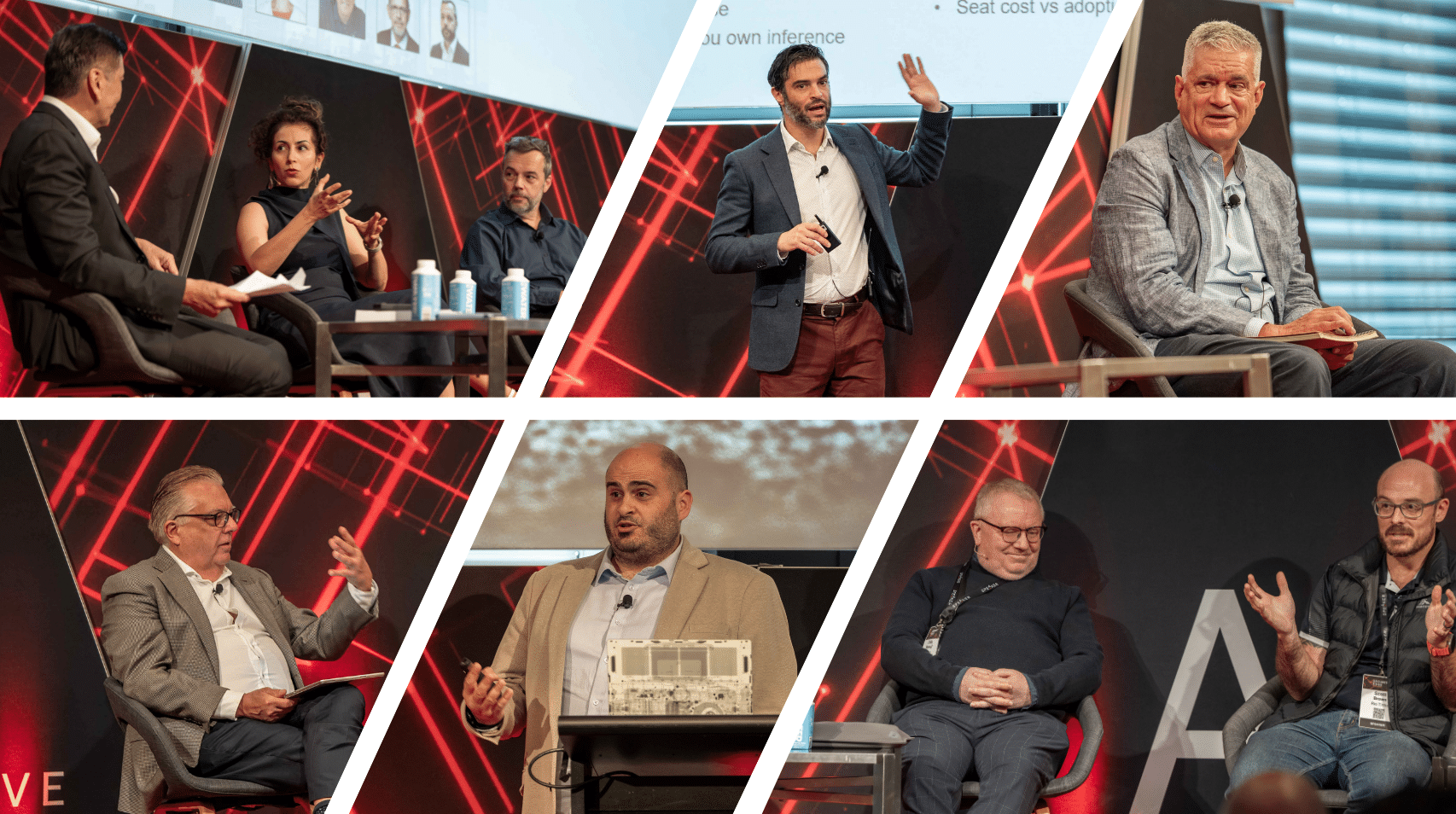
At ADAPT’s recent CMO Workshop, ADAPT Founder & CEO Jim Berry presented research drawn from more than 2,000 executive buyers across Australia’s top 400 organisations.
In fact, according to ADAPT’s survey of 350+ Australian IT leaders, tech buyers give new vendors only 1 hour a month to prove their relevance.
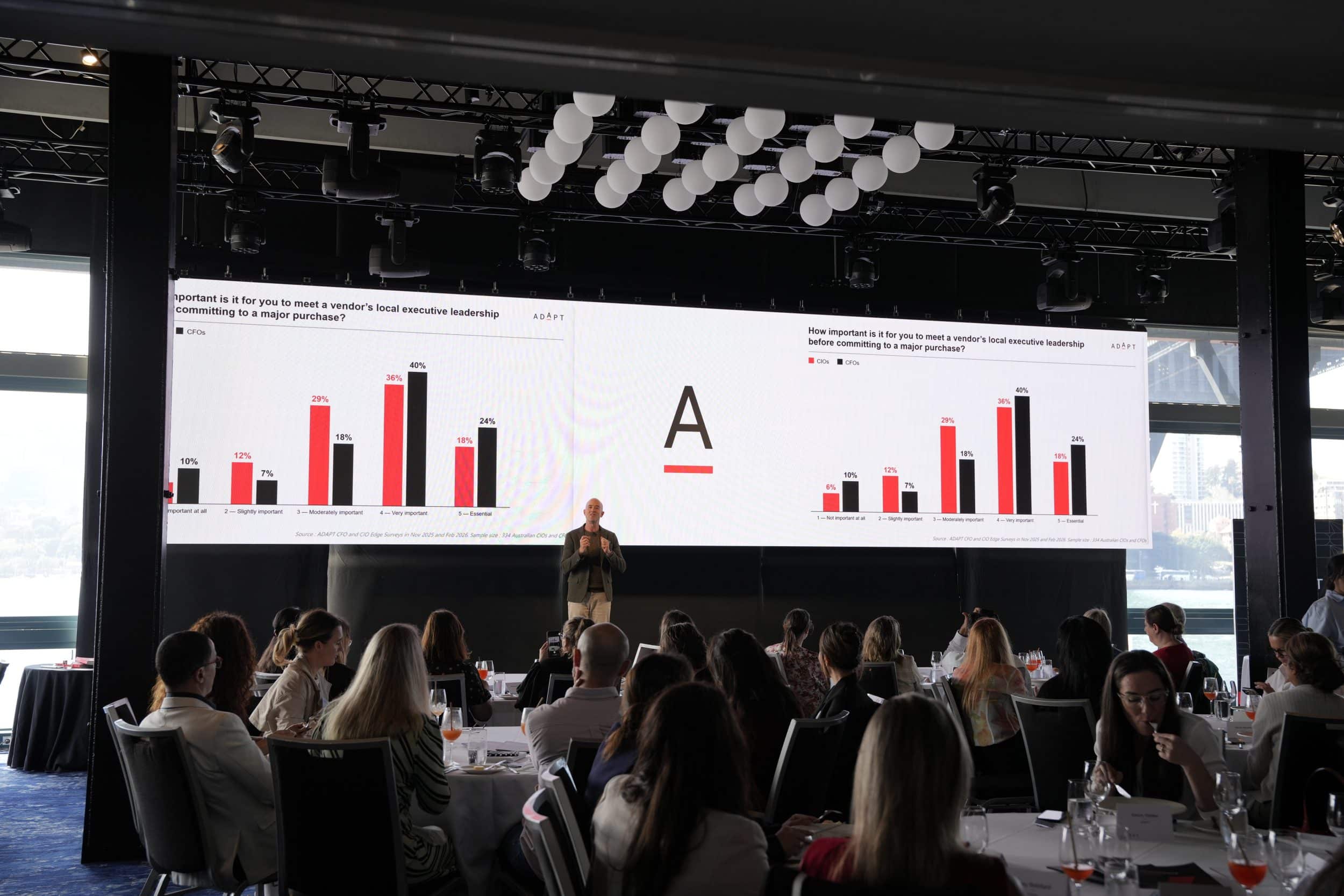
In addition, he revealed that 80% of vendor outreach is rated as white noise and shortlists often form before sales enters the conversation.
As a result, Jim challenged GTM leaders to own one or two credible local data points that can surface during AI-led research and help internal champions defend the investment in later finance discussions.
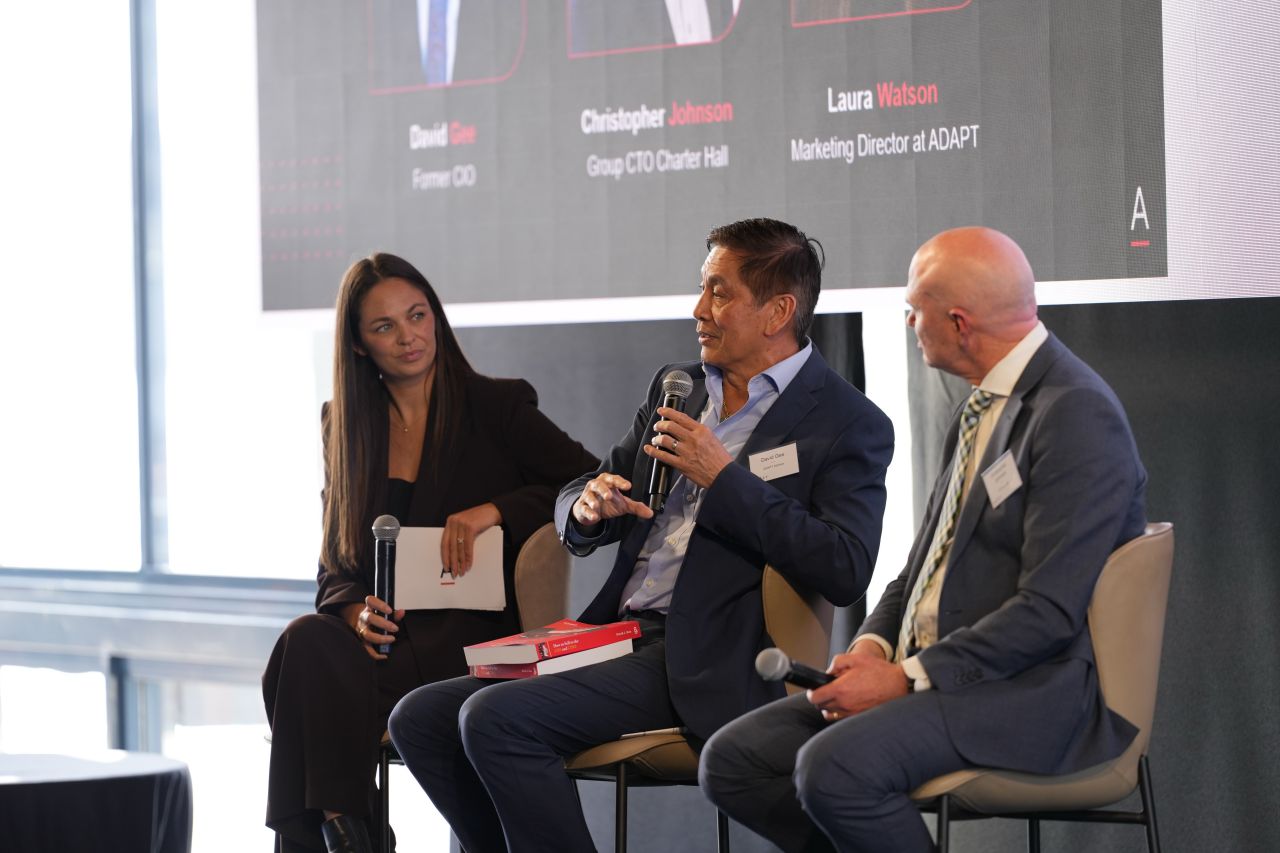
Laura Watson, Marketing Director at ADAPT, then led a panel with David Gee, former CISO, and Christopher Johnson, Head of Group Technology at Charter Hall, on earning attention, building trust, and equipping internal champions to secure approval.
This article covers:
- Earning attention before formal engagement
- Building trust through context, connection, and evidence
- Equipping internal champions for the wider buying group
Generic outreach is filtered out before buyers see it
Australian enterprise and public sector technology leaders give new providers roughly one hour a month.
More than 4,000 suppliers compete for that time.
Christopher reviewed his promotions folder before the panel and found 868 emails from the previous 30 days, an average of almost 29 a day.
He had opened none of them.
Call screening had removed another common route into his working day.
The volume has changed how buyers respond to the entire category.
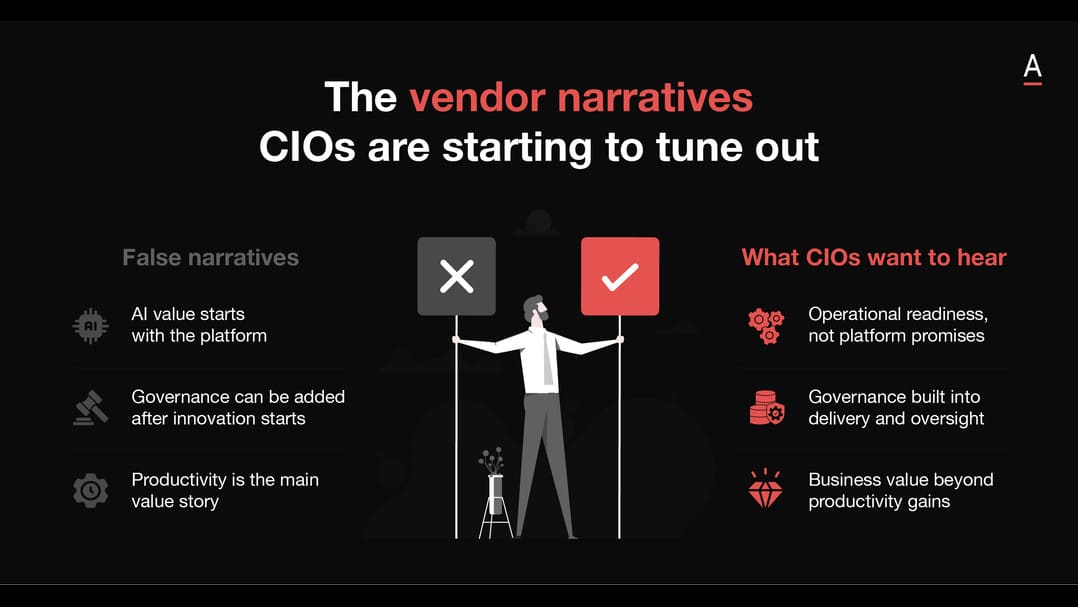
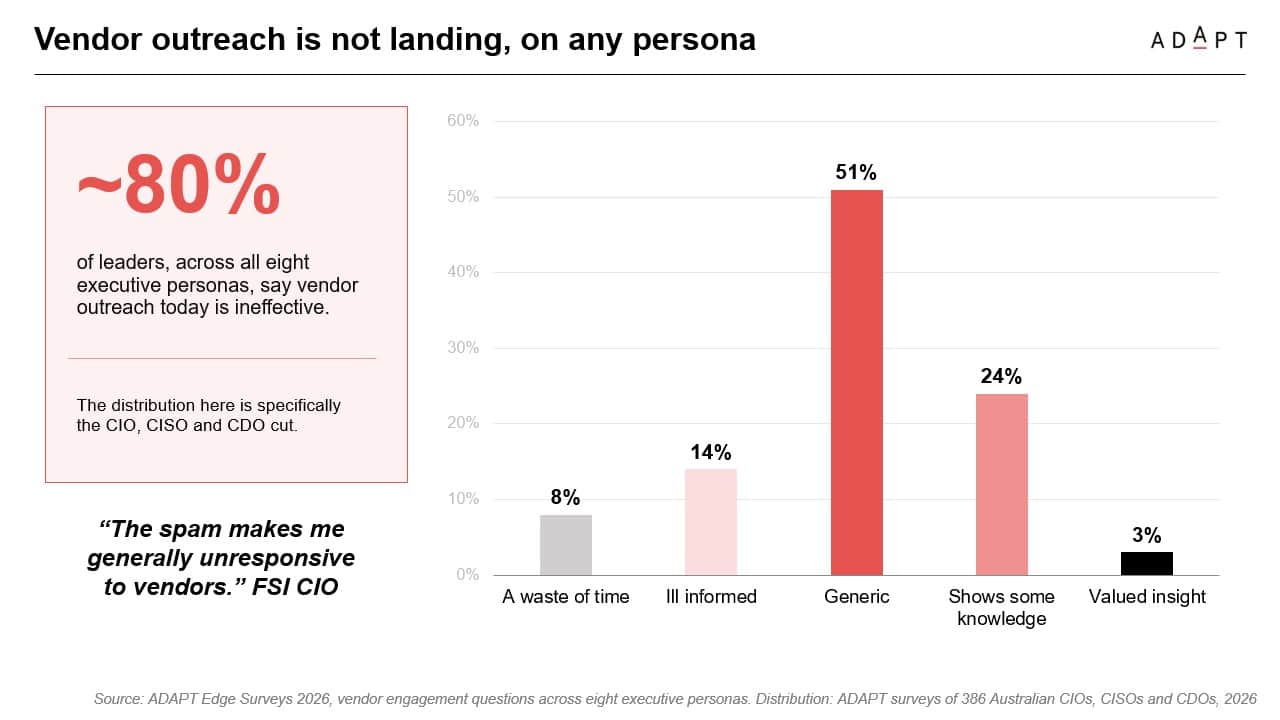
ADAPT research shows that technology leaders rate 80% of vendor outreach as generic, poorly informed, or a waste of time.
Repeated exposure to weak outreach teaches buyers to disregard unsolicited contact, including stronger messages that arrive later.
AI-generated personalisation has increased the volume without improving its value.
Christopher described receiving a message that repeated details from his career history.
It proved that the sender had scraped his profile, not that they understood Charter Hall’s priorities.
David said the first interaction should address the outcome the executive owns, the strategy behind it, and the pressures affecting delivery.
Product features matter after the provider has established that connection.
The same problem extends into thought leadership.
Buyers use AI tools, earned media, peer communities, and independent sources before speaking with sales.
Local data, customer evidence, and credible third-party perspectives give them something they can find, verify, and apply to a decision.
Only 3% of the outreach assessed by ADAPT’s community qualifies as valued insight.
A message earns attention when it improves the buyer’s understanding of a current financial, operational, or risk problem.
Everything else adds to the volume being filtered out.
Trust transfers through people and proof
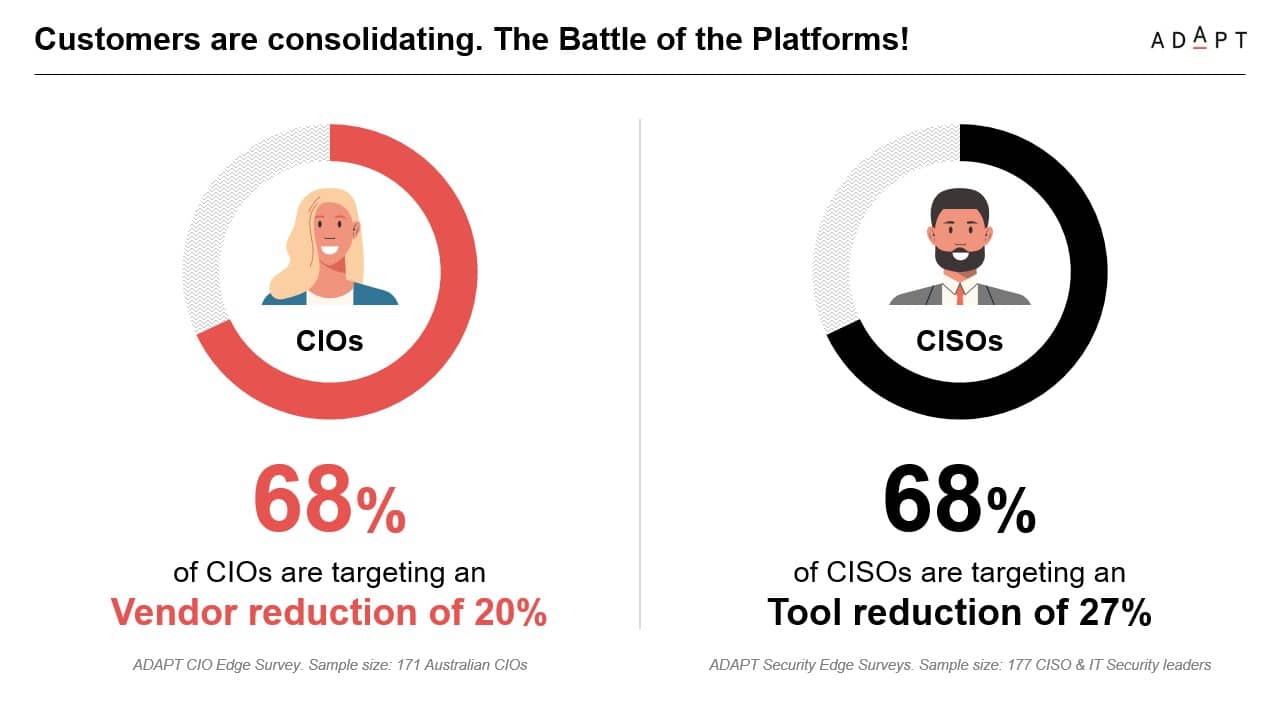
ADAPT research shows that 68% of CIOs are targeting a 20% reduction in their vendor ecosystem.
New providers must displace an existing relationship, support consolidation, or solve a problem the current portfolio cannot address.
Warm introductions help establish that case.
Christopher said he would readily refer a trusted partner to technology leaders across the property sector because the recommendation carries his reputation.
When evaluating providers himself, Christopher starts with AI-assisted research and then seeks customer references.
Direct access to clients who can discuss the relationship candidly gives him stronger evidence than a controlled sales conversation.
Buyers want to know why another supplier deserves a place, how it fits the existing environment, and which complexity it removes.
David described trust through competence, character, and consistency:
- credible expertise
- honest advice, and
- reliable delivery
after the contract is signed.
Christopher also values providers that respect timing and offer practical pilots.
His team can test the proposition, assess the relationship, and build internal confidence before making a larger commitment.
Roundtables and peer discussions support the same process by giving buyers access to credible people, relevant evidence, and candid conversations.
Trust must ultimately support a portfolio decision.
Buyers require evidence that the provider will reduce complexity, work with the existing environment, and continue delivering after procurement.
The champion has to sell the decision internally
An average enterprise technology purchase in Australia involves 13 people, with nearly half outside IT.
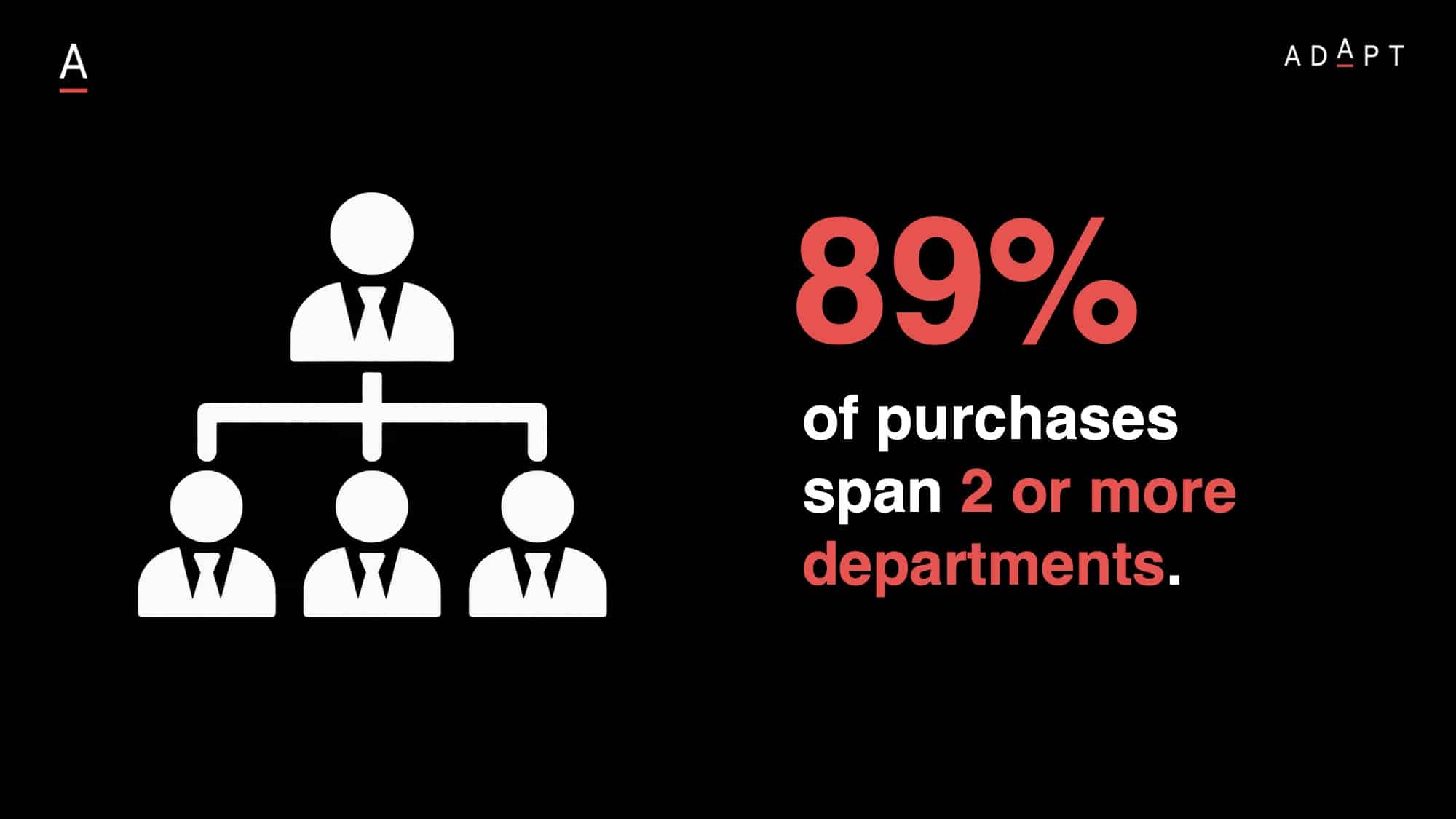
ADAPT research shows that 89% of purchases span more than two departments, while internal misalignment contributes to 40% of stalled deals.
Technology leaders may sponsor an opportunity, while finance tests the return, risk and legal examine exposure, procurement assesses the terms, and business leaders determine whether it supports their priorities.
At Charter Hall, technology expenditure is assessed by a CFO-chaired forum involving seven of the nine executive committee members.
Investments under $100,000 require a one-page case, while larger commitments require detailed evidence of ROI, ownership, delivery, and expected returns.
The function expected to realise the value must present and own the case.
A product deck may explain the offer, though it rarely equips an internal champion for this scrutiny.
Those champions often sit below the C-suite.
Christopher said his direct reports initiated Charter Hall’s last 10 significant technology decisions, giving providers a route into the organisation beyond the CIO.
Commercial value remains a major weakness.
Only 1% of CIOs measure AI value with CFO involvement, and twice as many CFOs as CIOs attribute rejected technology budgets to an inability to articulate value.
GTM teams should equip internal champions with evidence that remains credible across the buying group:
- A defined business outcome and accountable owner
- The current cost, risk, or operational constraint
- The expected return and measurement approach
- The stakeholders responsible for approval and delivery
- A financial case that can withstand CFO scrutiny
Create evidence that survives without the seller
Enterprise buyers remain open to new providers.
Their filters are stronger, and their standards for action are higher.
Locally relevant evidence serves the buying process at several stages.
It helps a provider appear during early research, gives an executive a reason to engage, and strengthens the case later presented to finance or the executive committee.
One or two provable A/NZ data points carry more value than another campaign filled with product claims.
The buyer can cite them, test them with peers, and use them to justify action.
The decisive question is what the buyer can do with the evidence after the meeting, particularly in the rooms where the provider is absent.
 Justina Uy
Content Marketing Manager
Justina Uy
Content Marketing Manager
Justina Uy is a data-driven content marketer that thrives on democratising elite know-how to empower Australia’s underdogs.
Skilled at translating complex ideas into a compelling story across formats and channels, she shifts seamlessly between writing long-form articles, creating viral social media posts, and producing thumb-stopping videos.
Since 2015, Justina executes her vision through a sophisticated understanding of the rapidly evolving digital and business landscape to serve entertaining and educational insights to the executive community.
Less Join the ADAPT
 Insider Community
Get the latest A/NZ market research and insights on the core trends impacting leaders.