







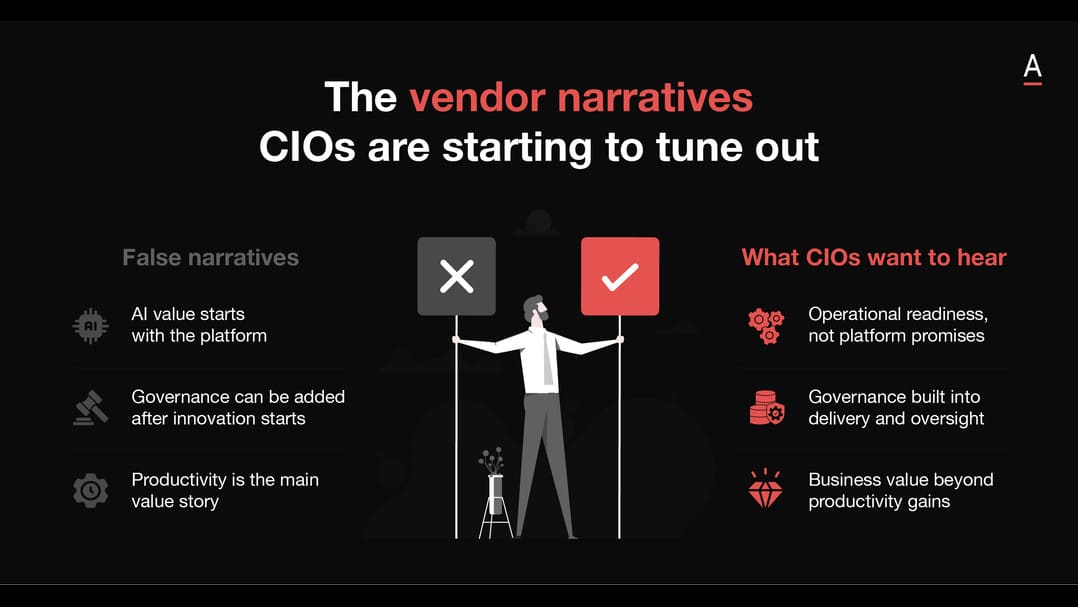





Why AI transformation requires a stronger human operating system
At CIO Edge in Melbourne, Work Futurist Dom Price and Telstra AI Executive Dayle Stevens show how behaviour, trust and capability shape adoption.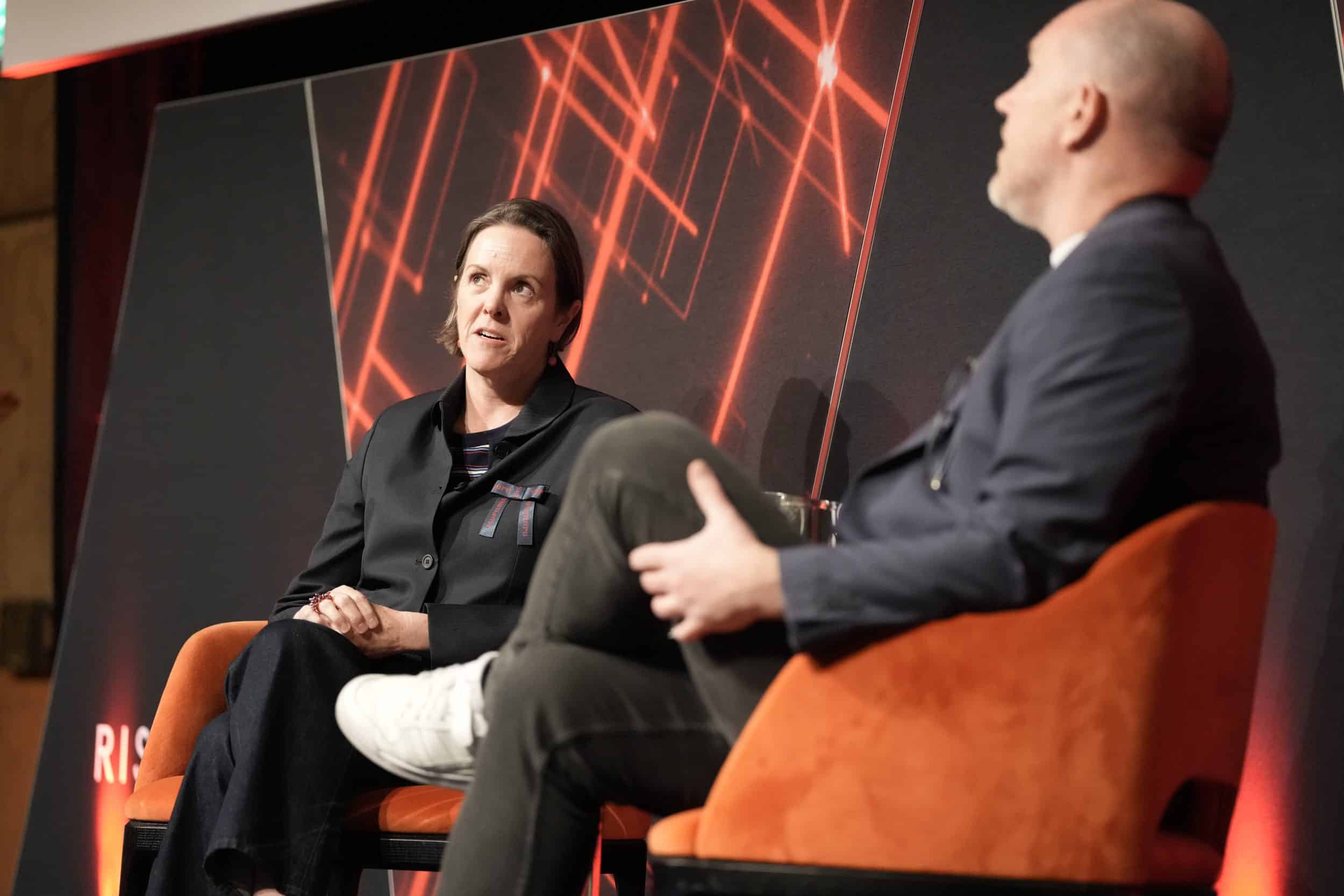


 Published Aug 24, 2026 in
Expert Presentations
People
Contributors
Dayle Stevens OAM
Dom Price
Published Aug 24, 2026 in
Expert Presentations
People
Contributors
Dayle Stevens OAM
Dom Price
Training alone will not change how people work.
At CIO Edge in Melbourne, Dom Price, Work Futurist and Visionary at Be Luminous, and Dayle Stevens OAM, AI Executive at Telstra, showed why sustained adoption requires ongoing behaviour change, room to experiment and incentives connected to real outcomes.
Key takeaways:
- Reinforce behaviour change beyond initial training: Repeated learning, peer sharing, leadership attention and space to experiment help people develop new ways of working over time.
- Build confidence with individuals before redesigning workflows: Give employees practical experience with the technology, then extend adoption into business processes and wider strategic priorities.
- Make trust and shared knowledge organisational capabilities: Demonstrate how systems are governed and monitored, and encourage people to share what they learn across teams.
Behaviour change requires reinforcement beyond training
Skills matter, but knowledge of a tool does not guarantee that people will change how they work.
Dom frames the human challenge through capability, capacity and willingness.
Organisations need people who can use new tools, enough space to experiment with them and an environment that encourages different behaviours.
Dayle’s experience with Ask Telstra shows how quickly the challenge can move beyond the technology.
Data quality created an early constraint, followed by the harder task of changing workforce behaviour.
One-off training around a release could not support that shift on its own.
Telstra established an ongoing Data and AI Academy and reinforced learning through repeated exposure, peer sharing and leadership attention.
Treat behaviour change as an ongoing organisational capability. Skills development needs to continue after deployment, with employees given opportunities to apply what they learn in their day-to-day work.
Individual confidence creates a path to wider redesign
Giving employees practical experience with new tools can build the confidence required for more significant changes to work.
Telstra approaches adoption in three waves.
The first gives individuals tools that improve their own productivity.
The second applies the technology to business-process transformation.
The third considers how those capabilities change the organisation’s wider strategy.
Starting with individual use gives employees room to experiment privately, find practical applications and develop familiarity before workflows change around them.
The next stage requires a stronger connection to business outcomes.
Telstra incorporates deployment and benefits into its broader incentive structure rather than treating adoption as a separate measure of success.
This keeps investment connected to existing organisational priorities.
Individual productivity provides an entry point; process redesign and strategic integration determine whether those gains travel further across the enterprise.
Trust and shared knowledge need visible operating practices
Trust requires evidence of how systems are monitored, governed and assured.
Dayle identifies sovereignty, trust and knowledge as areas where organisations can differentiate their approach.
As systems take on more work, leaders need confidence in the controls around them and in the organisational knowledge informing their decisions.
That knowledge extends beyond data.
Effective systems also need context about how people make decisions, how work moves across teams and where organisational boundaries affect an outcome.
Sharing what employees learn helps build that context across the organisation.
Dom and Dayle encourage leaders to create environments where people exchange practical lessons rather than hold expertise within individual teams.
Curiosity also needs commercial discipline.
Asking “so what?” forces teams to connect experimentation to a meaningful problem before committing further investment.
The strongest adoption cultures give people room to explore while keeping attention on the problems the organisation actually needs to solve.
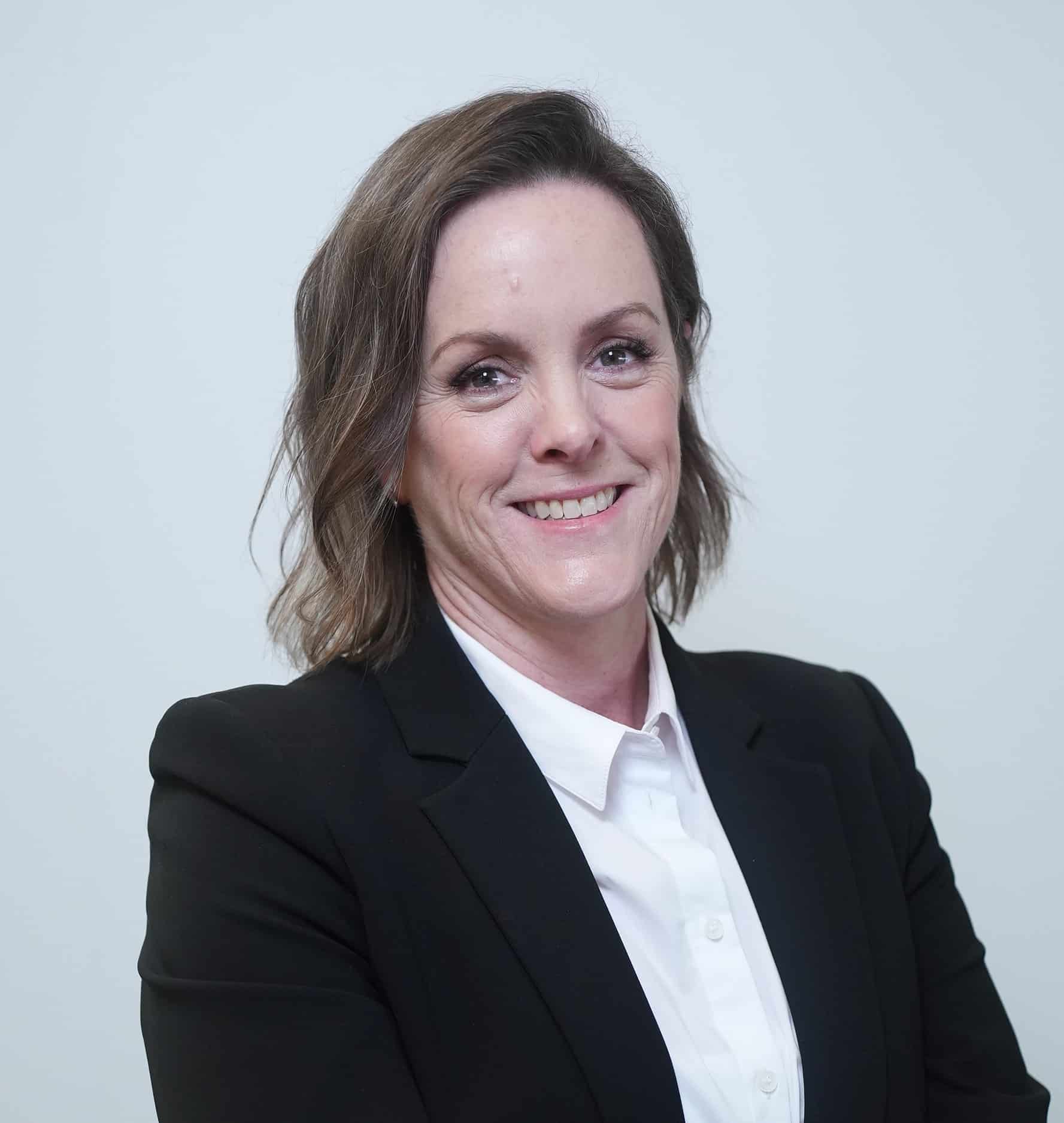 Dayle Stevens OAM
Executive, Data & AI at Telstra, former GM Data at AGL
Dayle Stevens OAM
Executive, Data & AI at Telstra, former GM Data at AGL
Dayle joined Telstra in July 2021 with nearly 30 years’ experience in the technology industry. She has held notable executive leadership roles in technology at companies such as NAB and AGL. Today Dayle leads Telstra’s Data & AI function.
Outside of Telstra, Dayle is a non-executive director at Beyond Blue, Australia’s most well-known and trusted mental health organisation, and a member of the IT Advisory Committee at Trinity College, University of Melbourne.
Dayle has long championed diversity in STEM across industry and age group boundaries, both through her own work and with global organisations aimed at encouraging women and girls to participate in STEM such as Robogals and Girl Geek Academy.
Dayle’s work has been recognised with multiple industry and professional awards, including being named in the CIO50 list of the best CIOs in Australia, the Australian Financial Review’s 100 Women of Influence, and being awarded an Order of Australia Medal for her services to information technology and to women.
Less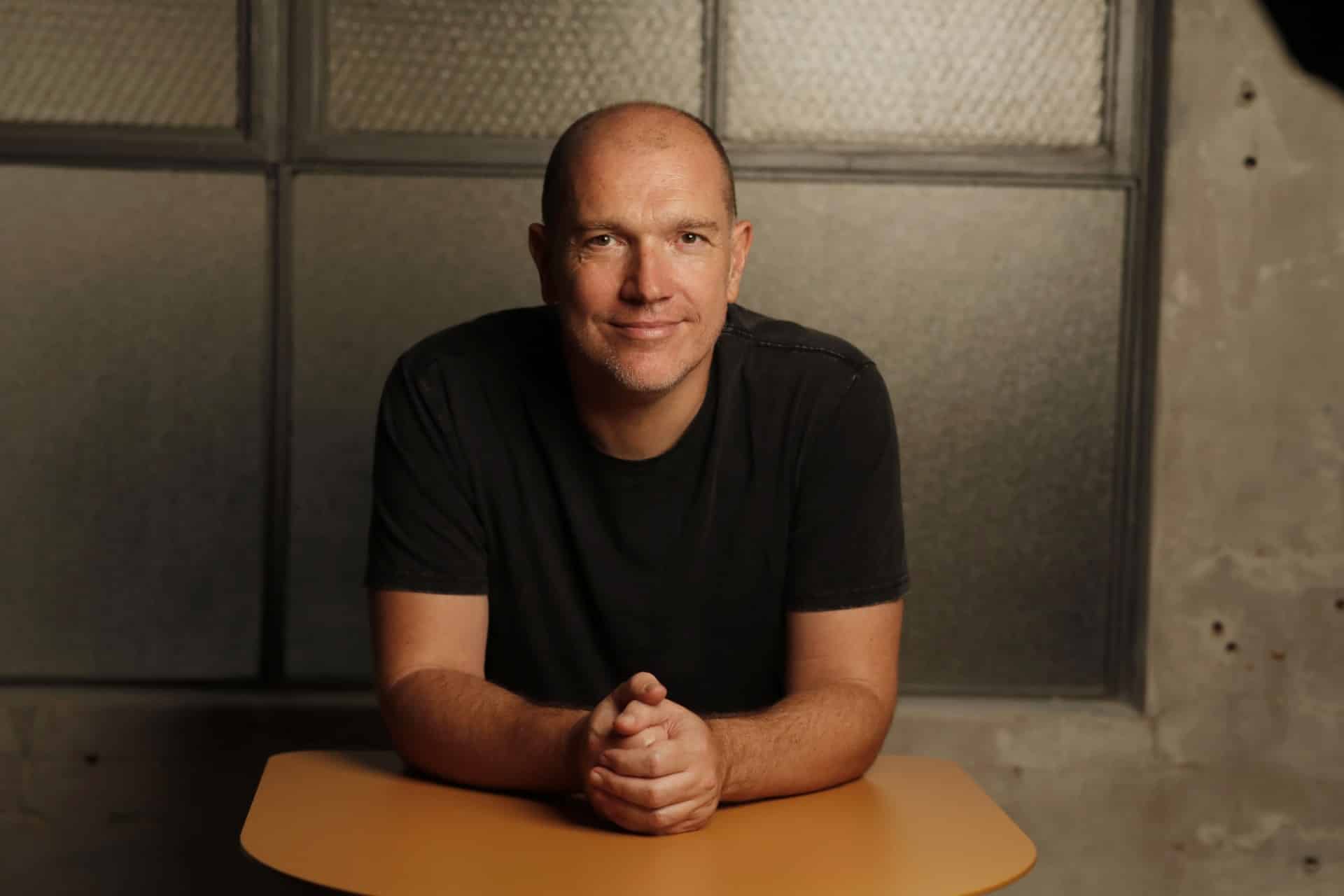 Dom Price
Work Futurist and Visionary at Be Luminous
Dom Price
Work Futurist and Visionary at Be Luminous
Dom Price is a Work Futurist, team obsessive, and Partner at Be Luminous and someone who has lived the chaos of scaling a business from the inside out. Joining Atlassian as employee #600, Dom stayed for 12 years as their resident Work Futurist, helping grow the company to over 16,000 people globally. That’s not theory – that’s scar tissue.
Dom operates at the intersection of tech and humans, and his mission is simple: upgrade the human operating system of how we work. Because as he’ll tell you, “a fool with a tool is still a fool… you’ve just made them faster.” In a world drunk on AI and the next shiny solution, Dom is the pragmatic voice asking whether your people are actually set up to use it well – driving change that’s sustainable, not just spectacular.
As a keynote speaker, Dom doesn’t trade in polished frameworks or borrowed wisdom. He shares real, lived experience the messy, hard-won kind which is exactly why he’s in demand. Less thought leader, more battle-tested practitioner.
Co-creator of the Atlassian Team Playbook, TED speaker, and advisor to C-suite leaders globally. Dom believes that work and life should be about thriving, not just surviving. A keen traveller and veteran of 53+ countries, he calls Australia home. Manchester made him. The rest? Still very much in progress.
 Join the ADAPT
 Insider Community
Get the latest A/NZ market research and insights on the core trends impacting leaders.
Join the ADAPT Insider Community
Get the latest A/NZ market research and insights on the core trends impacting leaders.