









Change stalls when leaders add information without addressing fear: BRAVE VR’s Emma Hall
In this interview with ADAPT, BRAVE VR CEO Emma Hall shows why fear, not knowledge, keeps employees from acting on AI-driven change.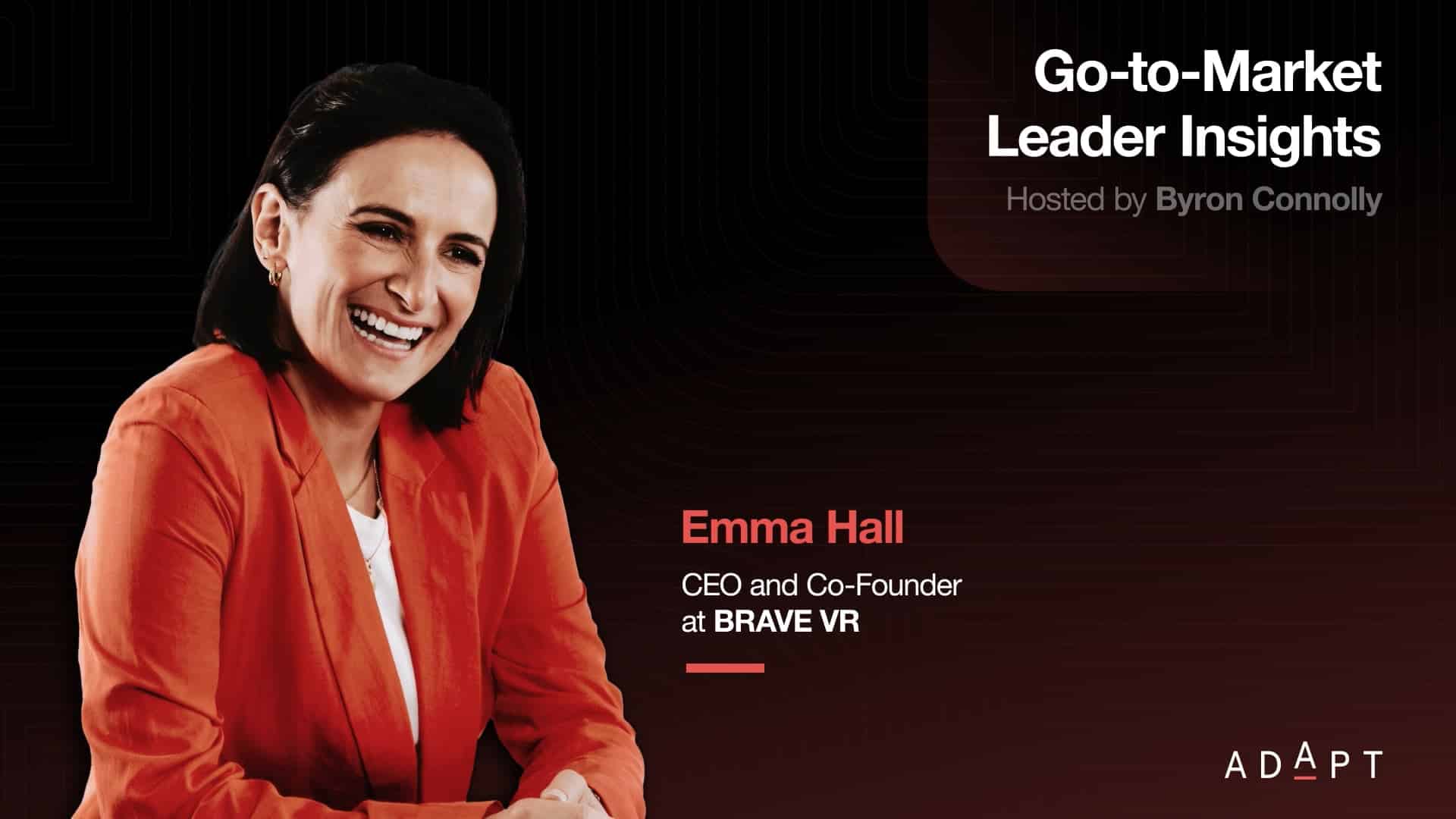


 Published Nov 11, 2026 in
Peer Insights
People
Contributors
Byron Connolly
Emma Hall
In 2020, Emma Hall was part of Virgin Australia’s HR division, which had to temporarily stand down 8,000 staff just before the airline entered voluntary administration.
The airline was facing travel restrictions brought about by the COVID-19 pandemic.
At the time, it felt like change on steroids. Looking back, Hall sees it as the start of something more permanent.
“What happened then was the start of the new wave that we’re in, which is not just that change comes in waves, but that uncertainty is here to stay”, says Hall, now co-founder and CEO of virtual reality tech organisation, BRAVE VR.
Hall spent 15 years at Virgin Australia, most recently leading culture and experience for around 10,000 people.
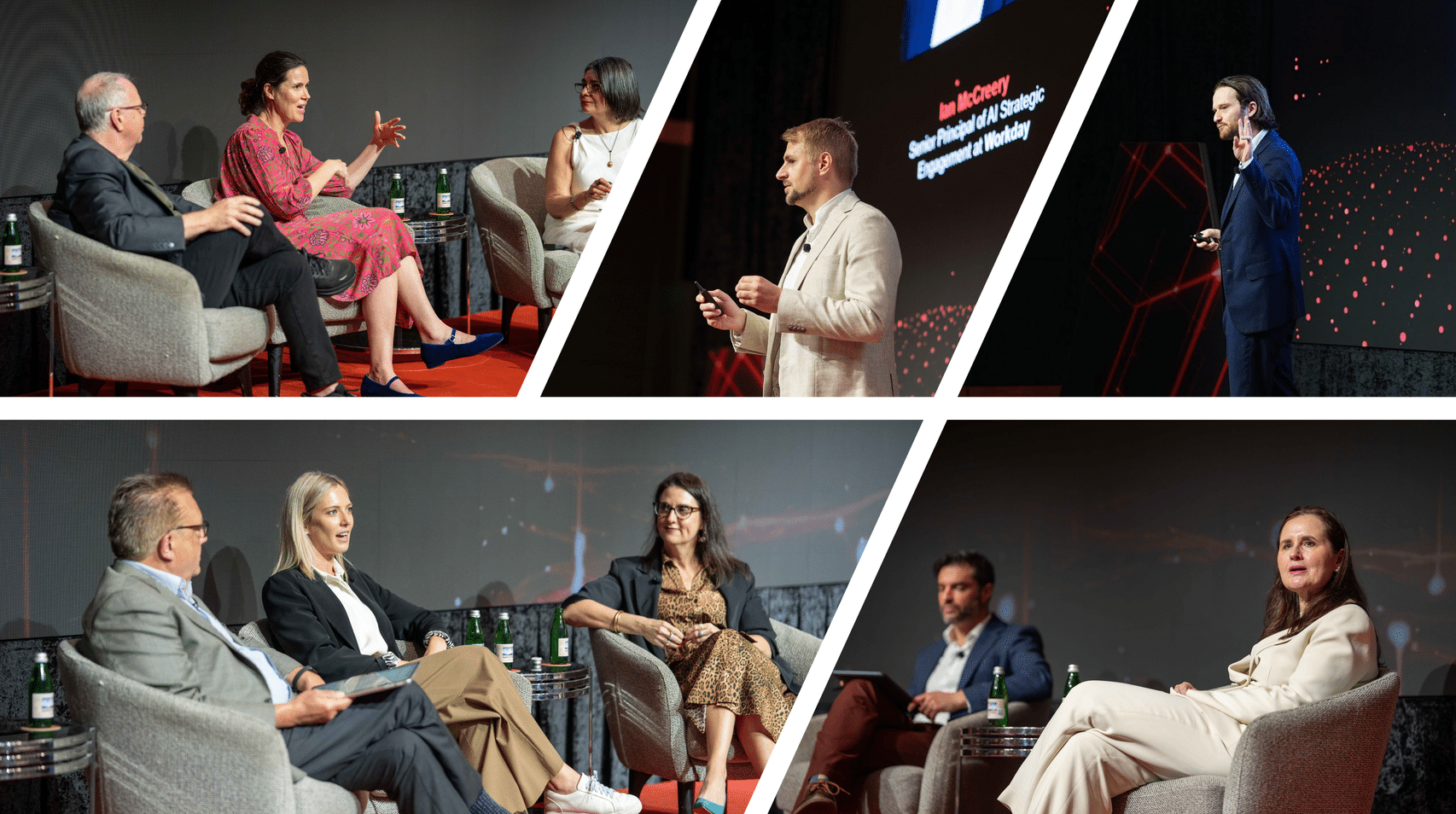
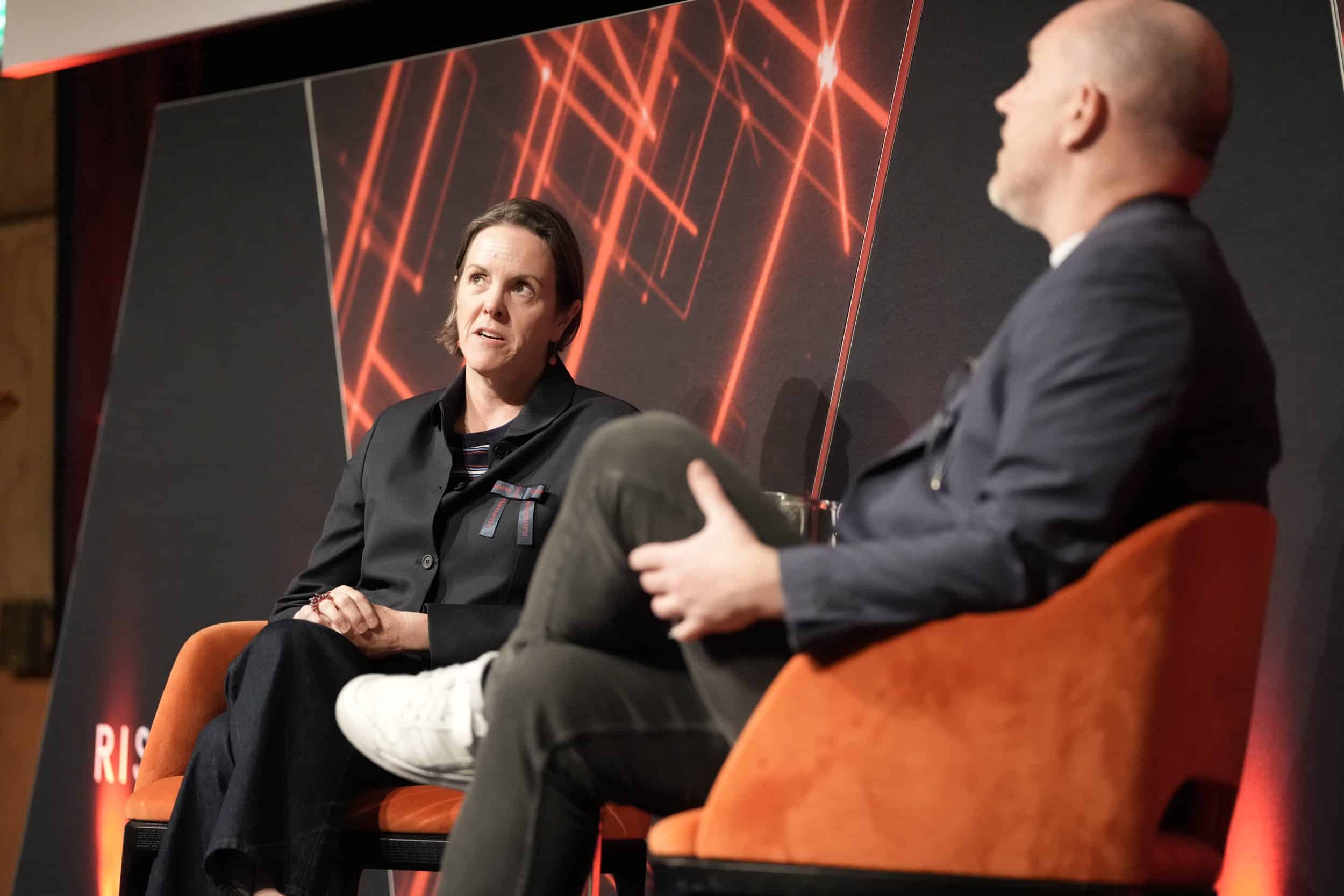
At ADAPT’s People & AI Edge event in mid-October, Hall co-hosted a roundtable discussion with HR execs on how to de-risk change and AI adoption.
The premise was simple: you can mandate a new system, process or structure. You can’t mandate people’s buy-in.
The traditional model of change assumed a beginning and an end.
“The idea is you do it for a period and then there’s no change. There’s peacetime and it allows people to regenerate and reset. We’re not in that world anymore”, she says.
The result is fatigue. Multiple change programs delivered one after another that never really end exhausts workers.
One exec at the roundtable said staff kept asking when it would stop.
Hall’s answer is blunt: it won’t. That means organisations have to change what they do to help people cope.
Be candid, and make it land individually
Hall says Virgin got two things right during the pandemic. The first was constant communication, even without answers.
“We had leaders getting on calls with their unshaven beards, unsure themselves what the next day was going to bring. It was just bringing a real human element to it”, she says.
The second was recognising that change might be announced to a group, but it lands on individuals.
A pilot told they can no longer fly needs a different message from a corporate employee who can be redeployed.
“Being deployed into Coles when you’re a pilot was a more challenging situation. You’ve got to have a groundswell for change, but it has to land individually”, Hall says.
Candour now extends to the shape of change itself. One of BRAVE VR’s airline clients is rolling out several systems and programs at once, and adoption is lagging.
Hall says many organisations still introduce each initiative as a discrete event, without acknowledging that it’s one of many.
“We’re not having the conversation that this is just the start. Then we’re going to go into another and another and another. The way we handle change has to change itself”, she says.
You can’t comms your way out of an identity change
Fear is a word people avoid at work, yet it sits at the root of most resistance.
AI sharpens it because, unlike most change, it challenges who people are, says Hall.
“When a change causes a shift in your identity, it cannot be dealt with in the same way. It’s not just a conversation or a comms pack. You can’t comms your way out of an identity change.”
People who built careers as the expert ask what role they now play. Job security is the early question and the fears multiply, she says.
“If I’m not using AI, I’m being judged for not embracing technology. If I am using AI, I’m feeling embarrassed and judged that the work I’m producing uses AI”, she says.
Roundtable participants also describe a cognitive tax. AI removes the easy tasks, leaving people with more difficult work and greater exhaustion.
Then there is the fear of falling behind as early adopters move past chatbots into agentic tools.
“Fear is quite quiet. Fear often makes people withdraw, and it means that we’re not asking questions”, Hall says.
A rollout can look calm while people disengage because they don’t want to appear weak or uninformed.
Hall says a big indicator that this is the case is if execs are not getting a lot of feedback or questions.
Her answer is to build individual resilience as a lasting capability rather than wrapping a change program around each initiative.
She recalls a colleague who was made redundant and told her simply: ‘I know I’m going to be okay.’
More information won’t close the knowledge-action gap
Most change programs respond to resistance with more instruction and information.
Hall argues that this misreads the problem: people usually know what they should do, but the gap is in doing it.
“We know we should go to the gym and exercise because it’s good for us, but we don’t do it. What sits between knowing and doing is fear, self-doubt and judgement.”
Adding more to the knowledge bucket does not move people to action; it can add to overwhelm and confusion. Hall sees untapped productivity in closing that gap.
As she says, “there’s a lot of capable, smart people out there, but they’re not necessarily executing.”
Difficult conversations are her example. She describes them as the number one problem for organisations globally and says the issue in not a lack of know-how.
“They are afraid of the consequence of doing it: what might come up, and how they might be judged. If you could write a script for a person on how to have a hard conversation, that won’t [move] into the doing category.
“So, the only thing you’ve got to do is actually address why they’re resisting having a difficult conversation in the first place, which is quite deep seated”, she says.
Measuring behaviour, not what people say
BRAVE VR’s response is to take people out of the workplace entirely.
Participants put on a headset and enter scenarios that demand courage, empathy and self-awareness.
Hall says traditional workshops struggle on three counts.
Many businesses can’t release staff for half a day or more, frontline roles often can’t come offline at all, and participants who do attend are distracted.
In the headset, attention is total.
“For the time that you’re in the headset, and in our case, our modules are 15 minutes long, you think of nothing else,” she says.
Hall says immersive learning lets people learn four times faster than traditional methods and retain 80% of what they learn.
The bigger point is emotion.
“Our program can elicit emotion in people, and when you can [do that], the ability to change their state into a new way of operating is easier”, Hall says.
The headset also offers psychological safety. Participants often say they have never had that conversation or experience with anyone else.
The approach draws on David Kolb’s experiential learning theory: experience first, reflect on it, then turn it into action.
Measurement is where Hall sees the most value.
Engagement surveys and other self-reported data carry bias, shaped by culture, people’s desire to influence outcomes, and what they are willing to admit to themselves, she says.
In BRAVE VR, participants make choices, take on challenges and decide whether to answer questions.
“We’re able to measure your behaviour throughout those experiences, which gives us insight that sometimes even people wouldn’t be aware of”, she says.
The program tracks 20 behavioural KPIs from start to finish, showing whether people put what they learn into practice.
Human skills need more attention as work automates
At South by Southwest this year, Hall heard executives from LinkedIn and Microsoft return to one question: where will organisations develop their empathy skills as more work runs through systems?
Hall doesn’t believe relationships will disappear, but they will need deliberate attention.
“Doing more automation, it’s like, ‘what are we doing, then, to build more relationships and have more conversations?’” she asks.
Human skills, once dismissed as soft skills, must be treated as equally important to the business.
“If you don’t have something that’s developing human skills in your business, it’s going to be an interesting watch for the next few years.”
Curiosity, self-compassion and an open question
Hall offers two simple tools. The first is curiosity.
“You don’t have to have the answers. You just have to be willing to ask questions and be interested in where people are at,” she says.
People often tell her they don’t know what to say. Her advice is to recognise and acknowledge that someone is frustrated and talk to them about it.
“That alone is actually empathy in practice”, she says.
The second is self-compassion. People readily show compassion to others but are hard on themselves, which becomes costly when mistakes are inevitable, she says.
“We’re going into an era where we’re going to get it wrong. There is no doubt. Failure is not a bad thing, but we have to be kinder to ourselves.”
That leaves leaders with an open question.
If uncertainty is continuous and AI keeps reshaping roles, how will organisations build curiosity, self-compassion and resilience as lasting capabilities, rather than one more program in an endless series?
 Byron Connolly
Head of Programs & Value Engagement at ADAPT
Byron is a highly experienced technology and business journalist, editor, corporate writer, and event producer.
Prior to joining ADAPT, he was the editor-in-chief at CIO Australia and associate editor at CSO Australia. He also created and led the well-known CIO50 awards program in Australia and The CIO Show podcast.
Byron creates valuable insights for our community of senior technology and business professionals that help them reach their organisational and professional goals. He has a passion for uncovering stories about the careers and personal philosophies of Australia’s top technology and digital executives.
When he is not working, Byron enjoys hot yoga, swimming, running and spending time with his family. He completed the North Face 100km ultra marathon in the NSW Blue Mountains in 2012 and 2013.
Less Emma Hall
CEO and Co-Founder at BRAVE VR
 Join the ADAPT
Insider Community
Get the latest A/NZ market research and insights on the core trends impacting leaders.
Join the ADAPT Insider Community
Get the latest A/NZ market research and insights on the core trends impacting leaders.