









AI time savings can disappear into checking and rework, says Inventium.AI Workforce Futurist
At Government Edge, Inventium.AI Workforce Futurist Dr Amantha Imber shares how leaders can build skills, protect judgement and use saved time well.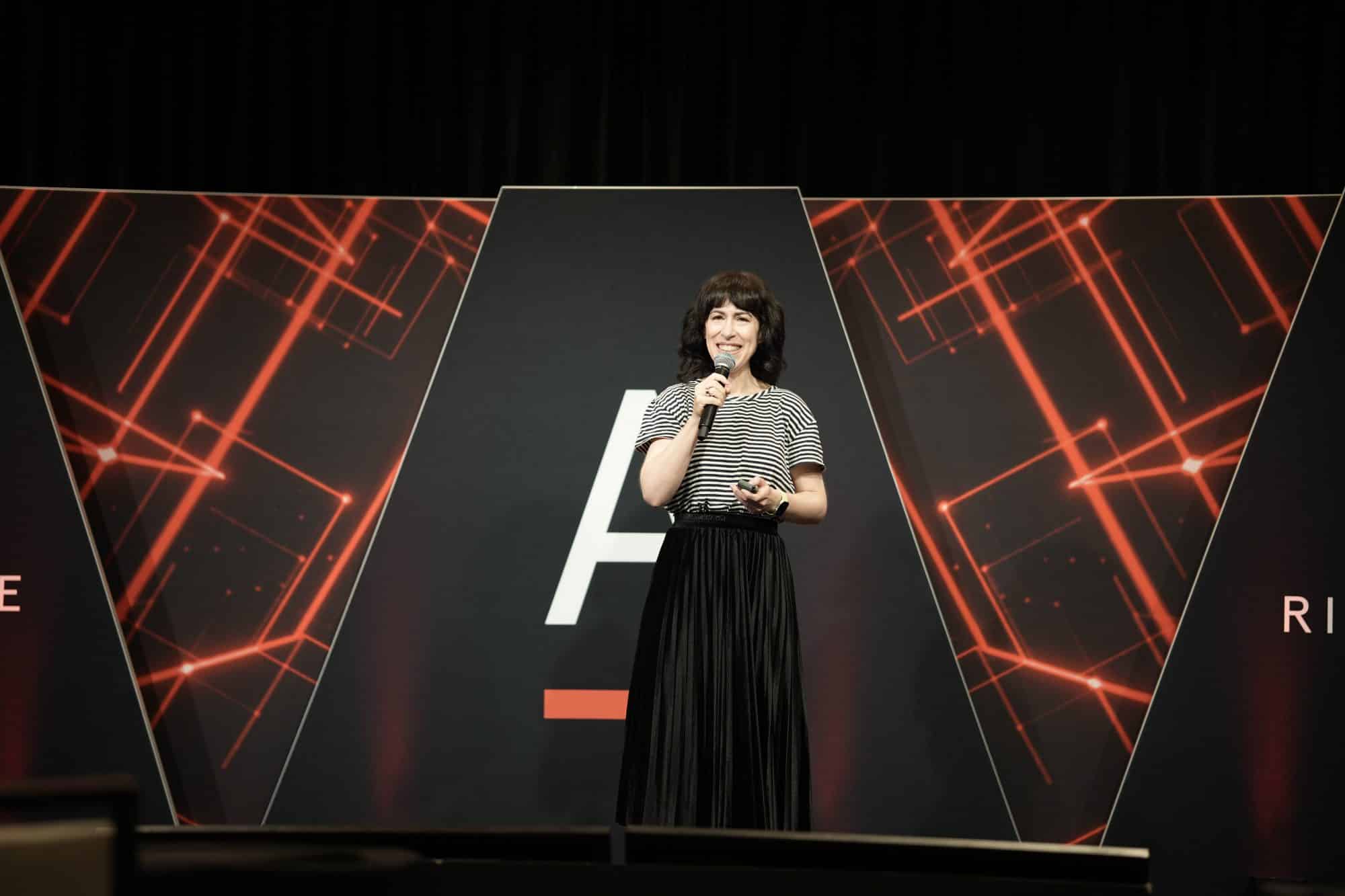


 Published Nov 19, 2026 in
Expert Presentations
People
Contributors
Dr Amantha Imber
AI time savings can disappear into checking and rework, says Inventium.AI Workforce Futurist
Excerpt: At Government Edge, Inventium.AI Workforce Futurist Dr Amantha Imber shares how leaders can build skills, protect judgement and use saved time well.
Time saved with AI can quickly be absorbed by checking outputs, fixing mistakes and switching between tasks.
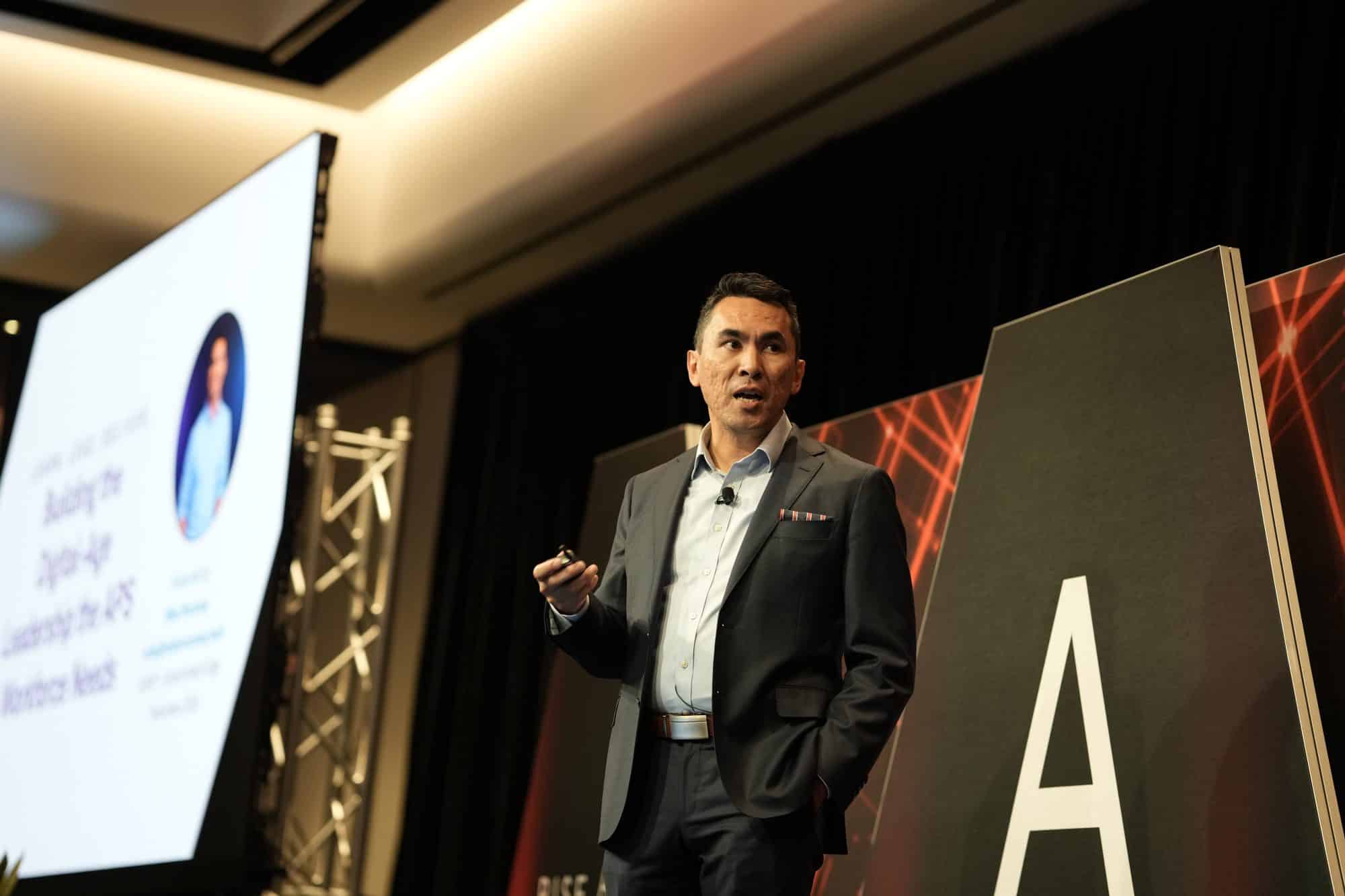
At Government Edge, Dr Amantha Imber, Organisational Psychologist and Workforce Futurist at Inventium.AI, focused on how people can use AI well without weakening judgement, skills or accountability, and what leaders should do with the time it saves.
Key takeaways:
-
- Train people to delegate to AI, check its work and take responsibility for what they share.
- Measure work quality, proficiency and staff wellbeing alongside adoption and efficiency.
- Decide how teams should use time saved and make that choice clear.
Checking, fatigue and weaker judgement can erode the gain
Amantha describes four risks she calls the “four horsemen of AI brain rot”: energy, skills, judgement and behaviour.
Heavy use can create cognitive fatigue and constant context switching.
Over-reliance can also weaken the skills and judgement people still need to assess the work AI produces.
Responsibility can blur when employees use the technology as an explanation for poor work.
The review burden adds another cost.
AI makes it easy to produce more content than people can properly assess, creating more checking, correcting and validation work.
Research cited by Amantha suggests this work can take around 6.5 hours a week.
Those costs need to be included when organisations assess whether AI is genuinely saving time.
Better use requires delegation skills and clear expectations
Employees need to know what to delegate, how to brief AI and how to judge the result.
Many have not been trained to do those things consistently.
Amantha recommends clear workplace expectations around accountability.
People should stand behind the ideas and words they share, make content specific to their organisation and be able to explain how AI contributed to the work.
Learning also needs to continue as the technology changes.
She cites research suggesting around five hours of AI training per person each year as a minimum associated with significant financial returns, with more extensive learning linked to greater time savings.
That development can include formal training, mentoring and support from AI champions who help employees apply the technology within their own work.
Leaders need to decide where saved time goes
Adoption rates alone do not show whether work is improving.
Amantha recommends tracking measures such as time to proficiency, process speed, error rates, staff wellbeing and relevant financial outcomes.
These measures give leaders a clearer view of whether AI is improving work quality and performance.
Saved time also needs an intended use.
Teams could put that capacity towards better service, learning, innovation or improved work-life balance.
Leaving that choice unclear makes it easier for saved time to become more work.
Leaders need to decide where the capacity goes and make that expectation explicit.
 Dr Amantha Imber
Organisational Psychologist and Workforce Futurist at Inventium.AI
Dr Amantha Imber is an organisational psychologist and the founder of Inventium, a behavioural science consultancy whose clients include Google, Apple, Disney and Microsoft. She is the two-time winner of AI Consultant of the Year at the Australian AI Awards, in 2025 and 2026.
More than half a million people have used Inventium’s programs to build stronger AI skills and lift their performance at work.
Amantha was the first Australian to win the Thinkers50 Innovation Award, which the Financial Times has described as the “Oscars for Management Thinking”.
She hosts the top-ranking business podcasts How I Work and How I AI, with more than 6 million downloads, where she asks some of the world’s most successful people about their habits and rituals and shares practical AI strategies. Her ideas have appeared in Harvard Business Review, The New York Times, Forbes and Fast Company.
She is the author of five bestselling books, including the international bestseller Time Wise. Her books have been translated into more than 10 languages, and her latest, The Energy Game, is out now.
Less Join the ADAPT
Insider Community
Get the latest A/NZ market research and insights on the core trends impacting leaders.
Join the ADAPT Insider Community
Get the latest A/NZ market research and insights on the core trends impacting leaders.