













Leadership capability can unlock AI adoption across government, says former Defence AI Centre Executive Director
At Government Edge, former Defence AI Centre Executive Director Mike Moroney shares how trust, culture and empowered talent shape AI adoption across the APS.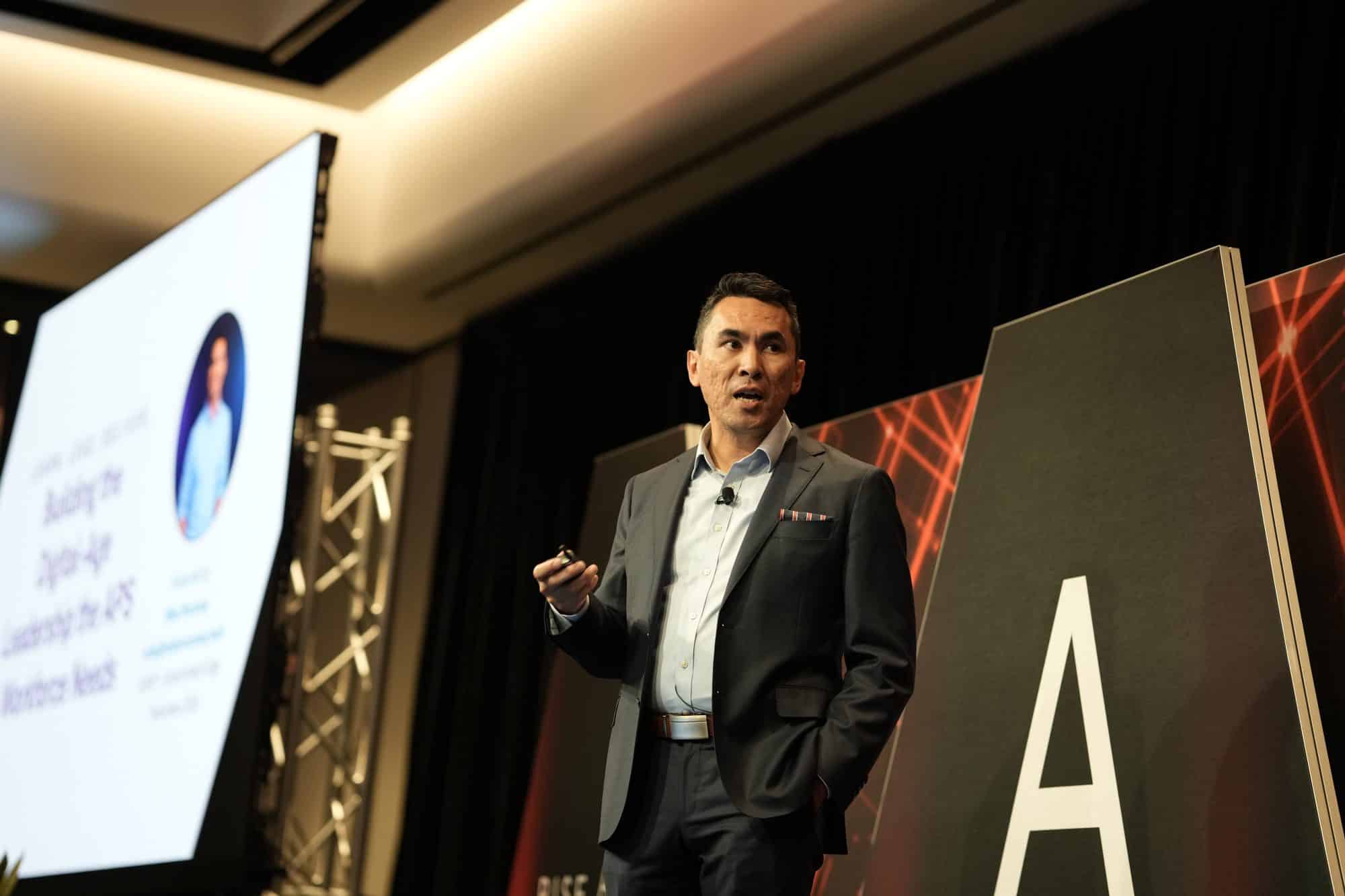


 Published Nov 19, 2026 in
Expert Presentations
People
Contributors
Mike Moroney
Strong AI adoption comes from leaders who understand the work, build trust and give skilled teams room to act.
At Government Edge, Mike Moroney, former Executive Director at the Defence AI Centre, drew on his experience in Defence to show how understanding people and purpose, building trust and empowering digital talent can strengthen adoption across government.
Key takeaways:
- Train senior leaders to guide AI adoption and shape the culture around it.
- Design technology around the people delivering and using public services.
- Give digital talent the trust, authority and resources to influence decisions.
Leadership needs to understand the people and context around the technology
Digital leadership begins with understanding who an agency serves, how its workforce operates and which cultural conditions support change.
Strong systems and policies have limited impact when the surrounding culture works against them.
Mike argues that AI should augment people’s work and reflect the realities of how employees make decisions and deliver services.
He points to a Defence project that used AI to support submarine detection.
Mike says the project succeeded where a similar effort by an ally had struggled because leaders brought operational and human perspectives into the work and prepared users to trust and adopt the system.
Senior leadership capability can determine whether adoption spreads
Technology investment and specialist capability can move faster than leadership readiness.
Mike identifies senior leadership training as a key bottleneck because executives shape the culture and operating conditions around new technology.
Leaders need enough understanding to guide teams through uncertainty, challenge established assumptions about work and adapt management practices as people begin working differently with AI.
Building that capability before initiatives expand gives specialist teams stronger support when adoption moves beyond individual projects.
Digital talent needs authority as well as meaningful work
Skilled people are harder to retain when they cannot influence decisions or lack the resources to make a meaningful difference.
Mike argues for clear roles, greater authority and opportunities for digital leaders to move across government and work on varied problems.
He frames capability building as a sequence: develop leaders, retain them, empower them and attract future talent.
Government’s public purpose can help attract skilled people, but agencies also need to create the conditions that allow them to contribute once they arrive.
 Mike Moroney
Former Executive Director at Defence AI Centre
Mike Moroney spent 25 years in Defence helping one of Australia’s most complex organisations bring artificial intelligence into real operations. As the AI Lead for the Royal Australian Air Force and Executive Director of the Defence AI Centre, he guided the adoption of AI systems for maintenance, airborne missions and advanced Industry 4.0 capabilities.
Mike is known for cutting through innovation theatre and showing how to deliver technology that actually works at scale. He focuses on building strong foundations, empowering people and measuring success by outcomes rather than pilots or tools.
He speaks candidly about digital transformation and the fact that technology is rarely the hardest part. The real challenge is shifting systems, incentives and culture so new technology can make a meaningful impact. Today, Mike works with leaders across government, industry and the community to help Australia build confidence and capability in the AI era.
Less Join the ADAPT
Insider Community
Get the latest A/NZ market research and insights on the core trends impacting leaders.
Join the ADAPT Insider Community
Get the latest A/NZ market research and insights on the core trends impacting leaders.