








Why AI workforce readiness in the APS starts with the people doing the work
Leaders from IP Australia, Home Affairs and the DTA on AI workforce readiness in government, from staff-led workflow redesign to clear risk boundaries.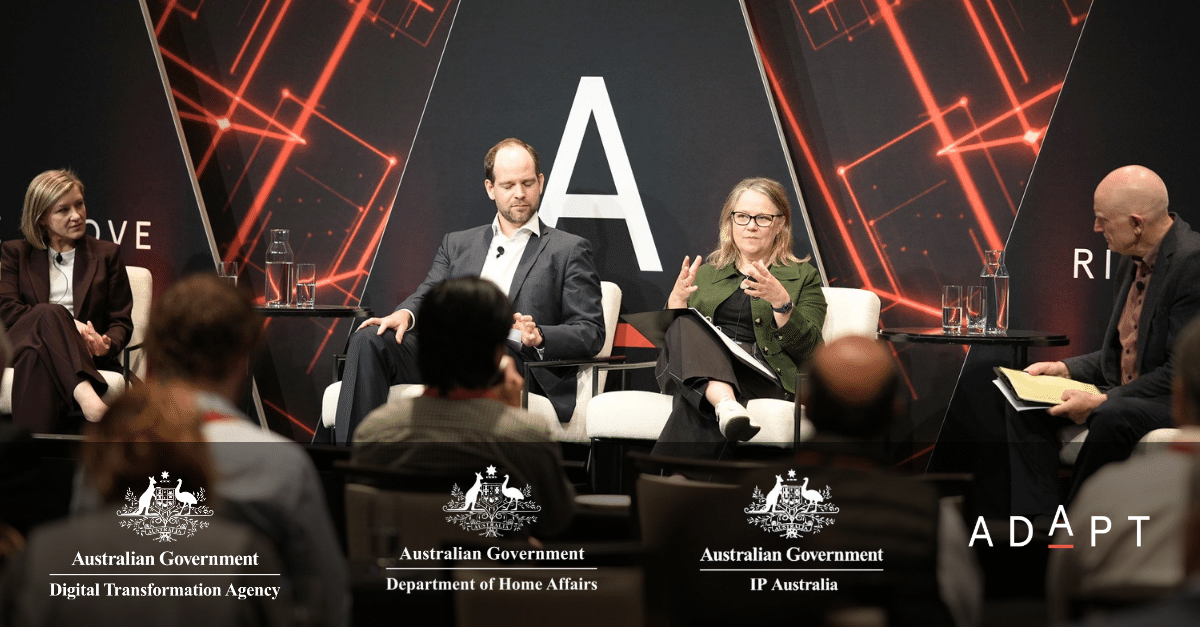


 Published Nov 11, 2026 in
Expert Presentations
People
Contributors
Margaret Tregurtha
Simon Cooper
Lucy Poole
Peter Hind
How do you build AI workforce readiness in government without losing public trust?
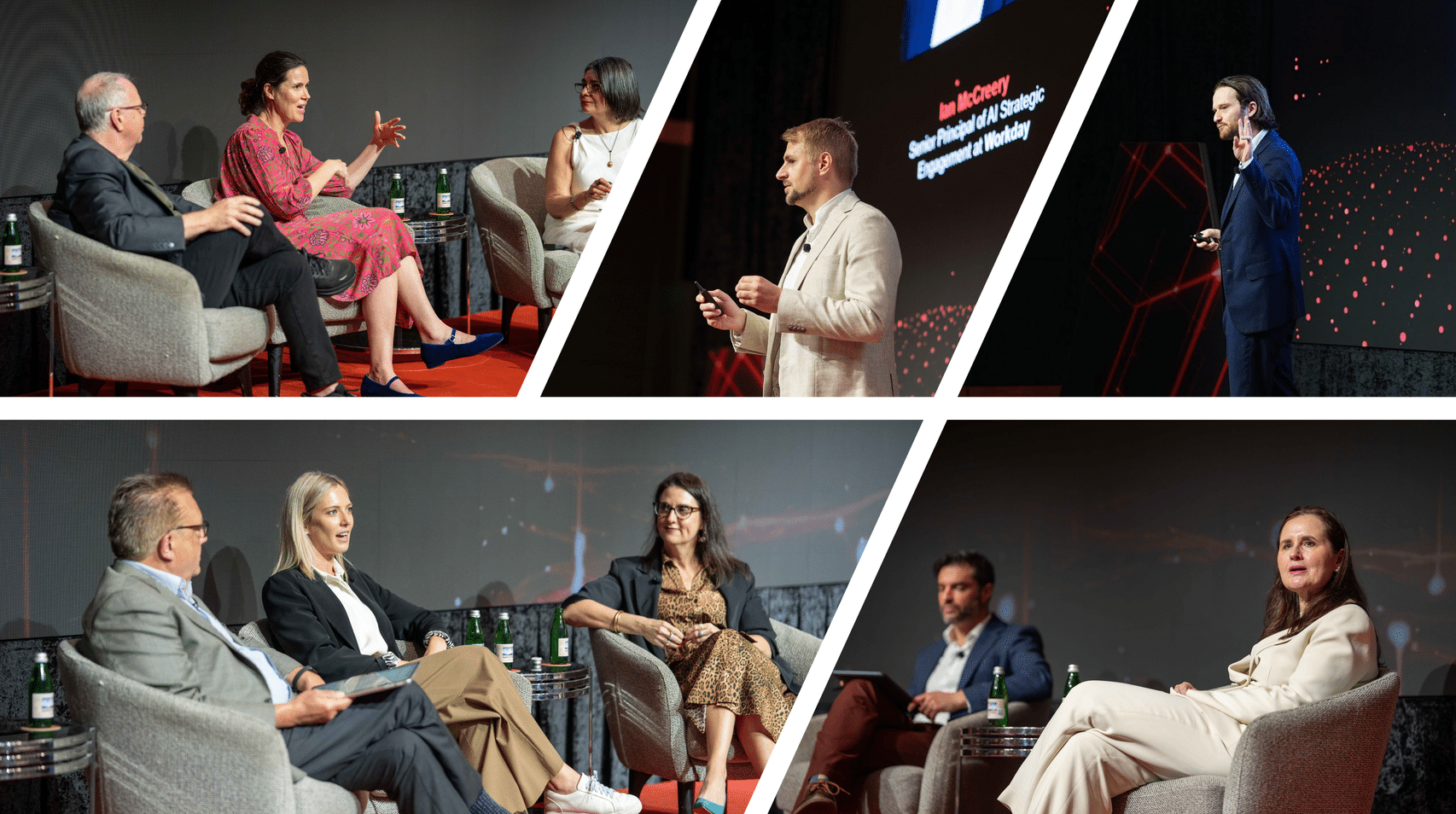
At ADAPT’s 3rd Government Edge in Canberra, ADAPT Principal Research Analyst Peter Hind put that question to leaders from IP Australia, the Department of Home Affairs and the Digital Transformation Agency.
Three themes stood out: involving staff in redesigning their work, setting clear boundaries for responsible use and showing practical results.
Key takeaways:
- Involve staff in mapping workflows and deciding where AI can solve real problems.
- Explain how AI is governed, where human oversight applies and when risks need escalation.
- Plan how to use time saved, and measure whether AI improves work for staff and the public.
Start with the work, then find where AI fits
AI adoption should begin with a real business problem.
Margaret Tregurtha, A/g Director General at IP Australia, describes bringing staff together to map workflows, identify pain points and decide where technology could improve work for employees or customers.
Involving staff this way gives them ownership of the changes and keeps the agency focused on useful applications rather than AI for its own sake.
Simon Cooper, A/g Chief Data and AI Officer and First Assistant Secretary at the Department of Home Affairs, says the department is tailoring its approach to the different needs of its 16,000 staff.
Broad access to Microsoft Copilot lets people experiment, while specialist AI development is relevant to a smaller group. Staff have also built tools from the ground up, including an AI agent that checks work against executive expectations.
Build trust with clear boundaries and visible results
Staff need to understand how AI will be used, how risks are managed and who remains accountable.
Simon Cooper says Home Affairs consults staff when AI is expected to significantly change workflows or roles.
He also describes an assessment framework involving legal and security teams, and senior business leaders.
IP Australia’s Margaret Tregurtha explains that clear risk boundaries help staff know when they can experiment and when they need senior approval.
Lucy Poole, Deputy CEO, Strategy, Planning and Performance at the Digital Transformation Agency, encourages agencies to show staff working examples, measure the results of pilots and share what they learn.
Reusing tested tools and approaches from other agencies can help government move faster while learning from previous experience.
Make time saved count
Efficiency gains don’t need to mean faster deadlines or more work.
Lucy Poole and Margaret Tregurtha say agencies should decide how to use the capacity AI creates, whether that’s more time for customer service, complex work, training or quality assurance.
They also emphasise preserving the knowledge and judgement employees need to check AI-supported work.
AI can change how government work is done, but lasting adoption depends on staff having a voice in that change and seeing its value in practice.
 Margaret Tregurtha
A/g Director General at IP Australia
Margaret has been part of IP Australia’s leadership team since early 2020 and is currently acting Director General of IP Australia. Her focus is on ensuring that IP Australia has the right capability to deliver on its strategic objectives, and on working collaboratively both domestically and internationally to support effective IP policy development.
Before joining IP Australia, Margaret was A/G First Assistant Secretary of Legal and Compliance in the former Department of Environment and Energy.
Margaret has extensive experience in providing legal and governance advice to government across a range of subject matters including education, industry, science, environment and energy.
Since 2008, she has held Senior Executive roles in the Commonwealth Government.
She was General Counsel of the Department of Industry, Science and Resources from 2012 to 2017 and General Counsel of the then Department of Environment and Energy from 2017 to 2019.
She has a Bachelor of Arts/Laws(Hons) and a Graduate Diploma of Legal Practice from the Australian National University. She is also a graduate of the Australia Institute of Company Directors.
Less Simon Cooper
A/g Chief Data and AI Officer - First Assistant Secretary at Department of Home Affairs
Simon is responsible for leading the safe use of AI to support the Department’s mission to protect Australia’s borders, manage immigration, preserve social cohesion, and safeguard national security covering 16,000+ staff. His role includes responsibility for AI capability uplift, delivery of AI use cases, setting strategy, implementing AI policy, assurance and controls working in partnership with business leaders, legal, technology, cyber teams, and a network of AI champions.
Simon has 20 years’+ experience delivering digital, data, AI, and transformation outcomes across government in Australia and the UK working with over 60 agencies. Prior to joining Home Affairs, Simon was a Partner at Deloitte where he led the National Central Government practice and specialised in digital transformation. He spent a decade at the UK’s Home Office having joined as a graduate including leading operational, data and strategy teams. Simon is a recognised thought leader including through co-authoring the book ‘Are we there yet? The Digital Transformation of Government in Australia’ (2019).
Less Lucy Poole
GM Strategy, Planning and Performance Division at the Digital Transformation Agency
Lucy leads the Strategy, Planning and Performance Division which focuses on providing whole-of-government strategic leadership to the development and implementation of digital policies, the Australian Government Architecture, and the Data and Digital Government Strategy.
Lucy oversees the management of the government’s digital investment pipeline to ensure an integrated and coordinated approach to government’s investment in digital and ICT. A key priority for Lucy is driving the achievement of the Australian Government’s vision to implement world class digital capabilities to deliver outstanding outcomes for all.
Lucy also manages the Digital Transformation Agency’s development of policies, governance models, and assurance frameworks for the implementation and use of Generative Artificial Intelligence technologies across the Australian Public Service.
Prior to joining the Digital Transformation Agency, Lucy held senior executive roles at the Department of the Prime Minister and Cabinet and the Australian Public Service Commission where she led several transformation programs. Lucy has experience across a range of sectors including Australian federal and state governments, the private sector and the UK civil service.
Less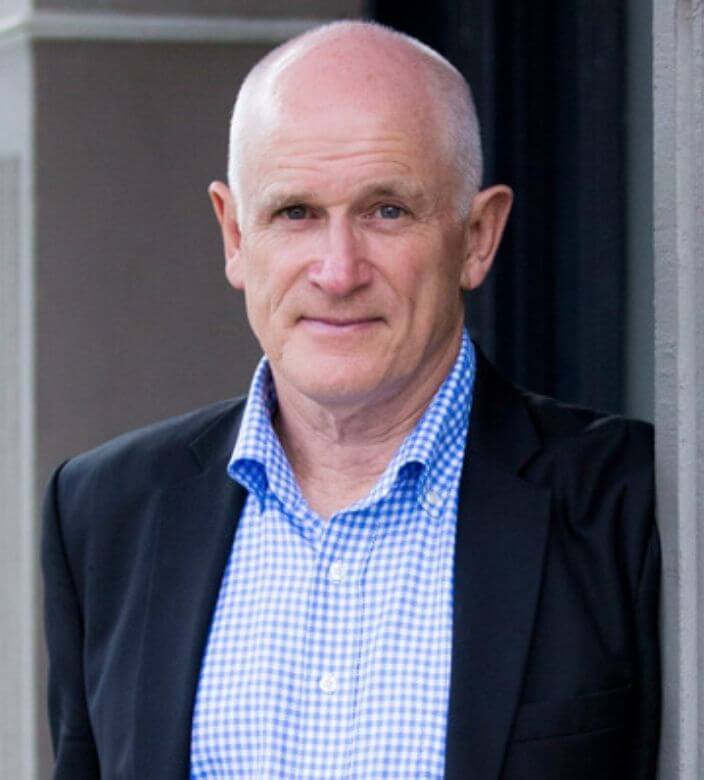 Peter Hind
Principal Research Analyst at ADAPT
Peter Hind has spent the last 25 years as an analyst and commentator on the ICT industry.
His primary areas of interest are the potential of technology to transform the way organisations operate, the change management obstacles executives encounter in realising this potential, as well as the tactics and techniques leaders have deployed to overcome these difficulties.
Peter now takes on multiple roles within ADAPT including the moderation of private events and roundtables, interviewing business executives about the strategies they are pursuing and assisting with the structuring of delegate surveys.
He also interrogates and analyses ADAPT’s treasure trove of end-user and C-suite data.
Less Join the ADAPT
Insider Community
Get the latest A/NZ market research and insights on the core trends impacting leaders.
Join the ADAPT Insider Community
Get the latest A/NZ market research and insights on the core trends impacting leaders.