
















50% of AI pilots lack governance, and vendors are still selling scale
Buyers face career level risk, weak readiness, and governance gaps. Vendors pitching scale without control are getting screened out.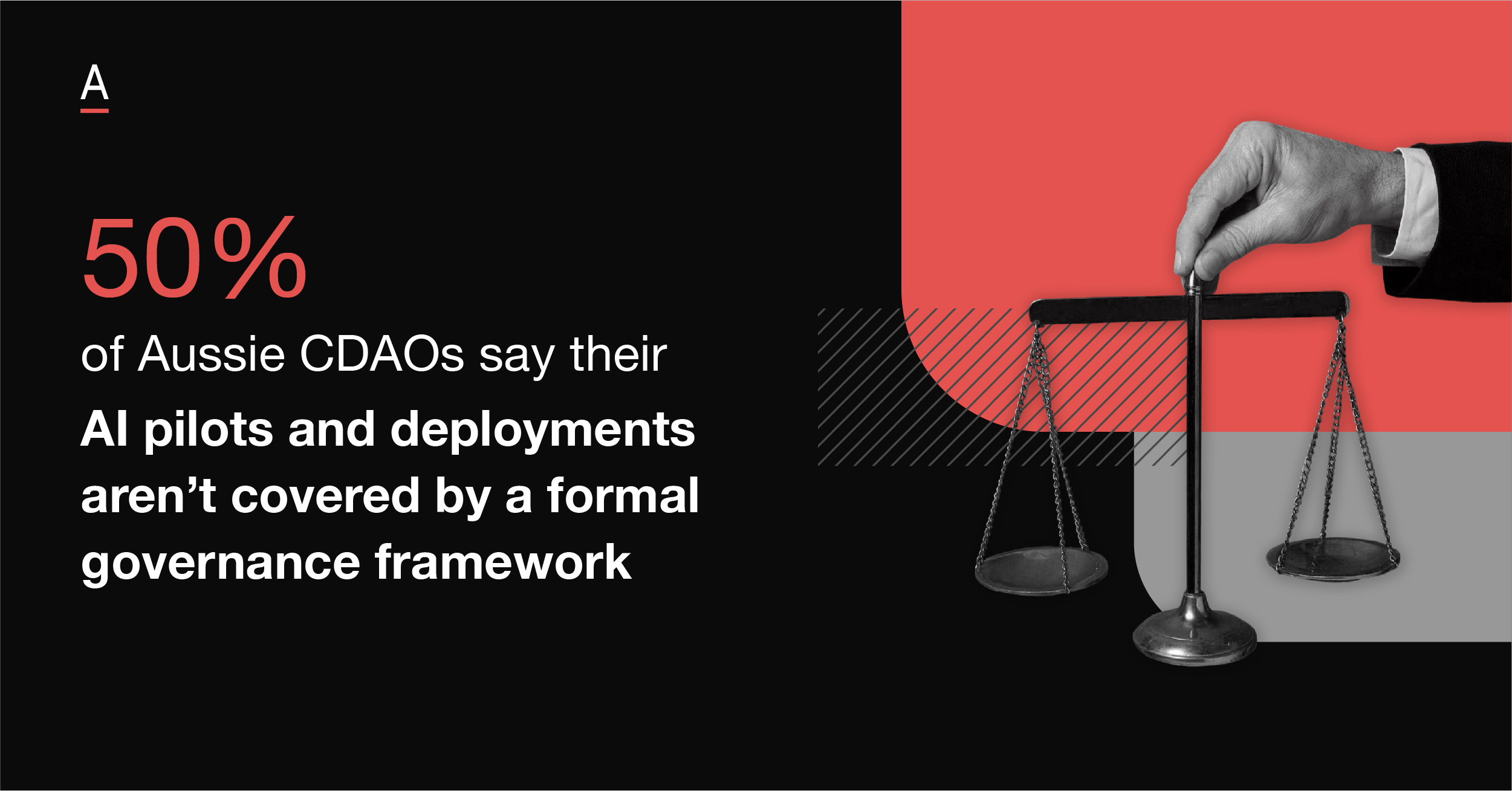


 Published Apr 13, 2026 in
Articles
Go-To-Market
Contributors
Justina Uy
Published Apr 13, 2026 in
Articles
Go-To-Market
Contributors
Justina Uy
Australian buyers are assessing AI under heavier pressure than many vendors appear to recognise.
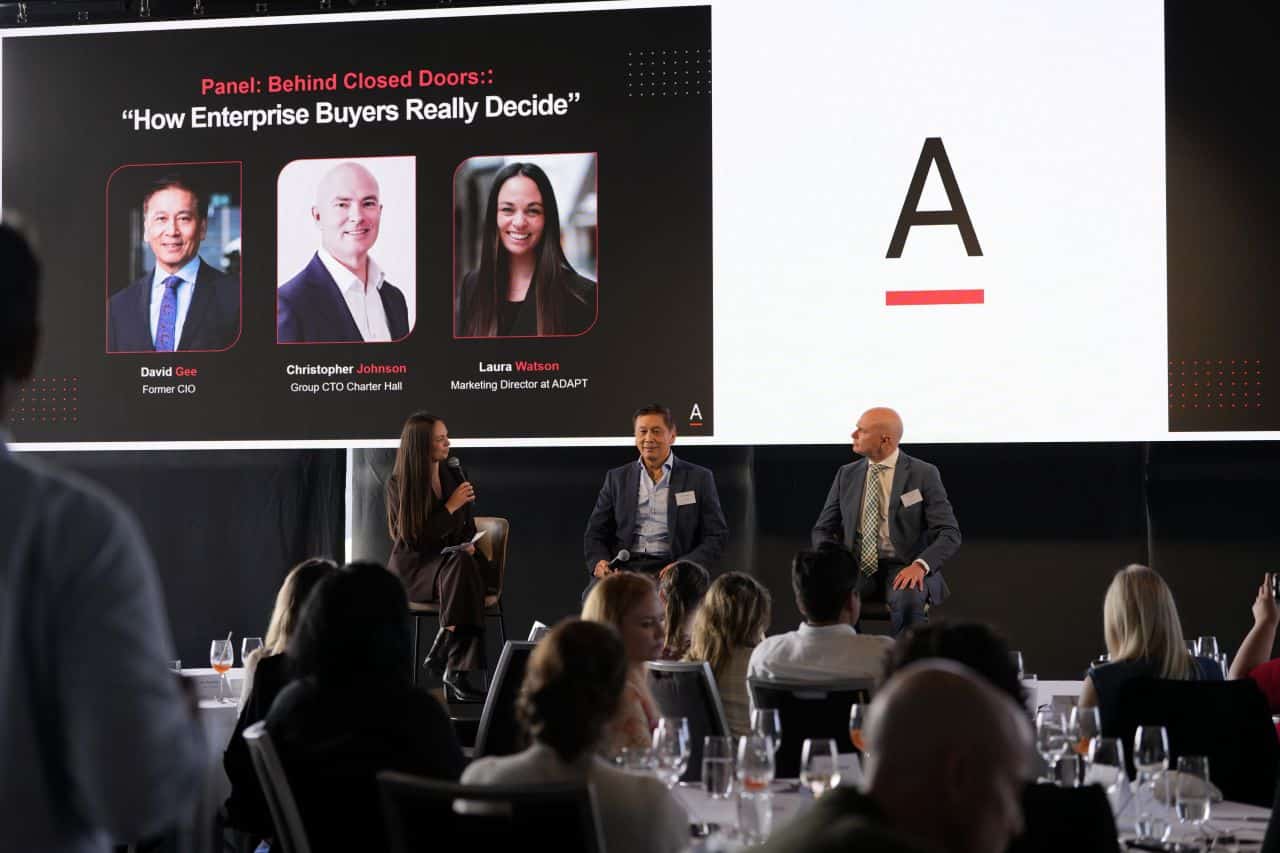
At ADAPT’s 5th Data & AI Edge in Sydney, the strongest signal was not curiosity about what AI could do.
It was scrutiny over what organisations could actually absorb, govern, and defend.
92% say AI success is tied to their career progression.

Vendors are selling into decisions buyers may need to justify to boards, finance, risk teams, and their own executives.
That raises the threshold for what counts as a credible AI story.
Interest is widespread. Internal confidence is far less consistent.
That tension ran through the event.
Gabby Fredkin, Head of Analytics and Insights at ADAPT, described a market where many organisations remain AI adjacent.
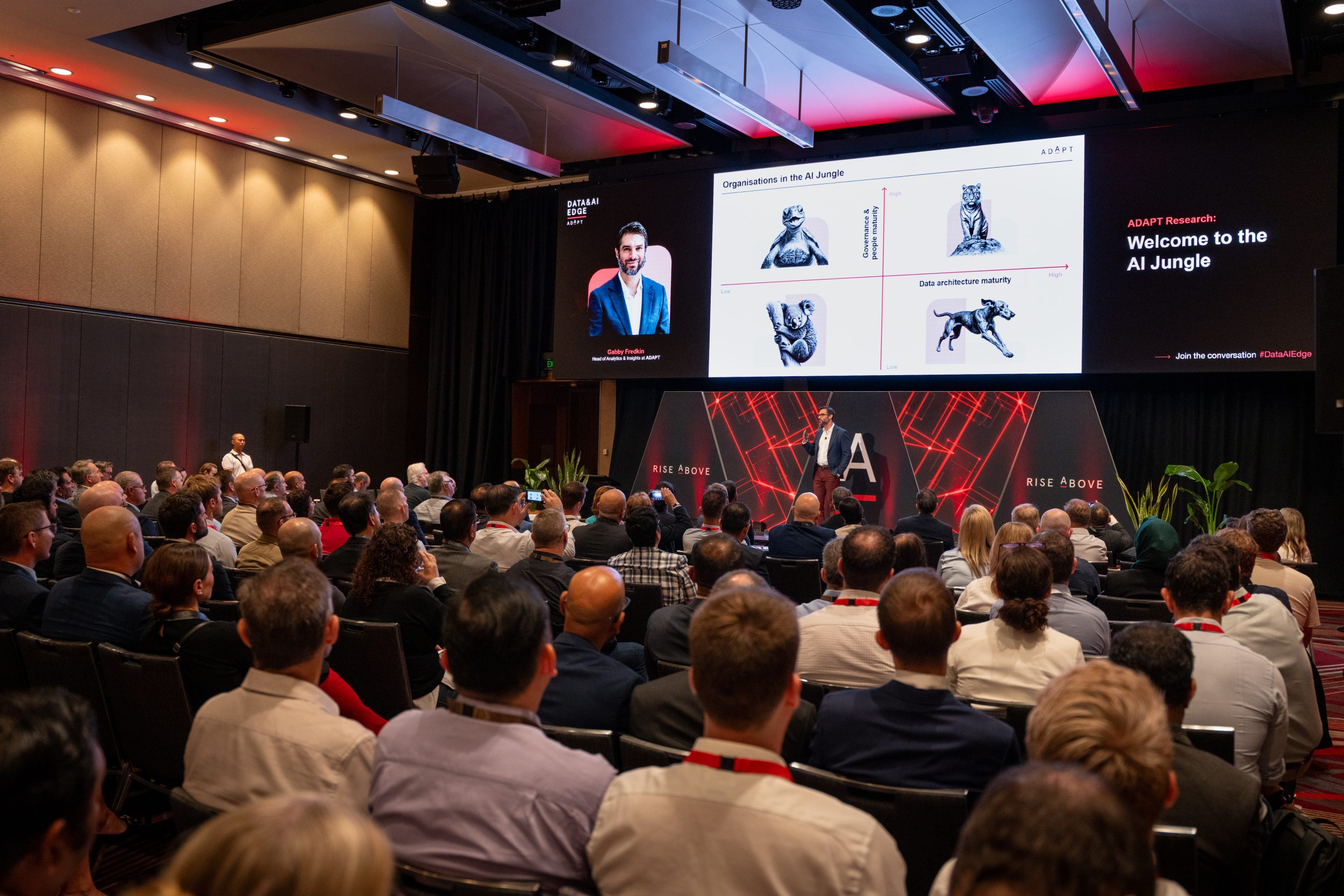
There is experimentation, there are copilots, there are isolated use cases, yet the operating model has barely moved.
The business around it is still catching up.
This matters because it explains why so many vendor conversations start well and stall later.
The buyer may be investing, trialling, and talking publicly about AI, while still lacking the data discipline, governance coverage, and organisational alignment needed to scale it.
Capability, speed, and transformation language still dominate, even though many customers are dealing with weak readiness, unresolved ownership, and incomplete controls.
The stronger commercial posture now is alignment with the buyer’s actual constraints.
Vendors who keep pitching scale into unstable conditions are adding friction to the buying process instead of reducing it.
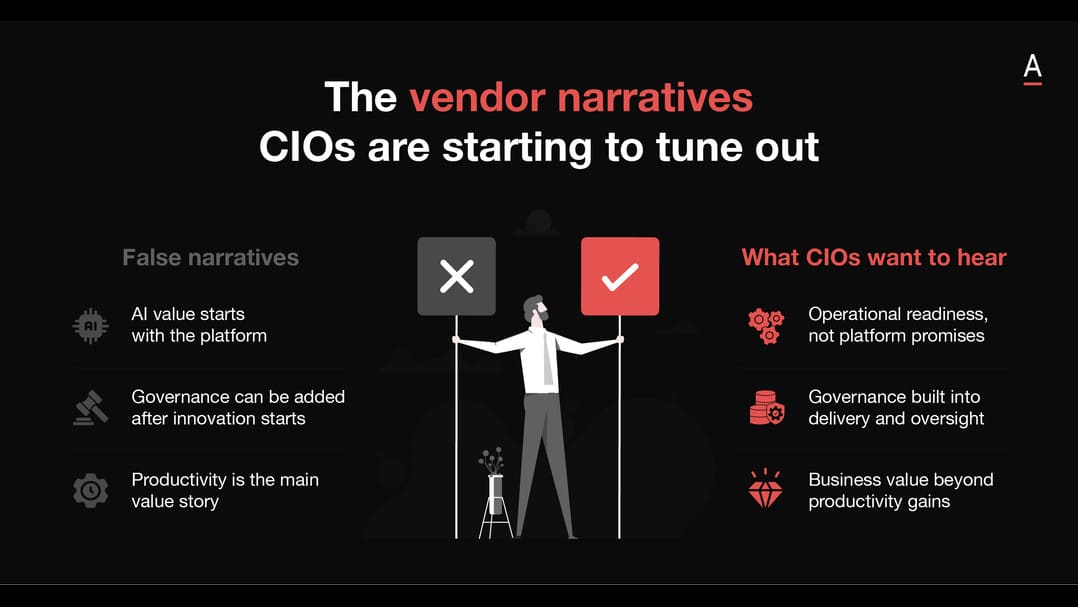
Vendors are selling AI scale into organisations that are still struggling with readiness
Many buyers are still trying to move from fragmented readiness to controlled execution.
That is a very different buying condition from the one implied by most AI sales narratives.
Buyers are working through platform migration, data quality issues, immature governance, and operating models that still reflect an earlier generation of technology.
A scale pitch can sound detached from the work they are actually trying to complete.
Gabby’s research put hard numbers around that gap.
Only 8% say their organisation is optimised for AI data readiness.
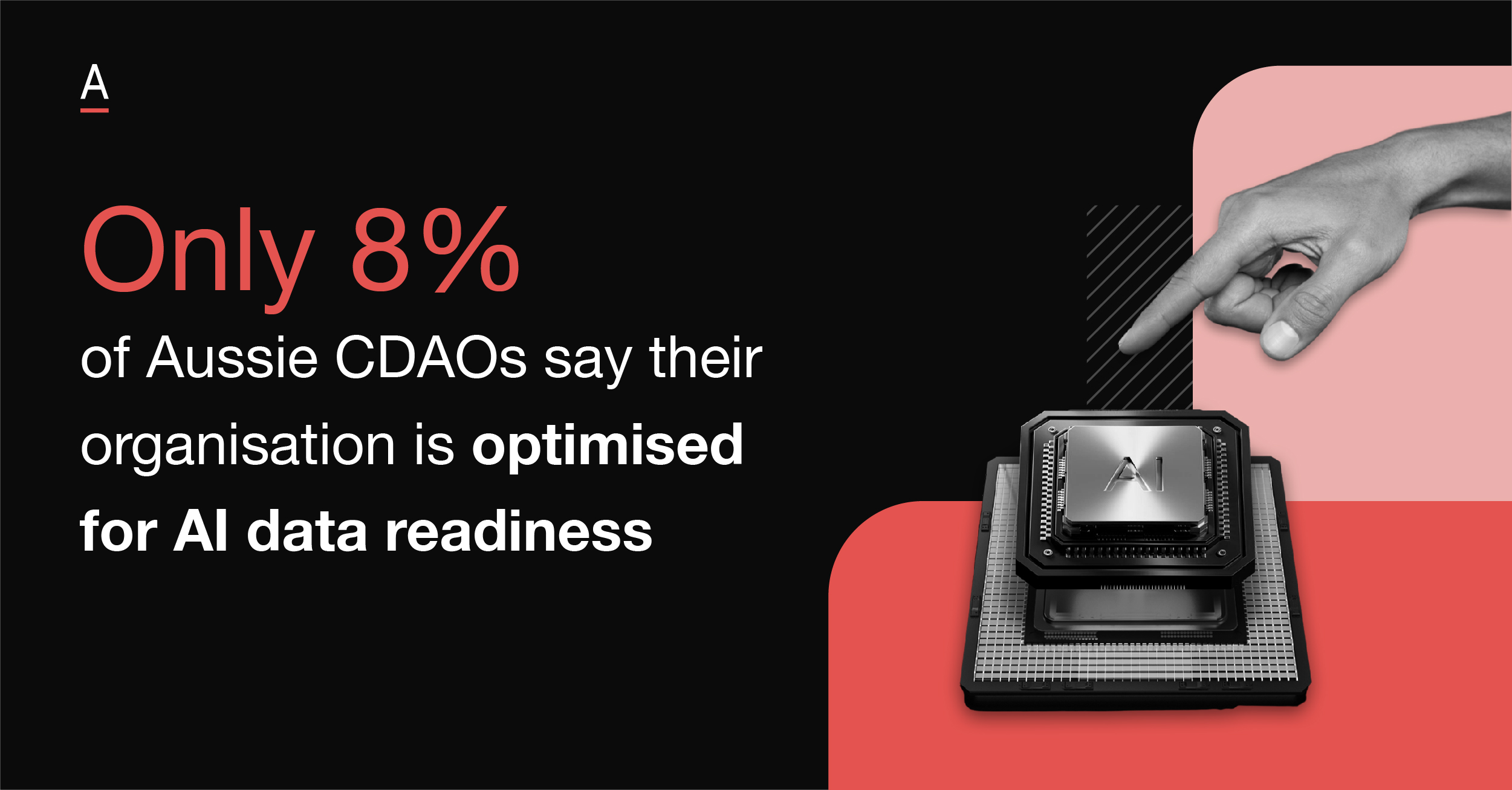
40% of Aussie CIOs say data foundations are the #1 constraint to scaling agentic AI.
Those figures explain why so many promising conversations stall. Buyers are not hesitating because they fail to grasp AI’s potential.
They are hesitating because the conditions needed to scale it across the enterprise are still weak.
That weakness changes the buying task. Many customers do not need another ambitious use case yet.
They need a route from scattered activity to repeatable execution.
Gabby’s maturity patterns made that visible.
Some organisations have built enough architecture maturity to move quickly, yet governance and people capability still lag.
Others are weak on both fronts and remain cautious as a result.
Vendors who confuse technical progress with operating readiness will keep misreading the account.
John Roese, Global Chief Technology Officer and Chief AI Officer at Dell Technologies, showed what a more mature response looks like.
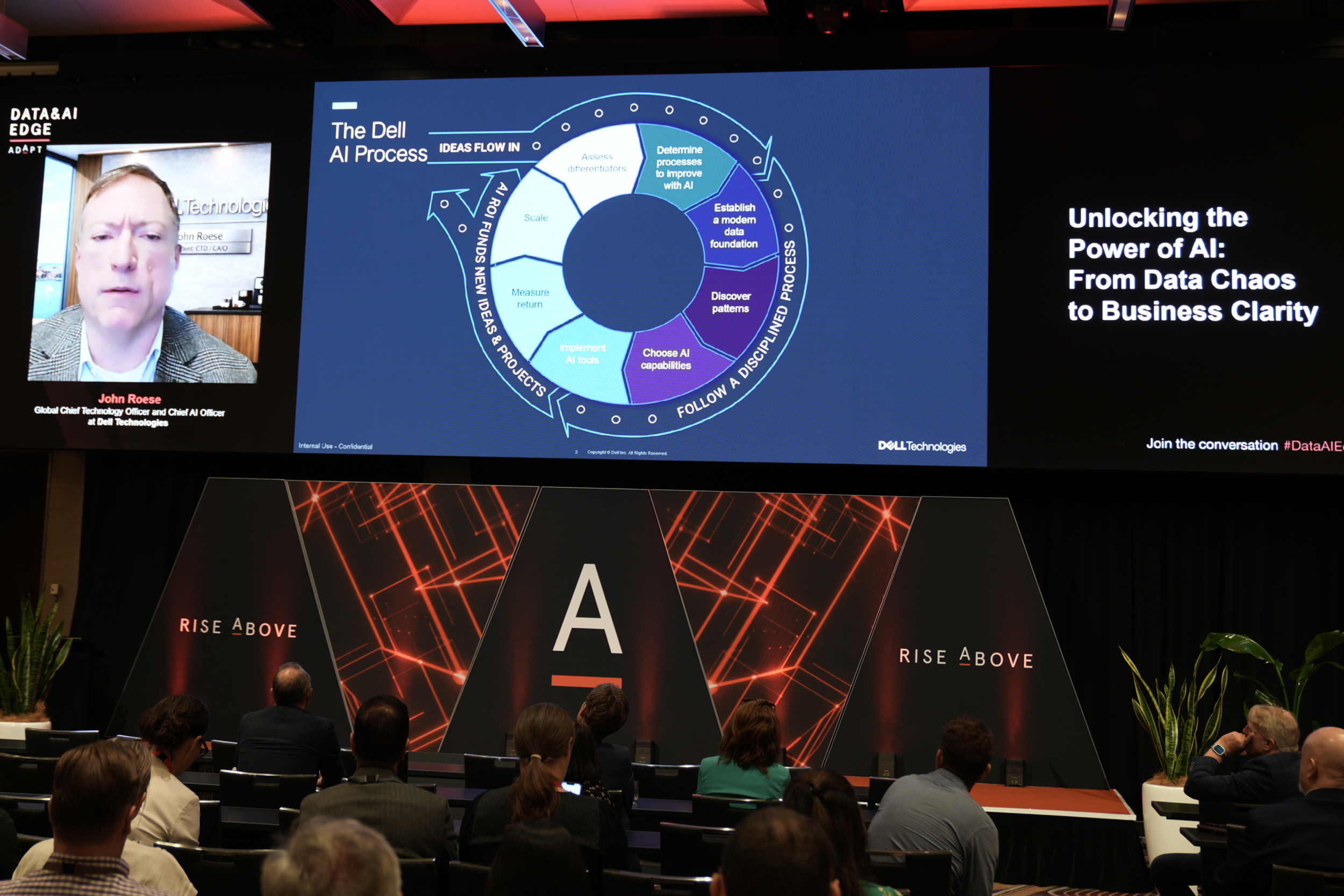
Dell moved away from 900 disconnected AI projects and reset around financial outcomes, core business functions, and process redesign.
His sequence, simplify, standardise, then automate, reflects how serious enterprises are now approaching value.
They are trying to reduce sprawl, impose discipline, and connect AI to outcomes the business already trusts.
Vendors still leading with broad possibility rather than a realistic path to execution will sound out of step with that agenda.
Many buyers need stabilisation before acceleration.
They need help sequencing the work, strengthening foundations, and narrowing the path to value.
Governance gaps are making buyers more cautious, and vendors are still underplaying that reality
Governance is influencing buying confidence far earlier in the cycle than many vendors acknowledge.
Once AI moves into pilots and production, buyers need to know whether they can keep control once the technology is live.
50% say their AI pilots and deployments are not covered by a formal governance framework.
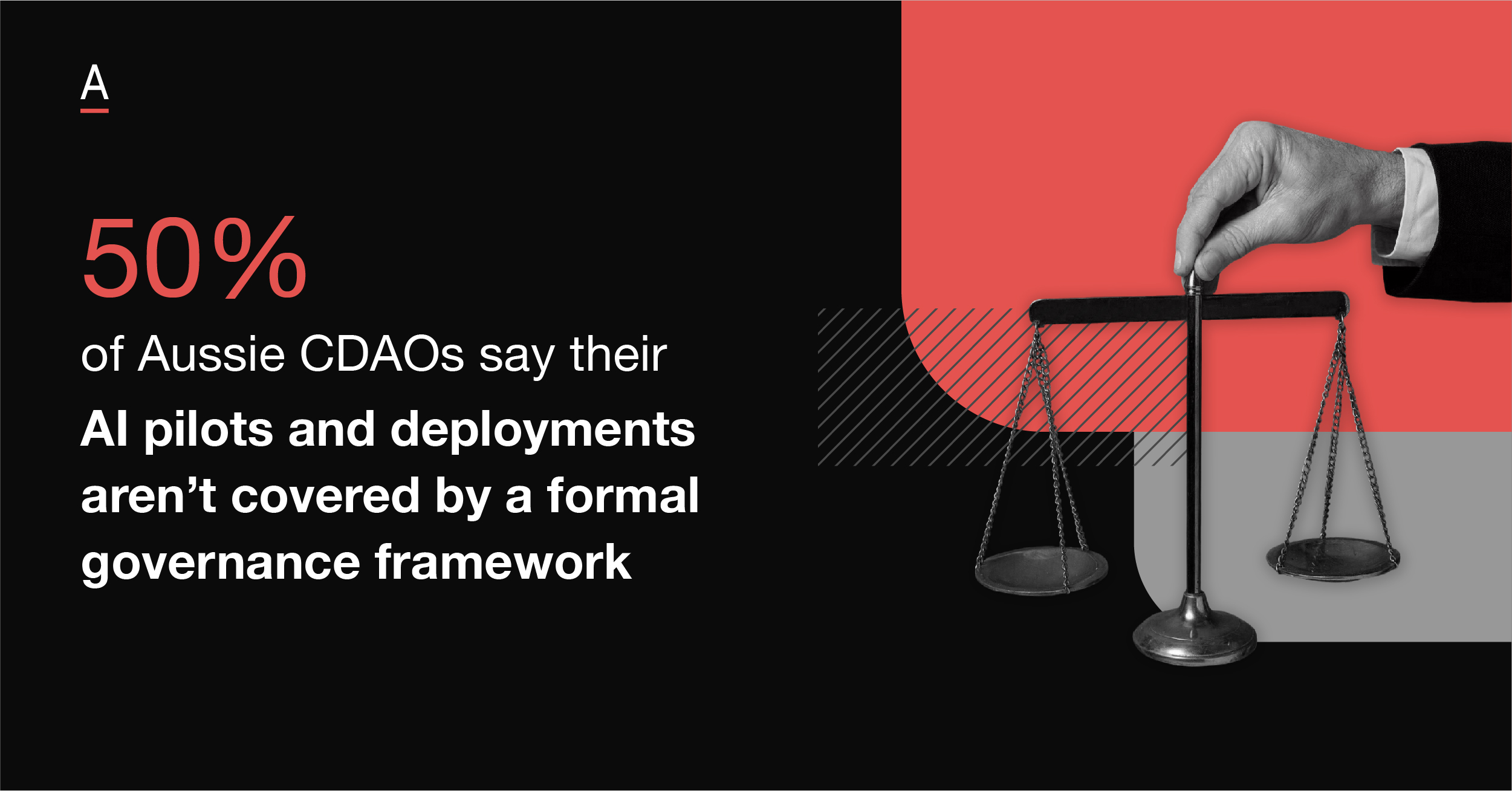
Only 7% of Aussie CIOs say their organisation has enterprise wide AI governance with board involvement.
Those figures show why many AI deals feel harder to progress than the level of interest suggests.
Buyers are moving into deployment while oversight, decision rights, and executive sponsorship are still incomplete.
Jen French, GM, AI Acceleration at Commonwealth Bank of Australia, showed what stronger governance looks like in practice.

At CBA, AI is supported by a group responsible AI framework, clear policies, safe usage guidelines, practical toolkits, and early collaboration between legal, risk, compliance, technical teams, and business leaders.
Buyers want to understand how a solution supports oversight in daily operations, where human involvement sits, and how accountability is managed across the people who carry the outcome.
Simon Kriss, CEO at Sovereign AI Australia, added a useful distinction between ethical principles and the governance model itself. One defines the rules the organisation is willing to work by.

The other defines who decides, how they decide, and how governance evolves with maturity.
That distinction matters because many vendor governance messages are still too generic.
Buyers need to know whether the product can operate inside the way their organisation actually manages risk and control.
The panel with Peter Hind, Mike Lau, CDAO at ADHA, Samrat Seal, Head of Transformation and Governance, AI and Cyber at Kmart Group, and Satya Tammareddy, Head of GTM, ANZ at OpenAI, reinforced the same pressure from different angles.
Mike tied value to people, process, technology, and human judgement.
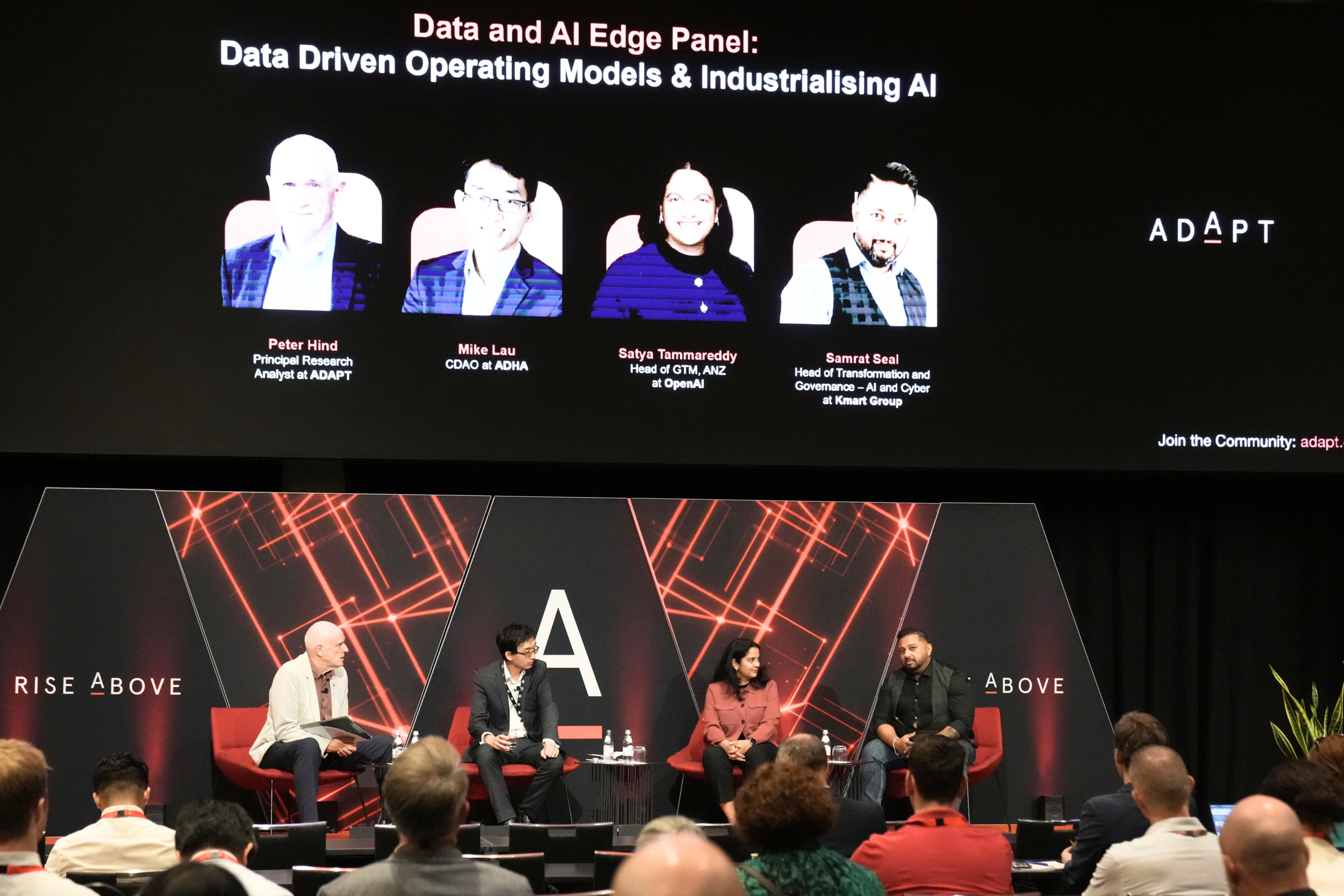
Samrat focused on lineage, stewardship, and repeatable control.
Satya pointed to capability gaps that make governance harder to operationalise.
Together they described a buyer environment where governance depends on operational context, literacy, and control design, not generic assurances.
Vendors who treat governance as a back page credential are forcing the buyer to do too much internal translation.
Vendors who show how the customer stays in control reduce friction at the stage where many deals now wobble.
AI vendors are still talking about tools, while buyers are trying to redesign work
Many vendors are still speaking at the level of features and tasks while buyers are increasingly thinking at the level of workflows, ownership, and operating change.
That gap matters because feature language rarely survives once the discussion moves beyond the technical evaluator.
David Scott, Chief Data and Analytics Officer at University of Sydney, was direct on this.

Ownership of AI-enabled work should sit with the business process owner, not the data or technology team.
That should reset how vendors think about the buying group.
The centre of gravity is moving toward operational accountability.
Buyers want to know how AI changes the process, where decision making shifts, and who carries the result.
Danny Liu, Professor in Educational Technologies at University of Sydney, showed how adoption strengthens when AI is embedded into the way people actually work.
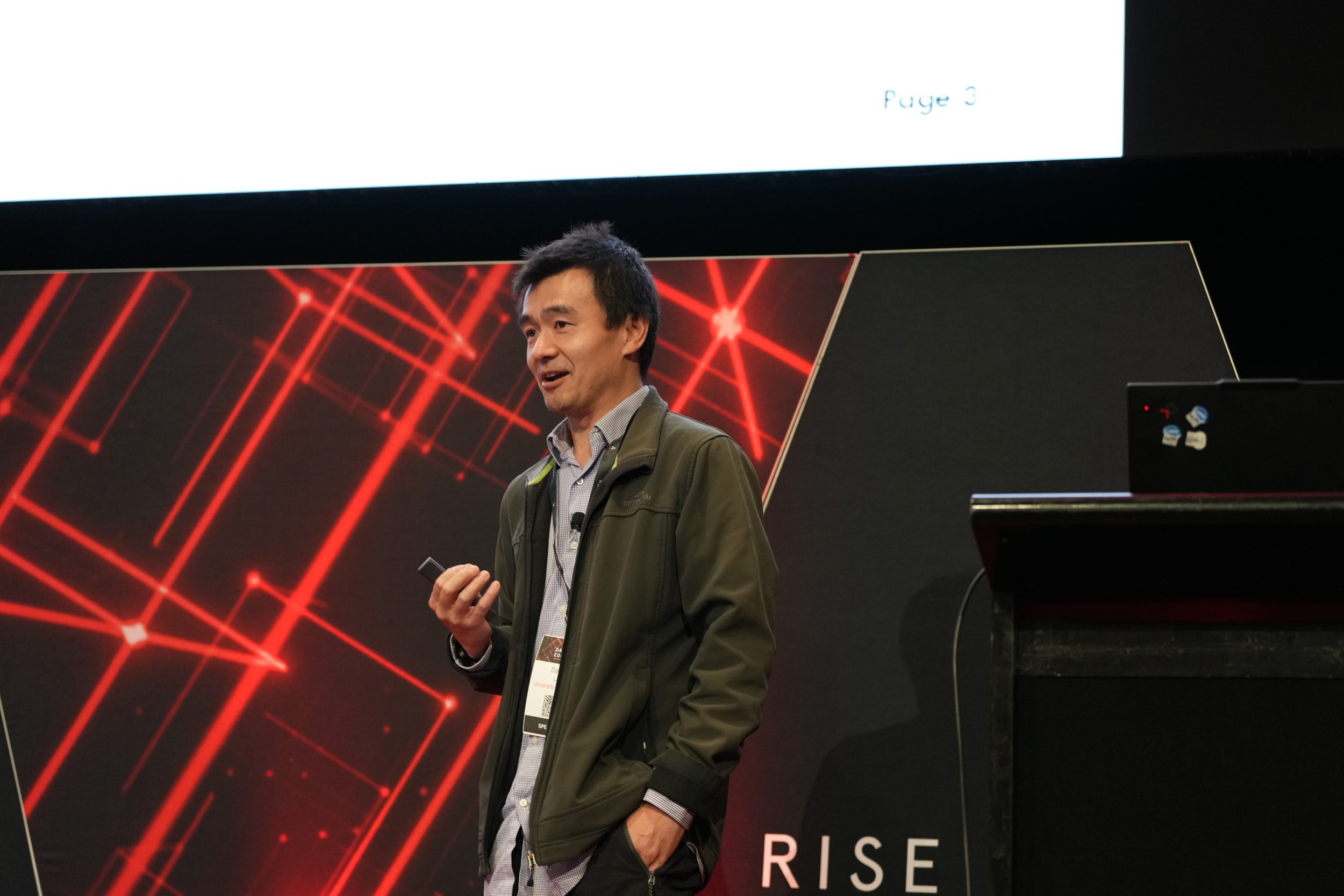
His examples centred on safe experimentation, user control, and redesigned support for students and staff.
Buyers are looking for a way to reshape work that users can sustain, not another tool that sits outside the workflow.
Katarina Dulanovic, General Manager Data Office at Allianz Australia and Global Group CDO Advisor for Data and AI at Allianz, pushed the same issue into the value chain.
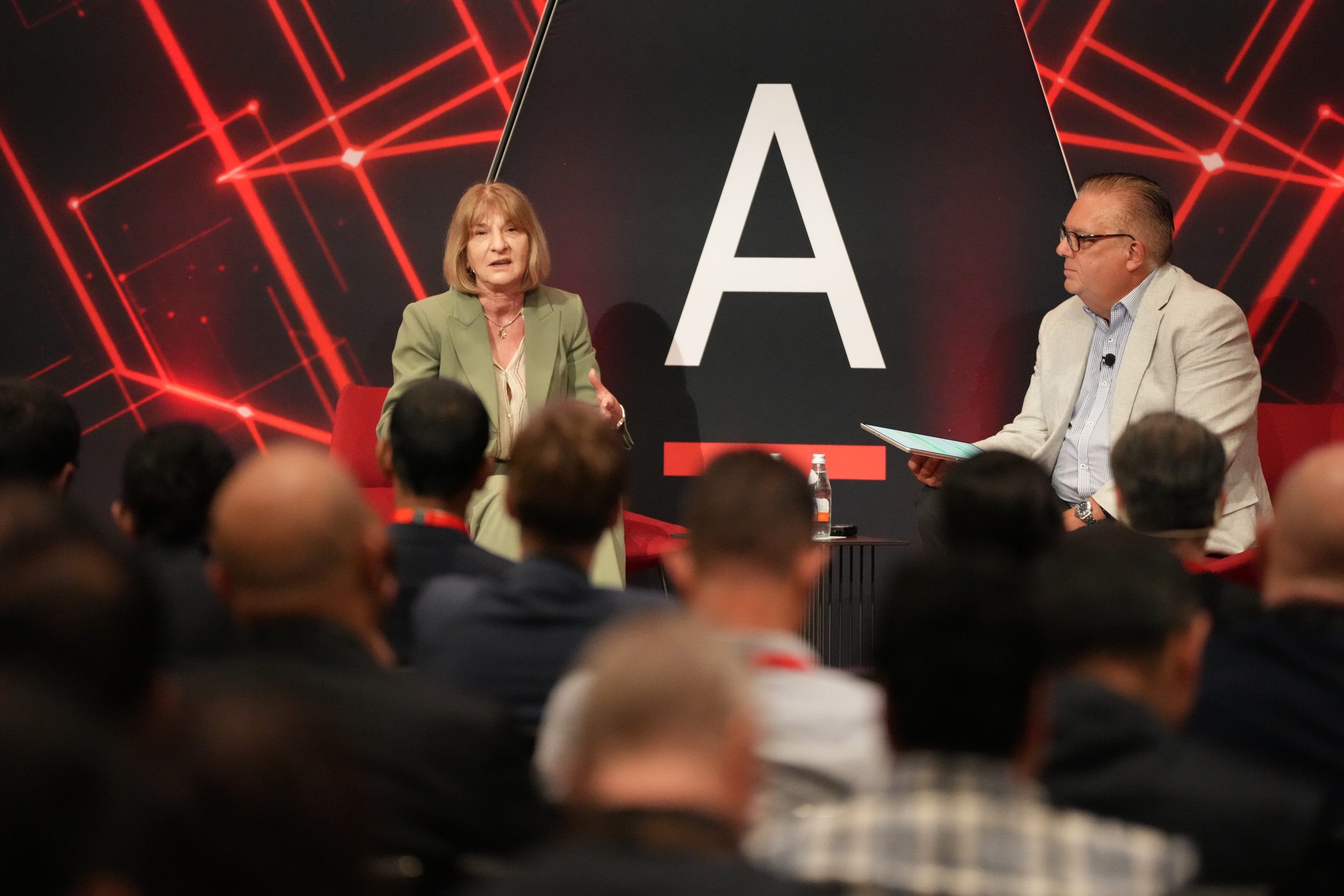
Her focus was on changing how the business operates and redesigning the roles most directly affected by AI.
If the customer is rethinking role design, process flow, and operating rhythm, a tool level pitch will feel thin.
The ROI discussion also needs more precision.
13% of CIOs say articulating ROI is their biggest challenge in securing AI budgets.
The harder task is linking AI investment to outcomes the business already trusts and redesigning work so those outcomes can be achieved. Buyers are looking for operational clarity.
They want to understand turnaround time, customer impact, risk reduction, service quality, cost discipline, and how responsibility sits after deployment.
Simon’s distinction between exploitation and exploration sharpens that further.
Some AI use cases improve speed, cost, or efficiency inside known processes. Others test new products, services, or operating models. Those cases need different commercial logic.
Vendors who collapse both into the same ROI story create confusion.
The stronger vendor story shows how work changes, who owns it, how it is governed, and how value will be measured in terms the customer already uses.
That is far more useful than another automation claim dressed up as transformation.
What vendors need to do differently now:
The vendors most likely to win in this market will be the ones that reduce buyer uncertainty and make progress easier to defend internally.
- Position for the buyer’s actual stage of readiness
Don’t lead with the most advanced use case if the customer is still dealing with weak data foundations, fragmented governance, or unresolved ownership. - Make governance part of the pitch, early
Show how the solution can be governed, monitored, explained, and controlled inside daily operations. - Speak to the real buying group
The message has to work for data leaders, risk, operations, business owners, and executive sponsors, not only technical evaluators. - Show how work changes after deployment
Buyers need to see workflow implications, role shifts, ownership boundaries, and how the operating model absorbs the change. - Prove value in business terms the buyer already trusts
Anchor to turnaround time, customer outcomes, risk reduction, cost discipline, service quality, or productivity. - Reduce internal friction
The strongest vendor story gives the buyer something they can defend under scrutiny and govern with confidence.
Vendors are not losing AI momentum because buyers lack interest.
They are losing it because their story creates too much uncertainty once the deal enters real enterprise conditions.
The vendors that win from here will be the ones that understand the buyer’s actual stage, lower internal risk, and make progress easier to defend.
 Justina Uy
Content Marketing Manager
Justina Uy
Content Marketing Manager
Justina Uy is a data-driven content marketer that thrives on democratising elite know-how to empower Australia’s underdogs.
Skilled at translating complex ideas into a compelling story across formats and channels, she shifts seamlessly between writing long-form articles, creating viral social media posts, and producing thumb-stopping videos.
Since 2015, Justina executes her vision through a sophisticated understanding of the rapidly evolving digital and business landscape to serve entertaining and educational insights to the executive community.
Less Join the ADAPT
 Insider Community
Get the latest A/NZ market research and insights on the core trends impacting leaders.