















Only 8% of Aussie CDAOs say their organisation is optimised for AI data readiness
At ADAPT's 5th Data & AI Edge, leaders confronted the gap between AI ambition and the hard realities of data readiness, governance, sovereignty, and execution.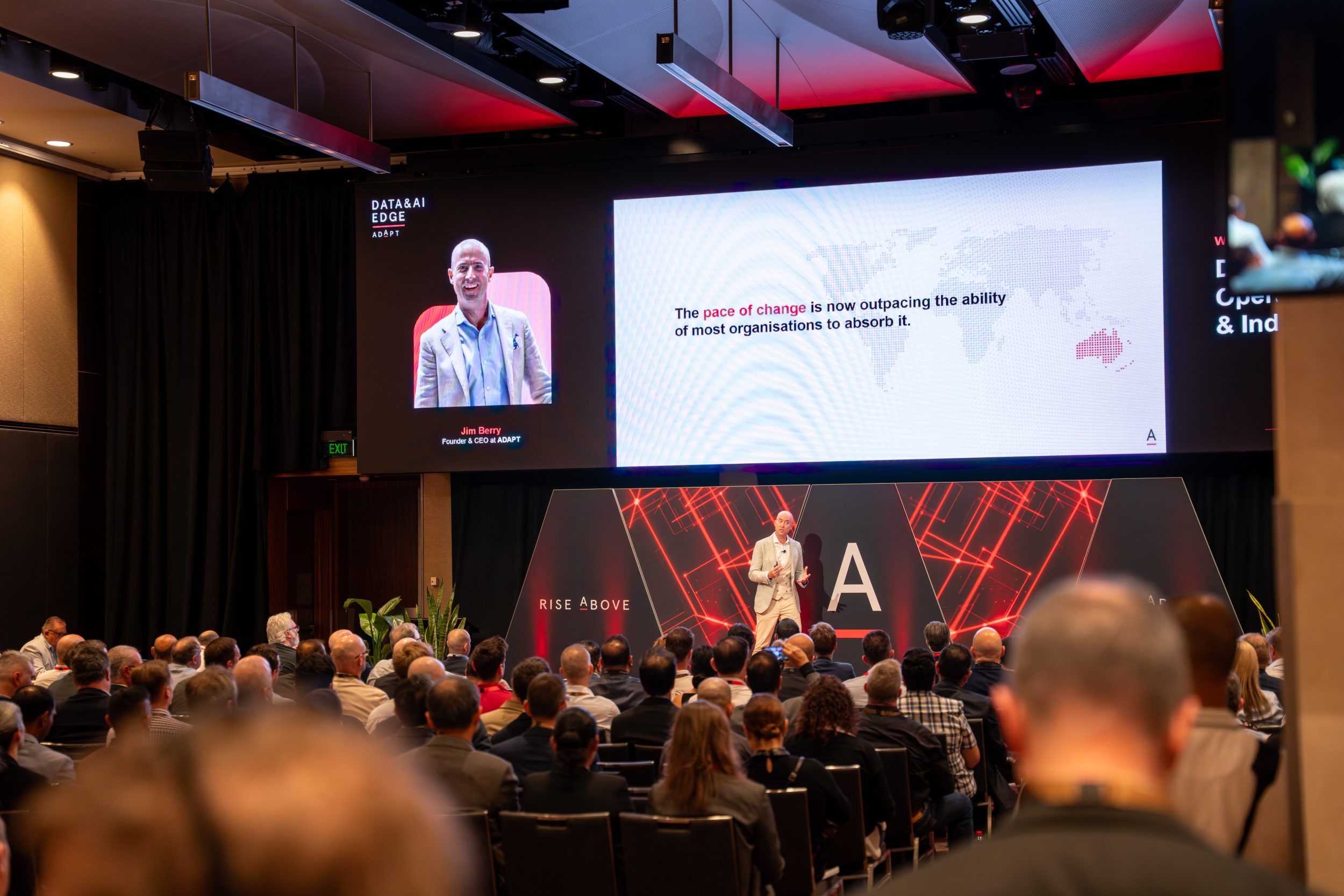


 Published Apr 2, 2026 in
Articles
Data & AI Strategy
Contributors
Justina Uy
Published Apr 2, 2026 in
Articles
Data & AI Strategy
Contributors
Justina Uy
Australian organisations are under pressure to turn AI from a promising capability into a reliable operating asset.
That pressure is rising fast.
Executive accountability is increasing, boards want proof of value, and the market is moving quickly, yet the foundations for scale remain uneven.
Data is still fragmented, governance is often incomplete, trust is fragile, and many operating models are too slow and siloed to support real industrialisation.
AI adoption is moving ahead anyway, widening the gap between visible activity and repeatable enterprise value.
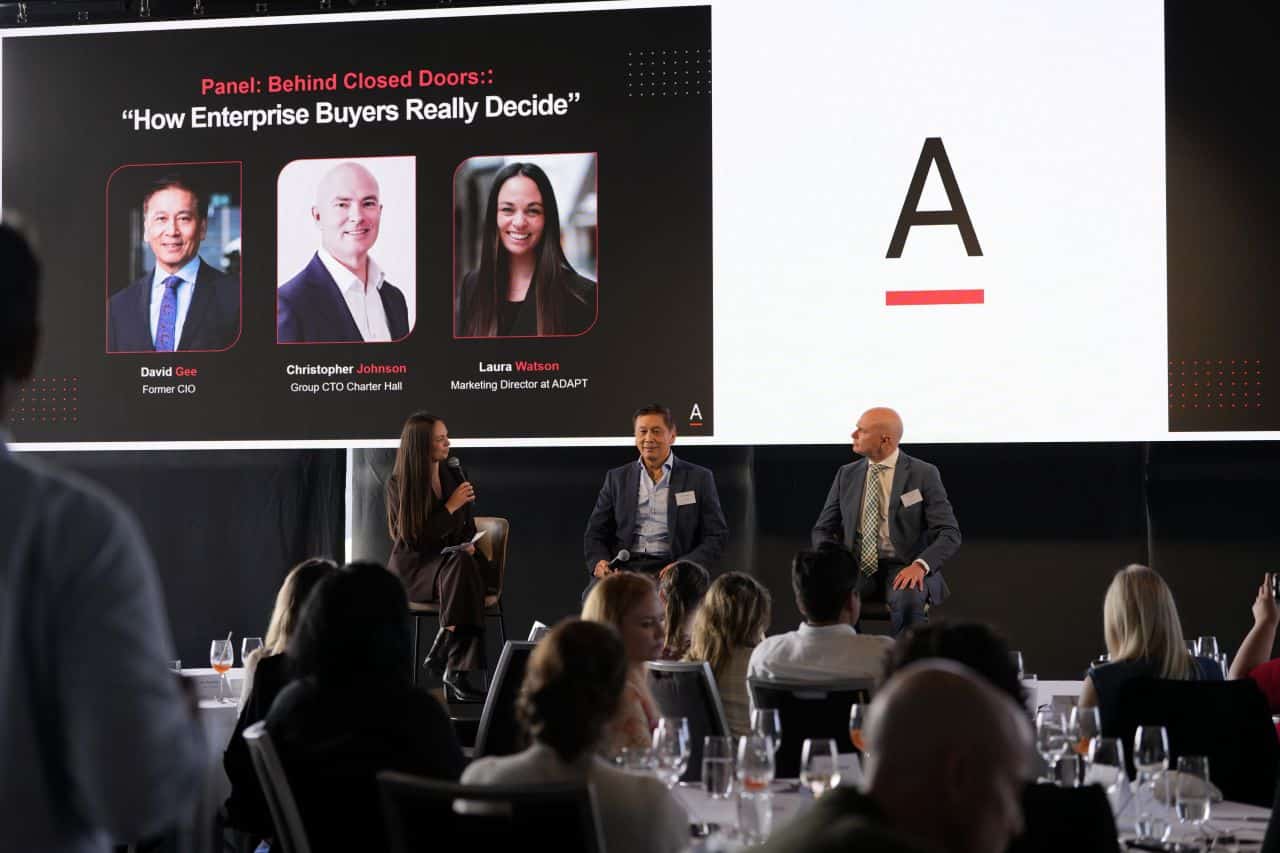
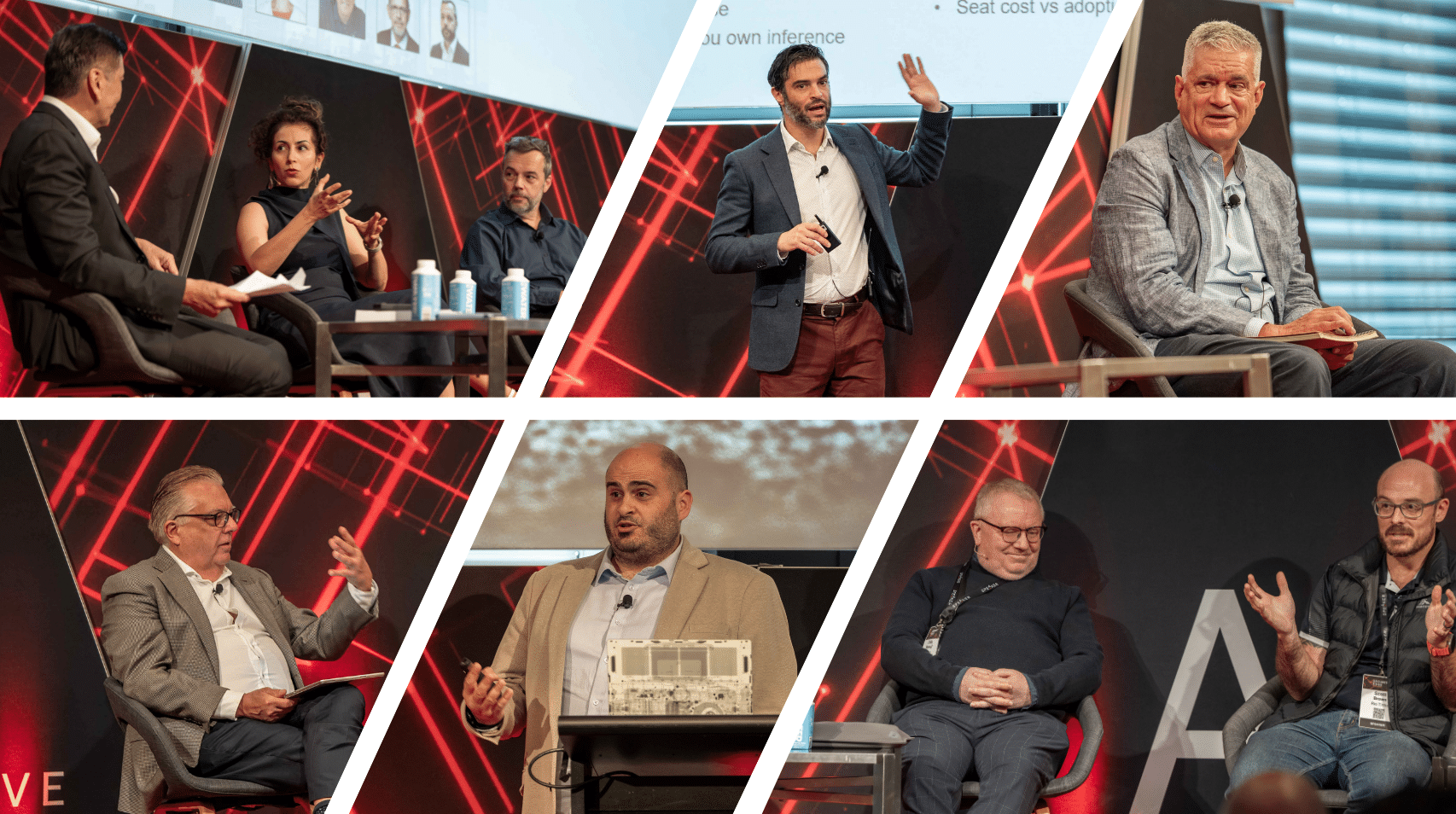
At ADAPT’s 5th Data & AI Edge, held on 1 April 2026 at Hilton Sydney, more than 200 A/NZ leaders across data, AI, technology, and transformation came together, representing 35% of Australia’s $2.64T GDP and 11% of the national workforce.
The event was a live benchmark of how leading organisations are responding to the push to industrialise AI and redesign operating models around trusted data.
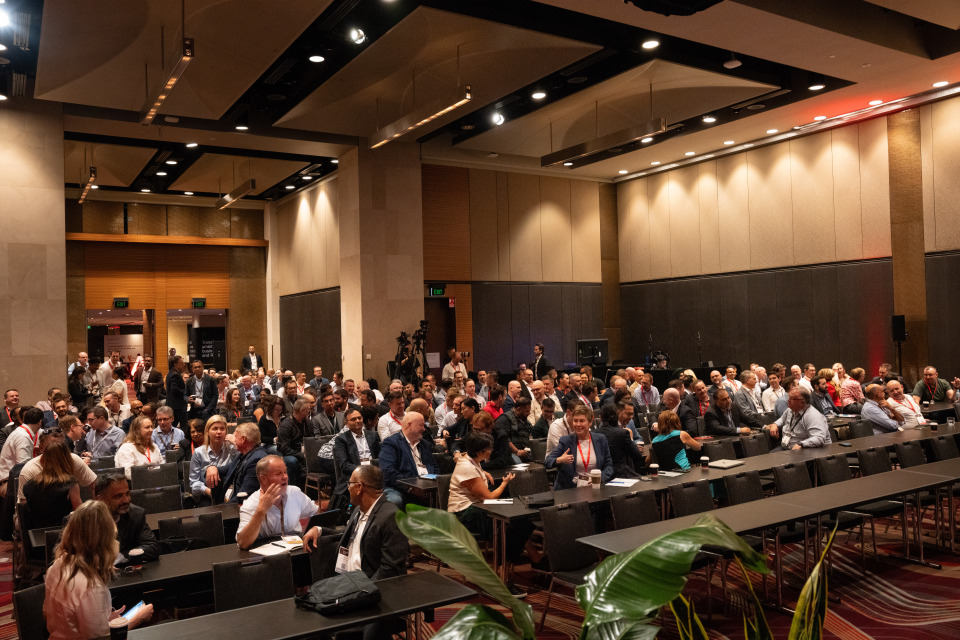
Opening the day, ADAPT Founder and CEO Jim Berry argued that many organisations are still stuck in the early stages of AI maturity, experimenting without realising scaled and measurable value.
He framed the central challenge as industrialisation, building scalable platforms, reusable models, modern data architectures, and stronger governance so pilots can become enterprise wide impact.
He also positioned AI as a whole of business issue spanning people, process, risk, HR, GRC, cyber, and leadership accountability.
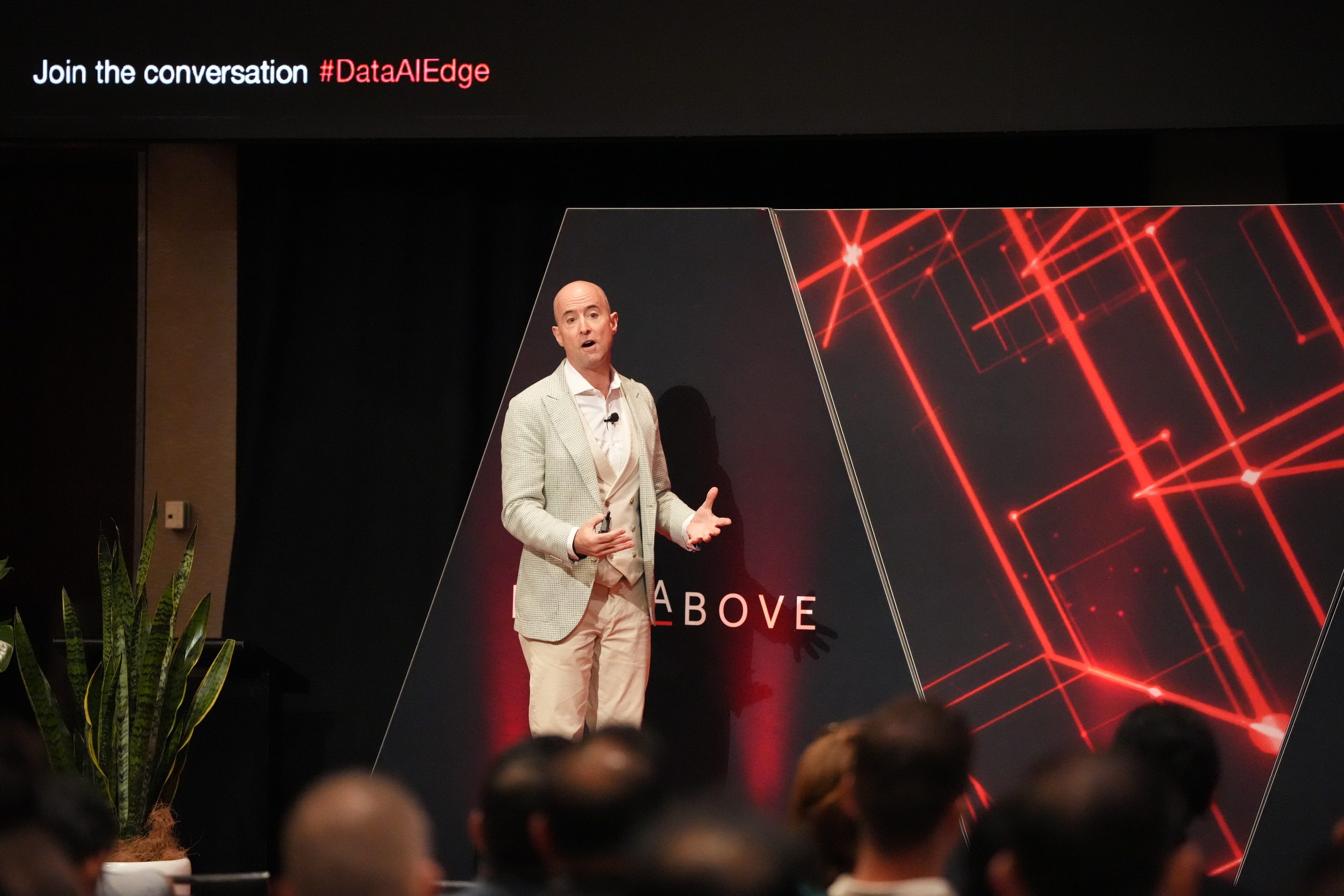
From the discussions and presentations of senior data, AI, and technology leaders from organisations including Allianz Australia, Domain Group, Sovereign AI Australia, Kmart Group, OpenAI, Dell Technologies, and more, several priorities emerged that define how Australia’s leading organisations are building the next phase of data driven transformation and AI industrialisation.
Redesign operating models before scaling AI
AI is already a leadership accountability issue.
ADAPT Head of Analytics & Insights Gabby Fredkin showed that 92% of Aussie CDAOs say AI success is tied to their career progression.
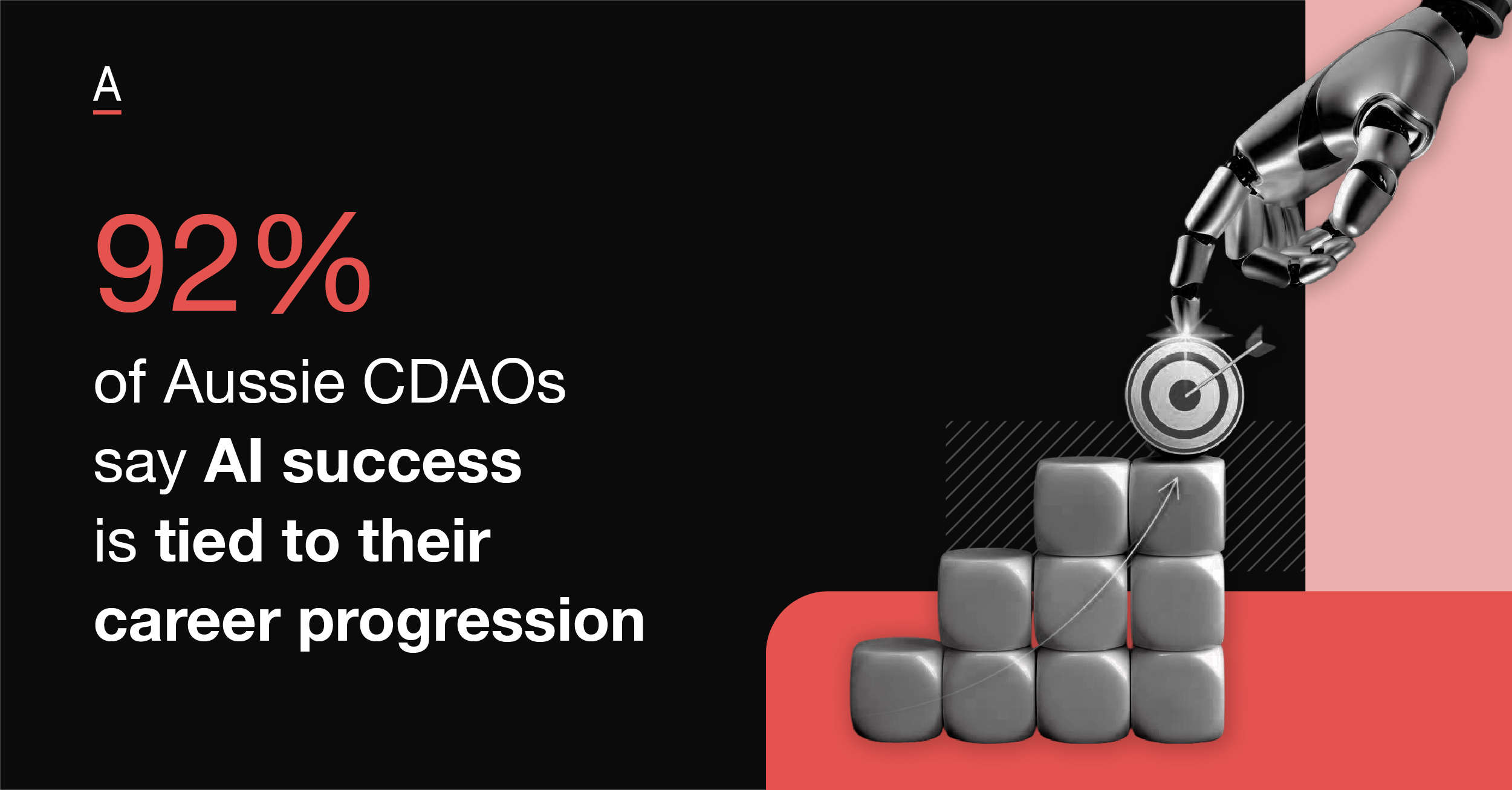
The pressure has moved to the executive layer faster than most organisations have rebuilt the systems needed to support it.
Most organisations are still treating AI scale as a tooling problem when it is really an operating model problem.
The bottleneck is not access to models.
It is whether the business is willing to redesign decision making, process ownership, and execution discipline around them.
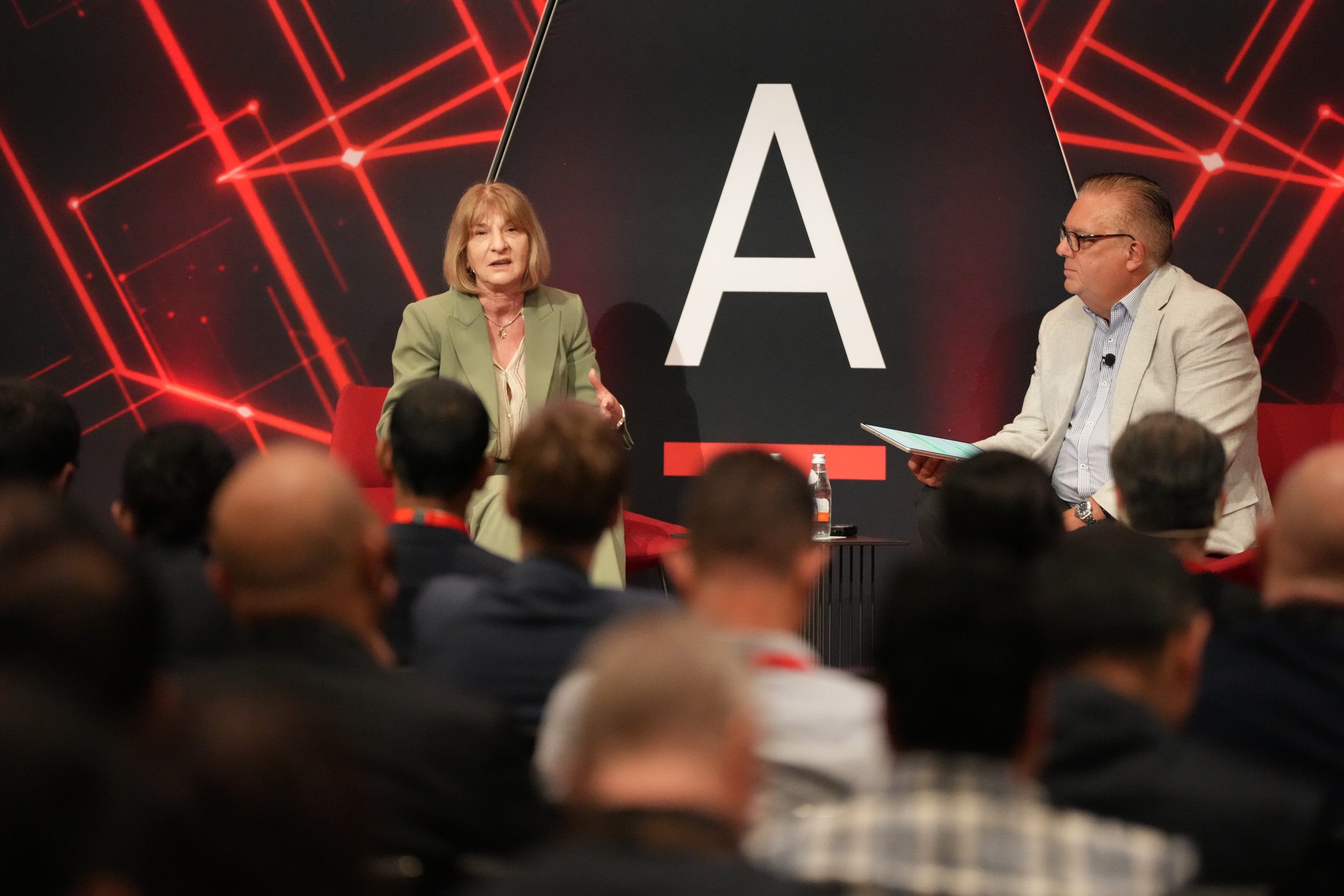
Allianz Australia General Manager Data Office and Global Group CDO Advisor for Data & AI at Allianz Katarina Dulanovic made that point most directly.
Her argument was that businesses are still wasting time on platform debates while avoiding the harder work of redesigning roles, workflows, and value chains. AI stays trapped at the edge when the operating model underneath it stays intact.
Meanwhile, Dell Technologies Global Chief Technology Officer and Chief AI Officer John Roese showed what the opposite looks like.
Dell had 900 AI ideas in motion and little real return until it cut through the noise, tied AI to financial outcomes, and reworked processes before automating them.
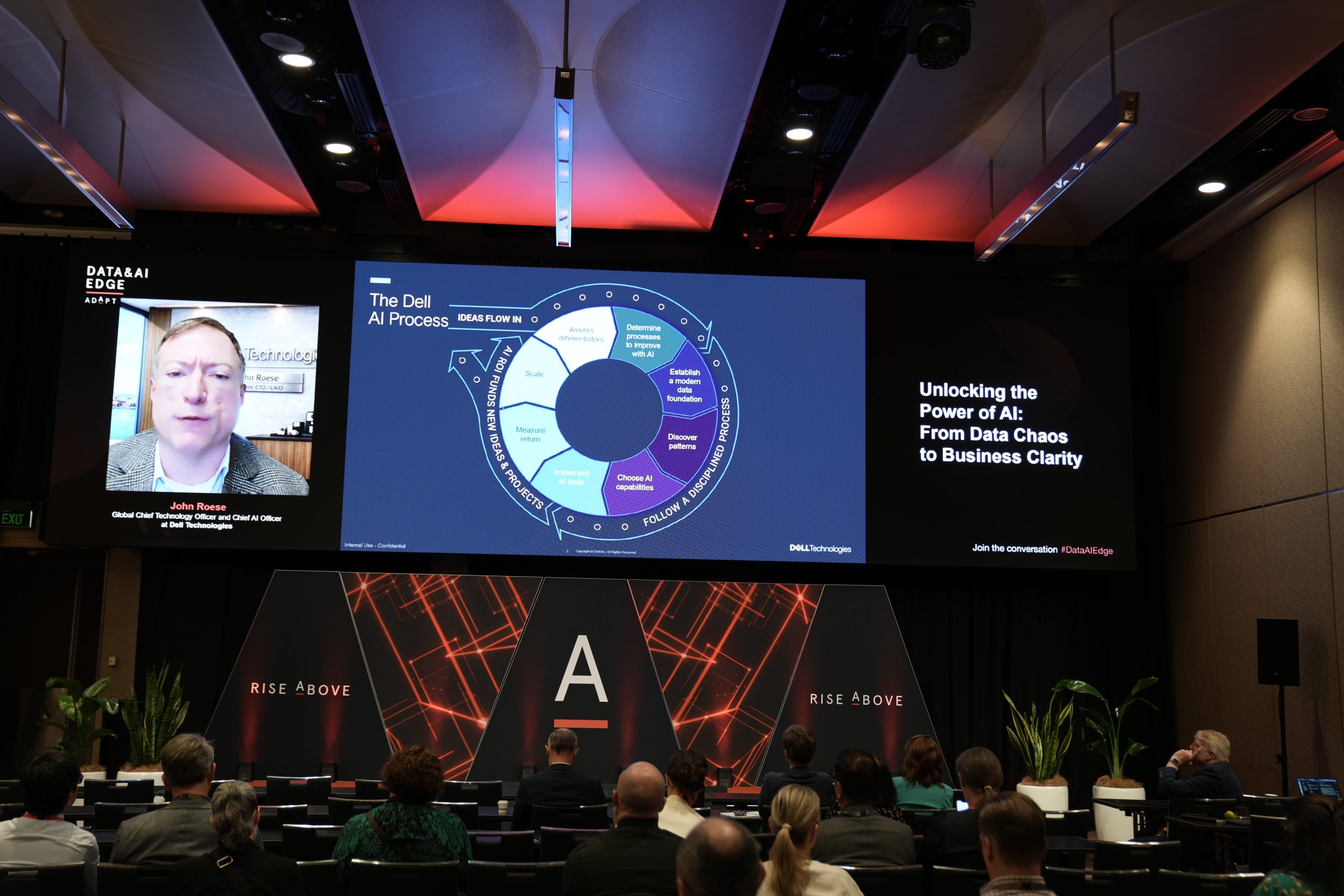
That is a very different discipline from simply funding more pilots.
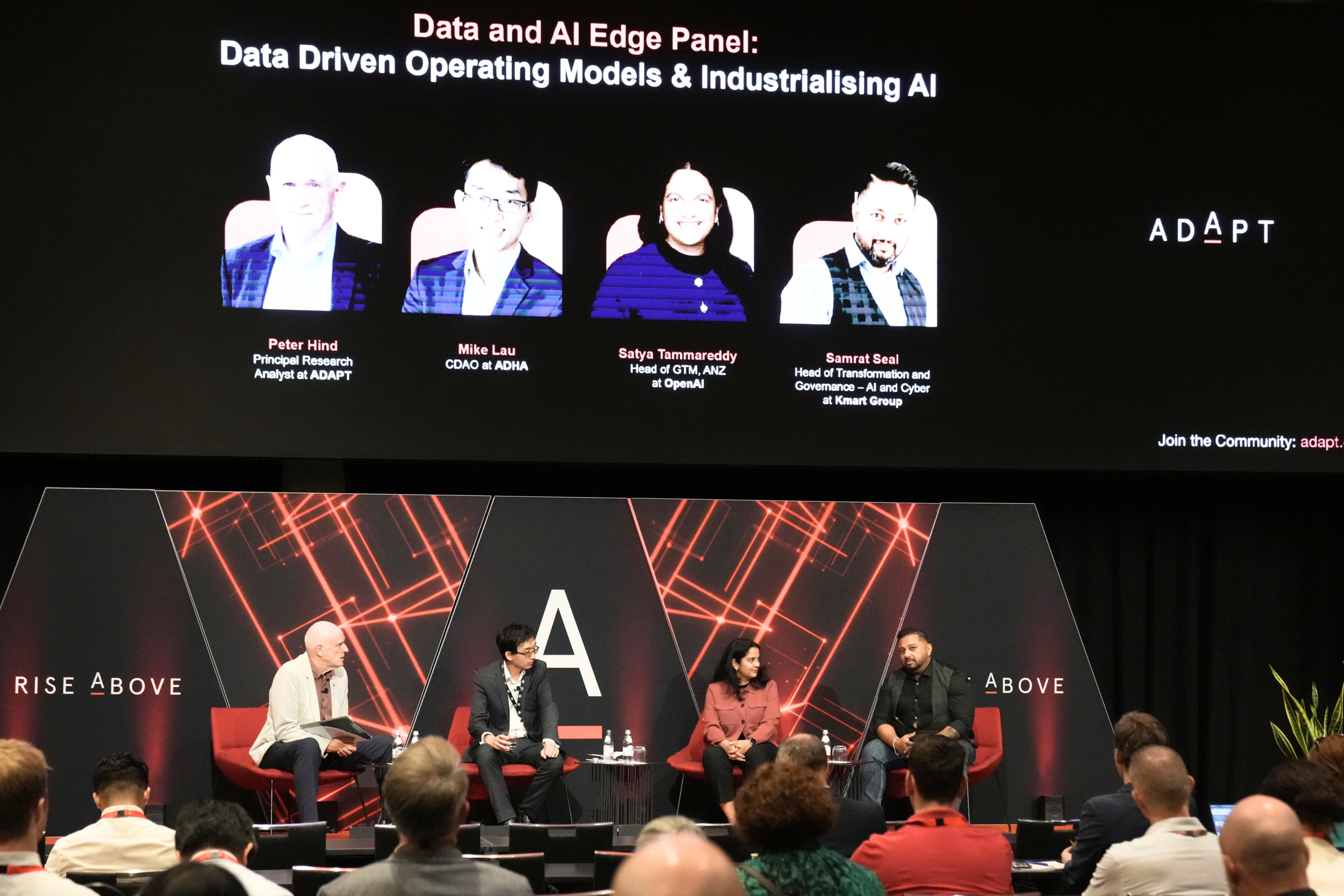
ADHA CDAO Mike Lau and Kmart Group Head of Transformation and Governance, AI and Cyber Samrat Seal added the execution reality.
Mike’s point was that value comes from improving the loop between people, process, and technology, not from treating AI as a standalone capability.
Samrat pushed that further, arguing that fragmented local wins break down once the business expects portability, reuse, and enterprise scale.
In an interview with ADAPT, Commonwealth Bank of Australia GM, AI Acceleration Jen French described a leader-led model where AI is pushed into the business agenda and modelled by senior leaders, rather than delegated to technical teams.
Similarly in a separate interview, University of Sydney Chief Data and Analytics Officer David Scott argued that ownership has to sit with business process owners, because they are the only ones close enough to judge whether AI improves the workflow or simply adds more activity around it.
The common failure is now easy to spot.
Many organisations are trying to fit a cross functional capability into structures built for siloed accountability.
That mismatch is why AI often looks more advanced in demos than it does in the actual operating model.
Strengthen data foundations before pushing for scale
The market is still trying to industrialise AI on top of data environments that are not ready for it.
Models have improved faster than the estates beneath them, and the cost of that gap is now showing up in stalled use cases, weak trust, and rising delivery friction.
Gabby showed that only 8% of Aussie CDAOs say their organisation is optimised for AI data readiness.
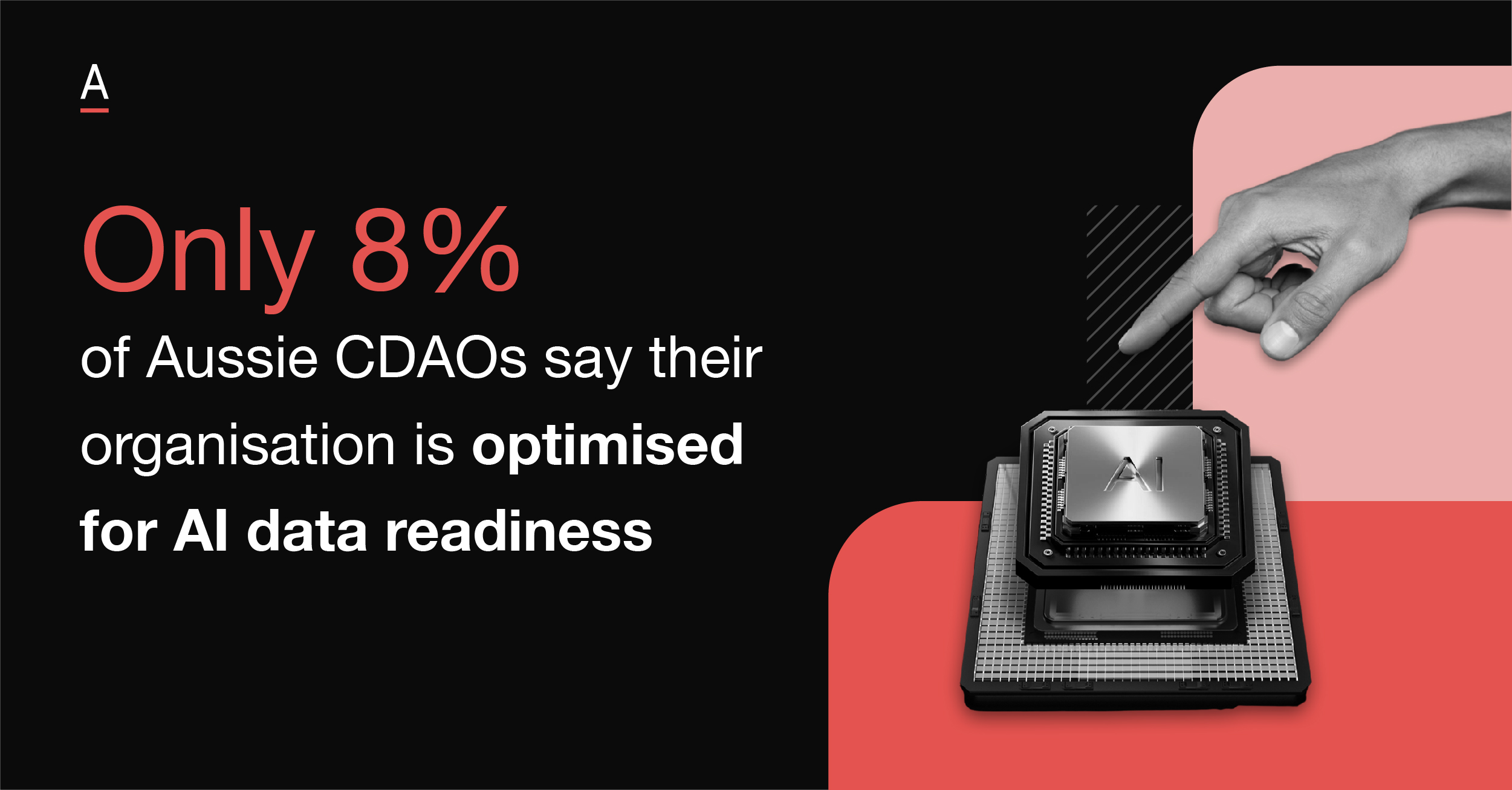
He also showed that only 20% describe their data and AI architecture as highly capable or fully ready, while 40% of CIOs still identify data foundations as the top barrier to scaling AI.
Domain Group Chief Data Officer Pooyan Asgari described a maturity ladder from available data, to usable governed data, to real intelligence.
His view was that most organisations are still stuck between the first two stages, which makes a lot of AI ambition premature.
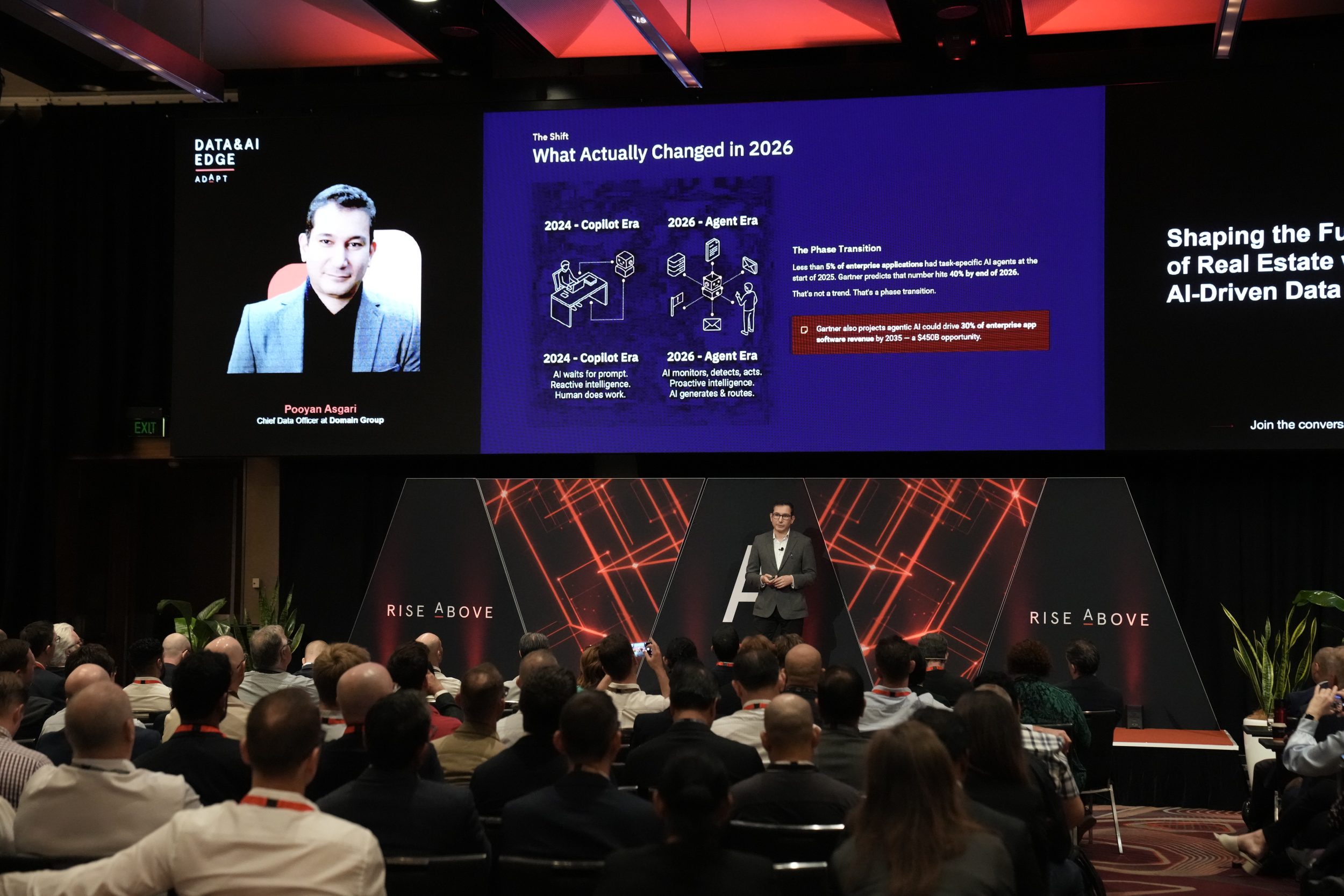
His Domain example showed why.
Processing 5 million aerial images and generating new insight across 2.4 million properties only becomes durable value if the business can explain how those conclusions were reached and defend the lineage behind them.
That is where many organisations still fall short.
John Roese pushed the same issue from an infrastructure perspective.
AI now needs a dedicated knowledge layer between systems of record and AI applications because legacy environments were built for transactions, not for feeding modern AI systems with the structure, speed, and context they require.
David Scott brought the issue back to organisational reality.
Progress still depends on lifting the capability of data owners and stewards so governance becomes operational rather than aspirational.
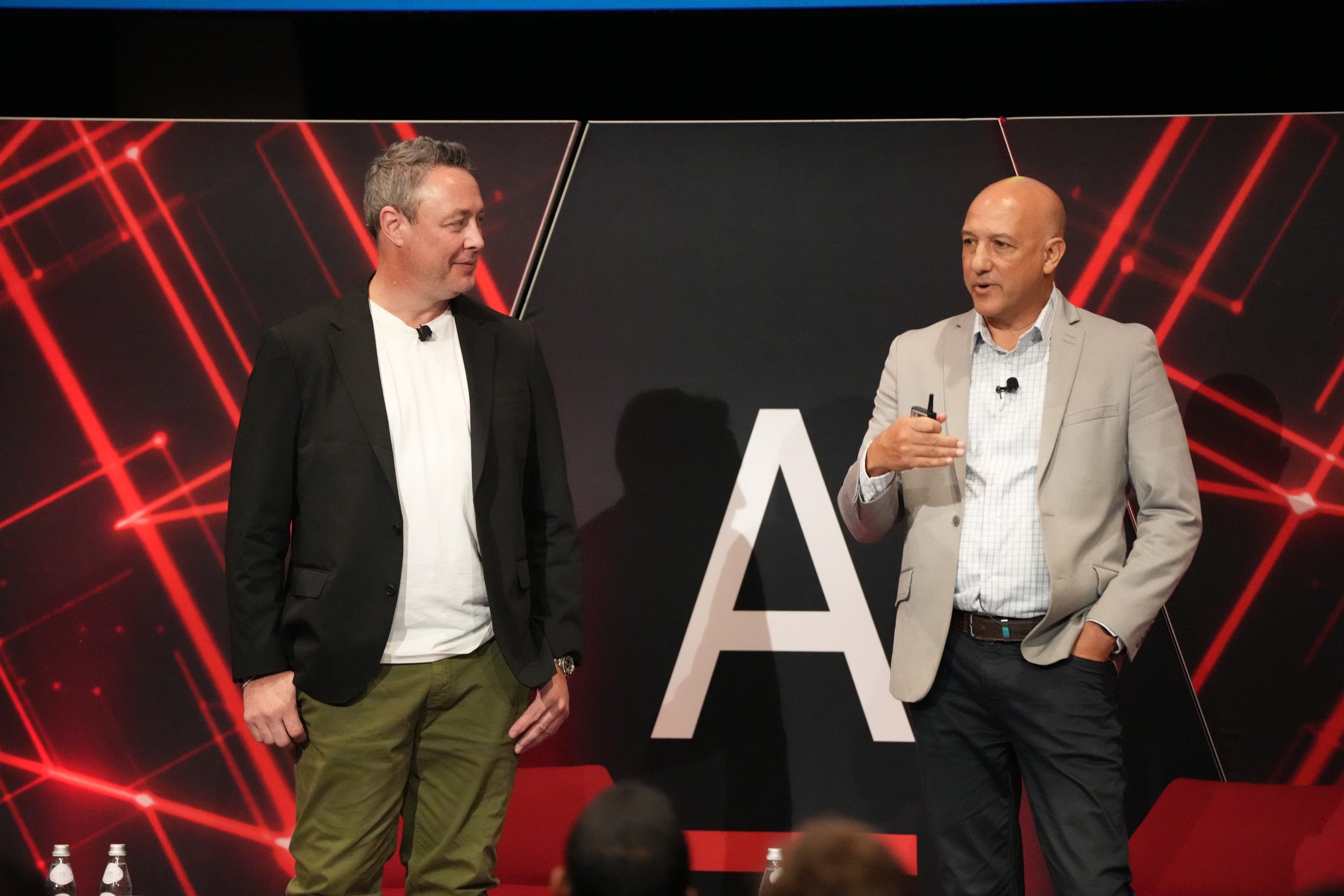
Oracle Head of ANZ Cloud Engineering Angelo Joseph and NVIDIA Strategic AI Partnership Lead Johann Kruse reinforced the same point from a platform angle, arguing that enterprises now need to think in terms of AI factories and full stack readiness rather than isolated tooling decisions.
The deeper issue is not poor data quality in isolation.
It is that many organisations still treat readiness as a technical uplift when it is really an enterprise prioritisation problem.
That is why AI keeps landing on estates that were never cleaned, governed, or simplified for this kind of use.
Expand data access without expanding risk
Industrialising AI increases the pressure to make more data usable by more people and systems.
It also raises the cost of doing that carelessly. Access and control now have to move together.
Andesite Chief Product Officer, former CISO at the CIA, and former CSO at Salesforce William MacMillan argued that data democratisation quickly becomes a security and complexity problem if the default response is to copy data into more places.
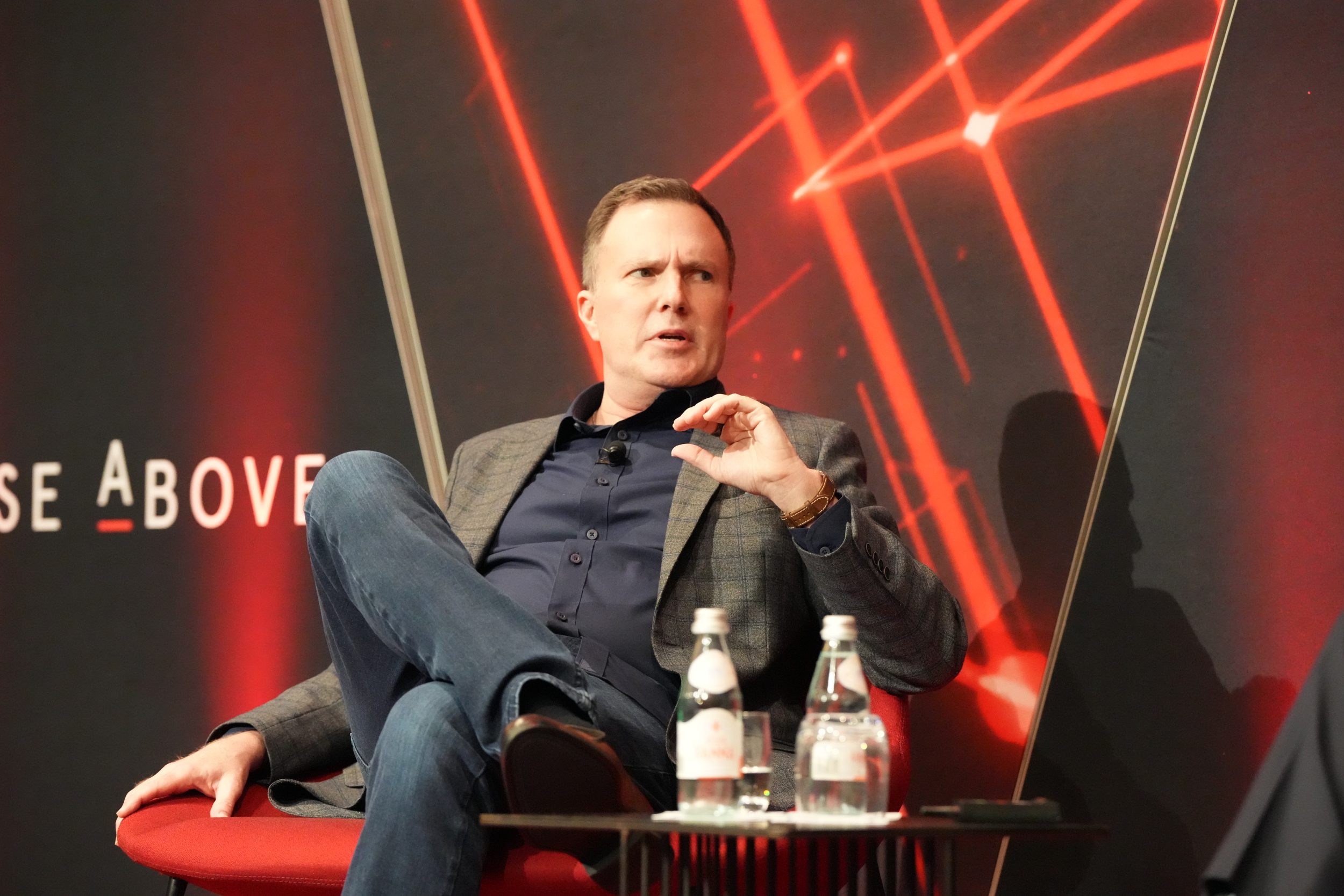
His alternative was to leave data where it lives and connect it through a secure decision layer, which reframes architecture as both a speed and risk decision.
That same issue widened into sovereignty.
During their conversation on stage, Dr Jon Whittle, Former Managing Director of Data61 at CSIRO and Simon Kriss, CEO at Sovereign AI Australia argued that sovereignty is broader than hosting location and includes where models are built, where inference happens, how responsibility is enforced, and who captures the economic value.
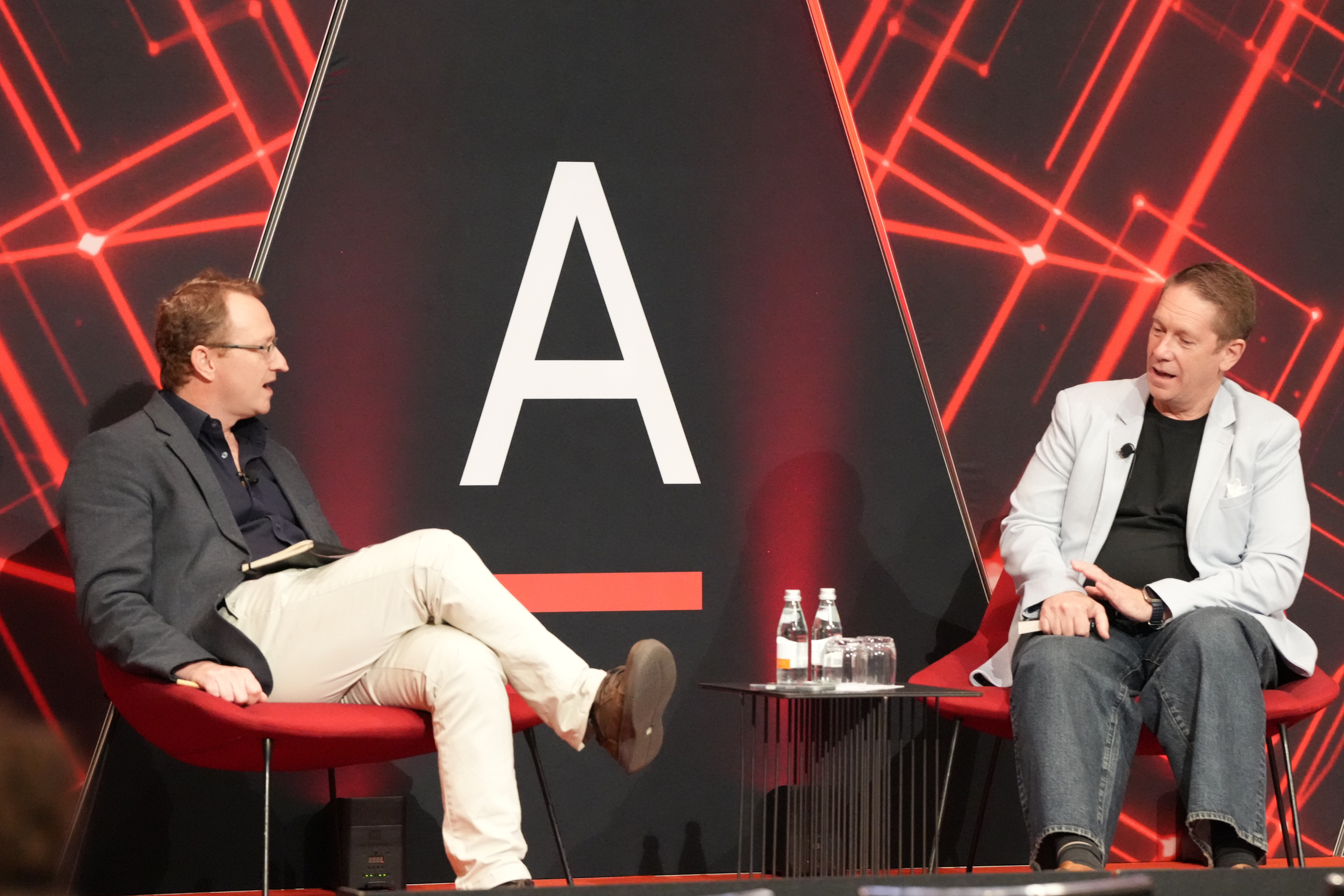
Simon also said many organisations still confuse domestic hosting with genuine sovereign control, while Jon argued that Australia has strong AI research capability but is still underinvesting in commercialisation, model development, and long term capability building.
Those choices now sit much closer to enterprise strategy than many organisations are willing to admit.
Trust, provenance, and control are no longer peripheral policy questions. They are becoming architectural choices, and those choices will increasingly decide who captures value and who remains dependent on somebody else’s system.
Build governance that can move AI into production
Governance is still where many AI programs slow down or quietly fail.
The problem is not that organisations lack policies.
It is that too many policies still sit outside delivery, instead of shaping the way use cases are scoped, built, and approved.
Gabby showed that around 50% of AI tools in pilot or deployment are still outside formal governance frameworks.
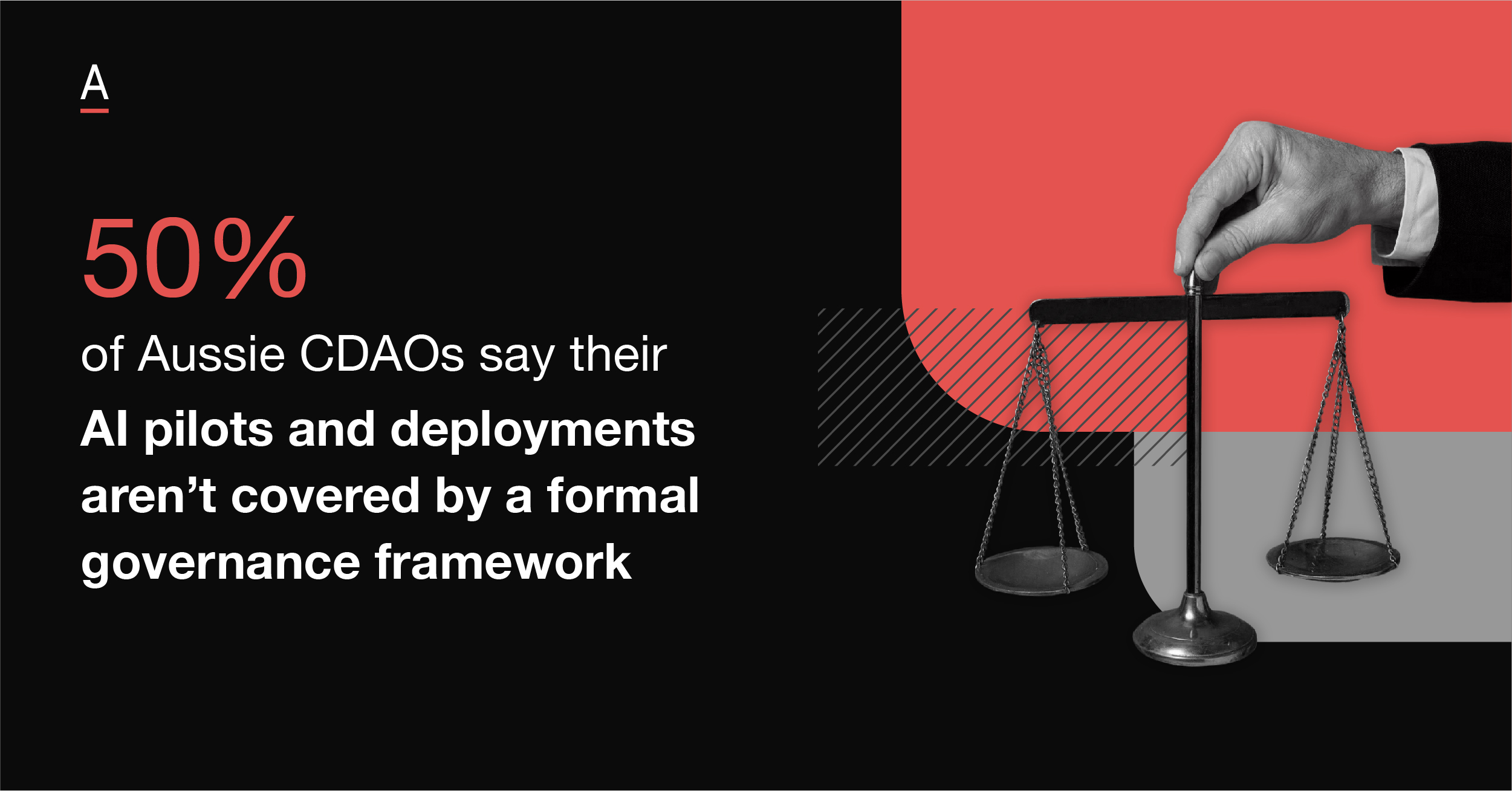
That one number explains more about why AI stalls than most maturity models do.
Jim Berry sharpened the same issue from a leadership angle. Both CIOs and data leaders increasingly want the CEO and board to take greater accountability for AI governance because the consequences now sit well beyond IT.
Samrat argued that governance has to begin with fundamentals such as lineage, stewardship, secure handling of structured and unstructured data, and clear ownership.
Mike added that human oversight remains necessary because data is imperfect and context always matters.
OpenAI Head of GTM, ANZ Satya Tammareddy added a capability lens to the same problem.
Australia is seeing strong business adoption while still lagging globally in advanced reasoning and coding use, which means governance maturity and workforce maturity are now tightly linked.
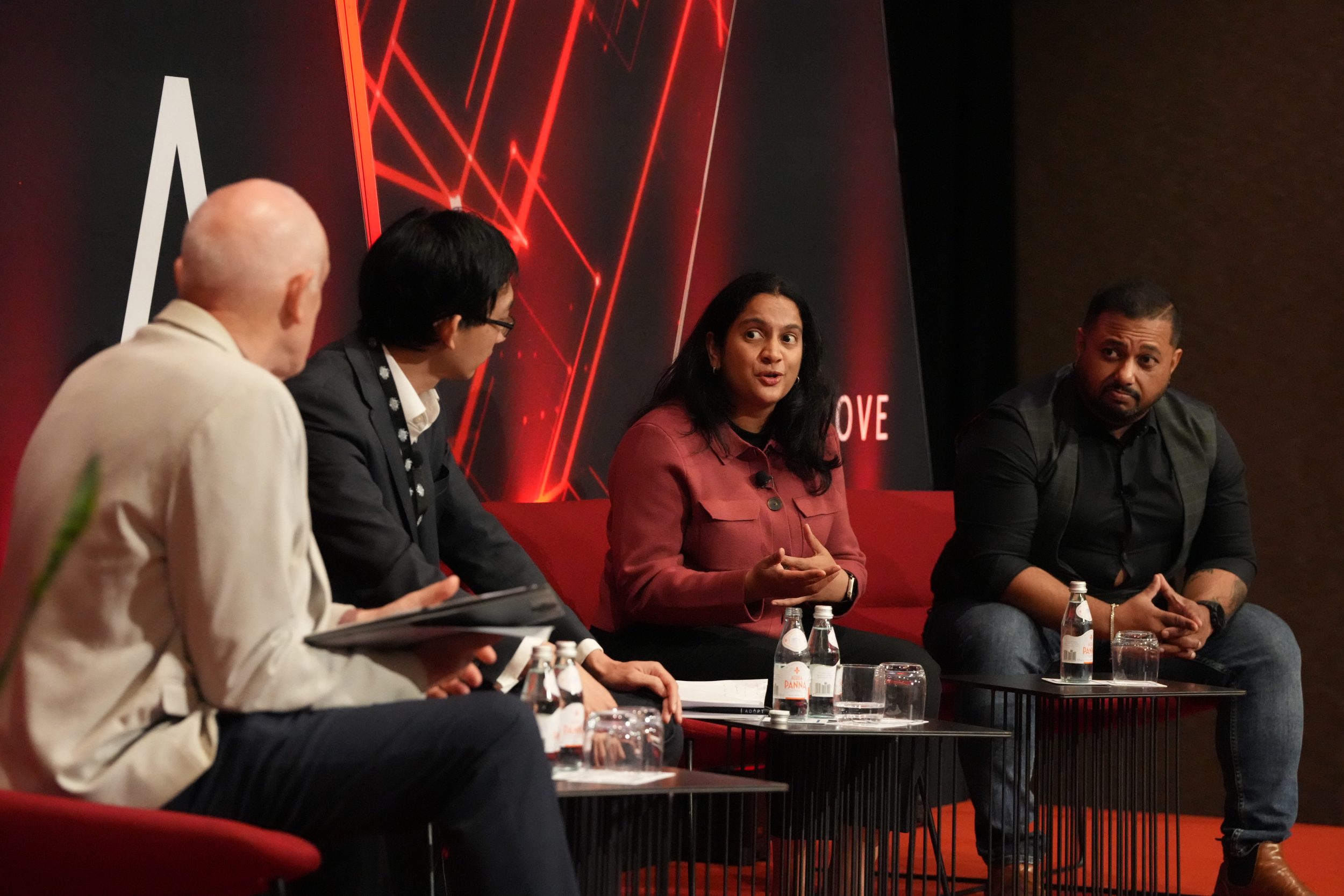
Jen French described how CBA brings legal, risk, compliance, HR, and technical stakeholders together early so governance shapes deployment from the start.
David Scott said the University of Sydney runs AI initiatives through an assurance framework tailored to its own institutional complexity.
In a separate interview with ADAPT, Simon Kriss argued that boards are still asking weak questions about whether AI is being used, rather than stronger questions about provenance, risk, and control.
Similarly, Dr Jon Whittle pushed the same point further, saying the real challenge is culture, change, and governance, not the novelty of the technology itself.
The organisations moving fastest are not skipping governance.
They are making it operational much earlier, when a use case is still being shaped, before risk, rework, and internal resistance have already accumulated.
Tie AI investment to measurable business outcomes
Many organisations are still talking about AI value in generic productivity terms.
That is one reason so much AI activity remains hard to defend. Productivity has become a stand in for strategy when it should be a result of one.
Gabby’s koalas, greyhounds, turtles, and tigers framework separated motion from maturity.
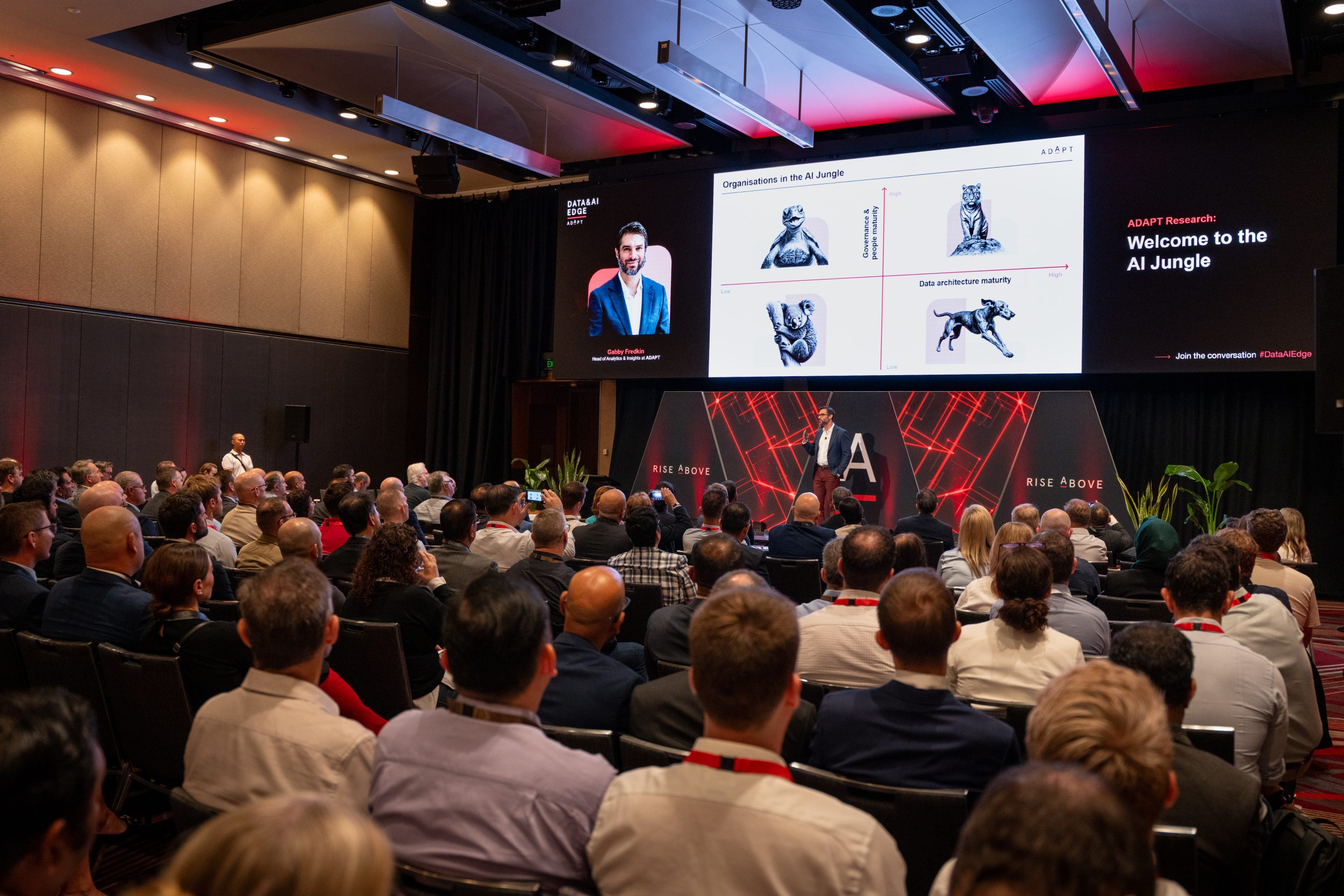
His Lendi example showed what stronger execution looks like, agents embedded into core workflows, 55,000 hours of sales time saved, and value tied back to business measures the company already trusted.
Roese described a harsher version of the same discipline at Dell. AI efforts were filtered through four measures only, increased revenue, increased profit, reduced absolute cost, or reduced regulatory risk.
That kind of filtering matters because it forces AI programs to compete with the rest of the business for relevance, not just for budget.
In interview, Dr Jon Whittle challenged the productivity story directly.
Personal productivity gains do not automatically become enterprise value, which is why he argued AI should first be tied to organisational purpose.
University of Sydney Chief Data and Analytics Officer David Scott gave that idea operational form by linking AI interventions to student satisfaction, student success, and reduced fail rates.
Satya Tammareddy also argued that AI’s more important contribution is increasingly in enabling work that previously could not be done at all, especially across coding, engineering, product experience, and customer engagement.
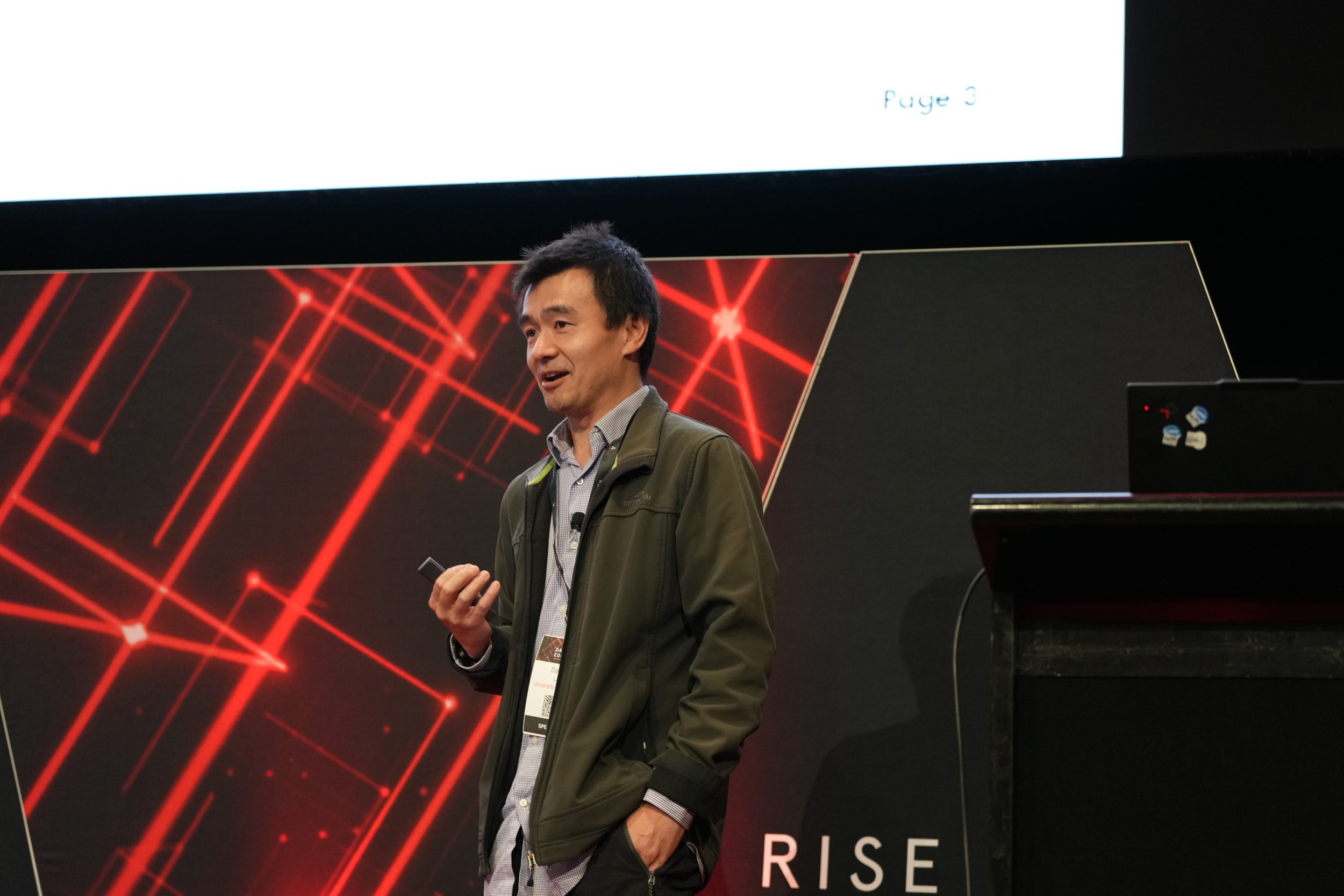
University of Sydney Professor in Educational Technologies Danny Liu grounded that in a very different domain, showing how the university’s own AI-chatbot Cogniti gives educators safe, governed control to build agents that scale their expertise rather than flatten it into generic automation.
The more useful distinction is no longer between pilots and production.
It is between AI that removes effort and AI that expands capability.
The second category is where more durable value is starting to emerge.
Recommended actions for data and AI leaders
The priorities that emerged from the day were practical and consistent.
Leaders looking to move from experimentation to scale should focus on a smaller set of execution disciplines that strengthen readiness, improve control, and tie AI more directly to business outcomes.
- Redesign operating models around business outcomes, not isolated AI projects.
- Prioritise the data domains that matter most for AI value and clean them first.
- Build governance that can support production, not just approve pilots.
- Link AI investment to existing business metrics and named owners.
- Put business process owners, not only technical teams, in charge of outcomes.
- Lift AI literacy across leaders and frontline teams so adoption does not stall at the point of trust.
- Treat sovereignty, provenance, and architectural control as present day decisions.
Australia’s next phase of AI maturity will be defined by execution.
The organisations that move ahead will not be the ones with the most pilots or the loudest AI narrative.
They will be the ones that can coordinate data readiness, governance, operating model discipline, workforce adaptation, and trust into one system that actually works.
That is the real shift now underway, and it will shape the next decade of change.
 Justina Uy
Content Marketing Manager
Justina Uy
Content Marketing Manager
Justina Uy is a data-driven content marketer that thrives on democratising elite know-how to empower Australia’s underdogs.
Skilled at translating complex ideas into a compelling story across formats and channels, she shifts seamlessly between writing long-form articles, creating viral social media posts, and producing thumb-stopping videos.
Since 2015, Justina executes her vision through a sophisticated understanding of the rapidly evolving digital and business landscape to serve entertaining and educational insights to the executive community.
Less Join the ADAPT
 Insider Community
Get the latest A/NZ market research and insights on the core trends impacting leaders.