













Data democratisation works when leaders stay close to the intent, says former CIA CISO
In this Data & AI Edge session, former CIA CISO and Salesforce CSO William MacMillan examines how AI is changing data access, governance, and enterprise risk as organisations push to democratise insight at scale.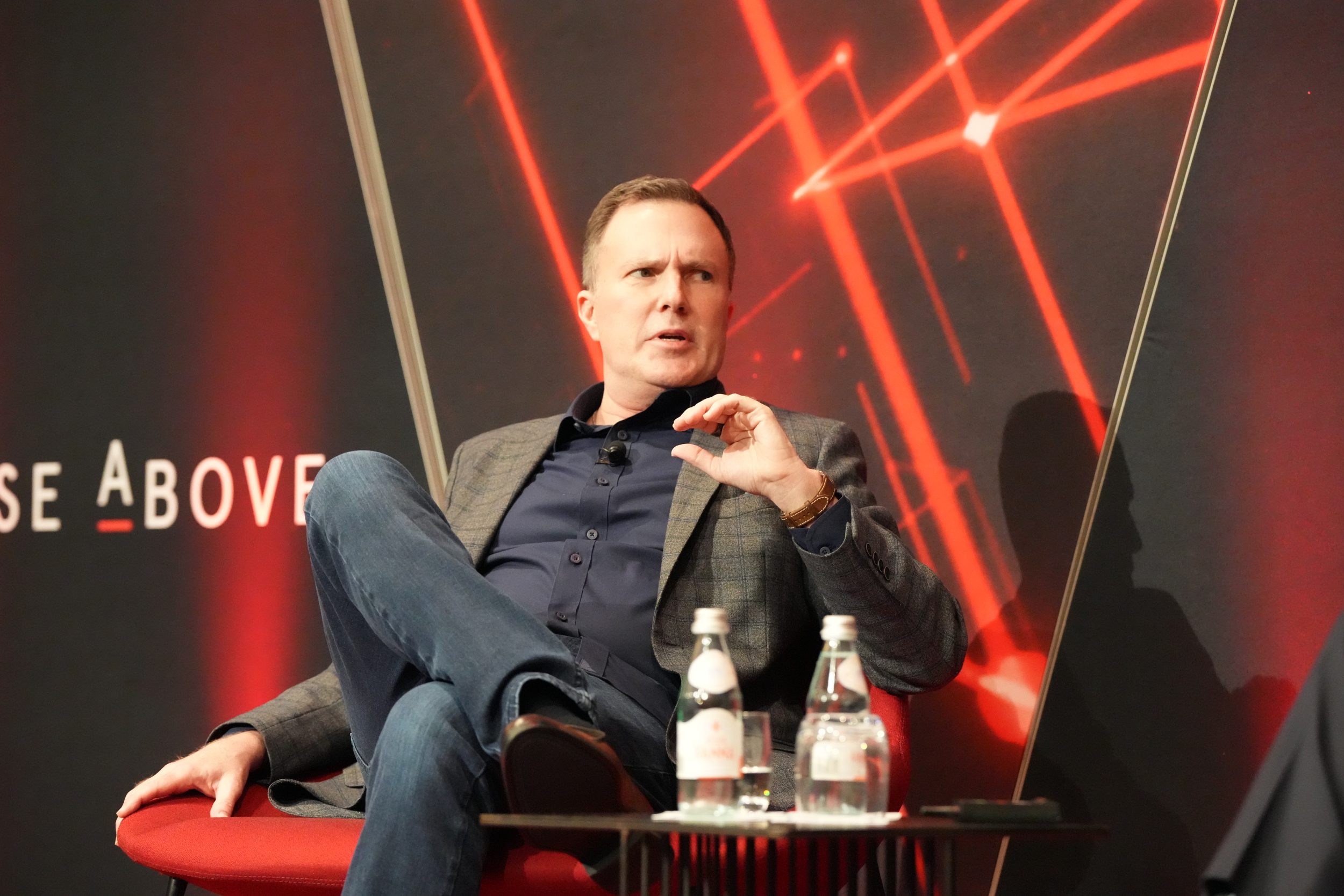


 Published Apr 9, 2026 in
Expert Presentations
Data & AI Strategy
Contributors
William MacMillan
Joey Meynink
Published Apr 9, 2026 in
Expert Presentations
Data & AI Strategy
Contributors
William MacMillan
Joey Meynink
What happens when AI makes enterprise data easier to access than it is to align?
As more organisations push to democratise data, the real risk shifts from simple exposure to fragmented decisions, weak architectural discipline, and accountability gaps that grow as access expands.
In conversation with ADAPT’s Head of Strategy Joey Meynink at the 5th Data & AI Edge, William MacMillan argues that secure scale depends on leadership presence, deliberate data movement, and shared ownership across security, technology, and data teams.
Key takeaways:
- Data democratisation creates more risk when access expands faster than leadership alignment and shared intent.
- Data movement should follow a defined decision or use case, because unnecessary centralisation adds cost, latency, and attack surface.
- Secure scale depends on shared accountability across cyber, technology, and data leaders, with architecture and governance treated as joint operating responsibilities.
Data access scales safely when leaders stay close to the intent
Opening access to data does not automatically create better decisions.
It only works when leaders stay actively involved in how that access is used, what it is meant to achieve, and how teams stay aligned as they move faster.
William’s warning is that wider access can create silent risk when teams move quickly without shared direction.
His argument is that democratisation needs consistent leadership presence, repeated communication of intent, and active validation that people understand the purpose behind the access they have been given.
Data movement should be driven by the decision being made
Many organisations still centralise data before they are clear on the decision or outcome they are trying to improve.
That slows time to value, expands attack surfaces, and creates more architectural complexity than most teams expect.
William pushes for a decision led approach instead.
He argues that organisations should test value where data already lives, using intelligence layers and guided analysis before deciding what genuinely needs to be centralised.
That creates a more selective, accountable way to move data and reduces the cost of moving everything by default.
Security and data scale together through shared operating ownership
Security problems rarely begin with a single tool.
They emerge when cyber, technology, and data teams work in sequence, hand off responsibility, or optimise for different outcomes.
William treats this as an operating model issue.
As AI increases the speed and reach of data use, those organisational seams become more visible and more dangerous.
His view is that secure scale depends on shared accountability, aligned incentives, and joint architectural ownership across CIOs, CTOs, CISOs, and data leaders.
That is what makes governance durable enough to support faster access and broader use.
 William MacMillan
Former CISO of the CIA | Former SVP for Info Sec at Salesforce
William MacMillan
Former CISO of the CIA | Former SVP for Info Sec at Salesforce
William MacMillan is the Chief Product Officer at Andesite. Prior to this position, he was Senior Vice President for Information Security at Salesforce.
Prior to his retirement from the federal government, William served as the Chief Information Security Officer (CISO) at the Central Intelligence Agency (CIA), where he led a sweeping transformation of the CIA’s cybersecurity strategy and organization.Prior to serving as CISO, William held multiple senior leadership positions at CIA dealing with various aspects of intelligence, counterintelligence, and cyber operations. During his career, he focused significant attention on insider threat, supply chain risk, and incident response issues, as well as the development of CIA’s Cybersecurity Operations Center (CSOC). Prior to joining CIA, William served as an officer and a pilot in the United States Air Force’s Combat Rescue and Special Operations communities.
William graduated from the United States Air Force Academy with a BS in Biology. He also holds an MA in International Relations from Salve Regina University and an MS in cybersecurity from George Mason University.William, his wife, and their three children reside in the Pacific Northwest.
Less Joey Meynink
Head of Strategy at ADAPT
Joey Meynink
Head of Strategy at ADAPT
Joey leads ADAPT’s Strategy function, working closely with business and technology leaders to help build more agile, innovative and resilient organisations.
Joey has led key client engagements including:
- Kyndryl, Executive Dinner: AI & Global Resiliency with CIOs & Chief Data Officers, co-hosted with Kyndryl CEO Martin Schroeter
- ServiceNow Vivid Experience: AI Enabled Customer & Employee Experience with Heads of Strategy & Customer Experience – customer and VP interview and panel
- AWS, Redhat & Apptio Executive Lunch: Controlling Cloud Costs, Enabling Efficiency & Unlocking AI with Heads of Cloud & Infrastructure – event moderation
- Led Roundtables for: Rimini Street, Octopus Deploy, LivePerson, Redactive, Netskope, MicroStrategy, Diligent, Akamai and more.
Prior to ADAPT, Joey led strategic and technology implementation initiatives at Accenture, focused on financial services clients and Generative AI. 7 years in strategy, research and product roles at Gartner Australia and the UK and held business service analysis roles at Bain & Co.
Less Join the ADAPT
 Insider Community
Get the latest A/NZ market research and insights on the core trends impacting leaders.
Join the ADAPT Insider Community
Get the latest A/NZ market research and insights on the core trends impacting leaders.