















Why AI alone will not improve government productivity and what leaders must redesign instead
AI activity is rising, but productivity proof is not. Agencies now need to redesign the work around the tools.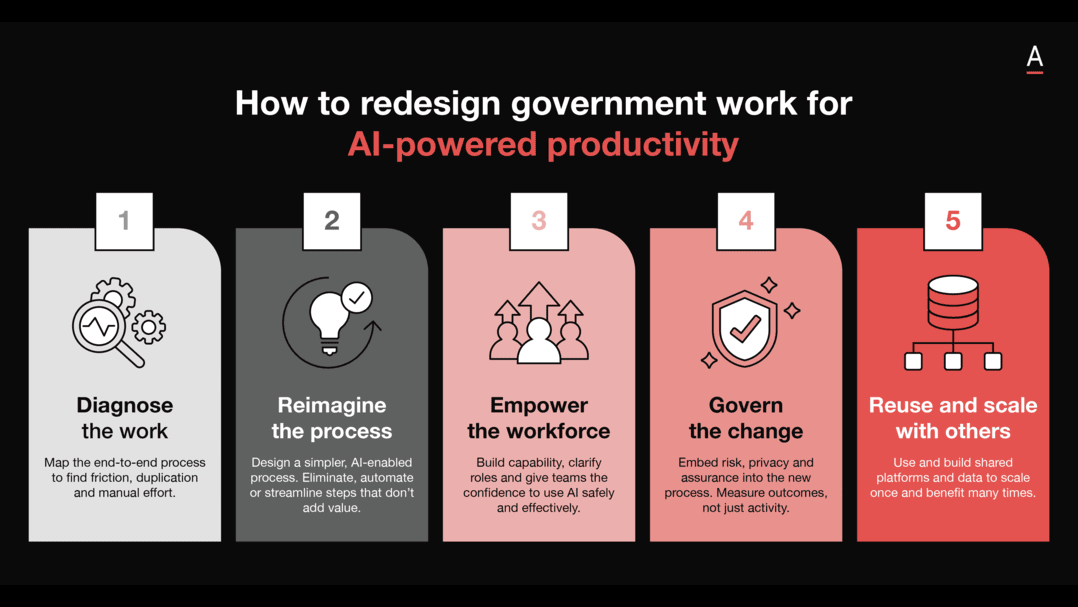


 Published Jul 13, 2026 in
Articles
Data & AI Strategy
Contributors
Justina Uy
Published Jul 13, 2026 in
Articles
Data & AI Strategy
Contributors
Justina Uy
AI is being added to work the APS has not redesigned.
Agencies are exploring agents and expanding digital programs, yet many of the approvals, handoffs, service pathways and workforce constraints around that work remain intact.
AI can make individual tasks faster, but productivity becomes difficult to prove when the process around those tasks stays the same.
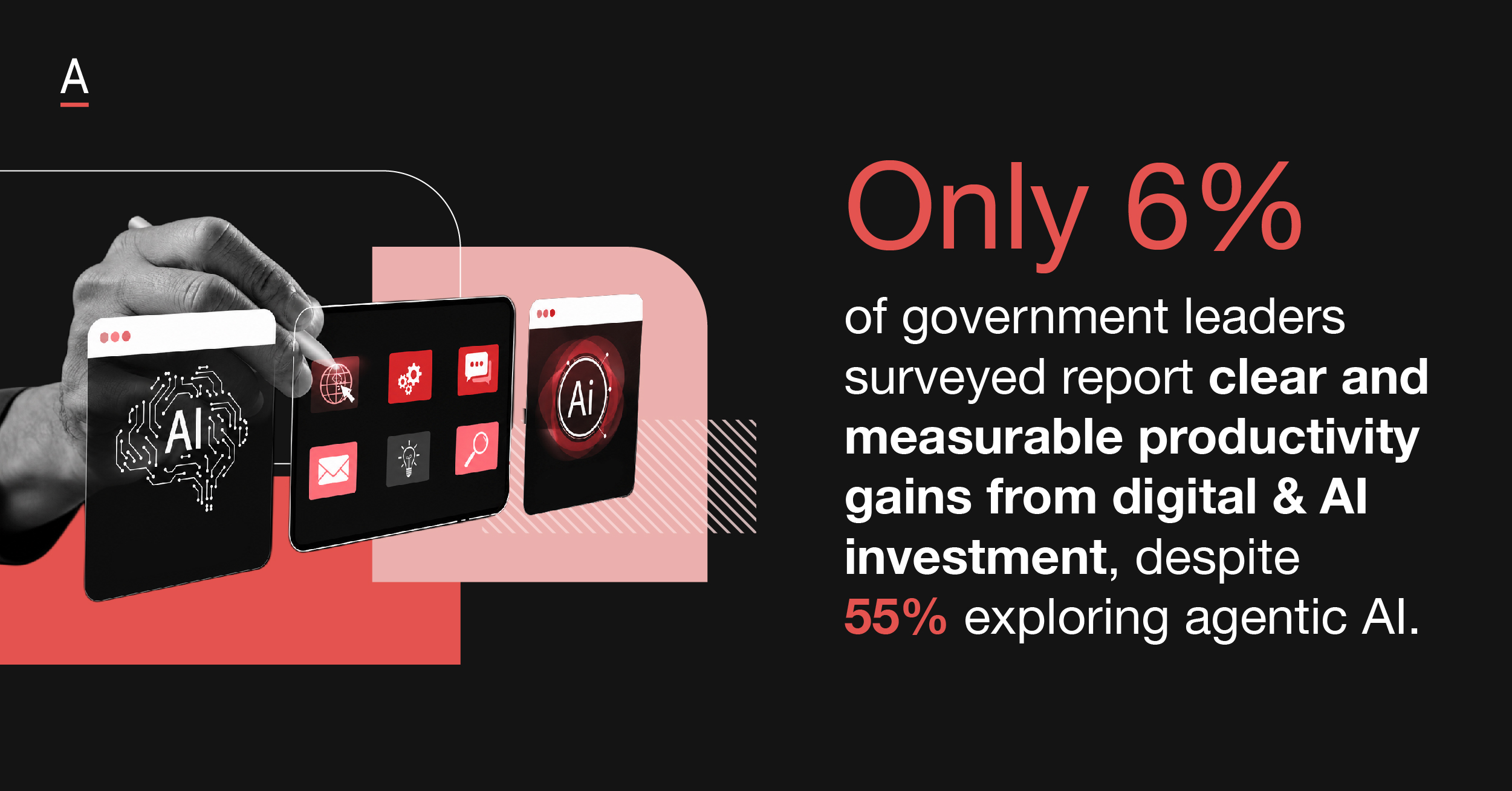
ADAPT research shows only 6% of government leaders report clear and measurable productivity gains from digital and AI investment.
Workforce readiness is the highest-ranked barrier preventing agencies from scaling AI successfully.
Only 25% of government leaders consider themselves mature in reusing technology platforms to accelerate delivery and interoperability.
Those numbers do not suggest a lack of ambition.
They point to a deeper execution problem.
Digital effort is spreading faster than work redesign, workforce readiness and platform reuse.
AI activity is spreading, but the productivity questions remain unresolved:
- which work should disappear
- which decisions should become faster
- which teams need new capability
- which platforms should stop being rebuilt in separate corners of government
Across Government Edge last June 2026, the same pattern kept surfacing: technology is moving faster than the operating conditions around it.
The discussions focused on the work design, governance, measurement, capability and reuse required to make AI change how government actually operates.
In this article:
- Reason 1: AI investments are landing on work that has not been redesigned
- Reason 2: Workforce readiness now determines whether AI can scale
- Reason 3: Agencies are still rebuilding what government should reuse
- What this means for public sector AI leadership
Reason 1: AI investments are landing on work that has not been redesigned
Many agencies can point to use cases, tools and pilots.
Fewer can show where AI has materially changed the workload, reduced rework, shortened a service pathway or improved capacity across a function.
Productivity remains thin when technology is introduced into work that still depends on manual approvals, duplicated platforms, unclear ownership and slow handoffs.
Andrew Matuszczak, Chief Information & Transformation Officer at Commonwealth Superannuation Corporation, pushed against the way AI is often discussed.
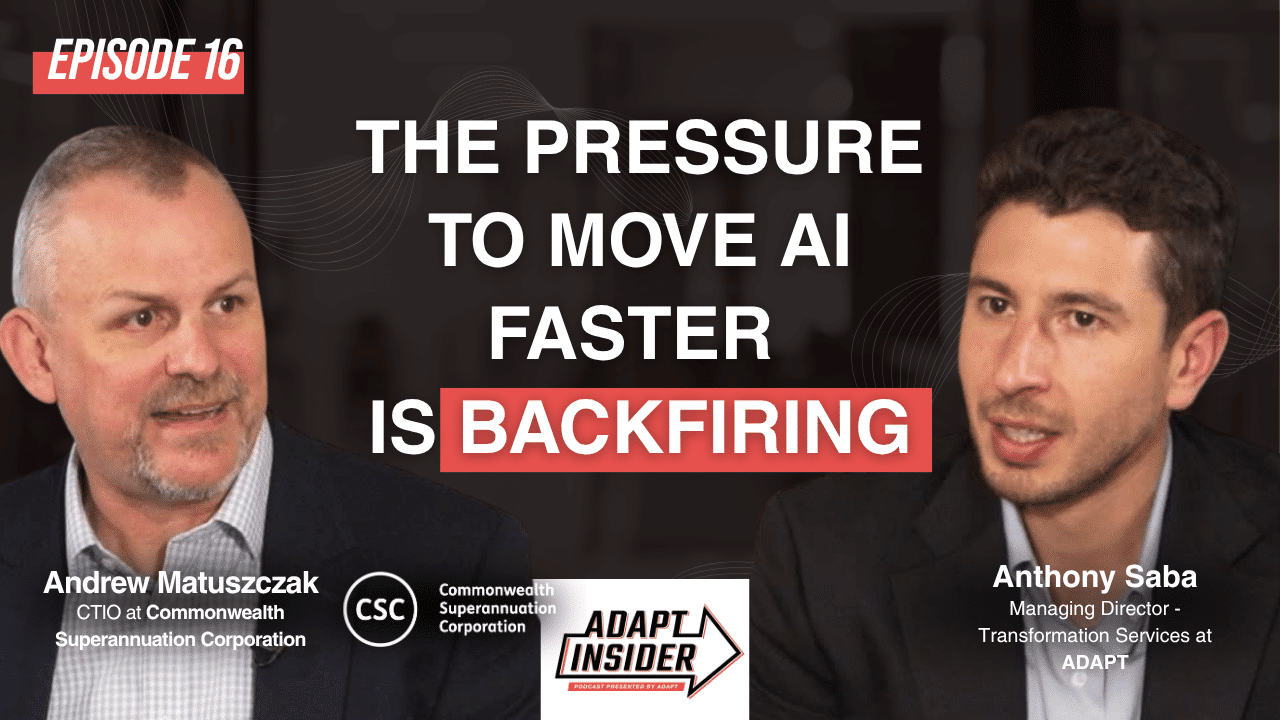
His view was that leaders should stop treating AI as one generic solution and return to the problem being solved.
He compared the current AI conversation to telling a doctor “I’m sick” and expecting a single answer, when the useful work is diagnosing the specific symptoms and finding the right specialist capability.
CSC’s transformation work shows why that discipline matters.
Andrew described a multi-year program across core systems, data analytics, customer experience platforms and middleware.
The work was designed to simplify architecture, reduce complexity and improve how people work before AI becomes embedded in customer and operational processes.
AI creates productivity when it changes the work around the task.
Faster summaries and automated steps help individuals, but agency-level gains depend on whether the surrounding service pathway, approvals and handoffs change with them.
Without a clear before-state, AI productivity becomes anecdotal.
Agencies need to know where work was slowing down, where capacity was being consumed and what operational burden should reduce once AI enters the process.
Andrew’s warning about “putting lipstick on the pig” applies directly to AI adoption in government.
New tools placed over brittle systems and poor process discipline inherit the weakness underneath.
The result may look modern at the interface while the real operating problem remains untouched.
The productivity test needs to move closer to the work.
Leaders should be able to name the burden being removed, the service change being created, and the measurement that proves it happened.
Without that discipline, AI becomes another layer of digital activity competing for attention without changing the economics of delivery.
Reason 2: Workforce readiness now determines whether AI can scale
Workforce readiness now determines whether AI can move beyond controlled trials.
Agencies need people who can redesign workflows, involve risk and privacy early, measure operational change and govern AI without turning assurance into another bottleneck.
David Walker, former Group Chief Technology Officer at Westpac and DBS and Chair of the AI Council at UNSW, argued that AI adoption barriers are overwhelmingly organisational.
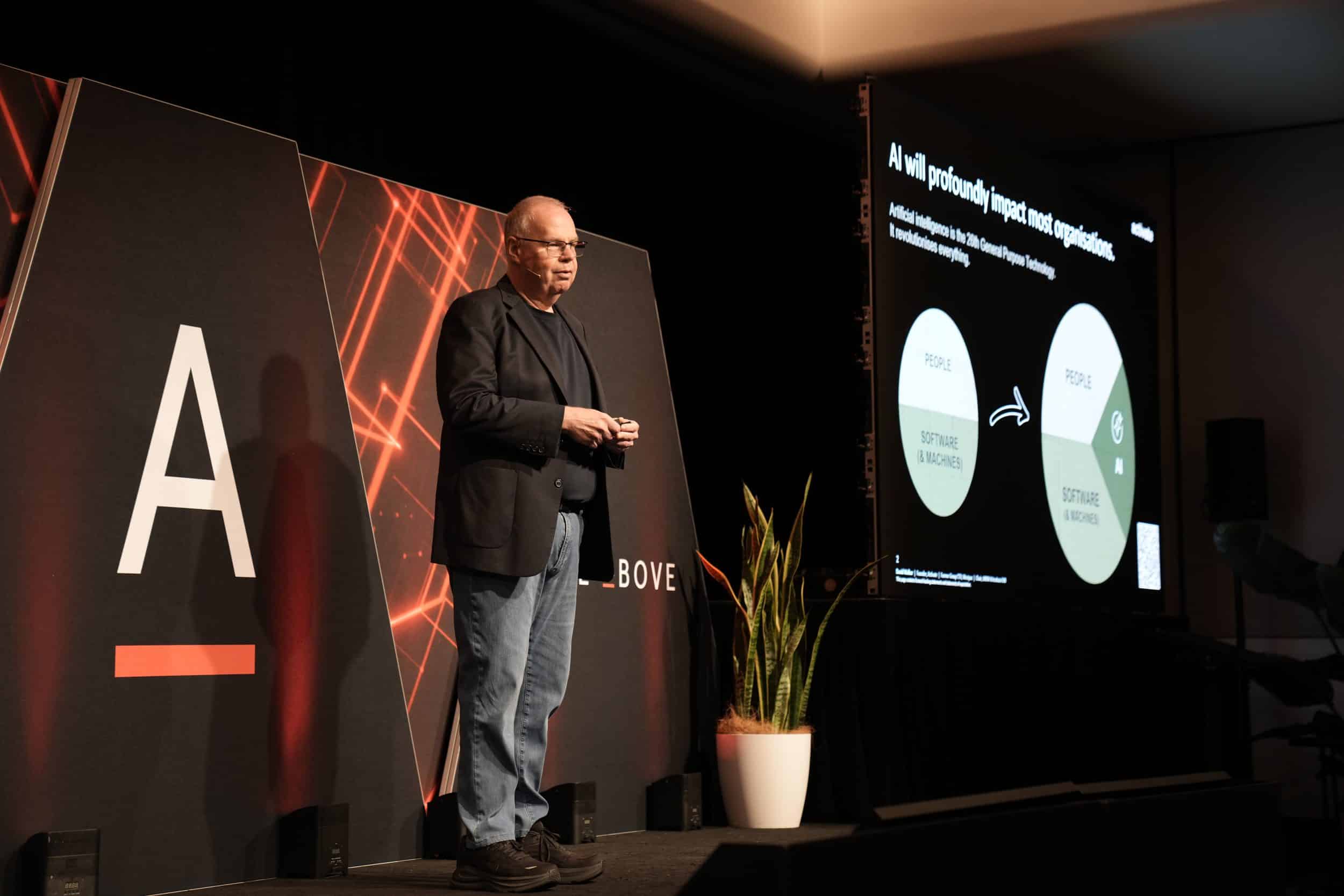
His research found most AI adoption barriers sit outside the technology itself: leadership readiness, funding, governance, risk management and process change.
DBS scaled AI because it had already built the organisational conditions AI depends on: executive ownership, learning velocity, process redesign, dynamic oversight and technology designed for change.
The same constraint now sits across the APS: AI cannot stay inside central innovation teams if productivity is expected across policy, service delivery, compliance, corporate functions and technology operations.
The people closest to the work need enough capability to challenge the old process, apply AI safely and understand where risk changes.
Andrew described this through CSC’s internal capability model.
After using “cyber angels” to build security awareness across business areas, CSC applied a similar approach to AI by developing champions inside different functions.
That creates practical support closer to the work, where most AI questions and behaviours will emerge.
Capability also determines whether trust holds.
In the Government Edge panel discussion, Justin Keefe, First Assistant Secretary, Digital and Security at the Department of the Prime Minister and Cabinet, framed workforce readiness as a mindset shift.

Agencies need clear guardrails, stronger learning habits and a willingness to break down “knowledge is power” behaviours that will not survive the next phase of digital change.
Elizabeth Tydd, Australian Information Commissioner, made clear that transparency, privacy and rights preservation are central to public sector AI adoption.
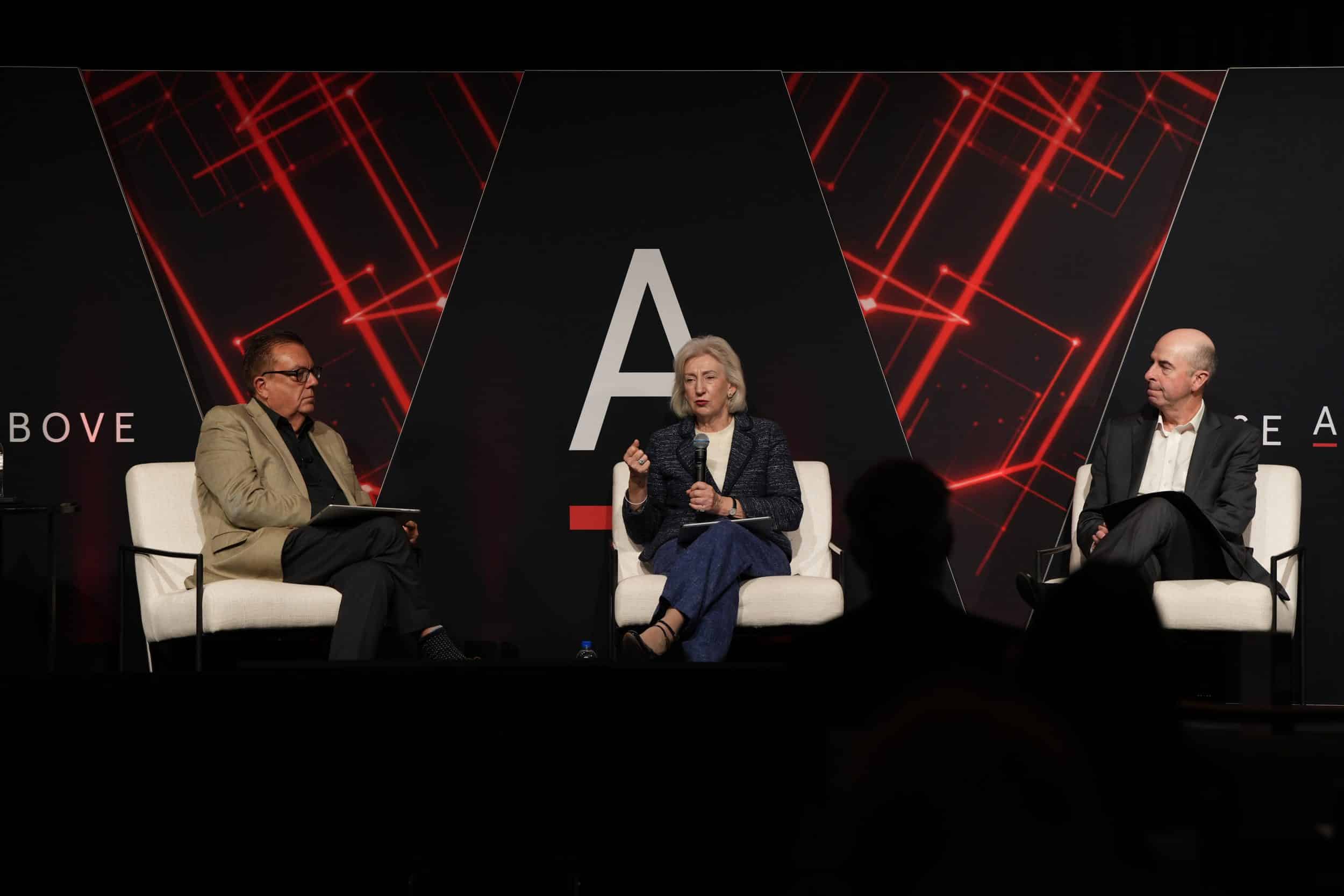
Charles McHardie, Chief Information and Digital Officer at Services Australia, described the work required before AI can scale responsibly: staff engagement, union engagement, skills uplift, procurement, legal review, cyber assurance and risk-based frameworks for AI use.
Staff engagement, skills uplift, procurement, legal review, cyber assurance and risk-based frameworks are not side activities; they decide whether AI can be trusted, used and scaled.
When staff do not understand the tool, citizens do not trust the service, or executives cannot defend the use case, adoption slows long before the technology fails.
Risk, legal and privacy teams also become blockers when they are brought in after the design has already hardened.
Workforce readiness is the ability to change work safely and repeatedly.
That capability is not created by a chatbot licence or a central AI committee.
It comes from practical literacy inside the teams expected to use AI, and from leaders who understand the operating changes required around it.
Reason 3: Agencies are still rebuilding what government should reuse
Only 25% of government leaders consider themselves mature in reusing technology platforms to accelerate delivery and interoperability.
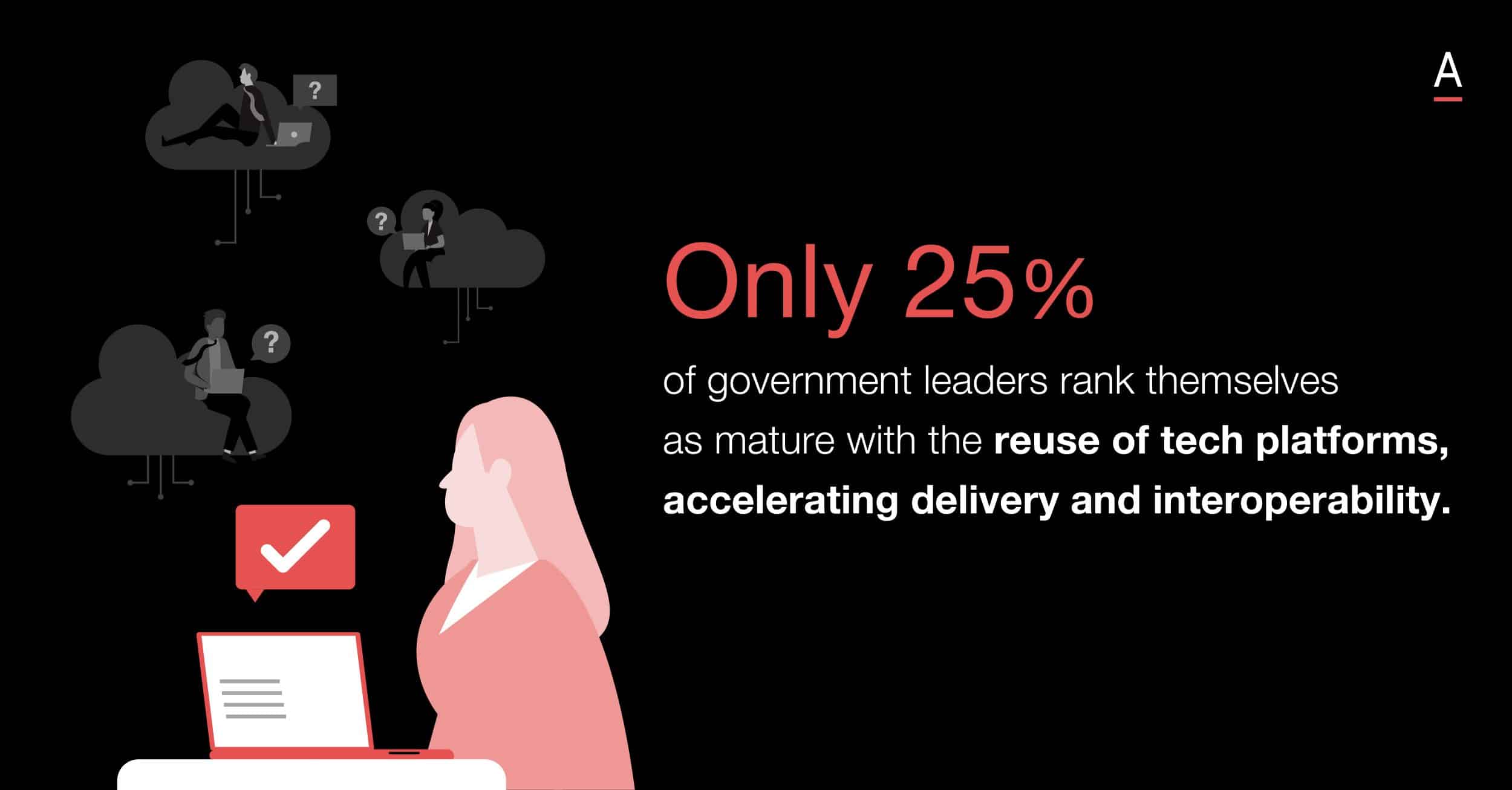
That leaves government paying too much for work it should not need to repeat.
Government agencies have distinct missions, but many of the enabling problems are common.
Identity, access, notifications, payments, records, data sharing, consent, cyber assurance and service integration keep appearing across agency boundaries.
When those capabilities are rebuilt separately, productivity loss becomes structural.
Peter O’Halloran, Chief Digital Officer at the Australian Digital Health Agency, framed productivity through the wider system.
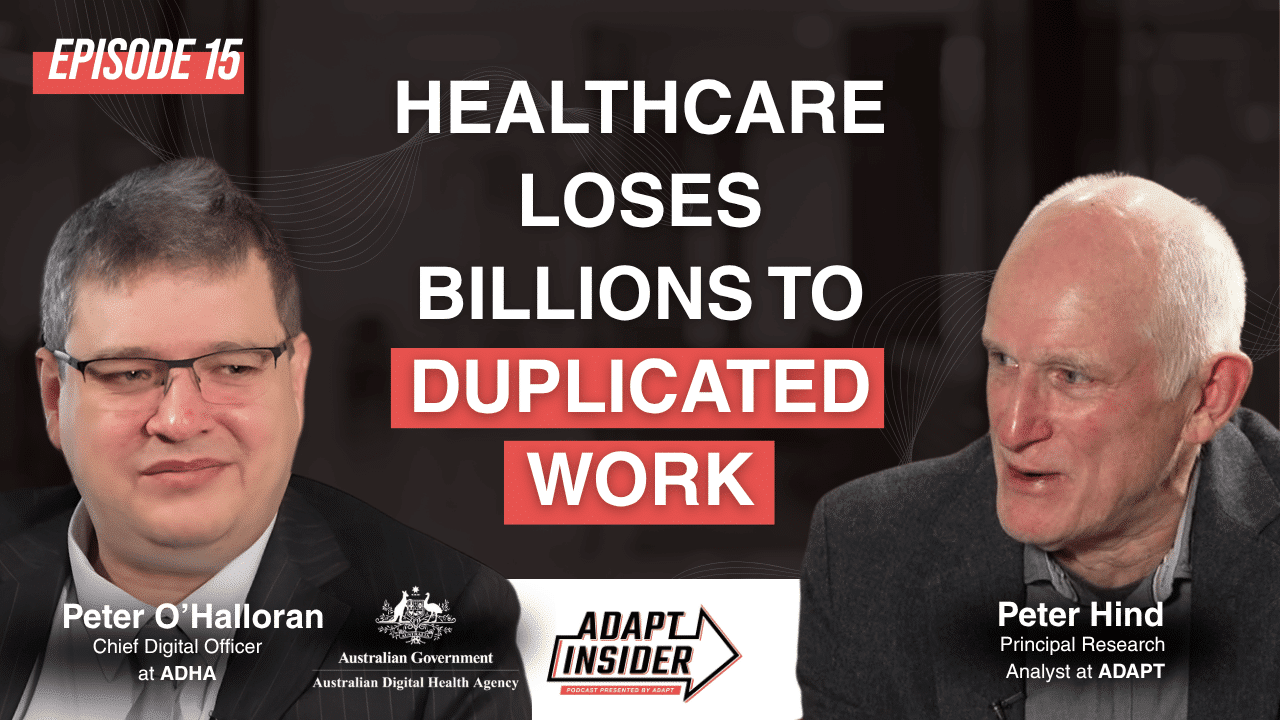
He argued that improving productivity inside his own agency would create only a minor improvement.
The larger gain comes from helping clinicians and consumers across the health system by improving information sharing, reducing duplicate tests, avoiding unnecessary repeat visits and getting better information to the point of care.
That is a more serious productivity model for government because the value sits across the system, not inside one technology function.
Peter described modelling accepted by central agencies showing savings through reduced duplicate pathology tests.
The operational value comes from shared digital infrastructure changing activity across many participants, even when the benefit cannot be neatly claimed by one agency.
Health also shows why sensitivity cannot be used as an excuse for fragmentation.
Health data is highly sensitive and must be protected.
That makes standards, consent, interoperability and governance more important, not optional. Collaboration becomes a design problem to solve with discipline.
Peter’s international work adds another dimension.
Digital health agencies in other countries are dealing with similar demand, workforce pressure and information-sharing problems.
Sharing what worked and what failed helps agencies avoid repeating avoidable mistakes.
Alan Thorogood from MIT CISR reinforced the same point through operating model architecture.
He argued that existing IT operating models were built for a previous environment and now need to change.
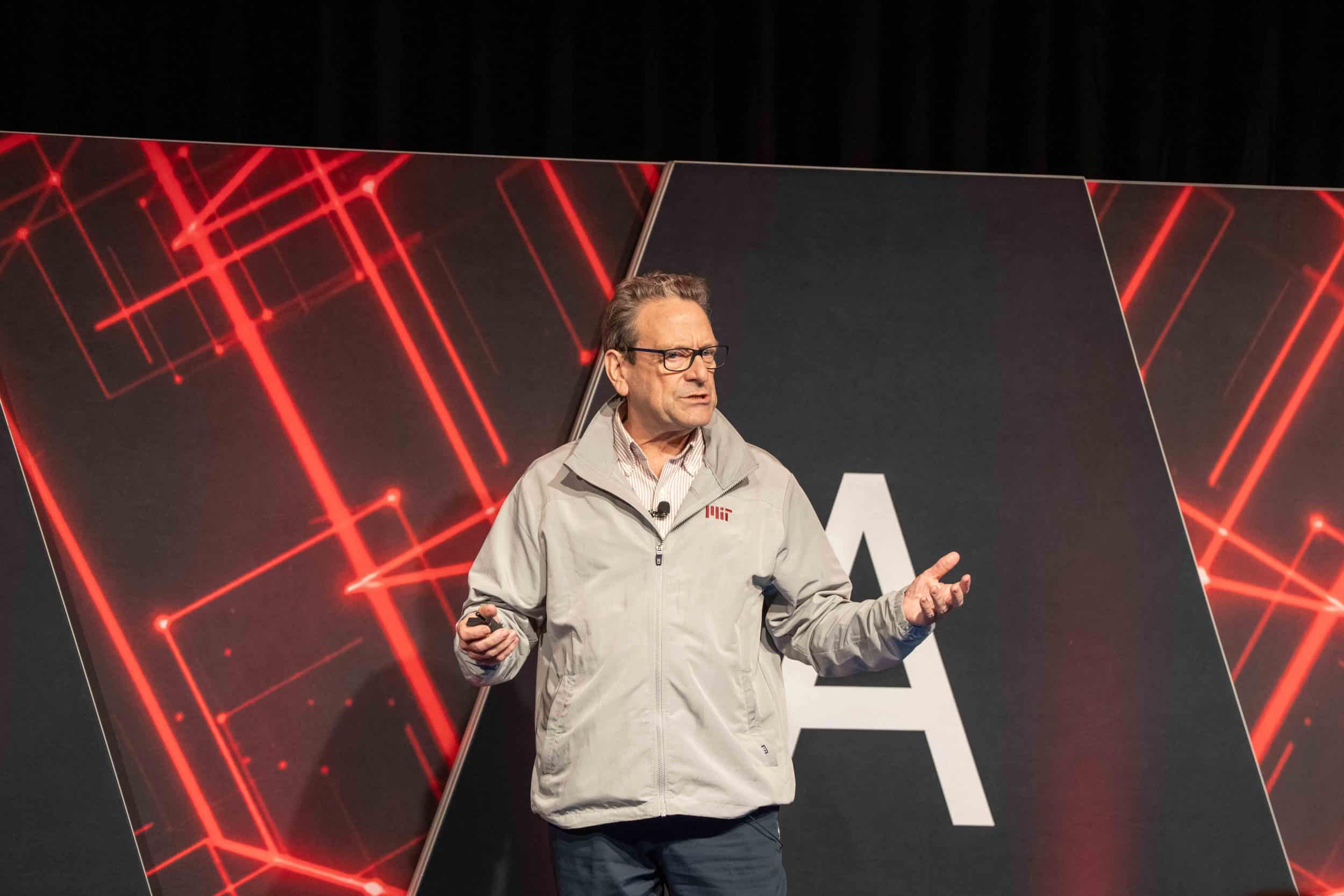
His work emphasised architecture, reusable capabilities, coordinated investment and platform thinking as ways to reduce duplication and prevent disconnected AI investments from creating future rigidity.
Alan’s warning about silos and “digital spaghetti” is especially relevant to AI.
A large number of pilots can look like progress while quietly creating new integration problems, new assurance burdens and new platform dependencies.
The more each agency solves common problems alone, the more expensive future interoperability becomes.
Reuse is a management decision before it is a technical one.
It requires leaders to separate genuine agency-specific needs from familiar habits of local build and local control.
Some services require distinct design. Many enabling capabilities do not.
If government wants productivity, shared capability has to become a stronger default.
Common platforms reduce procurement friction, shorten delivery, improve consistency and give smaller agencies access to capability they would struggle to build alone.
What this means for public sector AI leadership
Government Edge also showed an APS leaning hard into AI, while the operating conditions around it remain unfinished.
The productivity gap, workforce readiness barrier and low reuse maturity all point to the same constraint: agencies are trying to extract new value from work, skills and delivery models that have not changed enough to absorb it.
Progress now depends on harder executive choices about which work should be redesigned, which capabilities must be built inside delivery teams, and where government should stop solving the same problem agency by agency.
Leaders need to stop pilots without baselines.
They need to redesign work before automating it and build AI literacy inside delivery functions, bring privacy and risk into design earlier, and reuse platforms where government is solving the same problem repeatedly.
AI will keep improving.
That will make weak operating models more exposed, because the gap between what the technology can do and what agencies can absorb will become harder to ignore.
The agencies that benefit most from AI will be the ones prepared to change the work around it.
 Justina Uy
Content Marketing Manager
Justina Uy
Content Marketing Manager
Justina Uy is a data-driven content marketer that thrives on democratising elite know-how to empower Australia’s underdogs.
Skilled at translating complex ideas into a compelling story across formats and channels, she shifts seamlessly between writing long-form articles, creating viral social media posts, and producing thumb-stopping videos.
Since 2015, Justina executes her vision through a sophisticated understanding of the rapidly evolving digital and business landscape to serve entertaining and educational insights to the executive community.
Less Join the ADAPT
 Insider Community
Get the latest A/NZ market research and insights on the core trends impacting leaders.