














ERP upgrades will fail if leaders ignore integration debt
ERP modernisation now depends on whether leaders can simplify workflows, govern data movement and assign ownership across systems.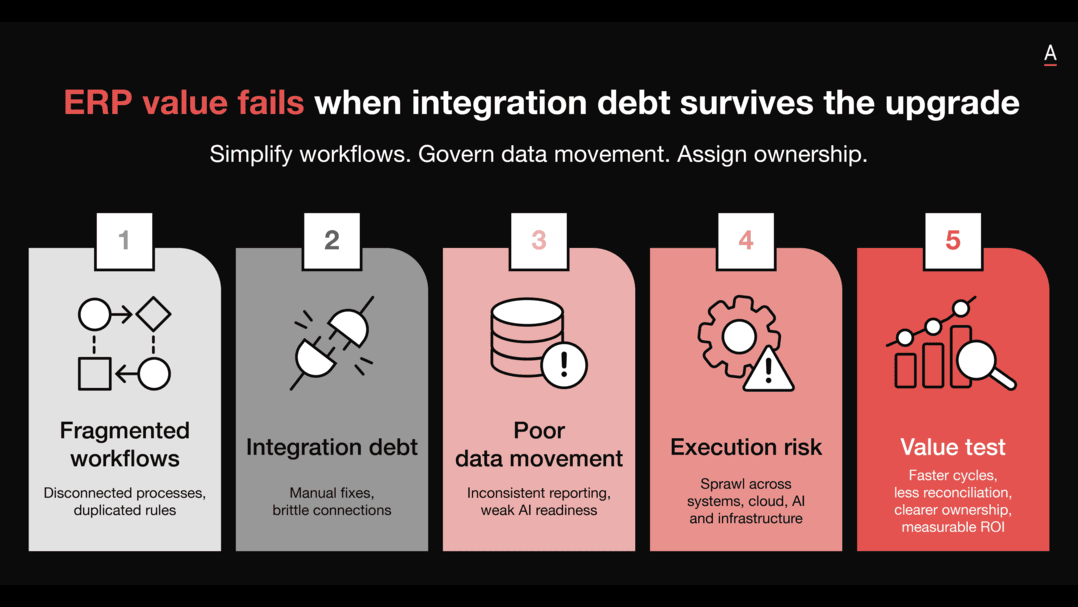


 Published Jun 25, 2026 in
Articles
Digital Transformation
Contributors
Justina Uy
Published Jun 25, 2026 in
Articles
Digital Transformation
Contributors
Justina Uy
ERP modernisation is now expected to support far more than core system replacement.
Boards want cleaner operations, faster reporting, lower process costs, AI readiness and measurable productivity gains, often within short investment windows.
Yet many organisations are still upgrading ERP platforms while leaving fragmented integrations, duplicated business rules and inconsistent data movement largely untouched.
At ADAPT’s CIO Edge, ERP modernisation emerged as the top CIO priority, while 74% of CIOs said they planned to invest in AI agents within 12 months.
Half also expected ROI within a year of a major IT rollout.
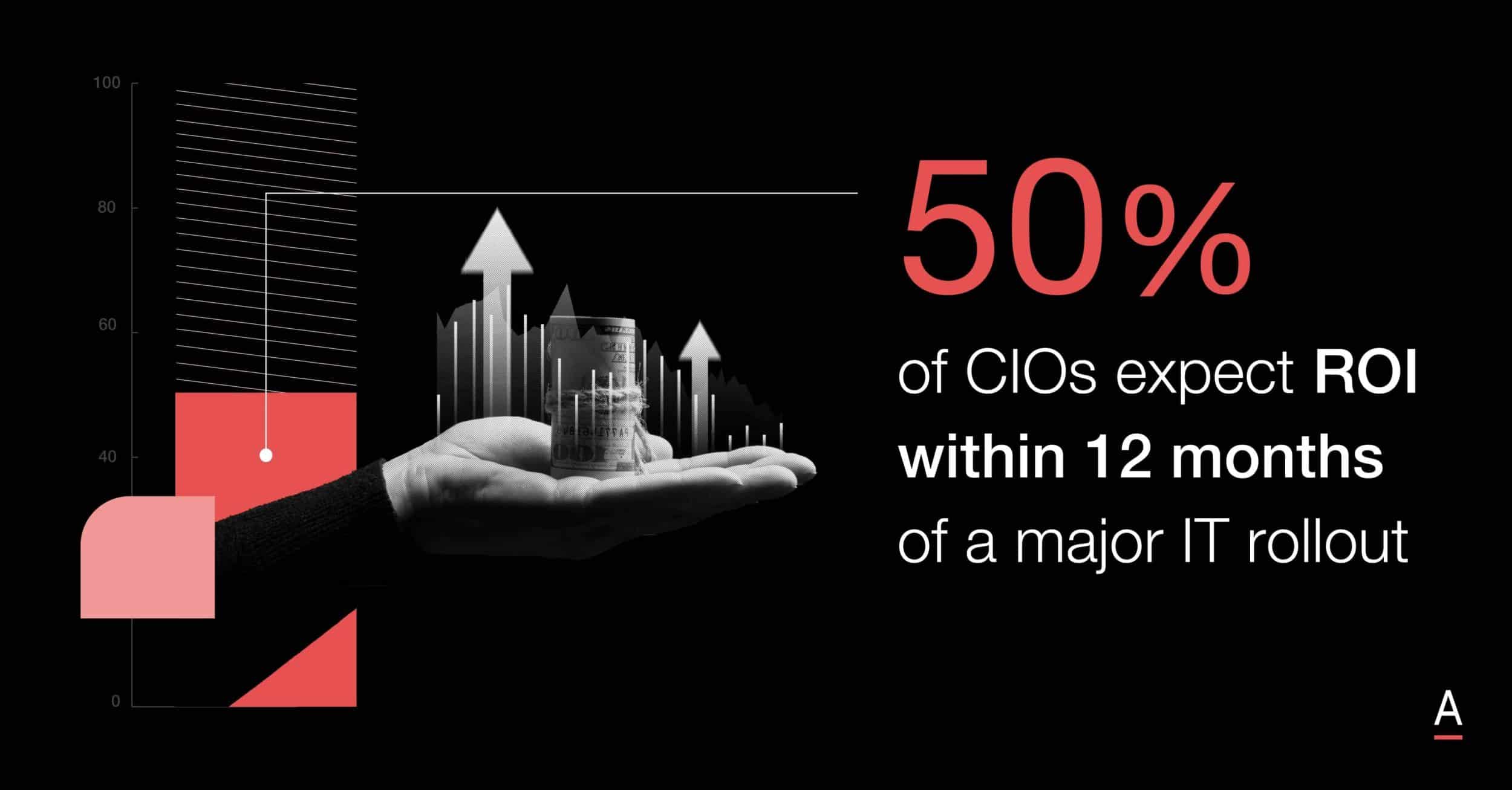
Those expectations turn ERP into an execution program rather than a technology refresh, because value now depends on whether workflows, systems and operational data can function consistently across the business.
In most ERP programs, the failure pattern appears before go live:
- Integration is sequenced after platform selection, even though it determines process performance.
- Data quality is treated as a reporting issue, even though it determines AI readiness.
- Workflow ownership remains fragmented, even though ERP value depends on cross functional execution.
- Implementation milestones dominate governance, even though post deployment complexity determines ROI.
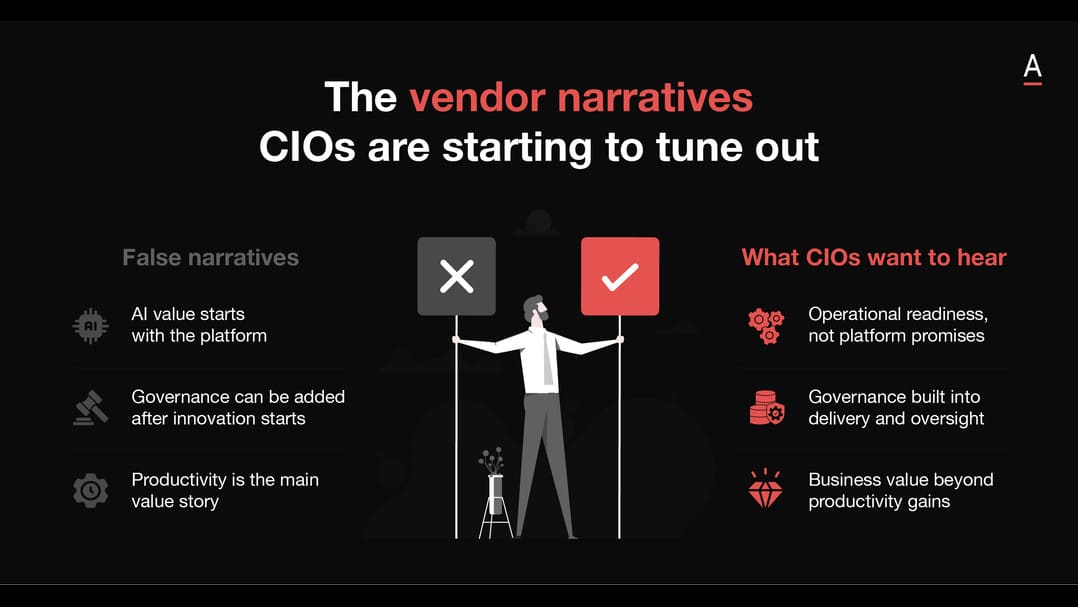
Many ERP programs still sequence the work incorrectly.
Platform selection and implementation are treated as the transformation itself, while integration, workflow ownership and operational standardisation are pushed into later phases.
By that point, the organisation has often recreated the same fragmentation inside a newer system environment.
Integration debt creates operational drag before ERP value appears
Integration debt rarely appears as a single failure point.
More often, it surfaces through manual reconciliation, duplicated approvals, inconsistent reporting logic and automation that breaks when workflows move across functions.
In ADAPT’s interview with Mission Australia CIO Peter Smith, the organisation’s ERP challenge was framed less around software capability and more around integration discipline.
Mission Australia operates across Microsoft, Workday, ServiceNow and smaller niche platforms, and Peter argued that the next phase of value depends on building a more integrated platform environment with stronger data architecture and cleaner operational visibility.
His point about integration efficiency is particularly relevant for ERP leaders.
Peter said the organisation wants to “integrate once” rather than “integrate 15 times,” reducing process debt and improving consistency across the organisation.
That distinction matters because every bespoke integration adds governance overhead, process variation and long term maintenance cost, even when the ERP core itself becomes more modern.
MuleSoft’s 2025 Connectivity Benchmark found that disconnected systems and siloed data continue to limit transformation outcomes, particularly as organisations expand AI and automation initiatives.
Meanwhile, IBM’s analysis of enterprise data integration challenges similarly identified poor data quality, incompatible formats and fragmented hybrid environments as barriers to operational coordination and AI scale.
For ERP programs, those issues are operational constraints, not technical inconveniences.
If finance, operations, procurement and customer systems still follow conflicting process logic after implementation, the business continues carrying the same coordination costs that existed before modernisation began.
AI increases the cost of fragmented workflows
Many ERP business cases now assume future AI enablement, yet AI systems depend on conditions that fragmented enterprise environments struggle to provide.
Agentic workflows, forecasting models and automation tools require reliable process context, trusted operational data and consistent business rules across systems.
Organisations are shifting away from isolated experimentation and toward operational AI maturity, where governance, architecture and workflow consistency become more important than model access alone.
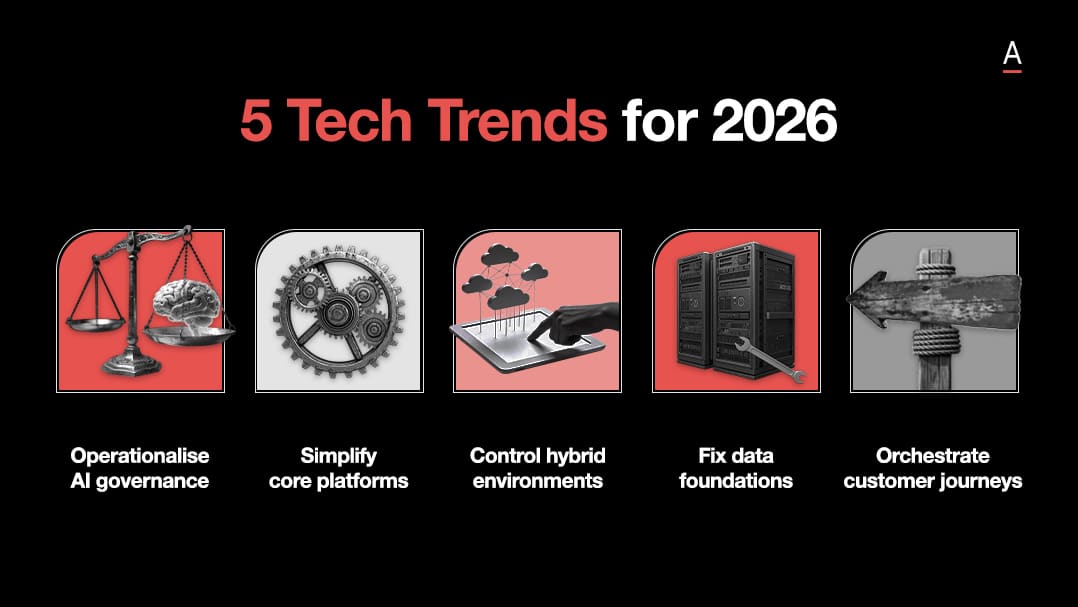
That shift raises the integration standard for ERP programs.
AI agents cannot coordinate effectively across disconnected workflows. Automation cannot scale if operational data structures differ between business units.
Reporting models become unreliable when core systems apply conflicting definitions to the same activity.
At ADAPT’s session on enterprise transformation in the age of agentic AI, Solly Brown, Partner at McKinsey and leader of QuantumBlack ANZ, argued that CIOs now carry a dual mandate: transforming the technology function while helping redesign the wider enterprise around AI.
That requires more than introducing AI tools into existing workflows.
It requires operating model redesign, delivery changes and stronger coordination across systems and functions.
ERP modernisation increasingly becomes the environment where those coordination problems surface first.
Platform replacement does not remove process fragmentation
Many organisations are redesigning platforms to become reusable business assets rather than fragmented technology estates.
The examples that produced stronger outcomes focused heavily on simplification, reuse and governance rather than software deployment alone.
ANZ Divisional CIO Peter Barrass described how the bank turned payments into a reusable platform supporting institutional, retail and external clients, while governance and product management reduced duplication and enabled new revenue opportunities.
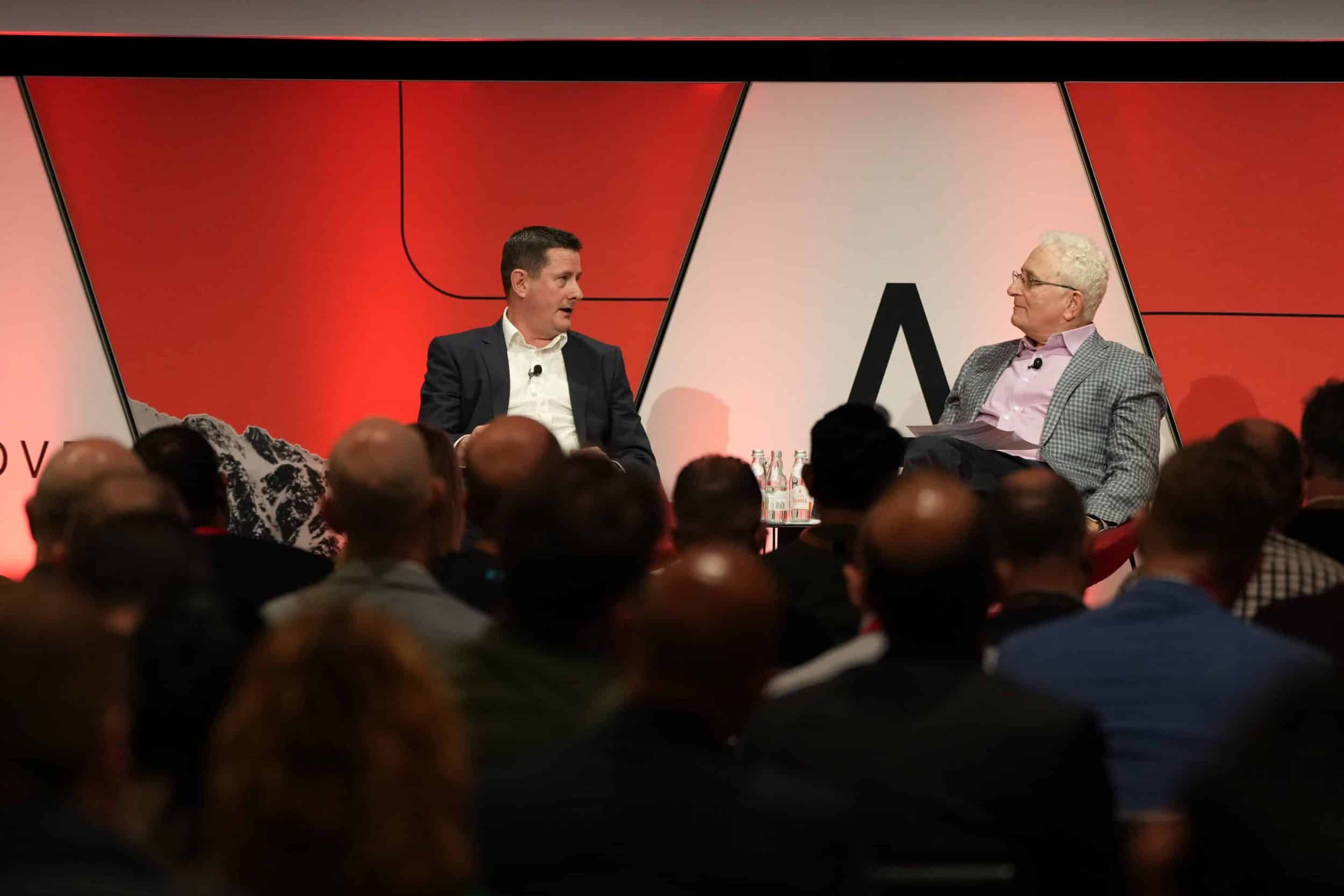
Lion Co’s Group Technology and Digital Transformation Director Ram Kalyanasundaram described replacing an ageing ERP and removing nearly 500 legacy applications, helping simplify the environment and enabling 85% to 90% of orders to move through digital channels.

ERP value emerges when organisations reduce process variation, simplify integrations and standardise workflows around measurable operational outcomes.
A successful implementation timeline does not guarantee any of those conditions.
SAP’s guidance on ERP transformation integration reaches the same conclusion from an architecture perspective.
Its recommendation is to modernise integration capability alongside ERP transformation because integration directly affects supply chain performance, customer experience and operational responsiveness.
Organisations that modernise ERP without redesigning integration architecture often recreate fragmentation around the new platform.
Infrastructure sprawl is increasing execution risk
ERP transformation is also becoming harder because the surrounding technology environment is expanding faster than governance models can stabilise it.
Enterprise compute environments are spreading across cloud platforms, SaaS ecosystems, edge environments and AI services while operational control models struggle to keep pace.
That expansion increases the number of dependencies ERP systems must coordinate across.
A finance workflow may now rely on cloud infrastructure, SaaS applications, identity platforms, analytics environments and automation layers operating under different ownership models and governance standards.
As those dependencies expand, ERP modernisation becomes less about replacing a core system and more about coordinating operational behaviour across a fragmented technology estate.
John Hopping, CTO APAC at Ericsson Enterprise Wireless, raised a similar issue at CIO Edge when discussing AI and robotics environments.
He argued that legacy wireless infrastructure struggles to support connected operations, automation and real time machine-driven workflows at enterprise scale.
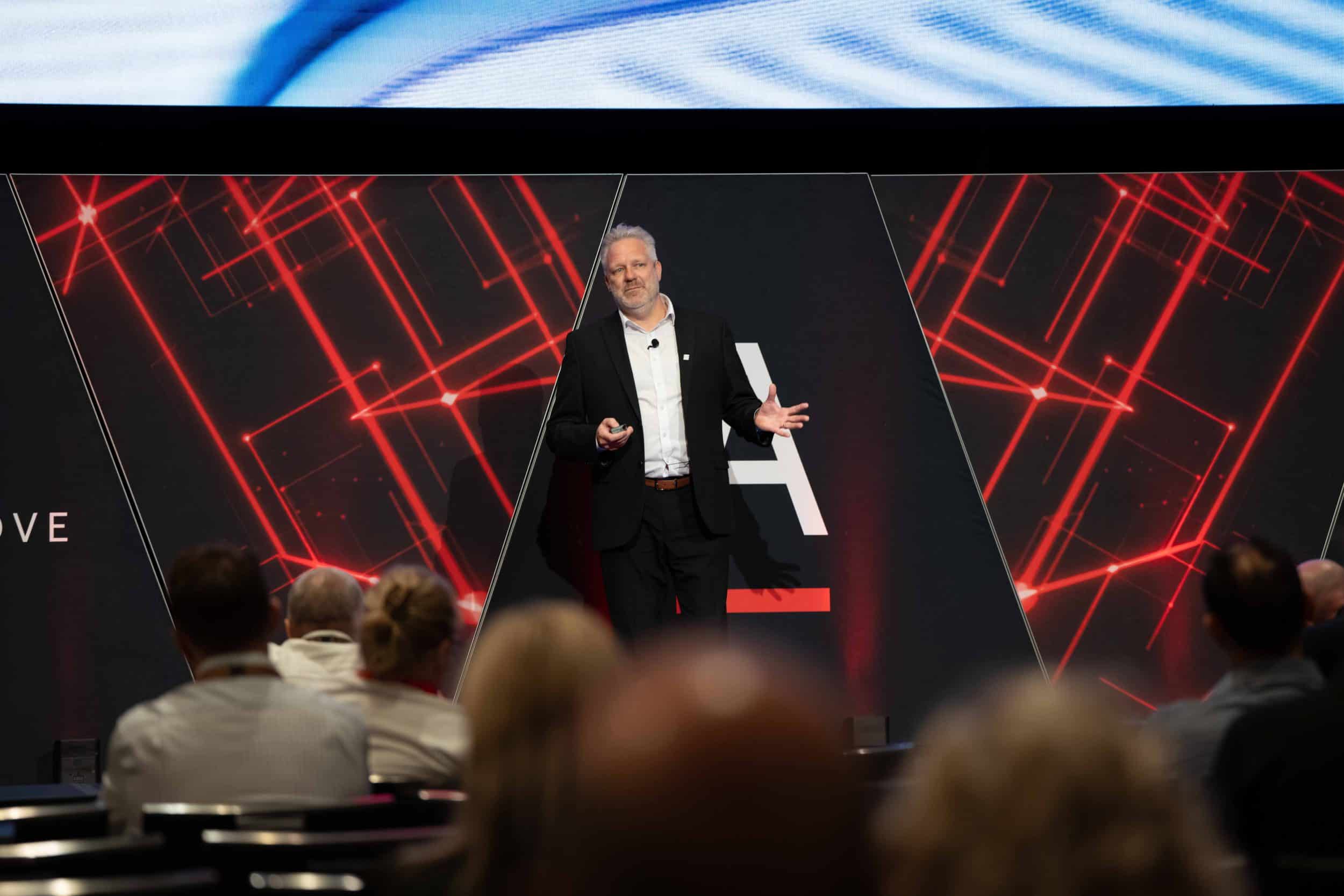
ERP programs increasingly depend on those broader infrastructure conditions because operational workflows now extend far beyond the core platform itself.
The operating test for ERP value
ERP governance needs to move beyond implementation metrics.
Delivery timing, budget control and go live readiness are still critical, but they do not prove that operational complexity has declined.
Before funding expands, leaders should apply a stricter test:
- Define the workflows that will change, including the process owner, baseline metric and expected improvement.
- Identify process critical integrations before implementation, then assign ownership for performance, resilience and governance.
- Standardise business rules across finance, procurement, operations and customer workflows before automation expands.
- Treat data quality as an operating requirement for AI readiness, not a reporting clean up task after deployment.
- Measure value after go live through reduced reconciliation, faster cycle times, lower process duplication and improved workflow visibility.
This is where ERP programs become more commercially defensible.
The business case should show how the platform, integrations, data controls and workflow ownership combine to reduce complexity across the organisation.
Without that discipline, the organisation may complete a successful implementation while continuing to absorb the same coordination costs underneath it.
 Justina Uy
Content Marketing Manager
Justina Uy
Content Marketing Manager
Justina Uy is a data-driven content marketer that thrives on democratising elite know-how to empower Australia’s underdogs.
Skilled at translating complex ideas into a compelling story across formats and channels, she shifts seamlessly between writing long-form articles, creating viral social media posts, and producing thumb-stopping videos.
Since 2015, Justina executes her vision through a sophisticated understanding of the rapidly evolving digital and business landscape to serve entertaining and educational insights to the executive community.
Less Join the ADAPT
 Insider Community
Get the latest A/NZ market research and insights on the core trends impacting leaders.