














Reclaiming ERP value in the agentic era demands better integration, says Mission Australia CIO
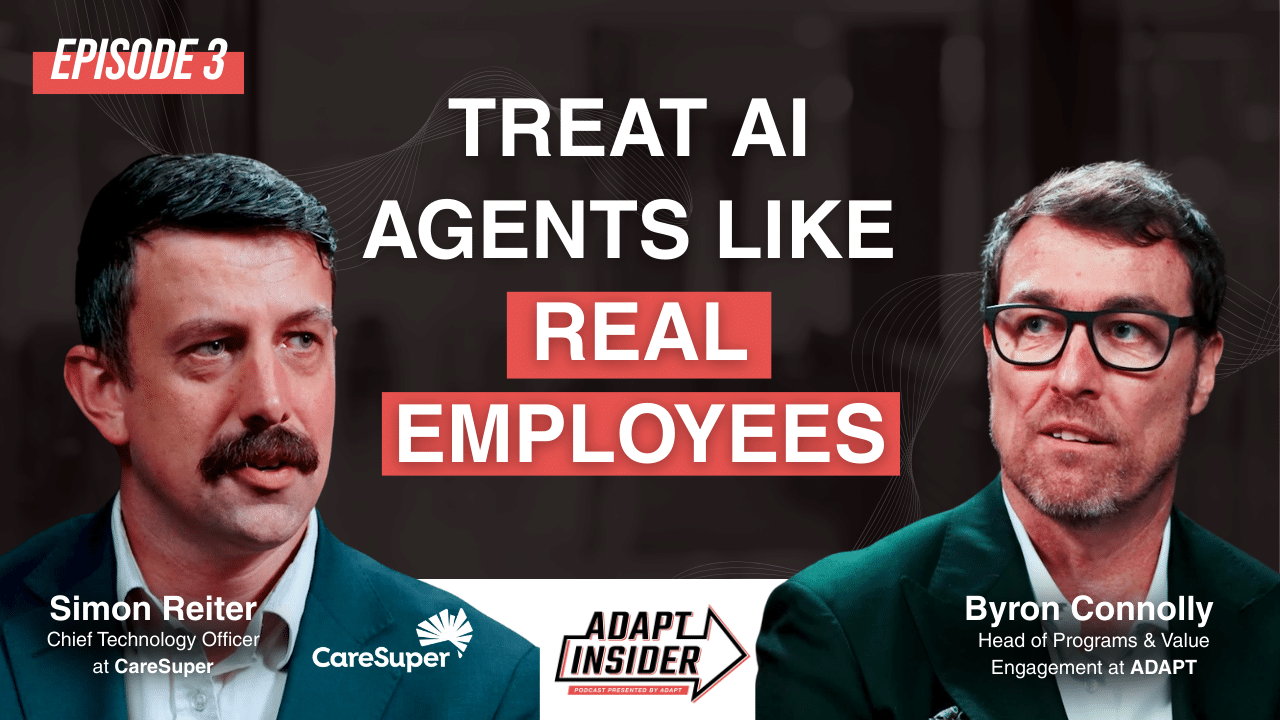
In this interview with ADAPT’s Byron Connolly, Mission Australia CIO Peter Smith explains why better integration, cleaner data, and measured AI matter more than ERP upgrades alone.


 Published Apr 20, 2026 in
Peer Insights
Strategic Business Initiatives
Contributors
Peter Smith
Byron Connolly
Published Apr 20, 2026 in
Peer Insights
Strategic Business Initiatives
Contributors
Peter Smith
Byron Connolly
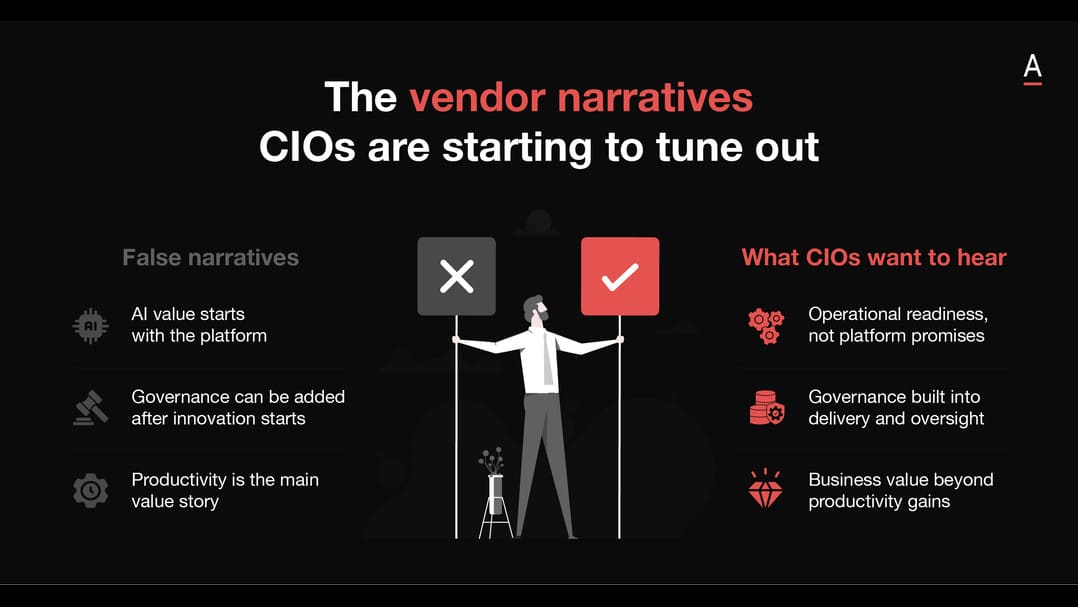
A new ERP era is emerging as Australian organisations start to take a closer look at the value these core platforms deliver in the age of AI.
A major issue for many is how to move beyond vendor-driven maintenance cycles and upgrades, with limited ROI visibility, to more modular solutions that support AI innovations.
ADAPT’s data shows that only 37% of organisations are engaged in ERP modernisation programs with most remaining on vendor maintenance.
CIOs cite legacy risk and vendor-pressured migrations as the top barriers to gaining the agility they need from these core platforms.
Large Christian charity organisation, Mission Australia, is in the fortunate position of running a collection of Microsoft, Workday and ServiceNow cloud and SaaS platforms, alongside some smaller niche systems, that have been continuously evolving over recent years.
“We are certainly getting quite good value out of them. Could we get more? Absolutely. That’s the ticket we need over the next couple of years [to] provide a really strong, integrated platform approach that targets the key things the business needs”, says Mission Australia’s Chief Information Officer, Peter Smith.
Like many organisations, Smith says a significant ERP gap has emerged in its data architecture, ensuring that data is high-quality and understandable, while also reducing integration work.
“We’re crafting an approach that says, ‘we’re going to integrate once; we’re not going to integrate 15 times’ and really getting that level of efficiency so that we reduce the process debt, make it more efficient and achieve better visibility of what is happening.”
AI to reduce process debt, improve service
Smith says Mission Australia has an appetite for AI technologies and is taking a “measured approach” to deployments, first bedding down governance, risk and compliance policies.
“Now, we are working on how we build those things out and where they make the most sense. I think the challenge for us is finding the pieces and the use cases that really add value, that justify the cost and the time focus because we’re all time poor.”
Smith says the organisation uses Microsoft Copilot Studio, a low code platform for building AI agents with “some connection” to Microsoft Foundry, the Azure platform-as-a-service offering for AI operations and app development.
AI will play a role in helping Mission Australia reduce process debt and better support its 2400 staff who deliver services to people in need across the country.
Mission Australia is exploring the best ways to use gen AI to dictate case notes, improving the quality of observations, reducing the time taken to produce them and providing automatic follow up for clients.
“It’s [about] reducing time and [improving] efficiency, but we’re also adding in quality uplifts. We’re training it [AI] to create better and more inclusive case notes for people. That will lift the quality of our case notes….it hasn’t been proven yet, but I believe it will lift the quality of care for clients.”
Peter says that agentic AI could also be used to automate the process of referring clients to additional service providers or identifying new information that field workers need to provide to people.
“I think eventually that will lead towards agentic AI dealing with clients directly to support them even more. That’s critical for us; anywhere we can reduce the cognitive load on our staff [and] increase their capability to support clients better, anywhere we can reduce admin overhead, that’s what we are working on.”
Peter adds that AI is still a “way off” from being deployed at scale as [AI] compliance policies already in place need greater maturity.
“They all need to be repeatedly carried out before I am comfortable rolling out AI on a massive scale. We’re already playing with some elements now, testing them out…but we need to make sure that our data and information [about] our clients and staff is protected at all times. So, we take a measured approach but we’re fairly ambitious at the same time.”
AI ball in the CIO’s court
Peter is responsible for Mission Australia’s AI strategy which he says is logical given the complexity of the technology.
“But I do believe that all execs will need to have a deeper understanding of, and responsibility for, these issues and concerns going forward; the same as they do now for cyber security.
“Every exec is responsible for understanding the impact of cyber security and whether they’re following the line in that space.
“It’s the same with AI and [we’re] willing to do more work to educate and support them…as we do with the Board, to make sure they understand it as well. Luckily, our [execs and Board] do to a large degree, so I’ve got some good support there.”
 Peter Smith
CIO at Mission Australia
Peter Smith
CIO at Mission Australia
An accomplished executive leader committed to driving positive business outcomes through customer experience, digital transformation, and strong leadership. Collaborates effectively as part of a leadership team to define and execute business strategies that promote sustainable growth. Effectively manages multiple concurrent projects whilst handling competing business priorities.
Demonstrates sound financial and commercial acumen and ensures cost-effective business operations. A skilled negotiator able to persuade others towards the desired outcome and communicates effectively with a variety of audiences. Currently seeking opportunities to take on an expanded CIO role or to transition into a CEO position.
Less Byron Connolly
Head of Programs & Value Engagement at ADAPT
Byron Connolly
Head of Programs & Value Engagement at ADAPT
Byron is a highly experienced technology and business journalist, editor, corporate writer, and event producer.
Prior to joining ADAPT, he was the editor-in-chief at CIO Australia and associate editor at CSO Australia. He also created and led the well-known CIO50 awards program in Australia and The CIO Show podcast.
Byron creates valuable insights for our community of senior technology and business professionals that help them reach their organisational and professional goals. He has a passion for uncovering stories about the careers and personal philosophies of Australia’s top technology and digital executives.
When he is not working, Byron enjoys hot yoga, swimming, running and spending time with his family. He completed the North Face 100km ultra marathon in the NSW Blue Mountains in 2012 and 2013.
Less Join the ADAPT
 Insider Community
Get the latest A/NZ market research and insights on the core trends impacting leaders.
Join the ADAPT Insider Community
Get the latest A/NZ market research and insights on the core trends impacting leaders.