















Finance leaders cannot scale AI agents on messy data and old ROI assumptions, says Workday’s Luke Bebbington
In this ADAPT interview, Industry Advisor, APAC at Workday Luke Bebbington explains why agentic AI is exposing weak data foundations, challenging traditional ROI models, and forcing finance teams to rethink how value is measured and governed.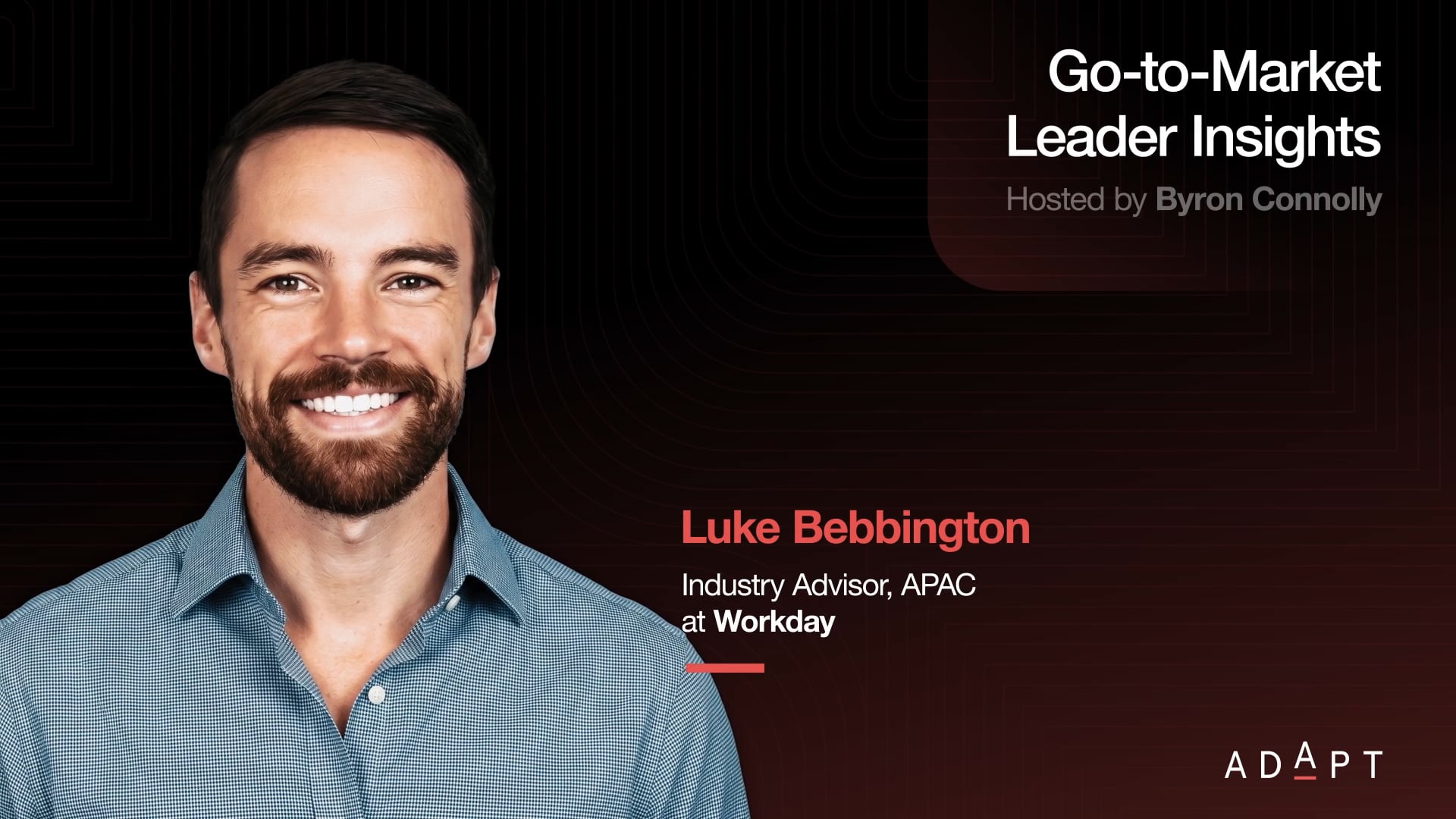


 Published Apr 24, 2026 in
Peer Insights
Finance
Contributors
Luke Bebbington
Byron Connolly
Published Apr 24, 2026 in
Peer Insights
Finance
Contributors
Luke Bebbington
Byron Connolly
AI agents are creating a new finance challenge: organisations need cleaner data, tighter governance, and a better way to measure value than traditional ROI models were designed to provide.
Luke Bebbington spent 20 years in finance roles across Australia, New Zealand and the UK before joining enterprise cloud applications provider Workday in 2022.
He was first exposed to AI in a work environment in 2014, when he was a senior finance exec at UK-based hedge fund management company, Man Group.
At the time the company began experimenting with AI to boost its algorithmic trading capabilities.
Fast forward to 2022, when ChatGPT was released and competing large language models (LLMs) soon followed. Over the past 18 months, agentic AI tools have also flooded the market.
Luke says agentic solutions can automate much of the daily activities undertaken by finance teams, allowing them to focus on higher-value tasks.
“If I look back on my career around the globe, the world is moving fast, it’s very volatile. Organisations are always looking for ways to grow revenues and margins, and a lot of the work finance teams do is quite reactive to that. We don’t always have time to step back and do that competitor analysis.
“Often, we’re forced to make decisions based on gut feel and ‘let’s experiment’, which reflect the reality of where we’ve come from. But having more time [as finance leaders], to work with the business on where it’s going…there’s a huge opportunity there to help grow our organisations”, he says.
Agentic lessons learned
Since his time at Man Group, Luke has built dozens of agents in various finance roles, giving him time to uncover the nuances of these technologies and blockers that prevent successful deployments.
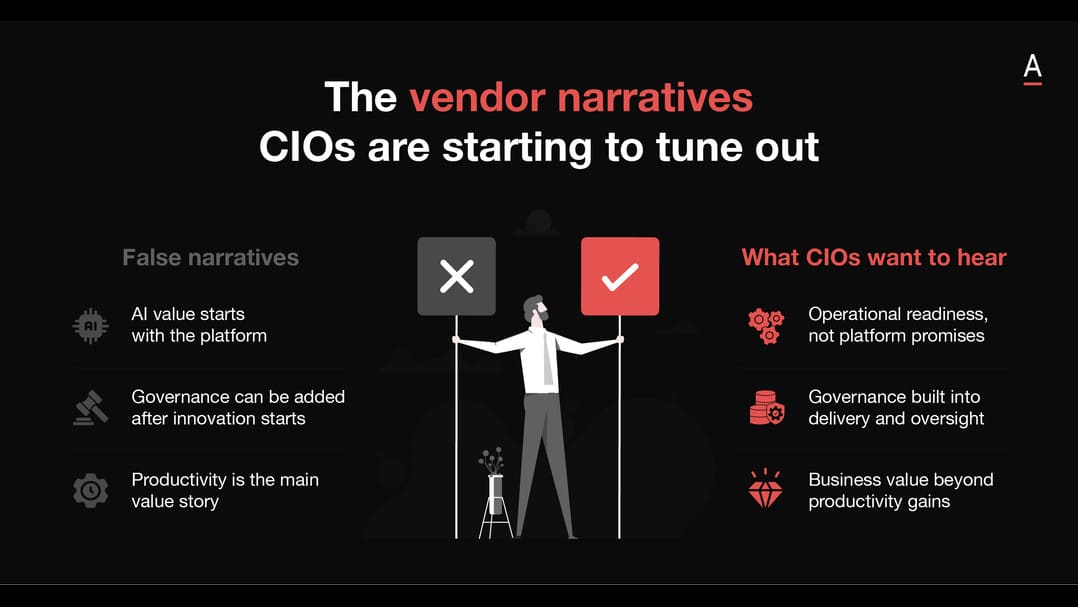
The first challenge for organisations, he says, is establishing clean data foundations and robust governance processes.
ADAPT’s data shows Australian CFOs are hesitant to roll out AI agents across their finance functions and wider organisations because their data environments are not ready.
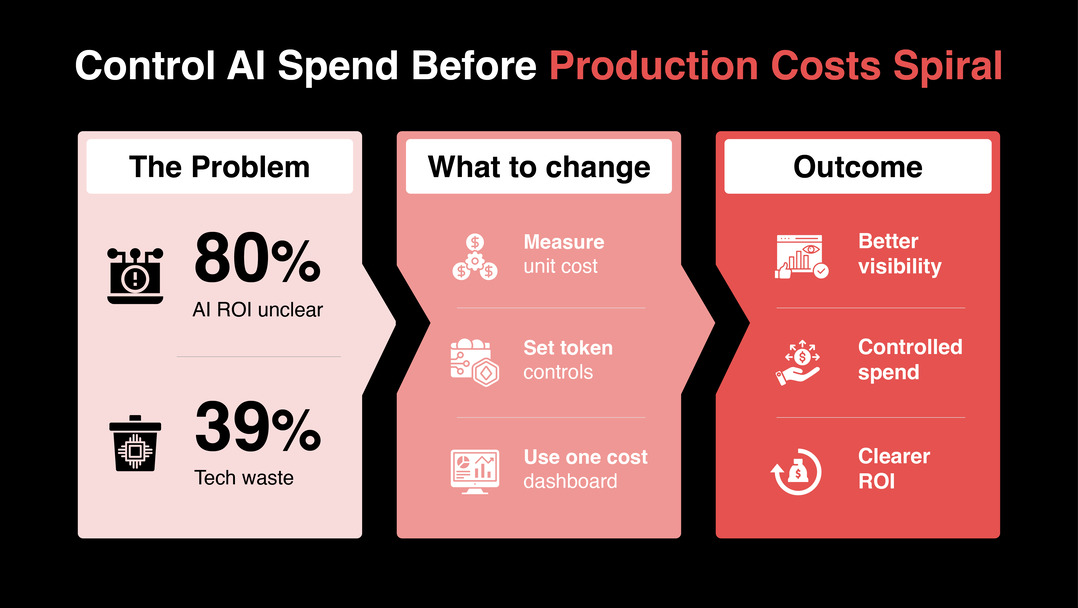
This caution comes at a time when 8 out of 10 CFOs say they are struggling to track returns on their technology investments, according to ADAPT’s analysis.
“You need a clean foundation; it’s really a non-negotiable if you want to actively use AI within your finance function. It [lack of data readiness] is a tough challenge for CFOs and their organisations, because everyone is looking to adopt AI right now and is chasing quick ROI.”
“The reality is that if you don’t have that [data] foundation correct, it’s going to be a struggle for your organisation to actually get an ROI and deliver value.”
Luke says organisations are dealing with multiple versions of the truth, much the same way as public LLMs, given their probabilistic nature, hallucinate or make ‘best guess’ answers to questions based on information that is available on the web.
“[Organisations] have their operational systems; data gets fed into their GL [general ledger] before going through some sort of ‘black box.’ Then there will be a new product, a new sales contract in there – something will have gone wrong and you have to post journals to correct that [before information is] sent through to be consolidated.
“Then you’re posting consolidation journals to tidy up the data [before] planning and forecasting teams do the same. Lo and behold, you’ve now got four different versions of the numbers.”
In this environment, running agentic AI models to generate reliable and accurate insights becomes a massive struggle and organisations risk setting themselves up for failure if these issues aren’t addressed, he says.
Providing people with the skills they need to adopt AI is important. Yet only 6% of senior technology and data execs surveyed by ADAPT in 2025 say that their organisations have mandated AI training.
“Obviously, a lot of individuals are training themselves, but that’s mind boggling. It’s difficult to adopt technology when you don’t understand it. So, there’s a lot of work that needs to be done.”
Finance teams need to be accountable for the work that agents and other AI tools are doing so governance is key – ensuring there’s an audit trail, executive support for decisions that are being made and auditors are satisfied with the results these tools are providing.
Agent sprawl also needs to be well governed.
“Agents have access to data and are taking actions with that data. Having controls over what data they can access and what actions they can take is really fundamental.
“That’s one of the reasons we work with so many organisations around AI agents at Workday. You need a safe environment to experiment, build confidence and maintain that auditability and control”, says Luke.
Tracking agent ROI
Luke says traditional ROI frameworks “don’t fit nicely’ when applied to agentic AI deployments because agents are intangible assets.
He says these types of assets, which also include the value and output that human workers provide, are not recognised on company balance sheets. This has always been a conundrum for finance professionals.
“That’s the reality with AI agents. We need to think about them more from an output capacity [perspective] and be careful that we don’t just track [agents] and compare [them] on a ‘cost basis.’
“For example, we don’t hire a software engineer [and ask], how many lines of code has that software engineer written? That’s the danger because it’s not what we need to be achieving.
“We need to look at the output. What have we actually delivered from this agent or from that person in this example? And that’s how we can determine what the ROI is here.”
As an example, Luke points to AI agents that automatically generate flash reports, which are summaries of a company’s financial and operational KPIs. This type of report may take a human one hour to compile every morning, an agent can generate it instantly.
These reports are often timelier and prompt more questions from executive teams, leading to improved financial insights.
“So, all of a sudden, that’s delivering more value, but it doesn’t fit nicely into the…traditional discounted cash flow model that we’re used to in finance. There are a lot of intangible benefits and that represents a big change for teams”, he says.
Luke also notes there’s an upfront ‘set up cost’ before organisations start generating value from agents.
“With those first two or three agents, you spend a lot of time and mental energy getting your head around it. You’re trying to weigh outputs against the ROI on that sort of cost, and it doesn’t necessarily stack up.”
“But as you start to roll out agents more widely and your teams know how to use and review those agents, then the ROI [becomes clearer].”
 Luke Bebbington
Industry Advisor, APAC at Workday
Luke Bebbington
Industry Advisor, APAC at Workday
Luke has worked as a finance director across Europe, the Americas and Asia Pacific — leading teams through transformation, complexity and change in some of the world’s most demanding markets. Today, he leads the Office of the CFO function for APAC at Workday, partnering with finance leaders on how the role is evolving — from technology and operating models through to the capabilities teams need to succeed. He spends a lot of time working hands-on with AI to understand what’s now possible, building and testing where it genuinely changes outcomes for finance teams.
Less Byron Connolly
Head of Programs & Value Engagement at ADAPT
Byron Connolly
Head of Programs & Value Engagement at ADAPT
Byron is a highly experienced technology and business journalist, editor, corporate writer, and event producer.
Prior to joining ADAPT, he was the editor-in-chief at CIO Australia and associate editor at CSO Australia. He also created and led the well-known CIO50 awards program in Australia and The CIO Show podcast.
Byron creates valuable insights for our community of senior technology and business professionals that help them reach their organisational and professional goals. He has a passion for uncovering stories about the careers and personal philosophies of Australia’s top technology and digital executives.
When he is not working, Byron enjoys hot yoga, swimming, running and spending time with his family. He completed the North Face 100km ultra marathon in the NSW Blue Mountains in 2012 and 2013.
Less Join the ADAPT
 Insider Community
Get the latest A/NZ market research and insights on the core trends impacting leaders.
Join the ADAPT Insider Community
Get the latest A/NZ market research and insights on the core trends impacting leaders.