

















Accenture ANZ’s CFO on the leadership blind spot that pushes capable women out
Samantha Randall, Chief Financial Officer ANZ at Accenture, reflects on the leadership habits and systems that quietly determine who advances, who stays, and who eventually leaves.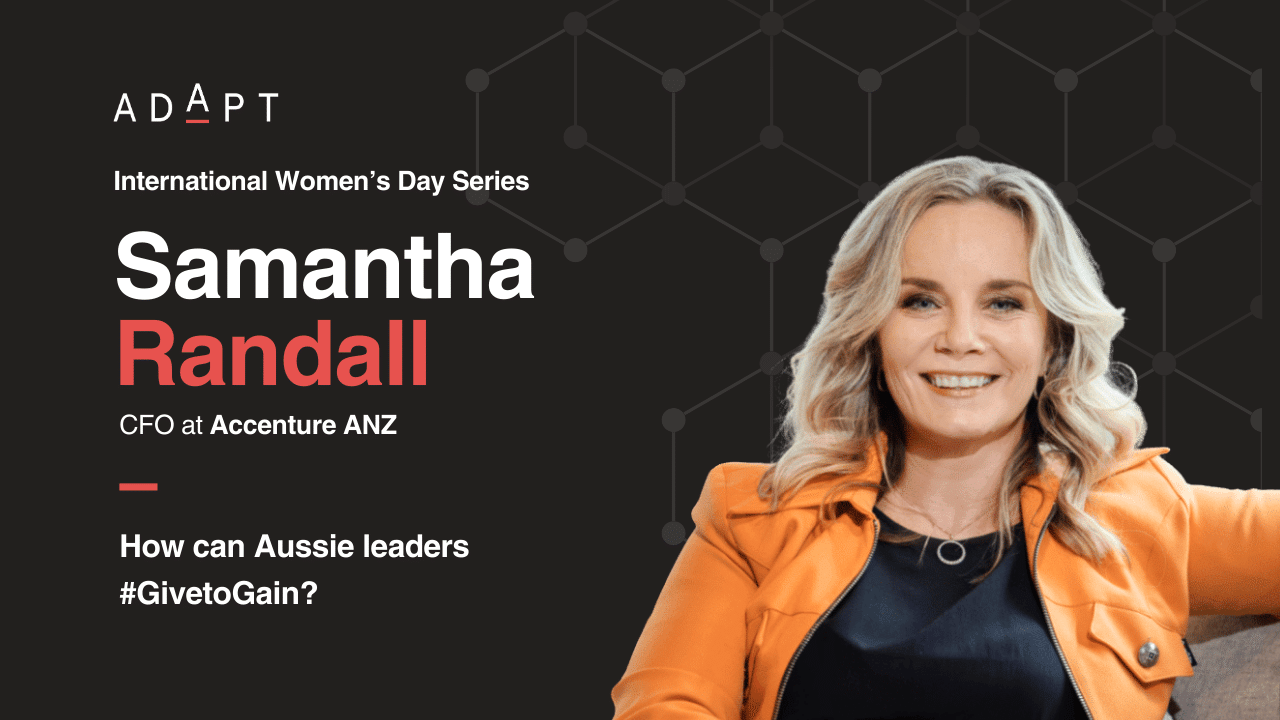


 Published Feb 25, 2026 in
Peer Insights
People
Contributors
Justina Uy
Samantha Randall
Published Feb 25, 2026 in
Peer Insights
People
Contributors
Justina Uy
Samantha Randall
Samantha Randall, Chief Financial Officer ANZ at Accenture, reflects on the leadership habits and systems that quietly determine who advances, who stays, and who eventually leaves.
She has built her career across senior finance roles in complex, matrixed organisations, navigating transformation, accountability, and growth at scale.
Across that journey, she has seen how performance alone rarely dictates progression. Instead, outcomes are shaped by who speaks up, who is noticed, and who quietly disengages when those signals go unseen.
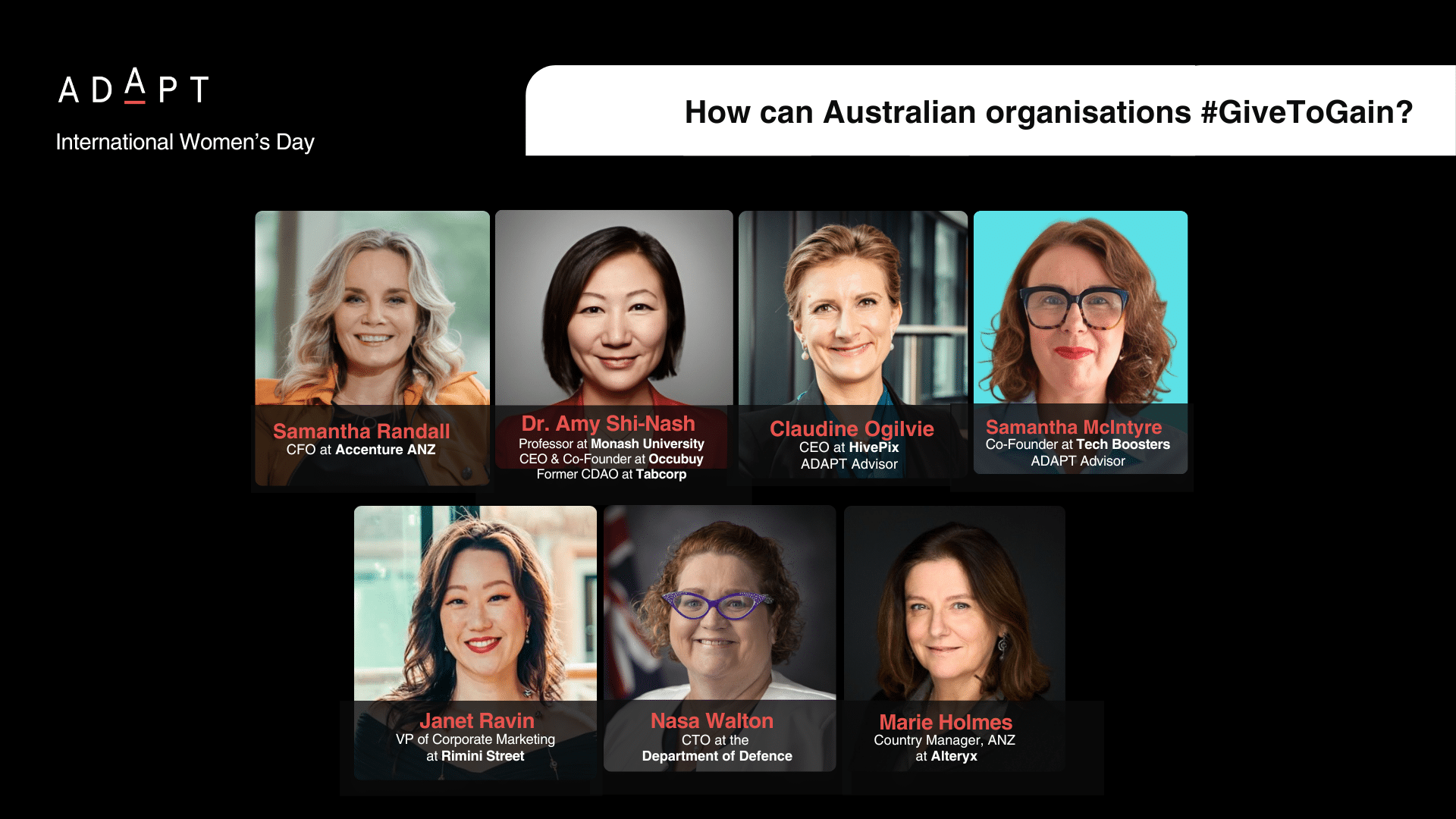
This year’s International Women’s Day theme, #GiveToGain, focuses on the idea that real progress comes from what leaders are willing to give, advocacy, flexibility, trust, and opportunity, and what organisations gain when those systems are intentional.
As part of ADAPT’s IWD 2026 series, Content Marketing Manager Justina Uy spoke with Samantha about the moments that shaped her career, the warning signs leaders often miss, and why the greatest risk sits in the silence that follows unmet expectations.
When advocacy changes everything
Looking back, Samantha can point to distinct moments where her career shifted because someone was willing to advocate for her in rooms she was not in.
Early in her career, she chose to proactively build relationships beyond her direct reporting line, sharing regular updates with a local leader she was not required to engage.
That decision led to her being put forward for a financial controller role well outside her original remit.
“He gave me a seat at the table, and that completely shifted the direction of my career.”
Years later, stepping into her current CFO role, Samantha again backed herself by initiating a data led conversation with a newly appointed CEO.
Presenting clear facts about what the business needed to stabilise and grow built trust early and created a platform for influence that extended well beyond finance.
The blind spot leaders miss in promotion decisions
As a senior leader, Samantha has become acutely aware of how leadership teams often misread who needs support when progression stalls.
She recalls sitting in promotion discussions where reassurance and attention flowed quickly toward vocal male candidates who had missed out, while equally capable women went unmentioned.
Knowing her mentees well, she recognised the risk immediately.
“The ones who go quiet are often the ones who will talk with their feet, and you lose them before you realise anything is wrong.”
For Samantha, this is where leadership responsibility sharpens. Giving back is not about intention, it is about intervention.
It means noticing who is not speaking, understanding how disappointment manifests differently, and ensuring advocacy does not default to the loudest voices.
When silence replaces engagement
One of the clearest warning signs Samantha watches for is behavioural shift.
Women who were once engaged, collaborative, and confident in challenging ideas gradually stop contributing.
They accept decisions rather than shaping them.
“When they stop challenging and just accept the situation, you are already losing them.”
This silence is often misinterpreted as contentment.
In reality, it signals disengagement and unmet ambition.
Samantha encourages leaders to act early by starting conversations, acknowledging missed opportunities, and addressing career progression before frustration hardens into exit.
Flexibility as a retention lever
Samantha credits flexible work arrangements as a critical enabler of her own leadership longevity.
Long before flexibility became mainstream, she was able to structure her work around outcomes rather than fixed hours, balancing senior responsibilities with family commitments.
“I did not need to be there from nine to five. What mattered was that the outcomes were delivered.”
She argues that flexibility builds loyalty, motivation, and sustained performance, particularly at senior levels.
Organisations that continue to equate presence with productivity risk losing experienced leaders who have already demonstrated their value.
Confidence gaps in hiring and progression
Samantha also challenges how confidence is interpreted during recruitment and promotion processes.
Women frequently disqualify themselves if they do not meet every requirement, while men are more likely to back themselves with partial alignment.
“You do not need 100% of the criteria. You need the ability to deliver value and grow into the role.”
She believes interviewers and leaders must adapt how they assess potential, drawing out transferable experience rather than relying on self promotion.
Mentors play a vital role in helping women articulate their value proposition and step forward before they feel fully ready.
Giving early experience its due
For women entering the workforce, Samantha’s advice is grounded and practical.
Every role builds skills that matter, even when the title appears modest.
Early experiences develop leadership, accountability, and decision making in ways that compound over time.
“Do not discount what you have learned just because the role sounds small.”
She also emphasises the importance of building real connections.
In an increasingly automated world, relationships remain one of the most powerful accelerators of opportunity, learning, and long term growth.
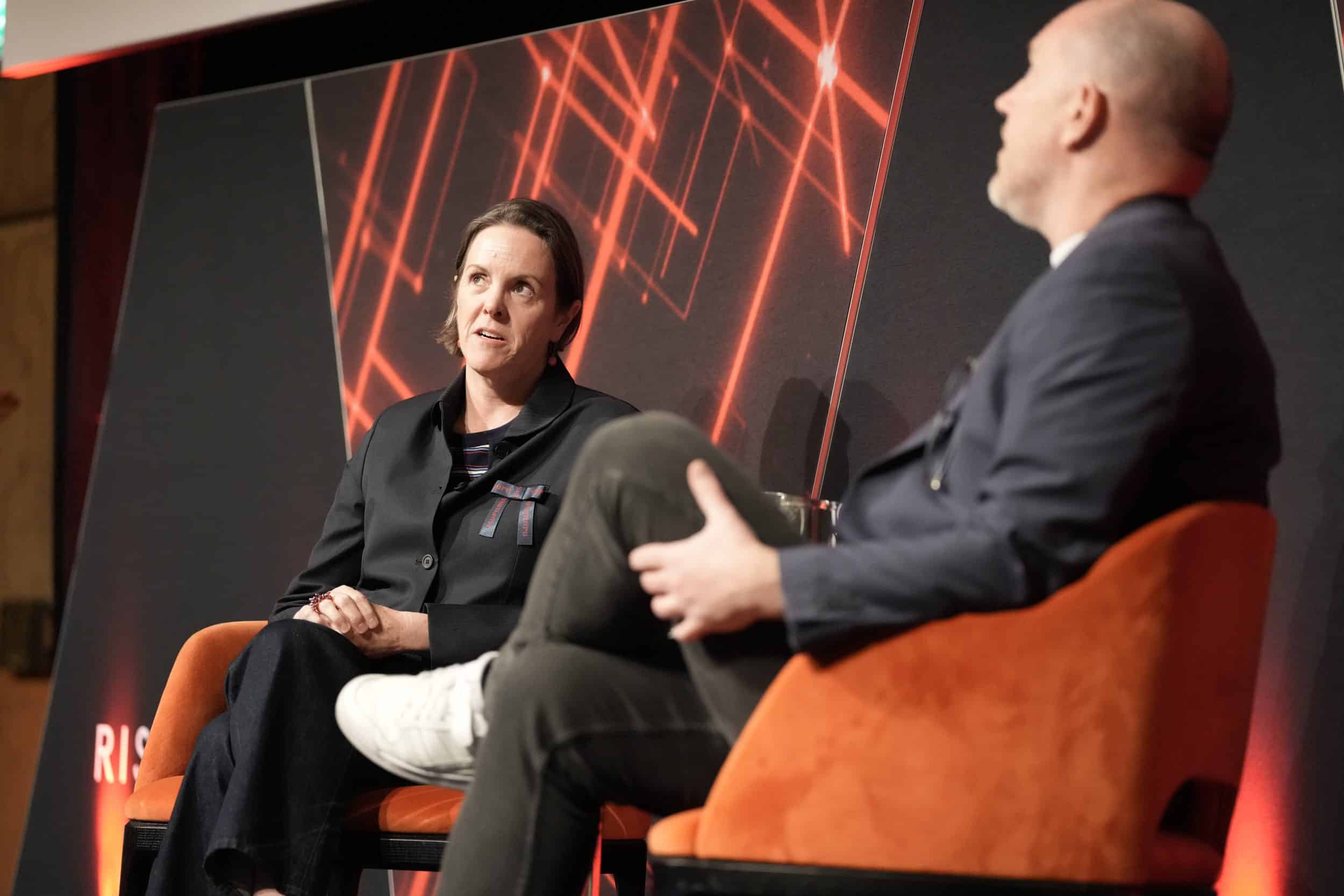
Samantha Randall also shared her perspective as a panellist at ADAPT’s CFO Edge, where she joined finance leaders from Westpac and the Australian Red Cross to discuss how CFOs shape value, accountability, and adoption in digital transformation.
 Justina Uy
Content Marketing Manager
Justina Uy
Content Marketing Manager
Justina Uy is a data-driven content marketer that thrives on democratising elite know-how to empower Australia’s underdogs.
Skilled at translating complex ideas into a compelling story across formats and channels, she shifts seamlessly between writing long-form articles, creating viral social media posts, and producing thumb-stopping videos.
Since 2015, Justina executes her vision through a sophisticated understanding of the rapidly evolving digital and business landscape to serve entertaining and educational insights to the executive community.
Less Samantha Randall
CFO ANZ at Accenture
Samantha Randall
CFO ANZ at Accenture
Experienced Finance Professional with a demonstrated history of working in the Information Technology and Services Industry. Highly skilled in all aspects of Corporate Financial Management, Advisory, Cash Flow, Treasury, Mergers & Acquisitions (M&A), Business Collaboration, mentoring and building High Performing Finance teams.
 Join the ADAPT
 Insider Community
Get the latest A/NZ market research and insights on the core trends impacting leaders.
Join the ADAPT Insider Community
Get the latest A/NZ market research and insights on the core trends impacting leaders.