















International Women’s Day 2026: How can Australian organisations #GiveToGain?
ADAPT celebrates International Women’s Day 2026 by shining a light on the perspectives of female leaders trailblazing in Australian tech and business, sharing how organisations can Give to Gain.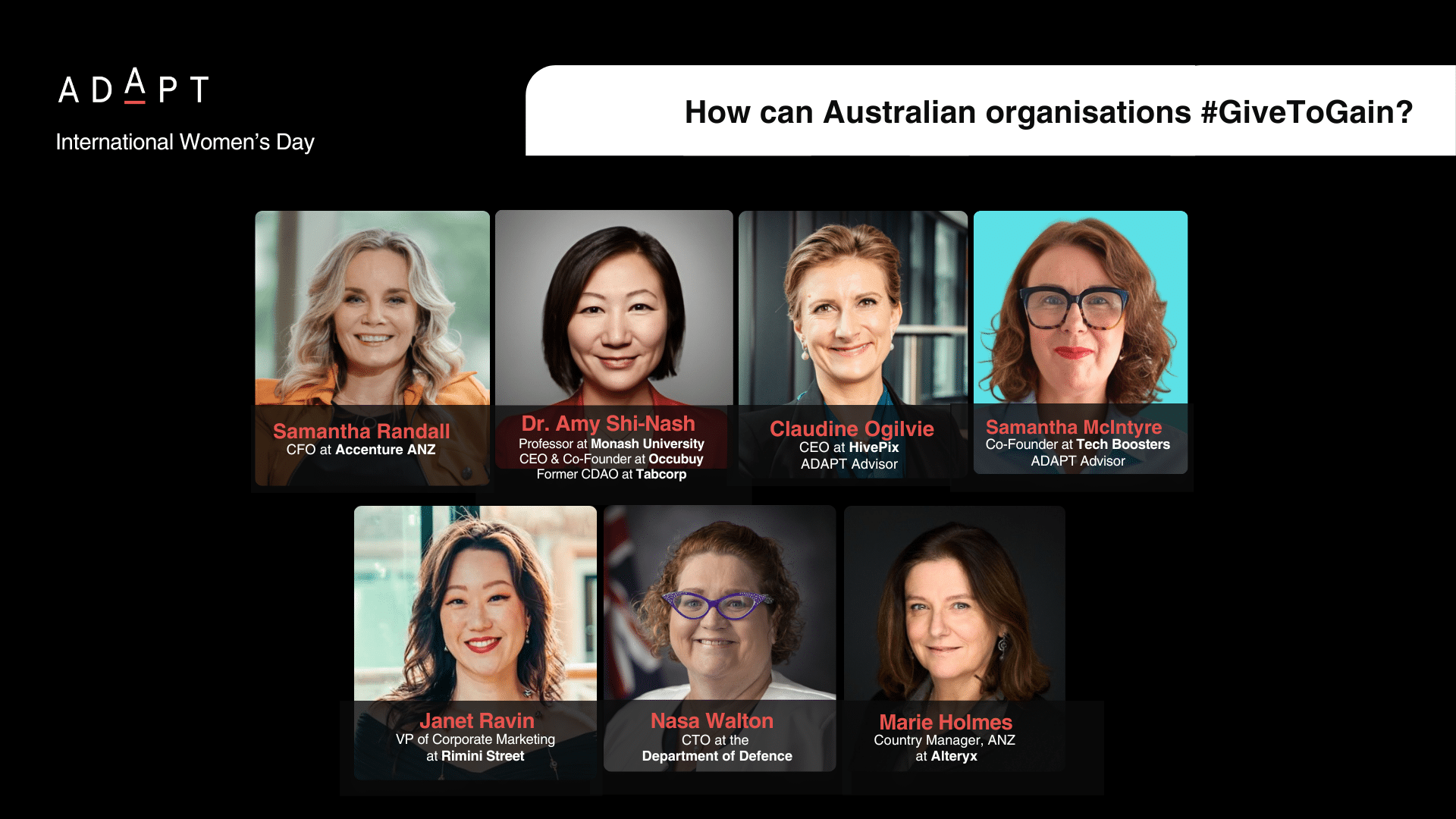


 Published Mar 4, 2026 in
Articles
People
Contributors
Justina Uy
Published Mar 4, 2026 in
Articles
People
Contributors
Justina Uy
ADAPT celebrates International Women’s Day 2026 by shining a light on the perspectives of female leaders trailblazing in Australian tech and business, sharing how organisations can Give to Gain.
International Women’s Day still matters because career progression in technology is shaped less by intent, and more by the everyday systems leaders reinforce.
Women continue to deliver results, yet access to sponsorship, visibility, flexibility, and decision making forums remains uneven across many organisations.
In 2026, the theme Give to Gain is a practical challenge to leaders, give people the support and opportunity to lead at their best, and you gain stronger performance, deeper retention, and better decisions.
In this series, ADAPT’s Content Lead Justina Uy spoke with seven technology and business leaders from Australia’s leading organisations about the habits that decide who advances, who stays, and who quietly leaves.
Build allies, then actively lift your shining stars
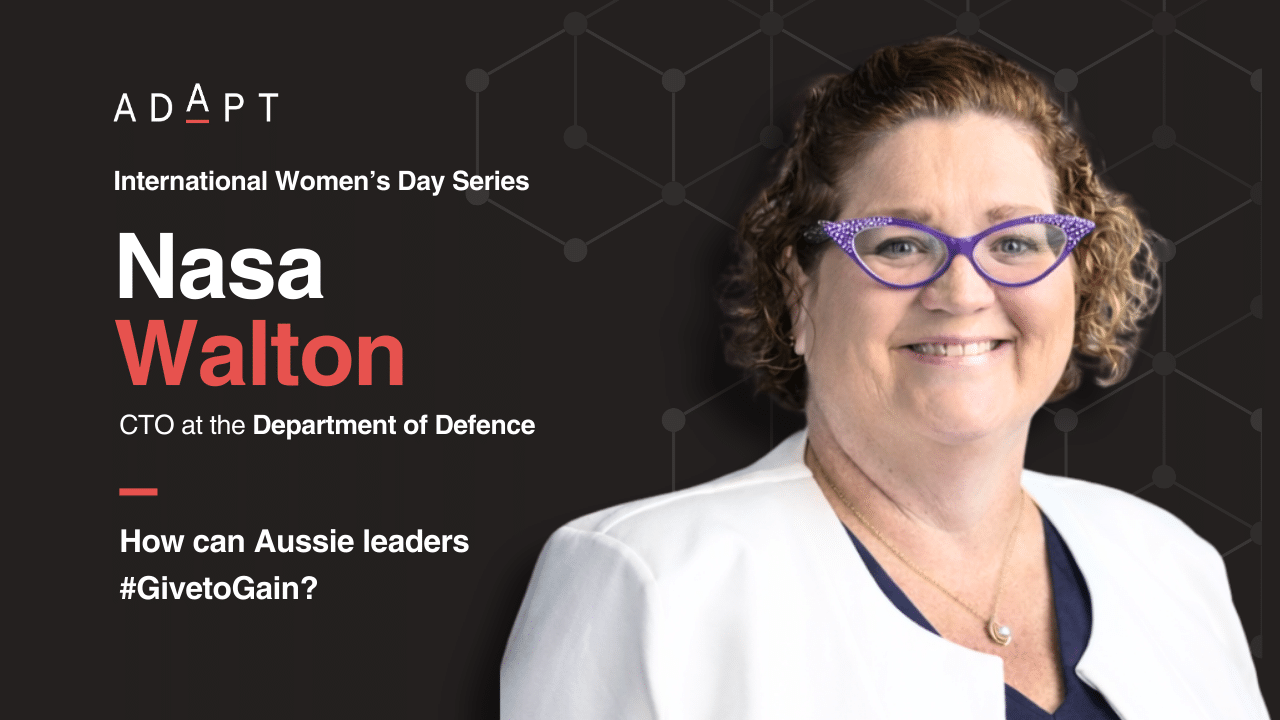
Nasa Walton, Chief Technology Officer at the Department of Defence, reinforced that advocacy does not only come from formal sponsors, it can come from mentors, supervisors, peers, and the wider teams you work with.
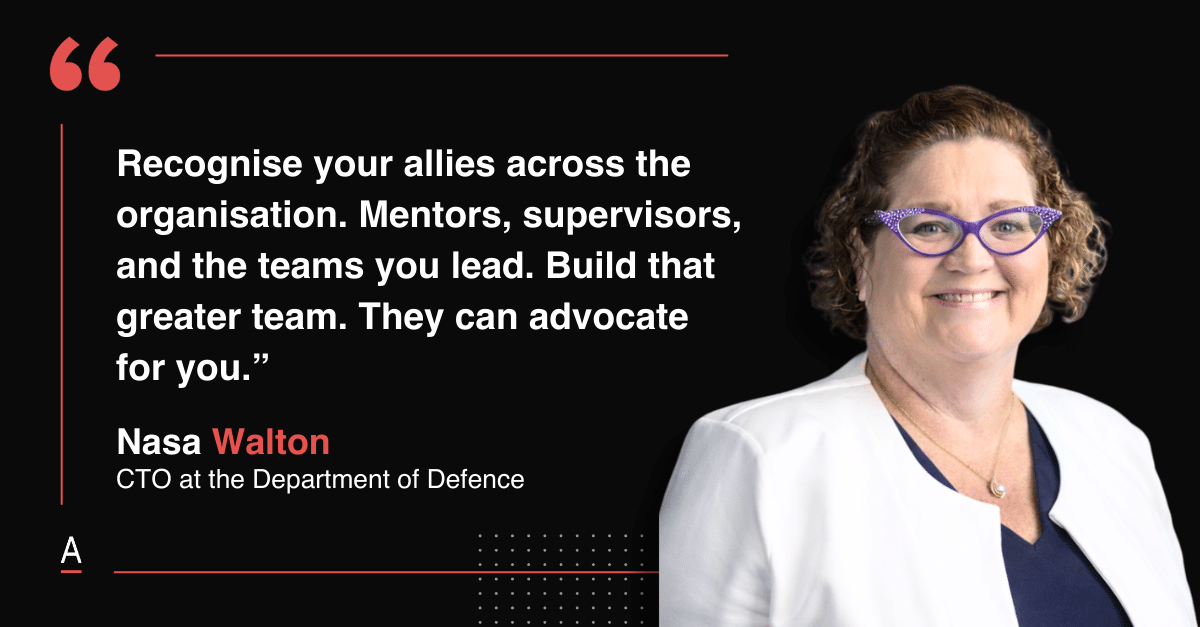
She described how women will leave environments that do not support their voice and authenticity, often stepping into a promotion elsewhere because someone else has noticed their impact.
Her call to leaders was to drop the assumption that high performers will naturally rise, when you spot a shining star, lean in, advocate, connect them to the right people, and help them step up.
Put credible talent in the room early
Dr Amy Shi Nash, Professor at Monash University, CEO and Co-Founder at Occubuy, former Chief Data and Analytics Officer at Tabcorp, described how quickly careers can accelerate when a leader backs you publicly, before you have “earned” a long history of internal visibility.
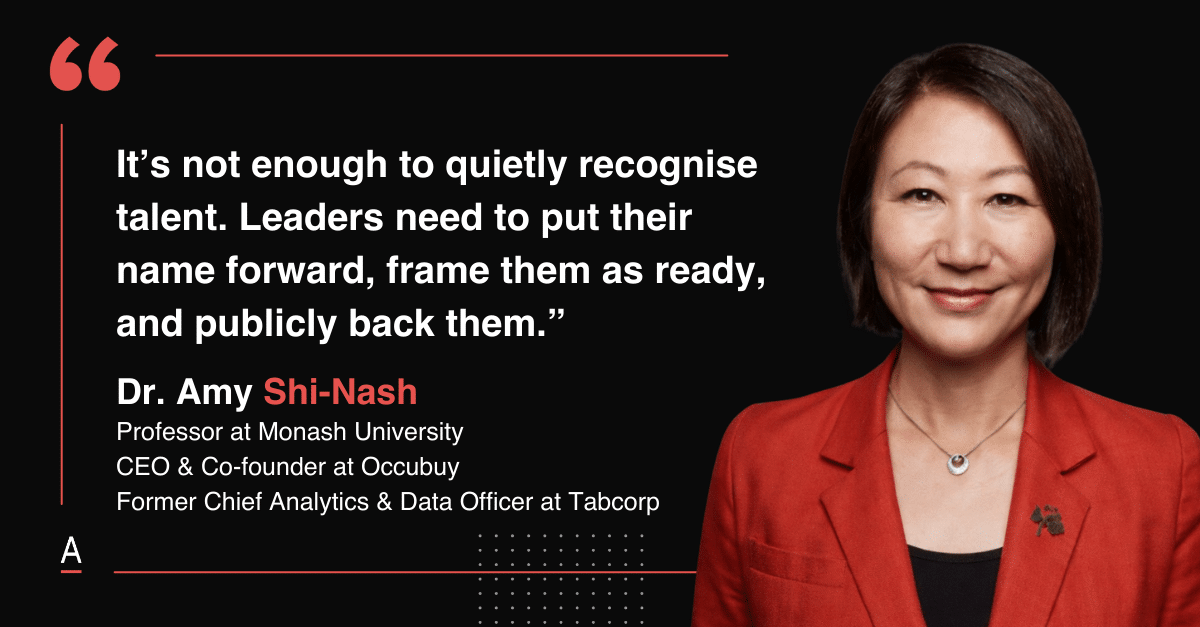
She shared the impact of being trusted to present at an Investor Day early in her tenure, which signalled belief to the board, investors, and the wider organisation.
High performance does not close an access gap on its own. Leaders need to sponsor deliberately, and bring women into the pre briefing and succession conversations where momentum is built.
Treat silence as an early warning sign
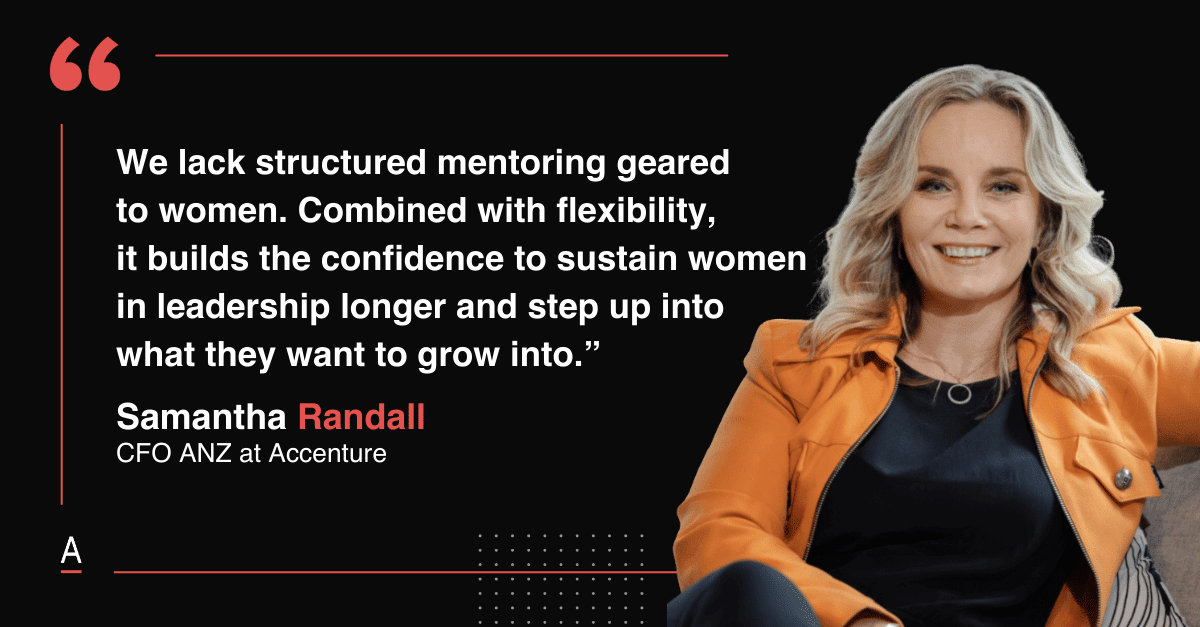
Samantha Randall, CFO at Accenture ANZ, highlighted a pattern leaders often miss, high-performing women frequently do not argue their case, they disengage, then they exit.
She described how women can stop voicing ideas over time, especially after being passed over for opportunities, and why that shift should trigger a direct conversation, not a performance assumption.
Give to Gain, in her view, includes flexibility measured by outcomes, plus structured mentoring that builds confidence before women decide the system will never shift.
Turn mentoring into sponsorship with specific asks
Claudine Ogilvie, CEO at HivePix and ADAPT Advisor, drew a hard line between mentoring that improves confidence, and sponsorship that changes outcomes.
She argued that women can make sponsorship easier by being specific about what they want advocacy for so supporters can act with clarity and credibility.
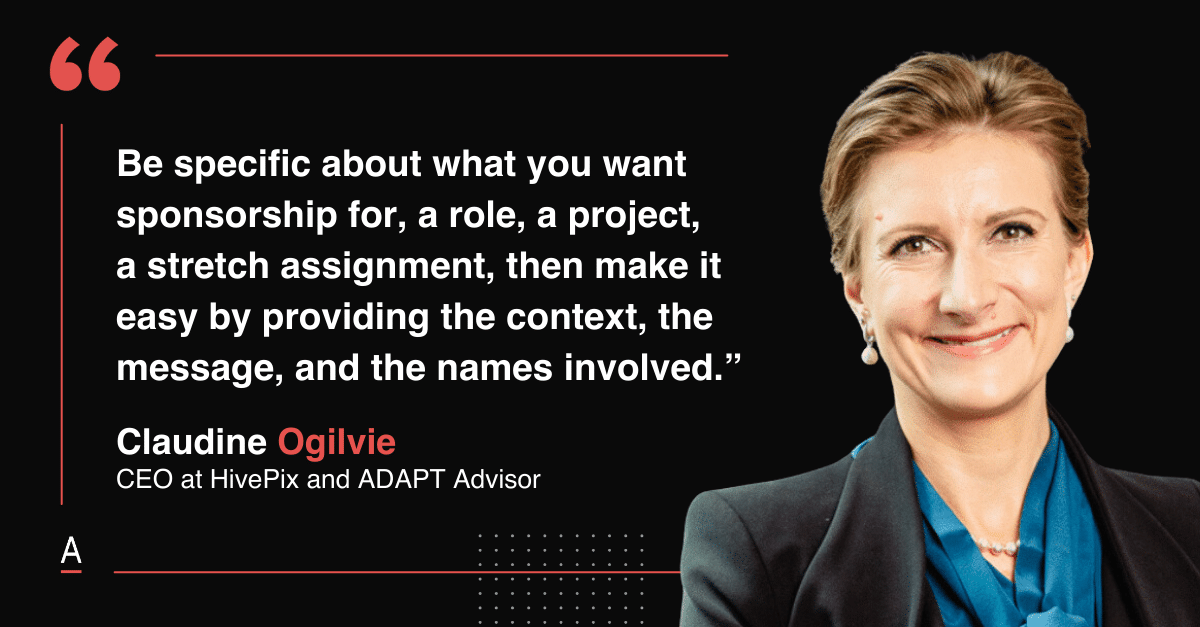
Her focus stayed on the mechanics, relationships matter, but career acceleration often comes down to whether someone is willing to recommend you when it counts.
Measure what matters, then follow the work
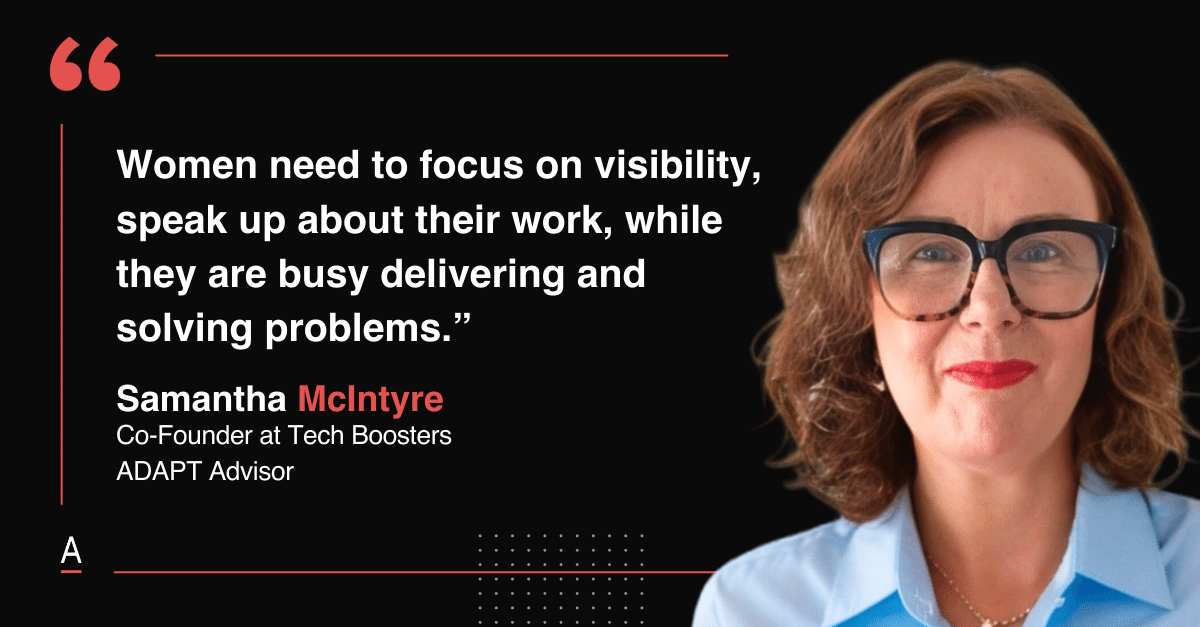
Samantha McIntyre, Co-Founder at Tech Boosters and ADAPT Advisor, pushed for accountability that starts with numbers, representation by level, retention, and attrition.
She challenged the excuse that leaders “cannot find women”, pointing to what changes when women sit in middle management and hiring networks expand.
She also emphasised visibility as a career lever, women can be busy delivering and still be overlooked if decision makers do not know their work, or their ambition.
Value whole careers, including gaps and life outside work
Janet Ravin, Vice President of Corporate Marketing at Rimini Street, argued that career gaps should be read with curiosity, not judgement, whether the cause is parenting, a sabbatical, education, or health.
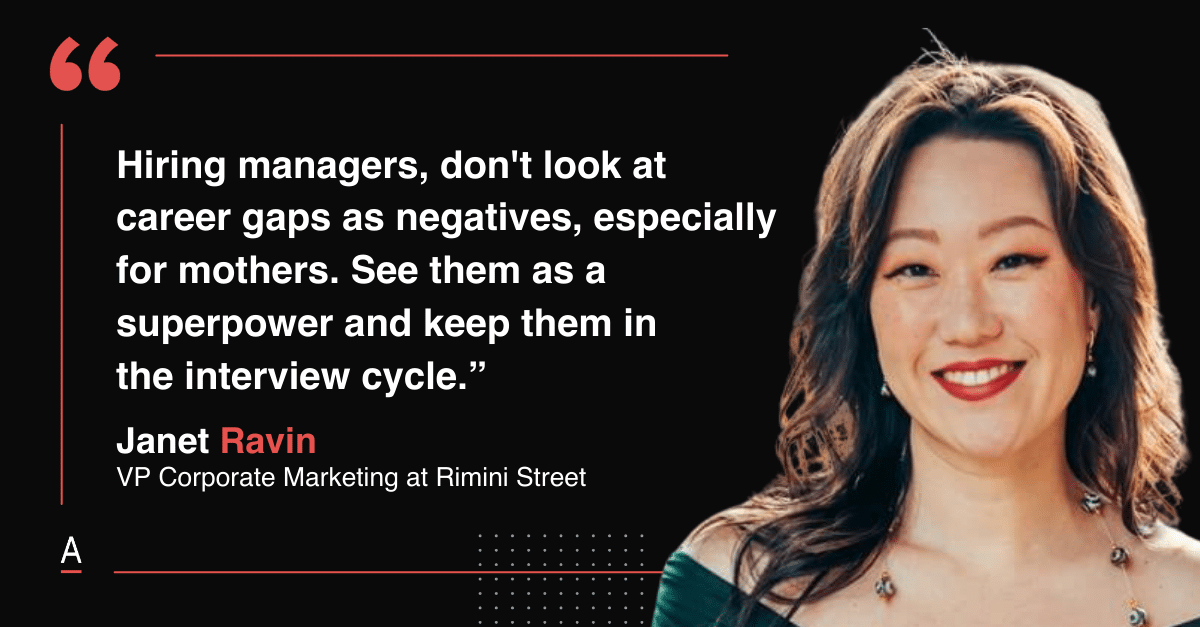
She described how broader life experience strengthens leadership, and why organisations gain when they stop treating linear careers as the default.
She also shared how culture can shift when leaders build community around real life moments, turning support into something people can feel, not just policies on paper.
Make sponsorship a deliberate act
Marie Holmes, Country Manager ANZ at Alteryx, points to two pivotal moments in her career when senior leaders backed her for roles she initially felt unready for and advocated for her behind closed doors.
That belief shifted her trajectory, expanding her confidence, visibility, and access to leadership forums.
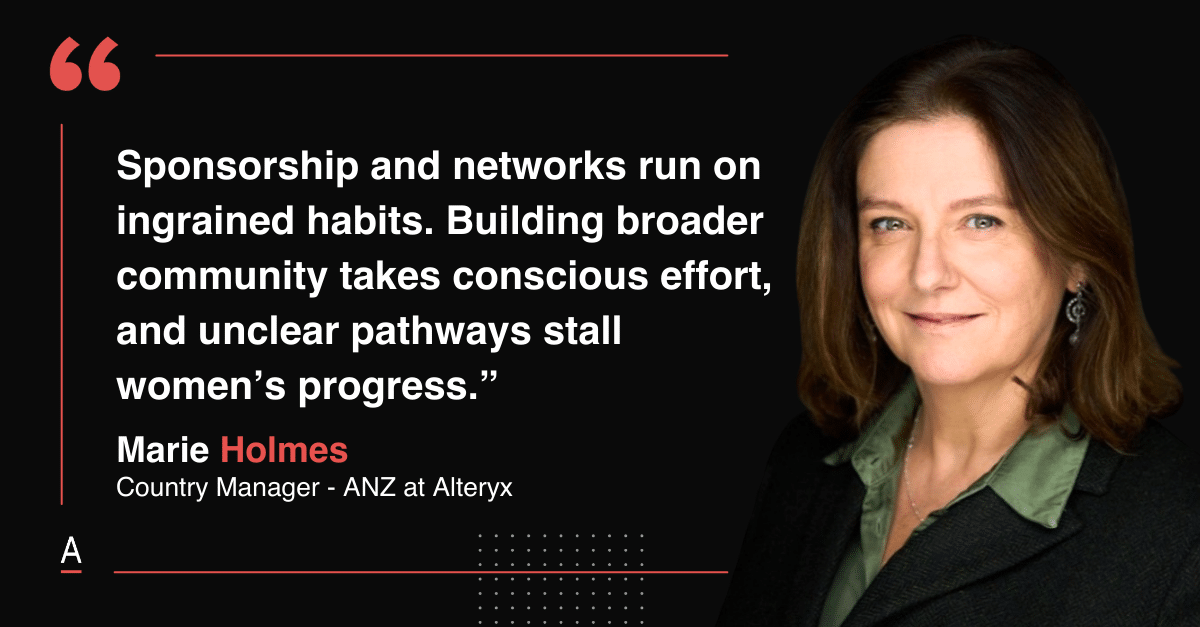
She warns that sponsorship and networks often operate as ingrained habits that favour those already inside the circle, unless leaders consciously widen them.
Progress depends on intentionally putting capable people forward, facilitating exposure to senior rooms, and encouraging them to step up before they feel fully ready.
What #GiveToGain demands in 2026
Across these conversations, the common thread was consistent, organisations lose women when support becomes informal, assumptions replace conversations, and recognition arrives too late.
The theme #GiveToGain is a leadership discipline that shows up in access to decision making rooms, sponsorship that is visible, flexibility that is outcomes led, and career pathways that account for real life.
ADAPT will continue to spotlight stories because the fastest progress comes from leaders changing what they do in the small moments that compound into careers.
 Justina Uy
Content Marketing Manager
Justina Uy
Content Marketing Manager
Justina Uy is a data-driven content marketer that thrives on democratising elite know-how to empower Australia’s underdogs.
Skilled at translating complex ideas into a compelling story across formats and channels, she shifts seamlessly between writing long-form articles, creating viral social media posts, and producing thumb-stopping videos.
Since 2015, Justina executes her vision through a sophisticated understanding of the rapidly evolving digital and business landscape to serve entertaining and educational insights to the executive community.
Less Join the ADAPT
 Insider Community
Get the latest A/NZ market research and insights on the core trends impacting leaders.
Join the ADAPT Insider Community
Get the latest A/NZ market research and insights on the core trends impacting leaders.