















With AI productivity still unproven, government buyers are changing what they expect from vendors
Federal agencies have AI options. They need vendors that can prove productivity, lift workforce readiness and reduce duplication under scrutiny.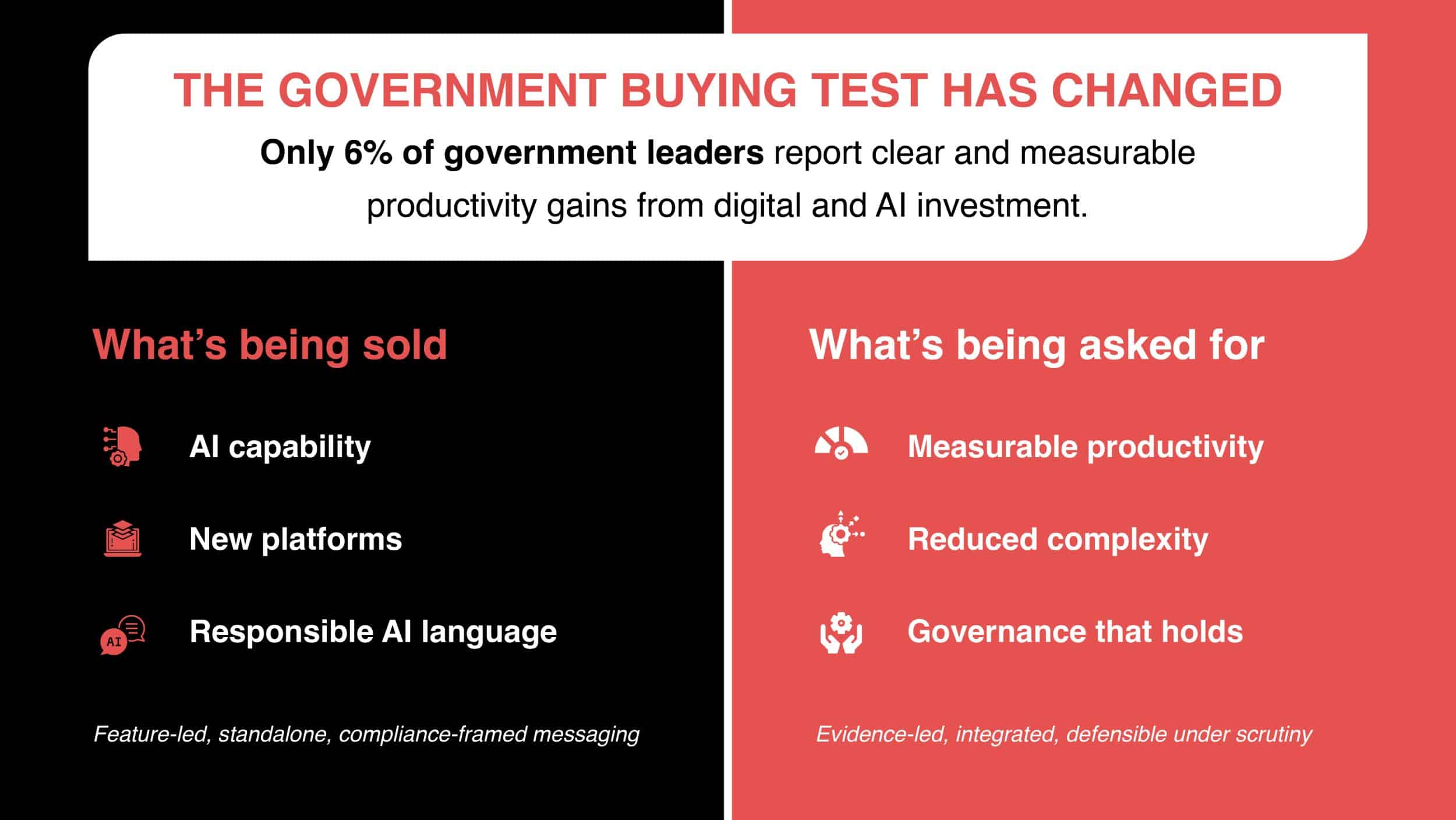


 Published Jul 15, 2026 in
Peer Insights
Go-To-Market
Contributors
Justina Uy
Published Jul 15, 2026 in
Peer Insights
Go-To-Market
Contributors
Justina Uy
Government buyers do not need another AI pitch.
That was clear at Government Edge last June 2026, where the strongest discussions were not about model capability, but the pressure to prove productivity, prepare the workforce and simplify how government operates.
Agencies are already surrounded by platforms, pilots, agents, frameworks and roadmaps. Another product conversation does not relieve the pressure they are under.
In many cases, it adds to it.
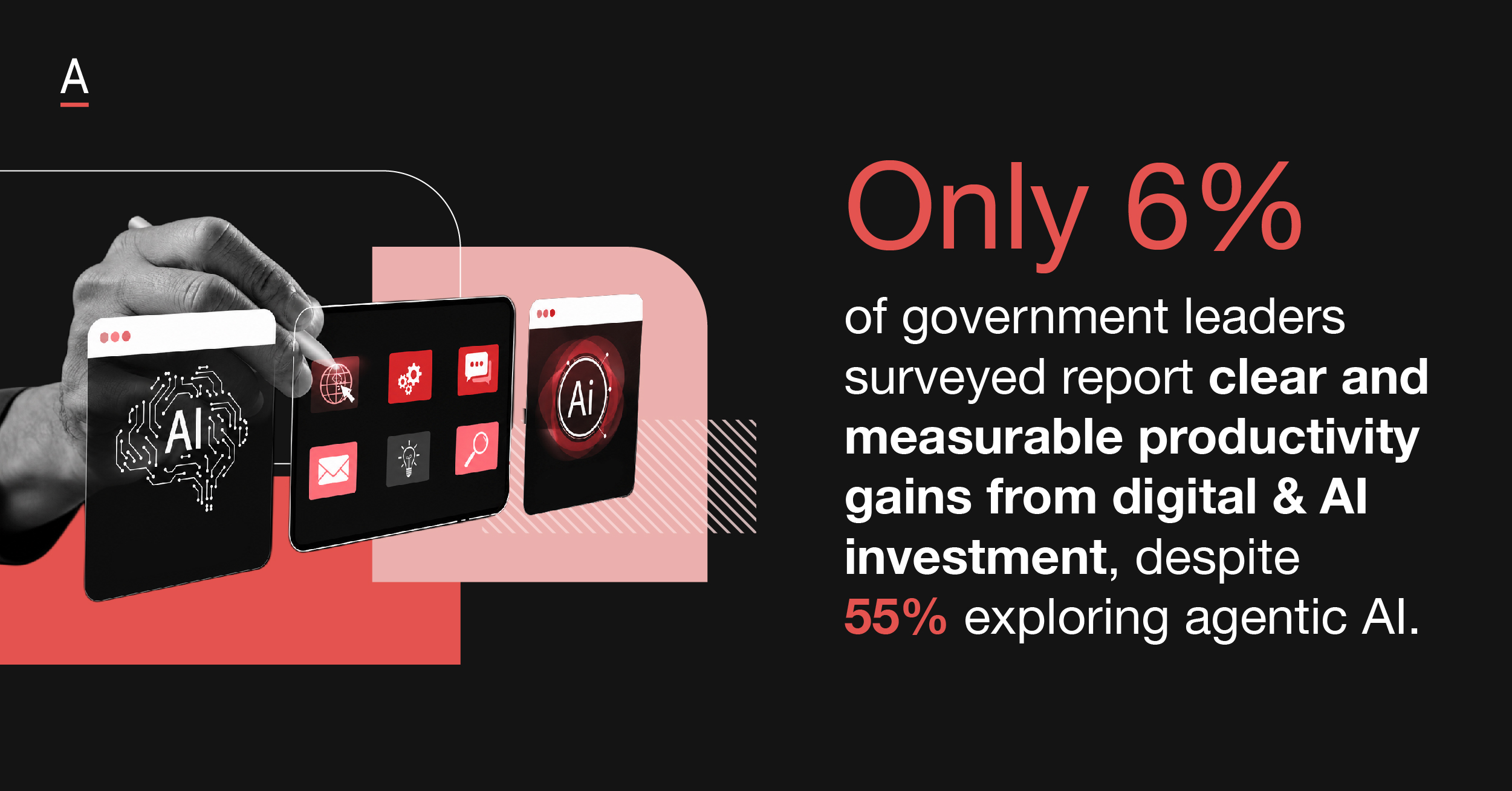
ADAPT research shows only 6% of government leaders report clear and measurable productivity gains from digital and AI investment.
That figure cuts through the noise.
Agencies are spending, experimenting and modernising, but too little of that activity is translating into operational proof.
Two other findings sharpen the same challenge.
Government leaders rank workforce readiness as the biggest barrier to scaling AI successfully, while only 25% consider themselves mature in reusing technology platforms to improve interoperability and accelerate delivery.
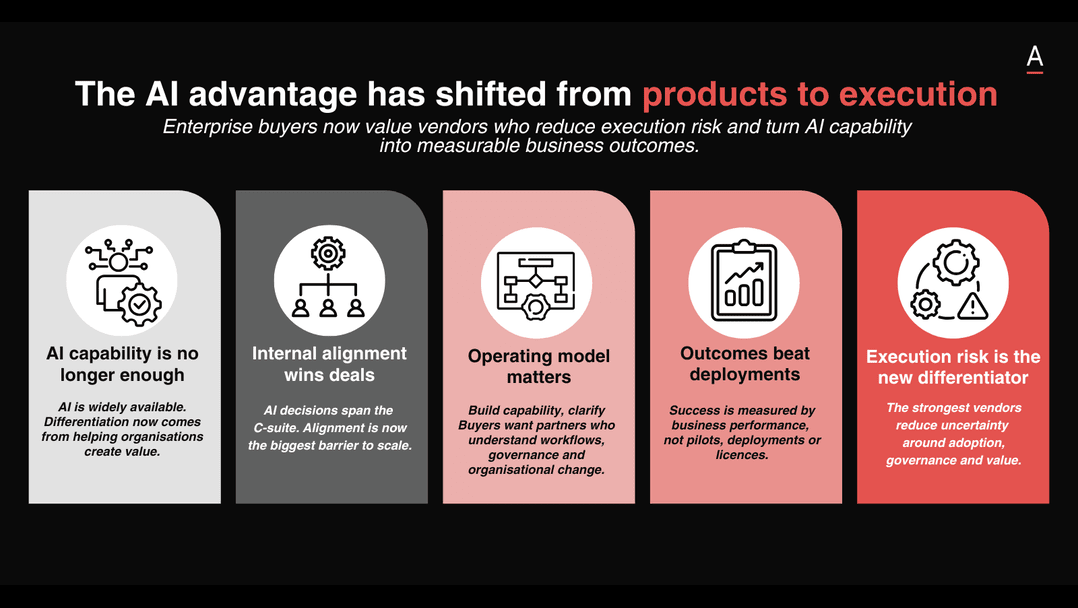
They are still interested in capability, but capability is no longer enough.
They need evidence that a technology decision can reduce friction, withstand assurance, support staff adoption, fit into existing architecture and produce a defensible productivity story.
The mismatch is becoming harder to ignore.
AI capability is being sold into agencies being asked to prove measurable productivity.
New platforms are being positioned to buyers trying to reduce complexity.
Responsible AI language is being offered to executives who need governance that survives procurement, privacy obligations, workforce scrutiny and citizen trust.
The stronger conversation starts with the buyer’s burden, not the product’s feature set.
In this article, we’ll tackle:
- Why productivity proof now matters more than AI promise
- Why organisational readiness is becoming part of the buying decision
- Why complexity reduction is now a test of partner relevance
Government is buying productivity outcomes, not AI capability
Only 6% of government leaders report clear and measurable productivity gains from digital and AI investment.
That leaves agency executives under pressure to separate visible activity from operational change.
A successful pilot may create interest, but it does not answer the question behind the investment: what burden has been removed, and how can the agency prove it?
Andrew Matuszczak, Chief Information & Transformation Officer at Commonwealth Superannuation Corporation, challenged the way AI is often discussed.
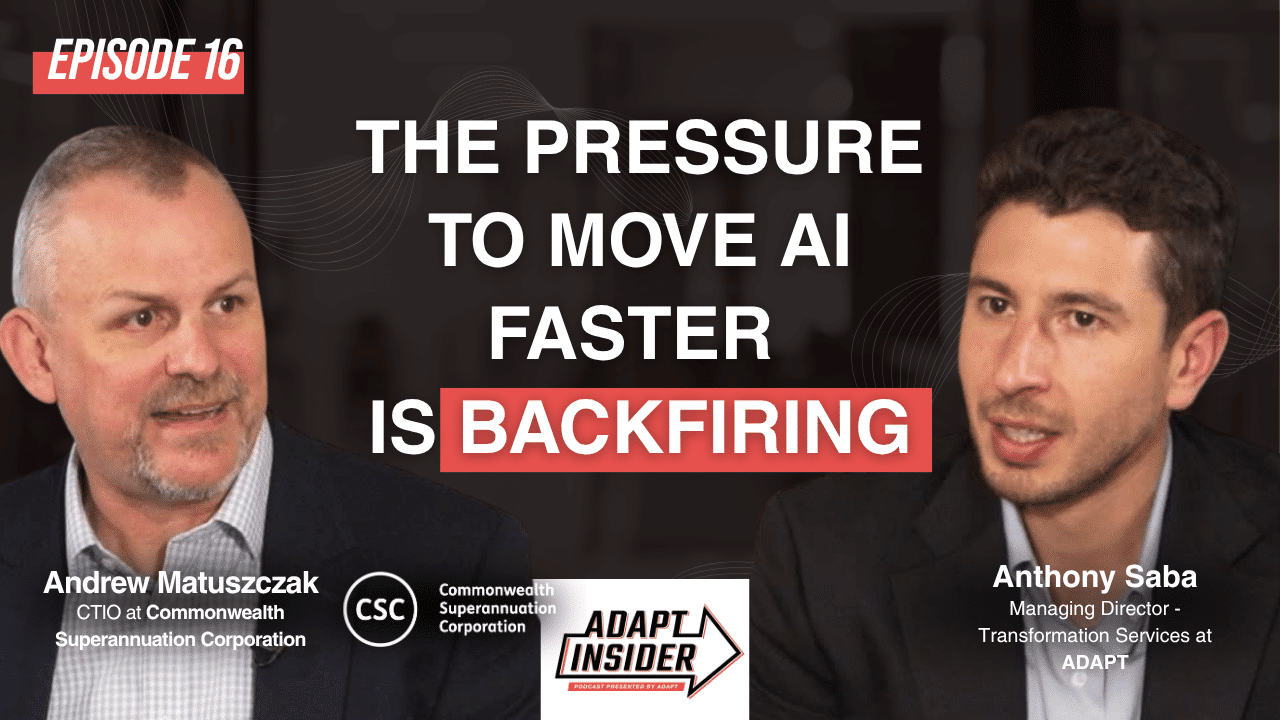
He argued that leaders need to stop treating AI as a generic answer and start with the problem being solved.
Andrew offered an analogy, saying “AI” is like telling a doctor “I’m sick” and expecting one answer, when the useful work is diagnosing the symptoms and finding the right specialist capability.
A generic AI story forces the buyer to do too much translation.
The agency still has to connect the product to a process, a workload, a risk position, a baseline and a measurable service outcome.
Andrew’s transformation work at CSC shows what buyers are trying to create before AI can produce value at scale.
The organisation has been modernising core systems, data analytics, customer platforms, middleware and architecture so that future AI use lands on stronger foundations.
The value is lower complexity, better customer experience, cleaner execution and stronger operational control, not the mere existence of AI in the business.
A demo may prove what the product can do, but government buyers need evidence they can defend internally:
- which process improves
- which workload reduces
- which decision becomes easier
- and what baseline proves the change.
Weak foundations also change the risk profile of a sale.
Andrew warned against putting “lipstick on the pig” by placing modern interfaces over brittle systems and monolithic architecture.
For agencies carrying legacy complexity, AI does not erase those constraints.
It can make them more visible, more expensive and harder to govern.
Selling into the wrong layer of the problem creates false momentum.
The buyer may like the product and still struggle to justify the investment if the offer does not connect to a measurable operating change.
The stronger proposition is built around proof.
It shows where work slows down today, where staff capacity is being consumed, where rework occurs, and how the solution changes that pattern without creating a new management burden around the technology.
Federal agency leaders are evaluating organisational readiness as closely as technical capability
Government leaders rank workforce readiness as the biggest barrier preventing agencies from scaling AI successfully.
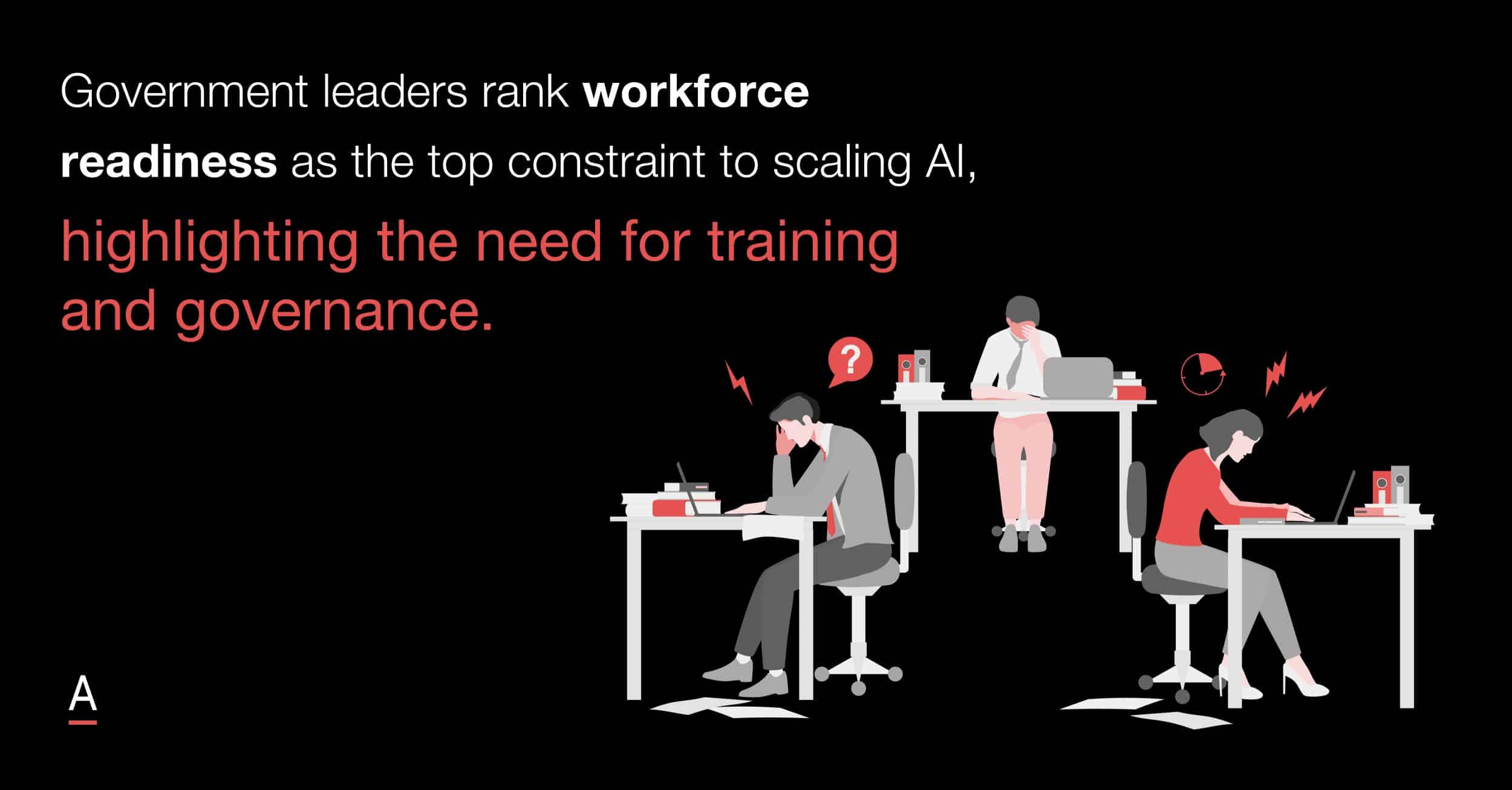
That finding should make implementation claims more disciplined.
In government, a solution can pass the technical evaluation and still stall because staff are not ready, governance arrives too late, unions have not been engaged, privacy questions remain unresolved, or executives cannot defend the use case under scrutiny.
David Walker, former Group Chief Technology Officer at Westpac and DBS and Chair of the AI Council at UNSW, argued that most AI adoption barriers sit outside the technology itself.
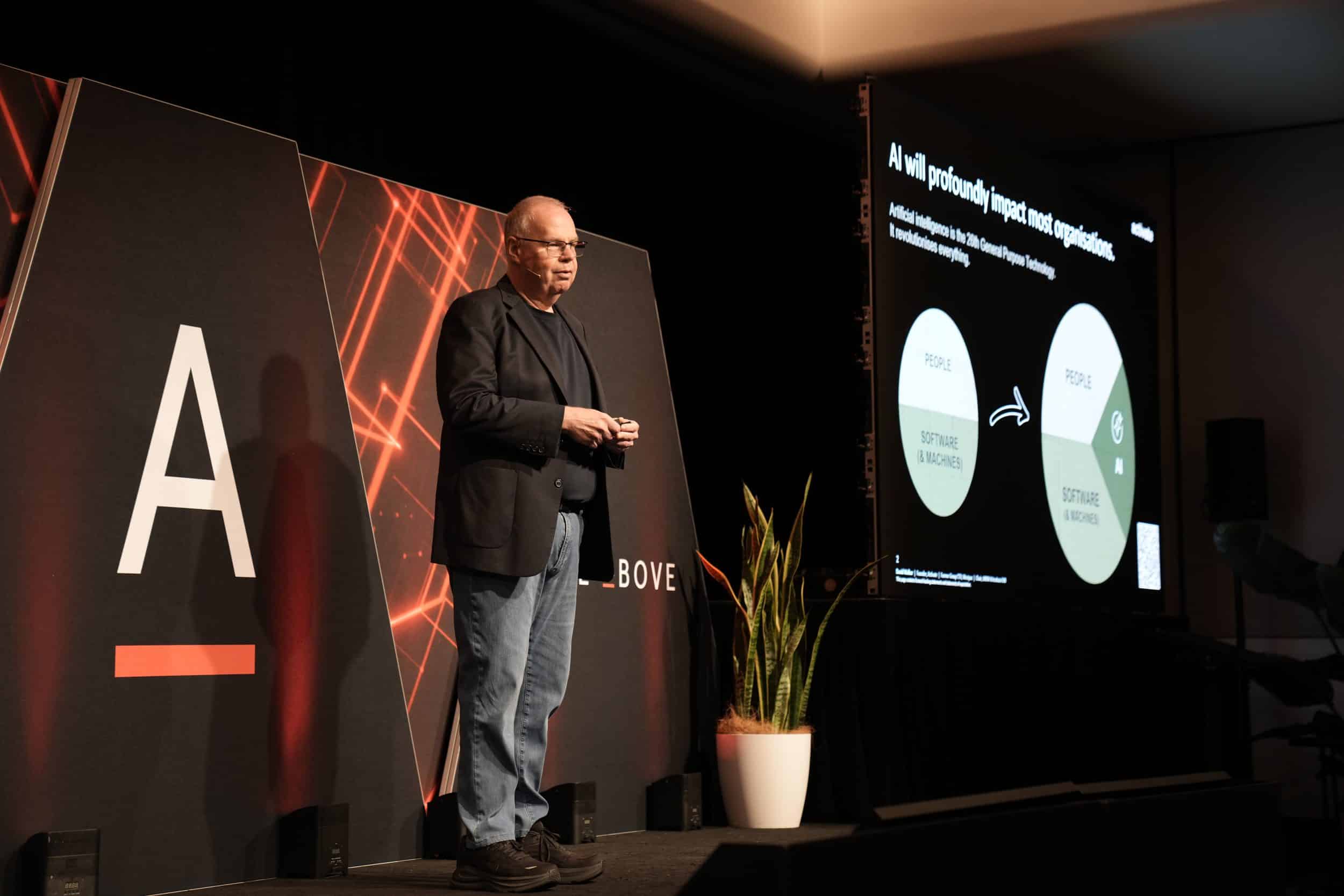
His research pointed to leadership readiness, funding, governance, risk management and process change as the heavier constraints.
The AI technology itself represented a much smaller part of the adoption problem.
David’s DBS example matters because it reverses the usual AI story.
DBS scaled AI after building the organisational conditions AI depends on: executive ownership, learning velocity, process redesign, dynamic oversight and technology designed for change.
AI value depends on conditions many products do not create by themselves.
For a government buyer, the risk of a failed AI purchase is not limited to poor adoption.
It can become a governance problem, a workforce problem, a trust problem, a procurement problem and, in high-volume services, a citizen-facing failure.
Charles McHardie, Chief Information and Digital Officer at Services Australia, described the preparation required before AI can scale in a major service delivery environment.
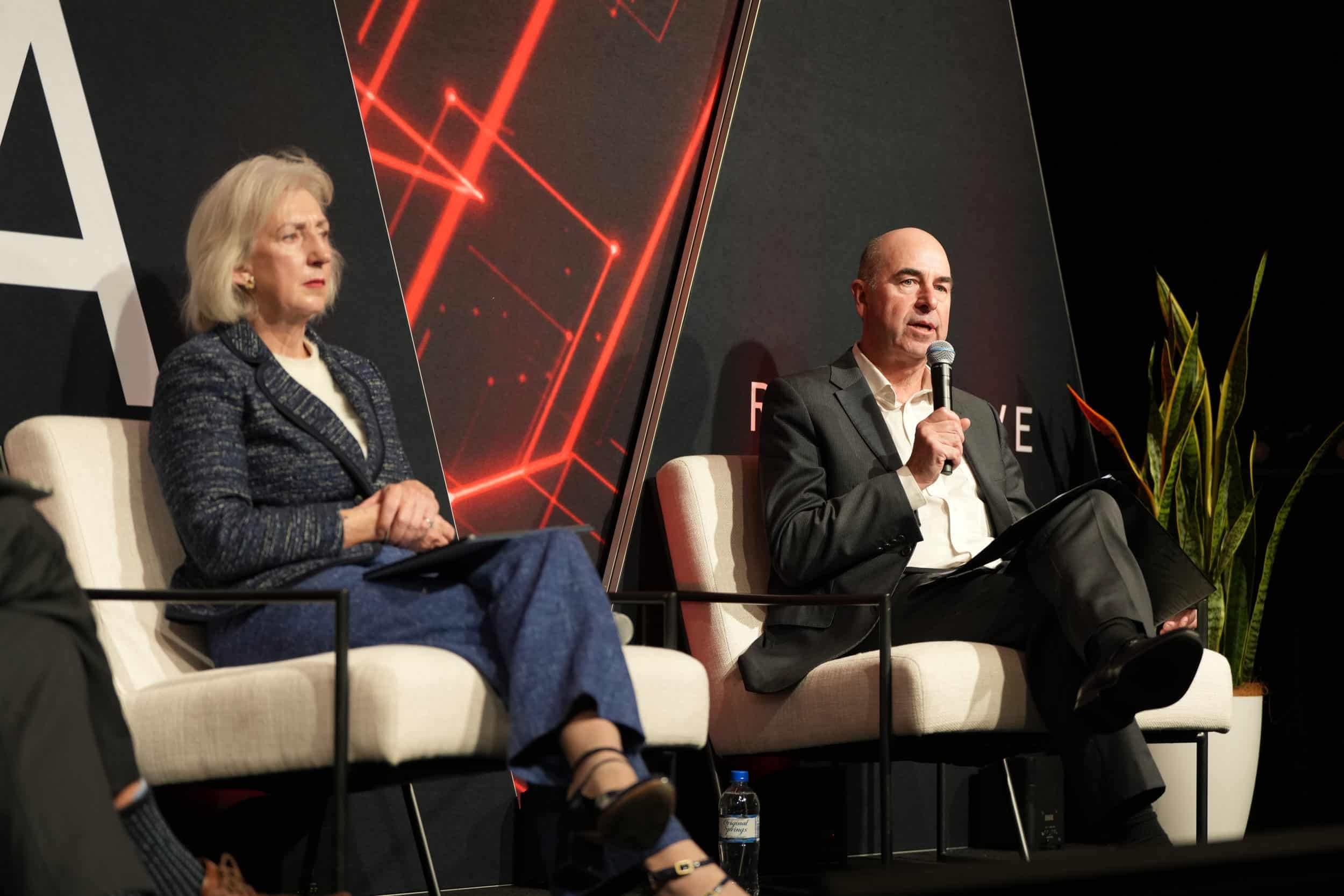
Services Australia has had to engage staff and unions, uplift skills, develop procedural frameworks for different risk levels, and work through procurement, legal and cyber implications.
He was direct that leaning into technology before people and process are ready creates failure conditions.
Buyers need products that reduce the coordination burden inside the agency:
- who needs to be involved, what assurance is required
- how staff will be trained, how risk will be assessed
- and how the use case moves from controlled pilot to operational scale.
Elizabeth Tydd, Australian Information Commissioner, added the trust and accountability layer that cannot be treated as background compliance.

She argued that governance puts agencies in control because it helps preserve public trust, rights and transparency.
She also noted that privacy, FOI and automated decision-making obligations extend into how technology is acquired and used, including Commonwealth contracts.
Public sector trust is part of the buying environment.
A product that is secure in technical terms may still be difficult to adopt if the agency cannot explain how it uses information, how decisions are supported, how citizens are notified, or how accountability is preserved.
In the Government Edge panel, Justin Keefe, First Assistant Secretary, Digital and Security at the Department of the Prime Minister and Cabinet, framed the same challenge through leadership behaviour.
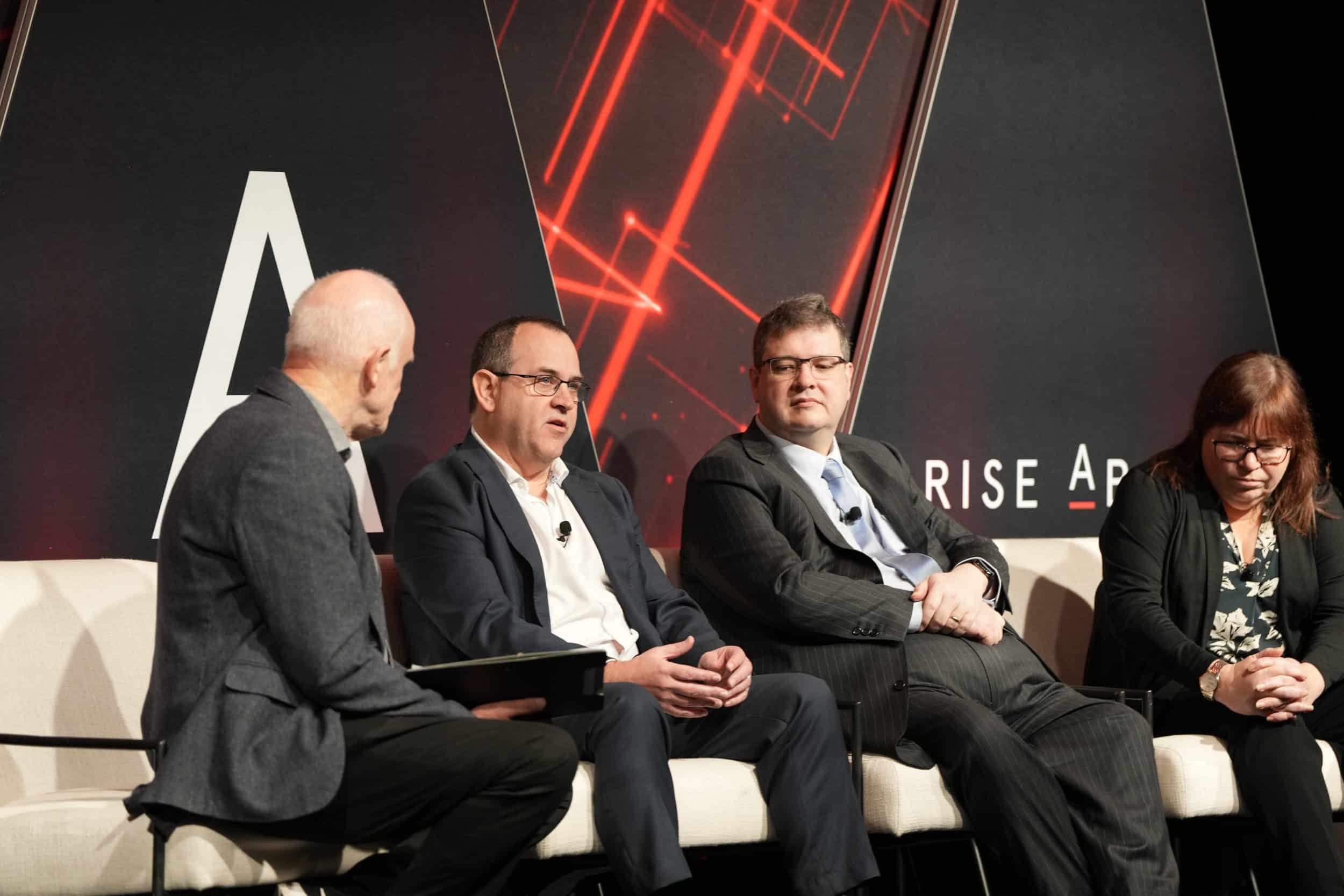
He argued that agencies need clear risk tolerances, transparency and enough freedom for staff to innovate within guardrails.
He also linked workforce readiness to mindset change, warning that long-standing “knowledge is power” behaviours will not work as AI changes how government work is done.
A technically strong product can still increase the buyer’s internal risk if it arrives without a plan for governance, workforce adoption, executive alignment and assurance.
Government buyers are looking for partners that make the organisation more ready to use the technology, not partners that leave readiness as the agency’s problem.
Government buyers want partners that reduce complexity across agencies
Only 25% of government leaders consider themselves mature in reusing technology platforms to improve interoperability and accelerate delivery.
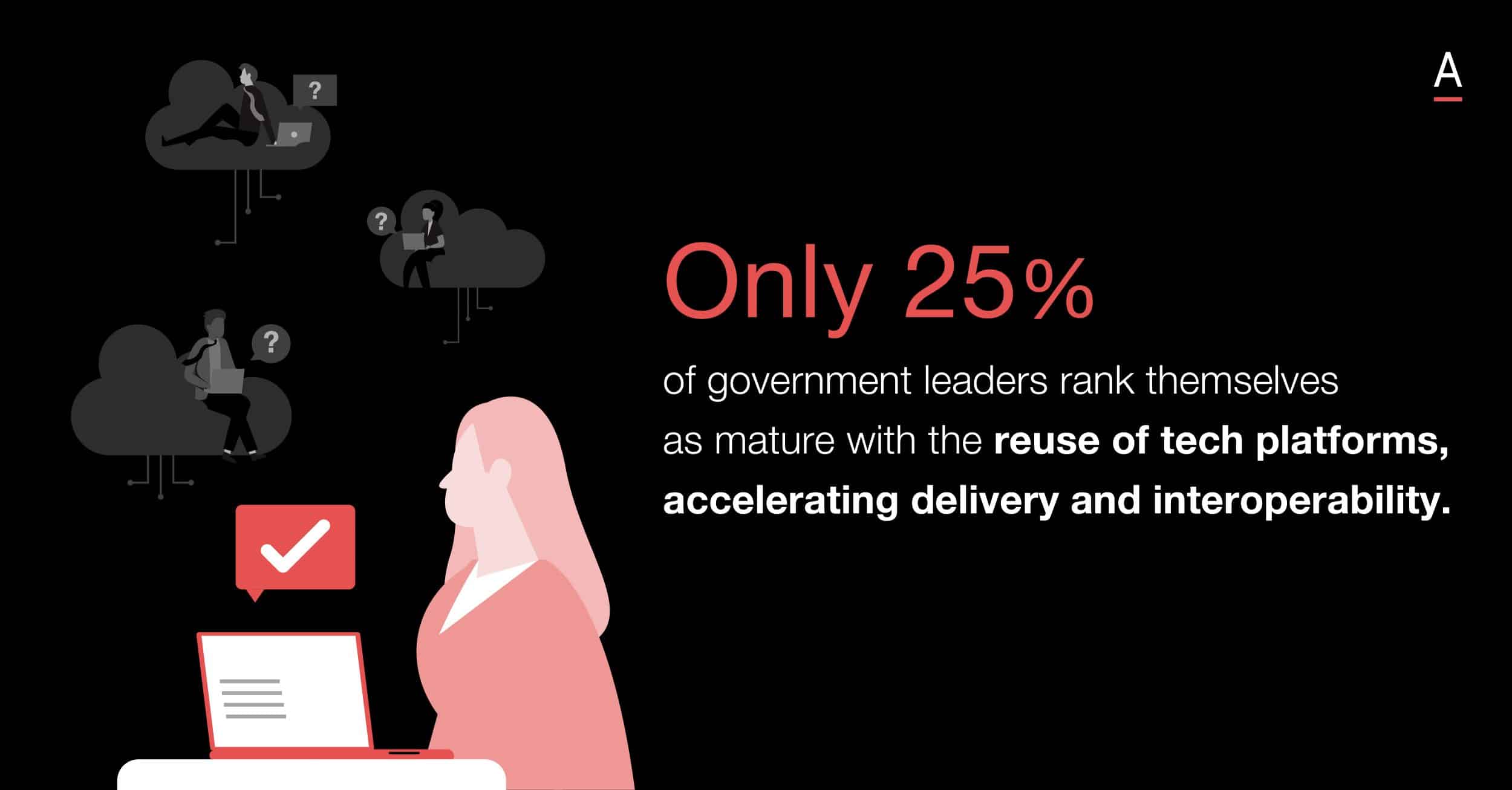
That leaves government paying too much for work it should not need to repeat.
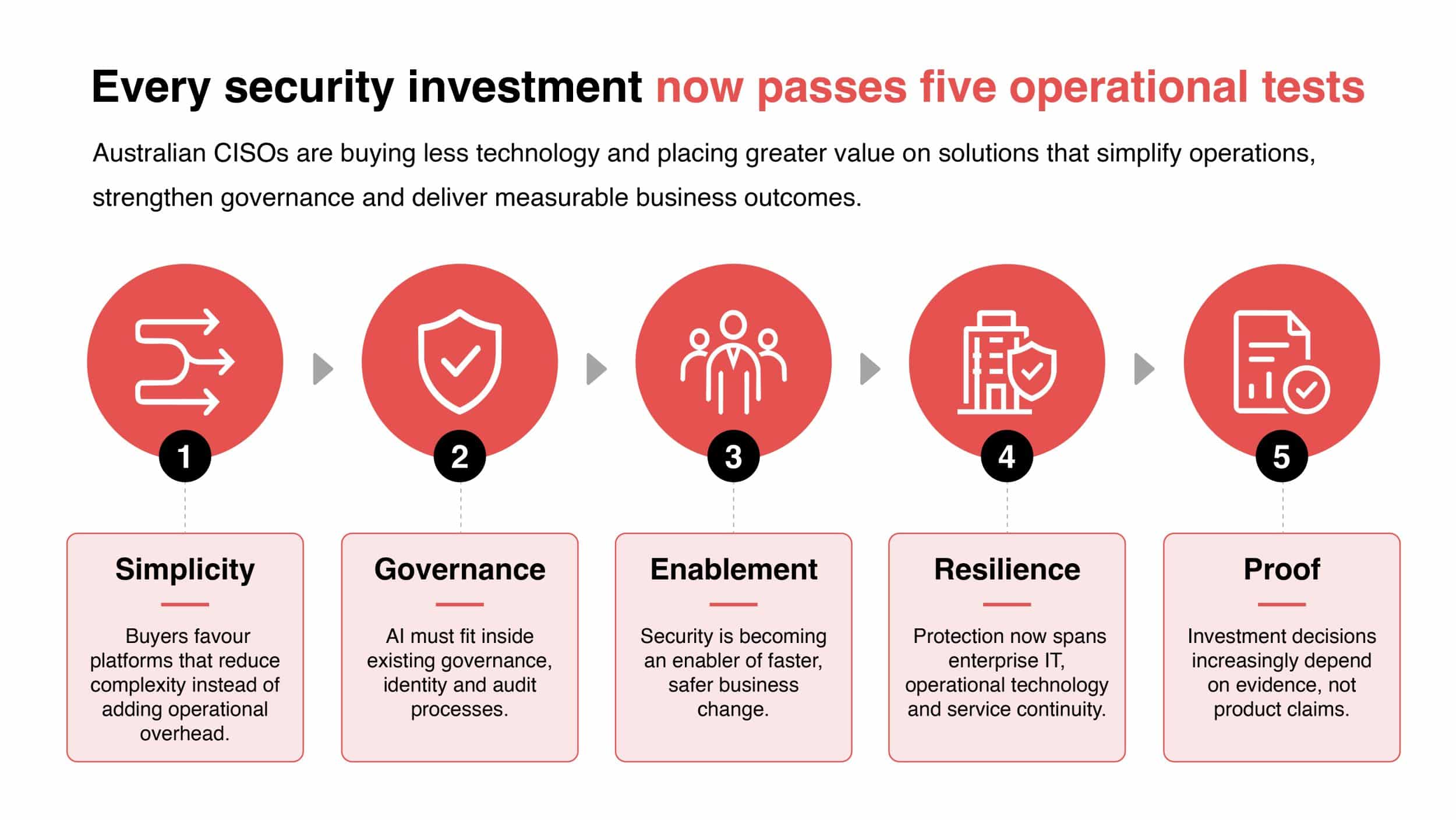
It also raises the test for any technology decision: will this reduce duplication, or become another platform to integrate, govern, fund and explain?
Peter O’Halloran, Chief Digital Officer at the Australian Digital Health Agency, framed productivity as a system-wide outcome.

The real value is not marginal efficiency inside one agency, but better information sharing that helps clinicians reduce duplicate tests, avoid unnecessary repeat visits and make faster decisions at the point of care.
Government buyers are trying to unlock productivity across agencies, jurisdictions, service providers, citizens and frontline teams.
That requires partners that can work within sensitive, complex environments without creating another isolated solution.
Alan Thorogood from MIT CISR made the same point through architecture.
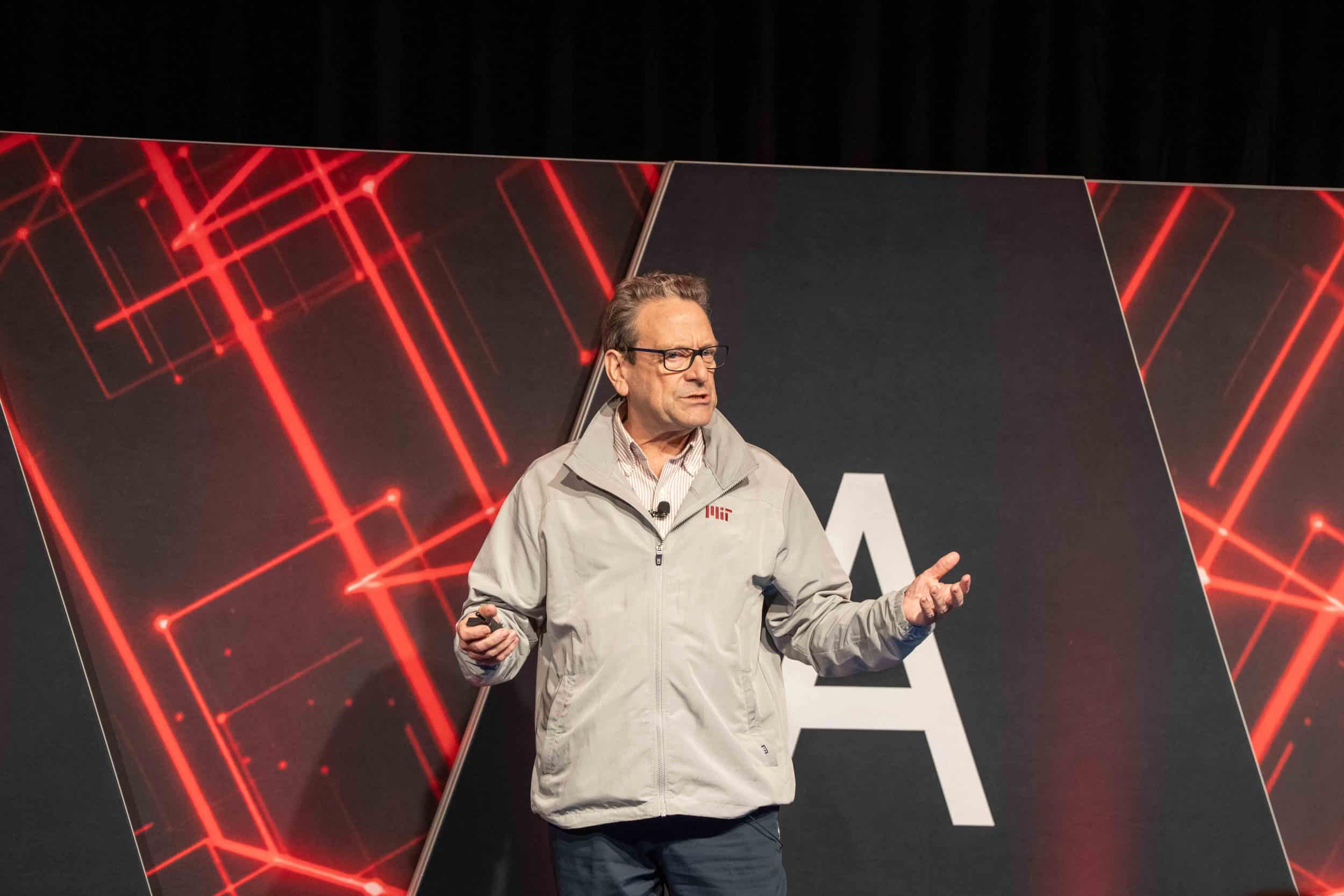
Without reuse, organisations create duplicated AI investments, disconnected systems and “digital spaghetti” that reduces agility over time.
Proofs of concept can look successful, then fail in production when agencies lack baselines, scalable architecture and reusable capability.
This is now part of the commercial test.
Government buyers already have too many tools that require separate contracts, training, assurance and integration work.
A new platform is harder to justify if it adds management burden faster than it removes operational burden.
The stronger proposition shows where the solution fits in the operating model: how it connects to existing architecture, supports interoperability, reduces duplication and makes government easier to operate.
The government buying test has changed
Federal agencies are still investing in AI, but the buying test has changed.
Capability is assumed.
Relevance now depends on whether a partner can help prove productivity, prepare the workforce, preserve trust and reduce complexity.
That puts pressure on traditional public sector GTM.
Feature-led messaging is weaker when executives need outcomes they can defend.
Standalone platform stories are weaker when agencies are trying to increase reuse.
Responsible AI claims are weaker when assurance must hold through procurement, contracts, privacy, workforce adoption and public accountability.
The strongest partners make the buyer’s internal case easier to prove.
They show the workload that changes, the baseline that matters, the governance path that holds, the capability uplift required and the integration burden removed.
Government buyers are not moving away from AI.
They are becoming more disciplined about what AI must deliver.
 Justina Uy
Content Marketing Manager
Justina Uy
Content Marketing Manager
Justina Uy is a data-driven content marketer that thrives on democratising elite know-how to empower Australia’s underdogs.
Skilled at translating complex ideas into a compelling story across formats and channels, she shifts seamlessly between writing long-form articles, creating viral social media posts, and producing thumb-stopping videos.
Since 2015, Justina executes her vision through a sophisticated understanding of the rapidly evolving digital and business landscape to serve entertaining and educational insights to the executive community.
Less
Join the ADAPT
Insider Community
Get the latest A/NZ market research and insights on the core trends impacting leaders.