














AI scale will expose every weakness in hybrid infrastructure control
Hybrid workloads are spreading across cloud, data centre and edge. Leaders need tighter control over placement, cost, security and capacity.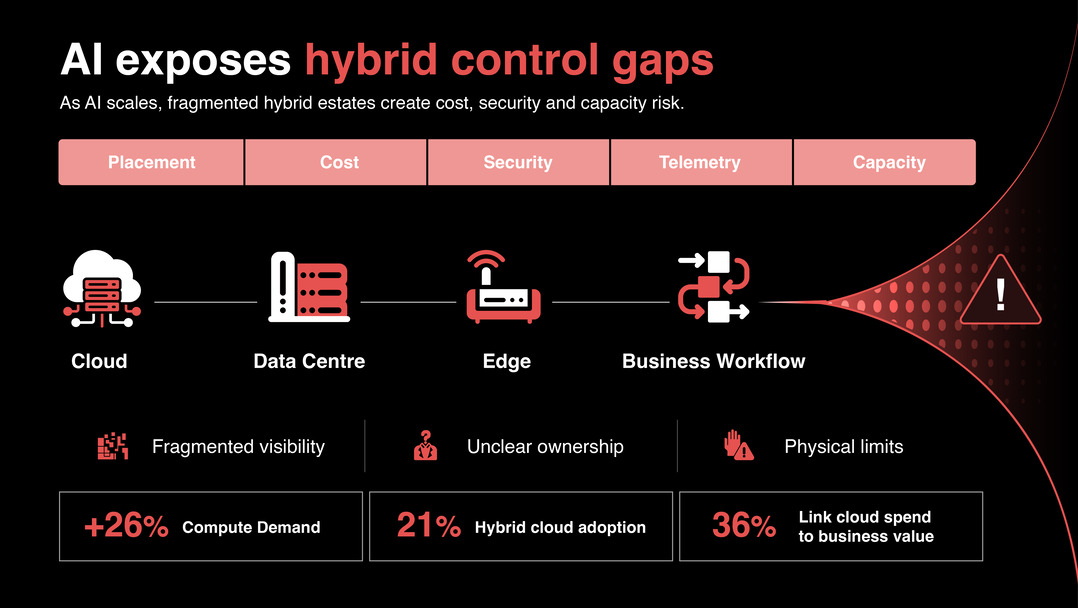


 Published Jun 25, 2026 in
Articles
Cloud & Infrastructure
Contributors
Justina Uy
Published Jun 25, 2026 in
Articles
Cloud & Infrastructure
Contributors
Justina Uy
AI scale will expose the parts of hybrid infrastructure that were already hard to control.
Most organisations did not arrive at hybrid infrastructure through a clean design.
They accumulated it through years of business demand, cloud migration, legacy constraints, SaaS adoption and edge use cases.
Public cloud, private cloud, data centres, SaaS and edge now sit together in the same estate, but they are often governed through different tools, policies, cost models and ownership structures.
AI makes that harder to manage because a single workflow can now spread across:
- Training and inference in different environments
- Data access and storage across multiple systems
- Security controls that may not follow the workload
- Latency and performance requirements that vary by use case
- Cost ownership that becomes unclear once compute, storage and data movement split across platforms
ADAPT’s Cloud & Infrastructure Edge research shows the shift is already underway.
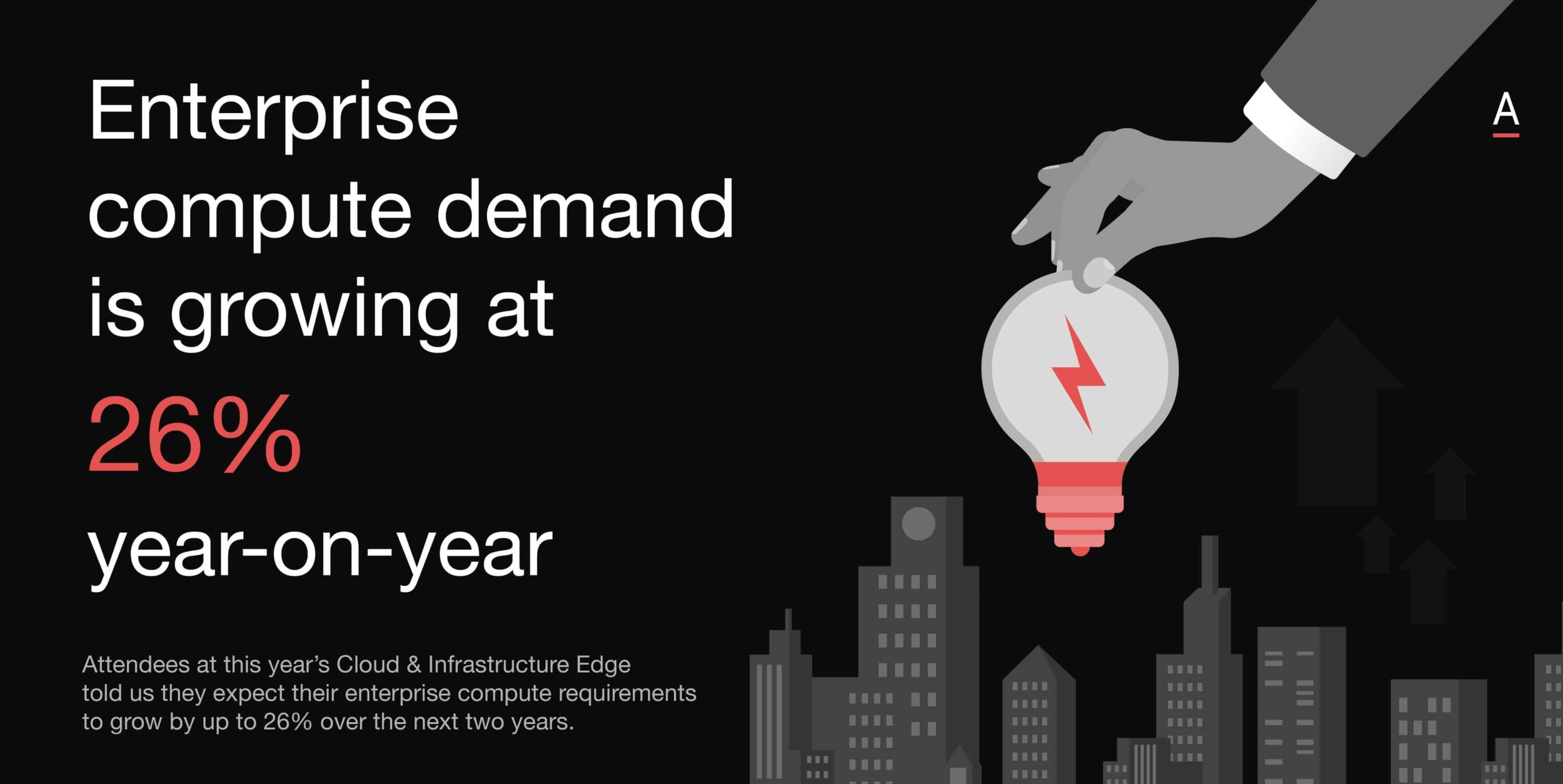
Enterprise compute demand is up 26% year on year, while workload patterns are shifting fast: public cloud share has fallen from 46% to 30%, and hybrid cloud adoption has reached 21%.
One in four organisations are actively repatriating workloads.
This is now an infrastructure control problem across a fragmented estate.
Hybrid is useful when leaders know where workloads belong, what they cost, which policies apply, and who owns them.
Without that, AI turns flexibility into sprawl.
Map the estate before AI scales through it
AI infrastructure control depends on visibility across workload paths, policy boundaries and ownership.
Many organisations are being asked to scale AI before those foundations are in place.
A model might draw data from a legacy system, run inference in cloud, store outputs in another platform, then trigger a decision inside a business workflow.
Each step may be technically valid. The risk sits in the gaps between them.
Who owns the data movement? Which policy applies at each stage? Where does telemetry break?
What happens if latency rises, storage costs increase or a sensitive dataset moves through the wrong environment?
ADAPT’s research shows this control gap clearly.
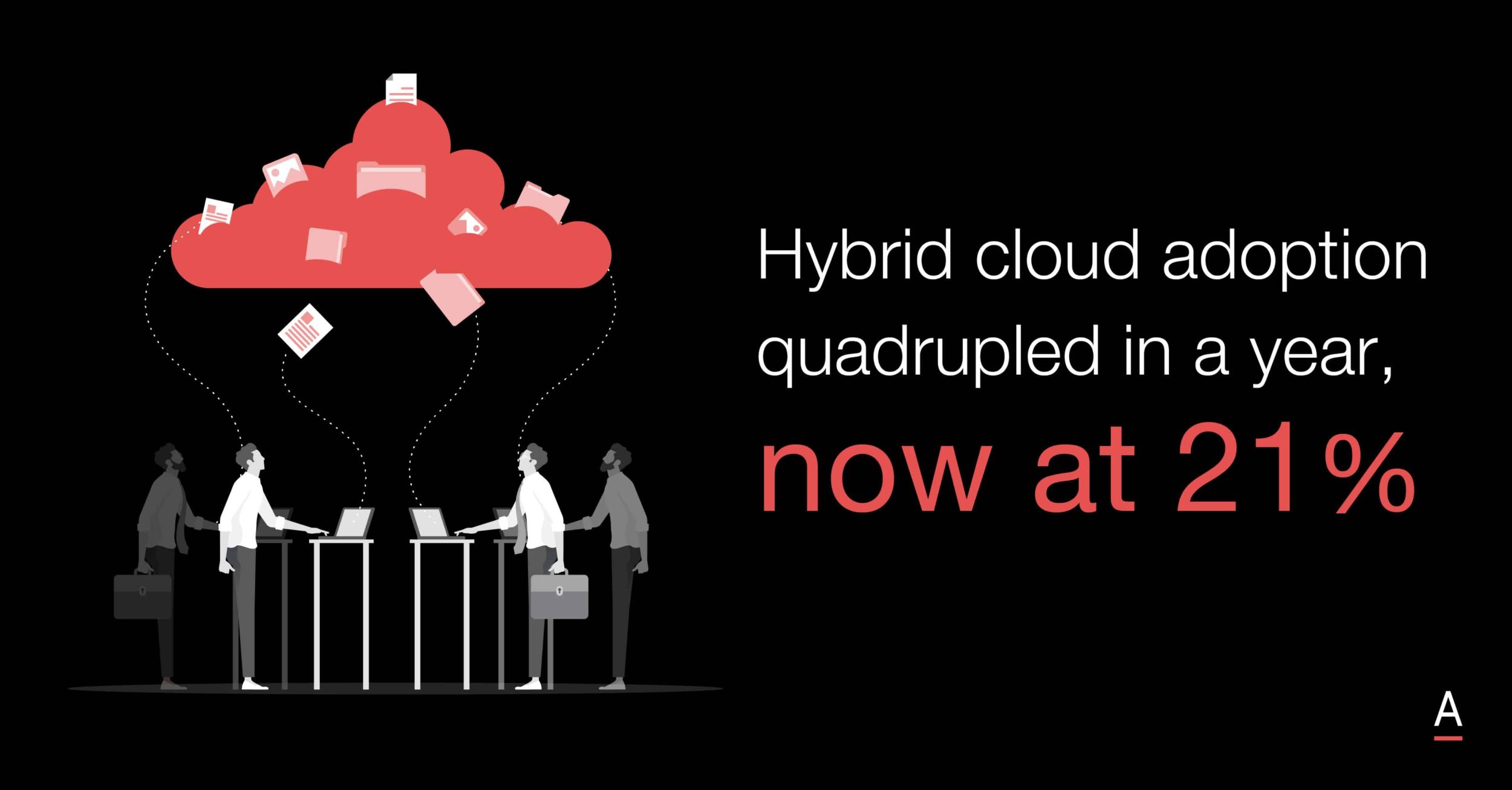
Hybrid cloud adoption has grown fourfold to 21%, while infrastructure leaders are dealing with fragmented telemetry across cloud, data centre and edge.
Gabby Fredkin, Head of Analytics and Insights at ADAPT, identified telemetry fragmentation as a major concern because leaders lack visibility across the full estate.
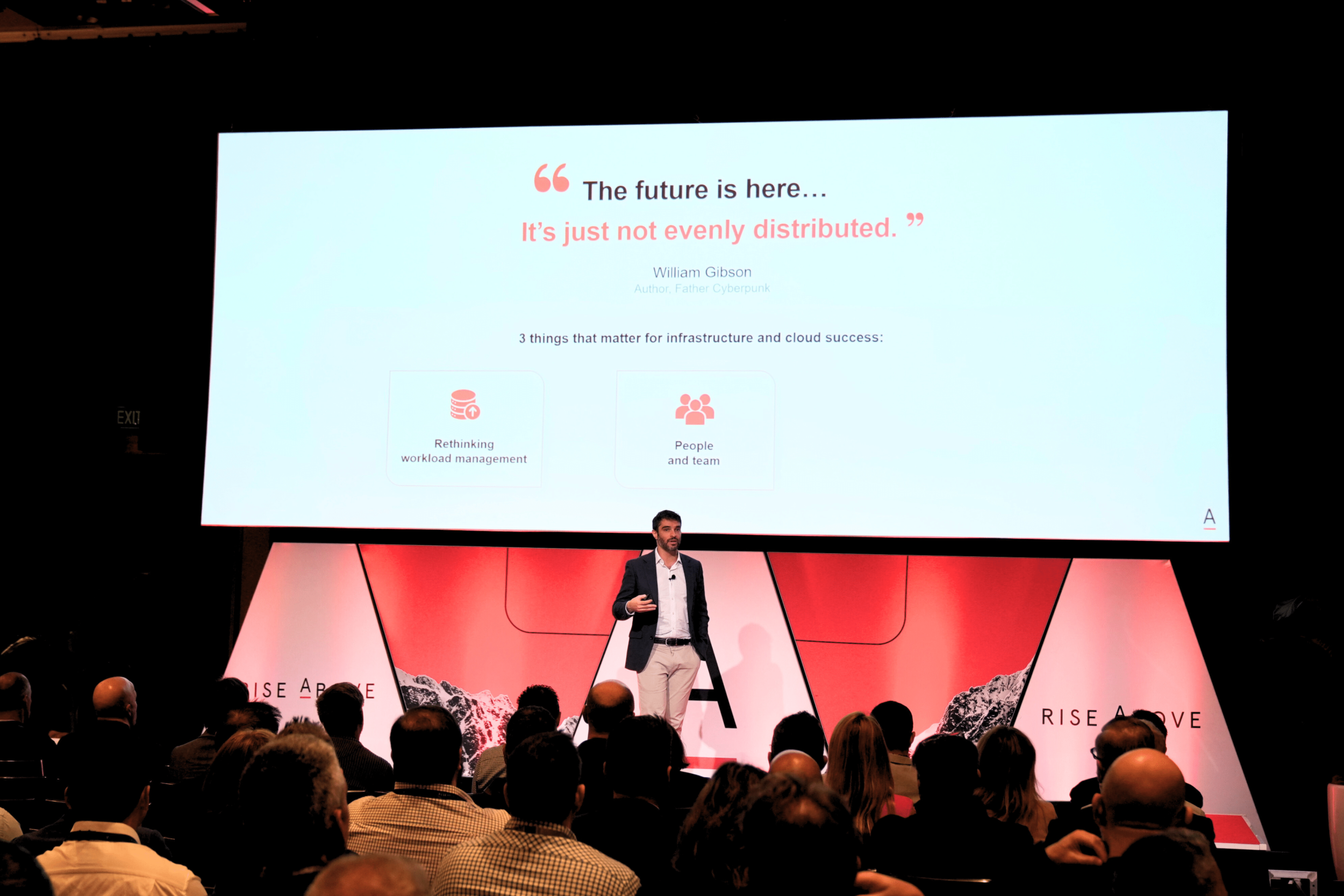
Tom Quinn, General Manager Core IT at Metcash, made the planning discipline clear: map the current environment before designing modular future states the business can fund.
Canva Chief Technology Officer Brendan Humphreys and AWS Director of Solutions Architecture Nam Je Cho point to platform abstraction as part of the answer.
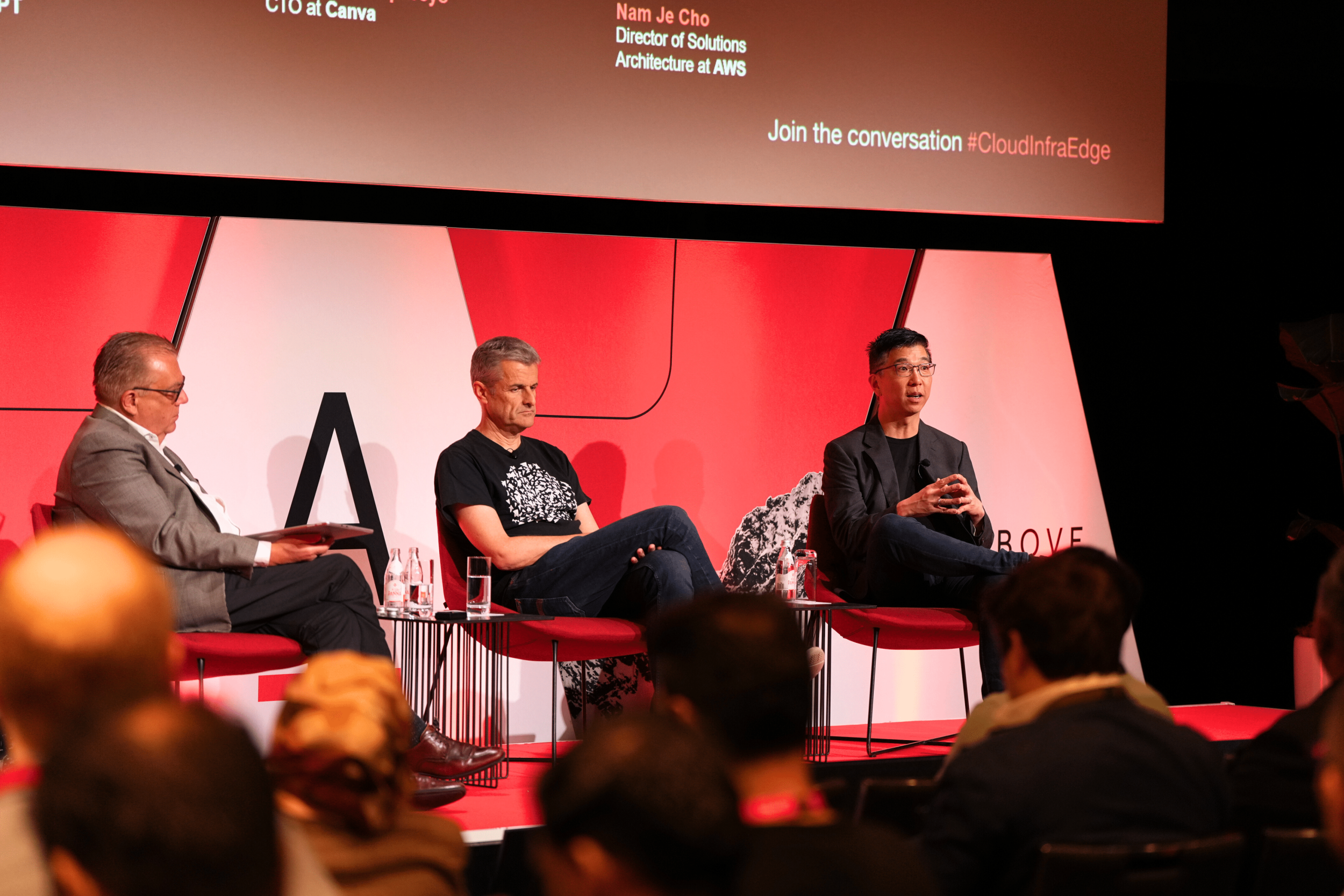
The aim is not to pretend hybrid is simple.
It is to create a shared layer where policy, workload placement and performance can be managed consistently, even when the underlying environments differ.
Recommended action: Build one control layer for workload placement, telemetry, policy and ownership across public cloud, private cloud, data centre and edge.
Move FinOps into the runtime
AI cost control cannot sit in a monthly report.
By the time finance sees the number, the architecture has often been set, the workload has scaled and the usage pattern has become normal. That timing does not work for AI.
Training, inference, GPU use, data movement and idle capacity all shift with workload behaviour.
A model can perform well and still be too expensive for the task.
On the other hand, a use case can look affordable in testing, then become hard to defend once usage expands across teams.
ADAPT’s infrastructure research found only 36% of leaders can link cloud spend to business value.
Many organisations still lack basic financial models such as showback or chargeback.
Gabby Fredkin noted that few Australian enterprises have embedded real time cloud cost accountability, with budget guardrails often arriving after commitments are made.
Wayne Vest, Senior Expert at McKinsey and Company, argued for forecast based planning, engineering level telemetry and shared decision rights so resource allocation connects to business outcomes.
A10 Networks found that only 19% of organisations have automated scaling for AI workloads, while more than half are only somewhat confident their infrastructure can support future AI needs.
FinOps has to move closer to architecture and engineering. Cost signals need to show up while workloads are being designed, deployed and tuned, not after the bill arrives.
Recommended action: Put cost signals into engineering workflows through showback, chargeback, automated scaling policies, forecast based planning and product level value metrics.
Make security travel with the workload
Hybrid AI increases security exposure because AI workloads pull on more data, more identities, more APIs and more environments.
Slower approval is not the answer. It pushes teams around the process.
Security needs to be built into the path teams already use to ship work.
Standards need to live inside platform modules, pipelines, identity controls and deployment gates.
If every AI workload requires manual interpretation of security policy, scale will stall or risk will rise.
ADAPT’s Cloud & Infrastructure Edge coverage shows this shift already happening.
Edwin Kwan, Head of Product Security at Domain Group, shared how Domain Group hardened containers and codified infrastructure standards into shared modules.
Matt Preswick, Principal Solutions Engineer at Wiz, warned that scan based pipelines without automated enforcement create alert fatigue without enough risk reduction.

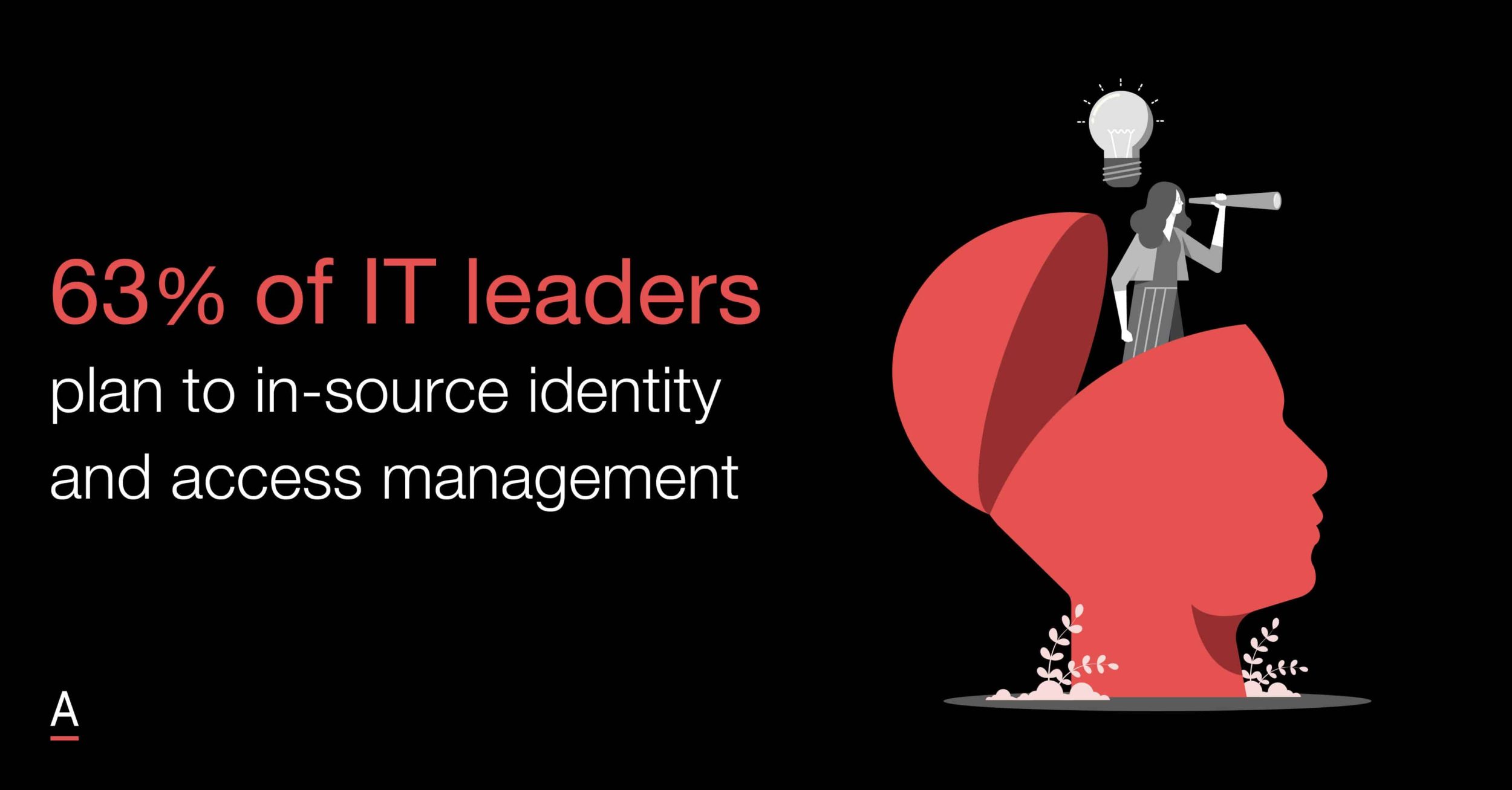
ADAPT also found that 63% of IT leaders are bringing identity and access management back in house, reflecting stronger concern over control of sensitive data flows in AI pipelines.
A10 Networks found security is the biggest AI infrastructure pain point, cited by 49% of respondents.
Performance and capacity matter, but weak security control can stop AI faster than slow infrastructure.
Controls need to move with the workload. A secure design in one environment has limited value if the same workflow weakens when it crosses into another.
Recommended action: Codify security standards into platform modules, pipelines, identity controls and deployment gates so AI workloads inherit controls by default.
Plan for physical limits before they become business limits
AI infrastructure is not only a platform decision.
It needs power, cooling, space, GPUs, storage, connectivity, low latency paths and people who know how to operate the environment under pressure.
These constraints are physical, and they do not move at software speed.
Bevan Slattery, Founder of Cloudscene, Superloop, Megaport, NEXTDC and Co Founder of PIPE Networks, has argued that Australia needs to rewire its digital backbone for AI, cloud and sovereign compute.
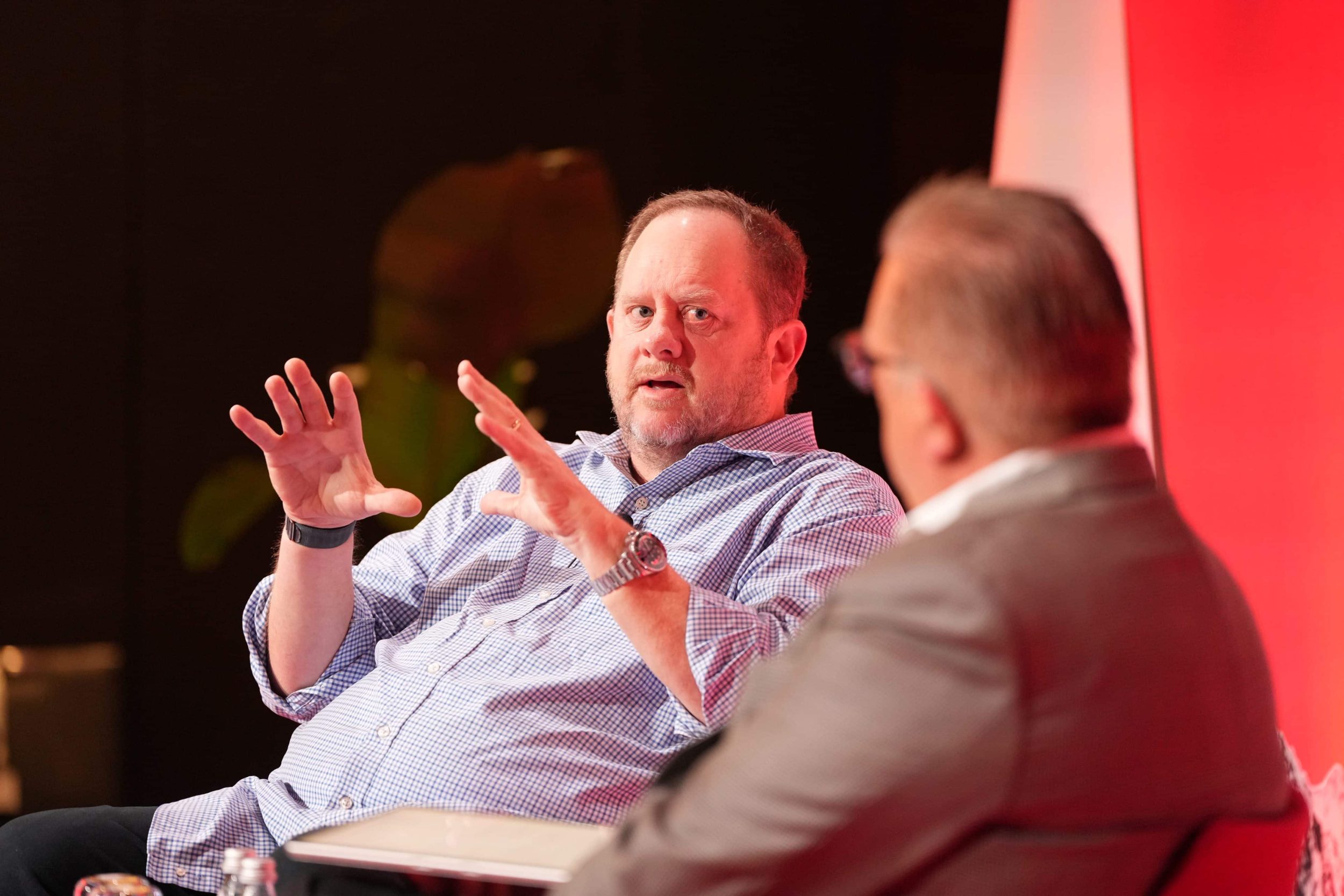
His point is bigger than connectivity.
Secure high capacity infrastructure, energy planning, workforce capability and national digital strategy have to move together.
Raj Singh, Targeted Segments Enterprise Sales Leader at Schneider Electric, brings the issue down to the data centre floor.
AI workloads place serious pressure on power and cooling.
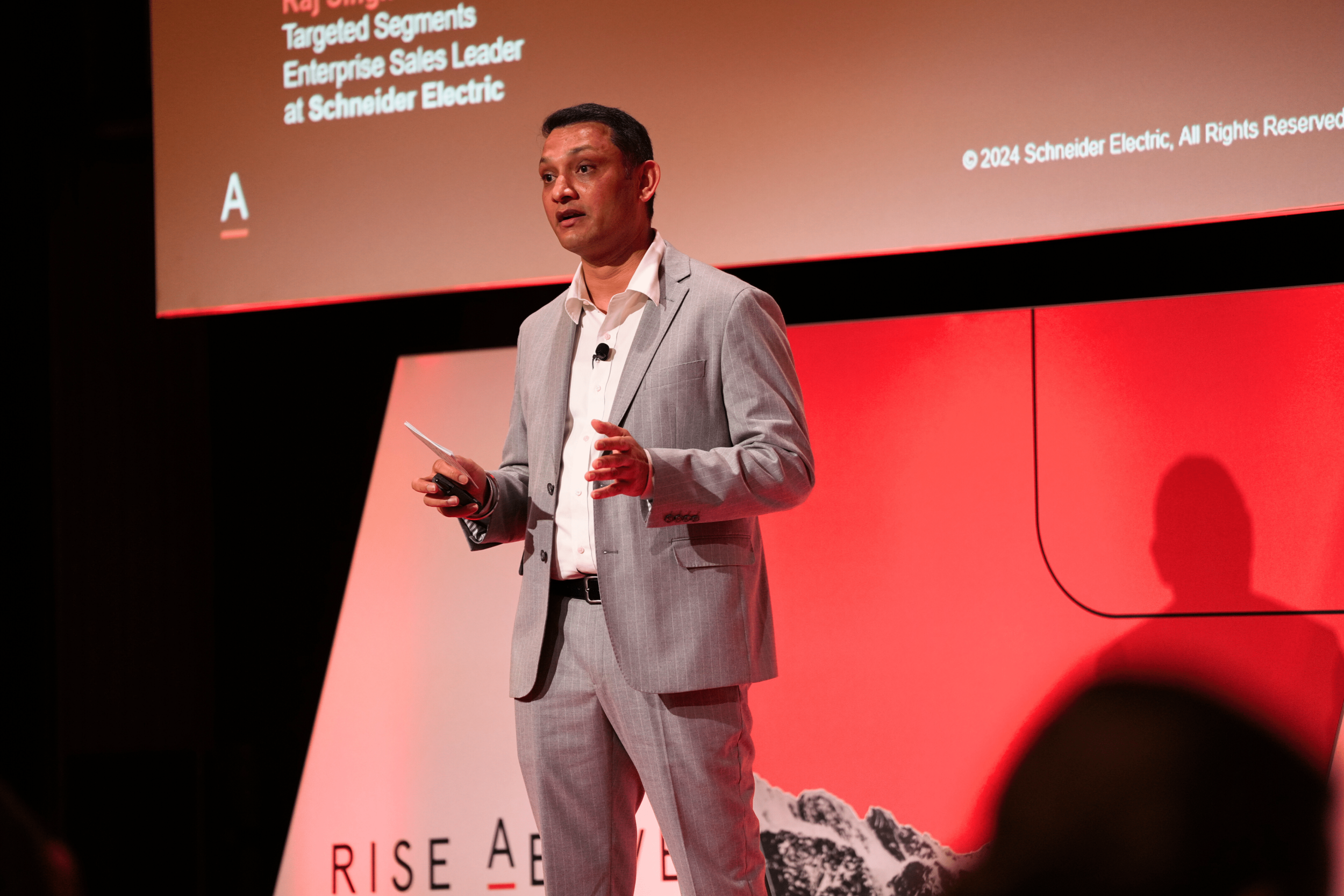
He warned that electricity demand from AI data centres is expected to triple by 2050, noting that 95% of AI workloads run at the core today, but by 2028 half will run at the edge.
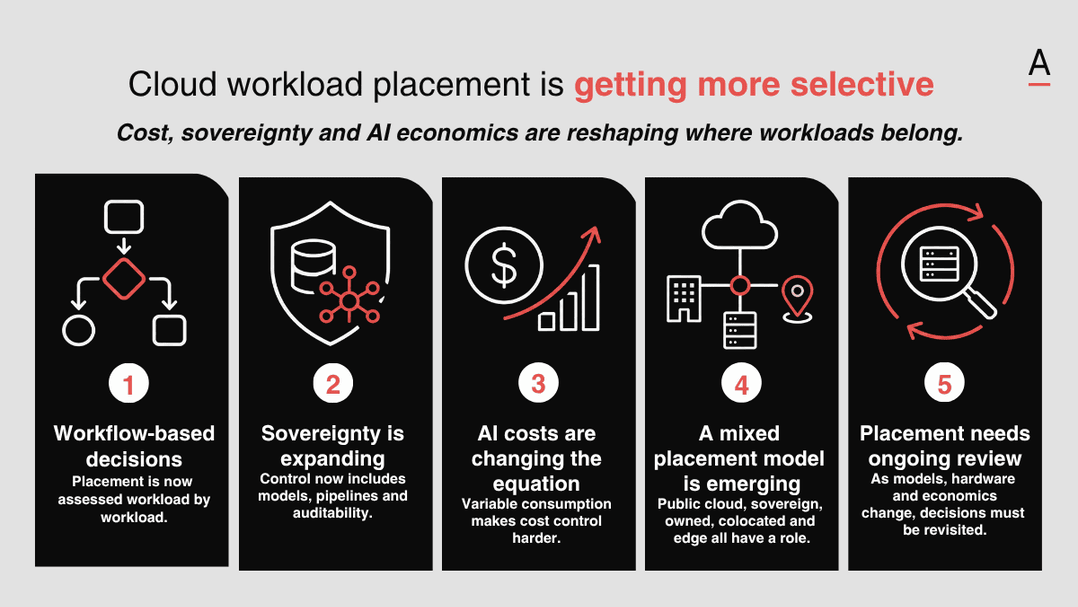
Workload placement must be judged against more than cloud preference.
Leaders need to know whether the chosen location can support the power draw, latency requirement, sovereignty obligation, resilience target and long term cost profile.
Leave those questions too late and they show up as outages, cost blowouts, weak performance or stalled projects.
Recommended action: Model AI infrastructure demand across compute density, cooling, energy, network latency, sovereignty and edge requirements before approving scale.
Replace central control with governed autonomy
The old infrastructure control model assumes central teams can approve the work, provision the environment, manage the exceptions and police the risks.
AI moves too quickly for that model.
That means shared standards, earlier cost visibility, automated security controls, and business owners who understand the placement, capacity and risk trade offs behind each AI use case.
ADAPT’s hybrid cloud and FinOps research shows infrastructure strategies are now shaped by workload management, team restructuring and deeper business engagement.
Skills gaps remain across DevOps, security and AI operations.
Infrastructure leaders also need stronger financial literacy, customer focus and data fluency because they are being pulled closer to investment and business case decisions.
Canva shows what a more mature model can look like.
Brendan Humphreys described an AI first approach that combines fast evaluation of third party models, an open developer ecosystem and investment in proprietary domain specific models.
Internally, Canva supports experimentation, human in the loop processes, shared learning and autonomy for teams to choose tools that deliver business impact.
Nam Je Cho reinforced the need for reskilling and a culture that can experiment without losing control.
Infrastructure leaders need a different balance: more local autonomy, stronger shared controls, faster delivery, clearer ownership and less tolerance for unmanaged cost, security and workload decisions.
Recommended action: Redesign infrastructure teams around platform engineering, AI operations, FinOps, security automation and business aligned workload ownership.
The control test for AI infrastructure
AI scale will expose whether hybrid infrastructure is governed or merely connected.
Compute, data, cloud, edge, security, cost and governance cannot keep operating as separate domains. AI cuts across them too quickly.
For every AI workload, infrastructure leaders need a placement decision that can stand up to scrutiny:
- Environment: why this workload runs in public cloud, private cloud, data centre or edge
- Control: which security, identity and policy controls stay attached across the workflow
- Economics: how cost changes when usage, inference, storage or data movement scales
- Capacity: whether power, cooling, latency and compute can support production demand
- Ownership: who is accountable after the workload moves from pilot to BAU
Running AI somewhere is no longer a meaningful benchmark. The standard is whether each workload runs in the right environment, under the right controls, with a cost and risk profile the business can defend.
 Justina Uy
Content Marketing Manager
Justina Uy
Content Marketing Manager
Justina Uy is a data-driven content marketer that thrives on democratising elite know-how to empower Australia’s underdogs.
Skilled at translating complex ideas into a compelling story across formats and channels, she shifts seamlessly between writing long-form articles, creating viral social media posts, and producing thumb-stopping videos.
Since 2015, Justina executes her vision through a sophisticated understanding of the rapidly evolving digital and business landscape to serve entertaining and educational insights to the executive community.
Less Join the ADAPT
 Insider Community
Get the latest A/NZ market research and insights on the core trends impacting leaders.