














AI token costs pushing enterprises back on-premise
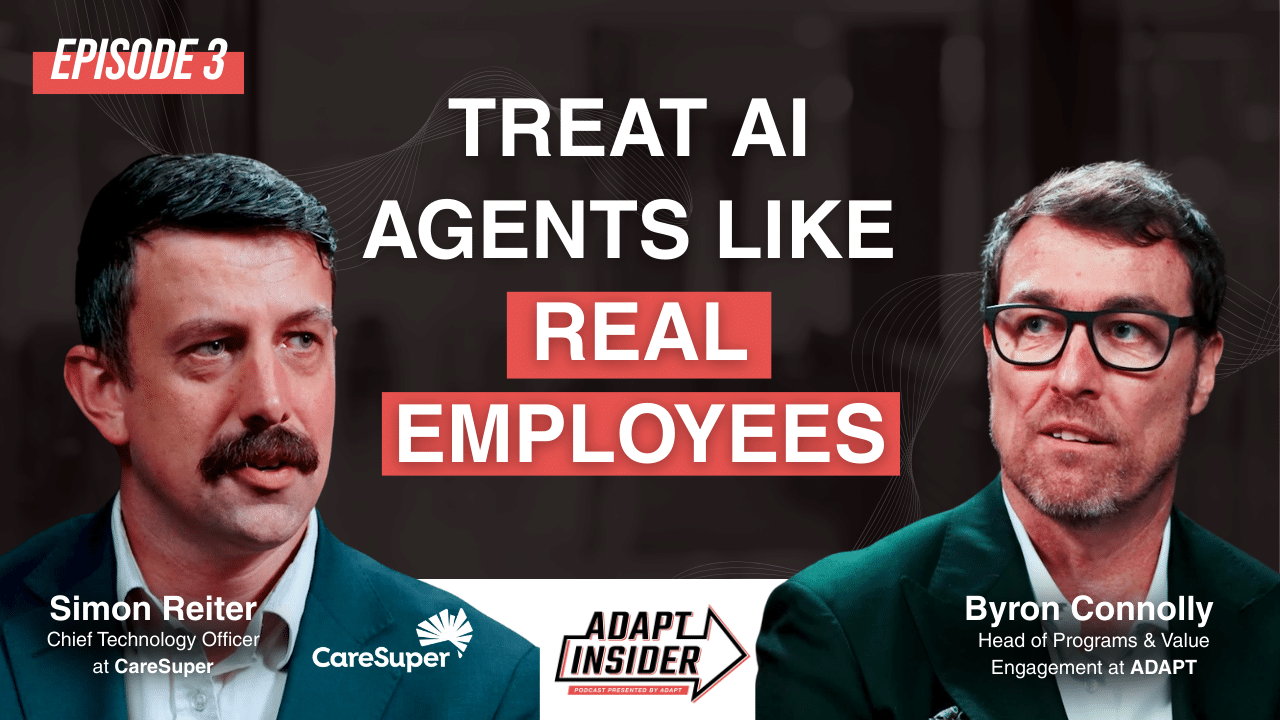
In this ADAPT interview, Sean Huntley, Executive AI Architect APJ at Broadcom, examines when AI costs make private infrastructure viable.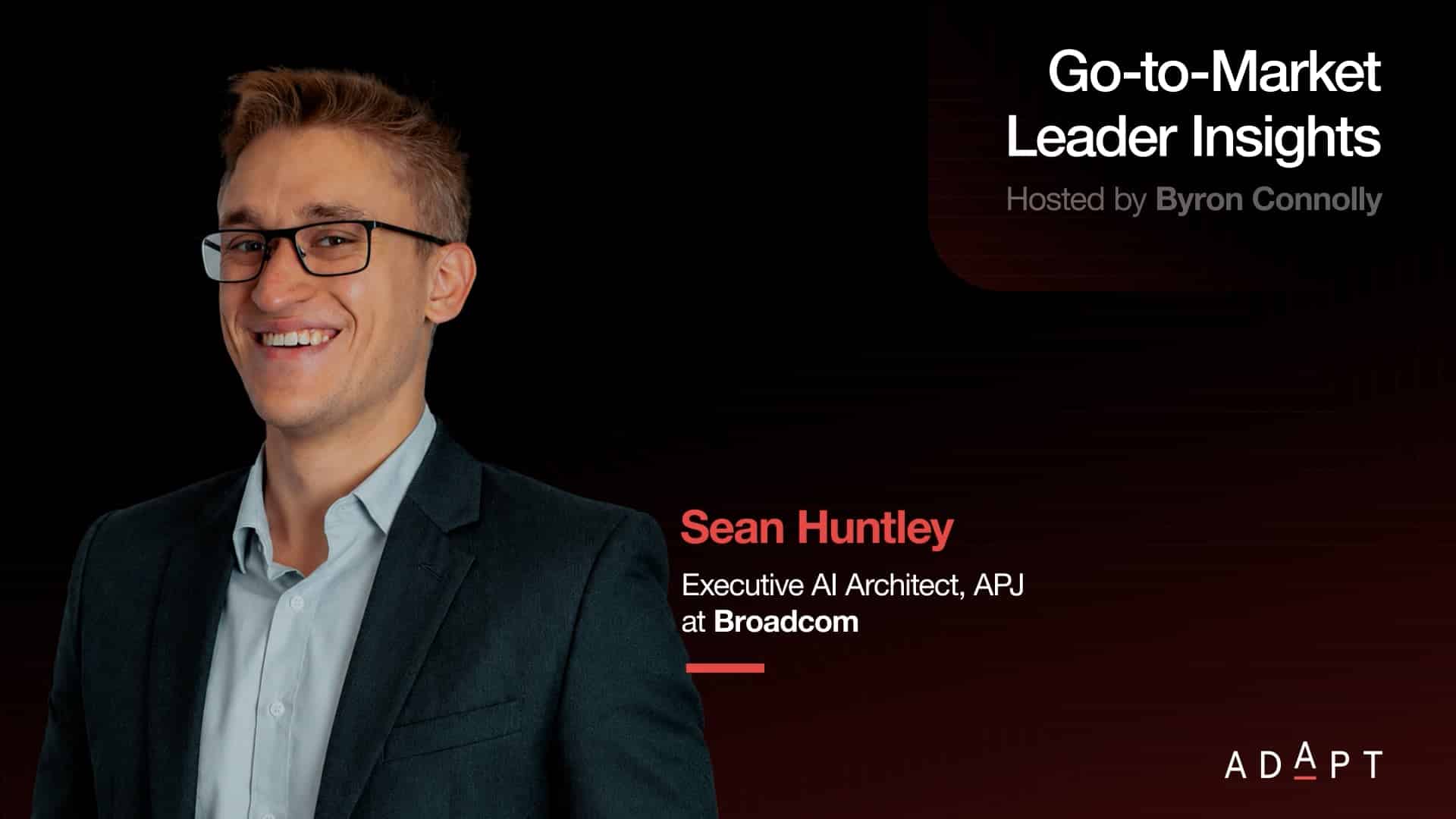


 Published Aug 5, 2026 in
Peer Insights
Cloud & Infrastructure
Contributors
Byron Connolly
Sean Huntley
Published Aug 5, 2026 in
Peer Insights
Cloud & Infrastructure
Contributors
Byron Connolly
Sean Huntley
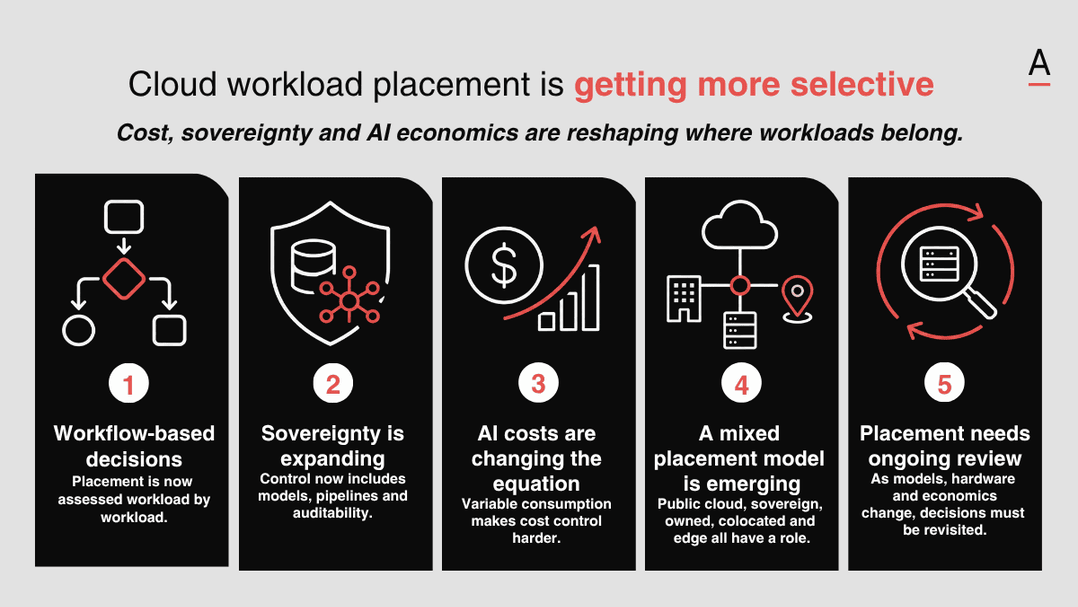
A government organisation analysed what it would cost to scale an agentic AI use case.
But once the sums were done, the agency realised the cost of cloud AI tokens would consume its entire IT budget.
“They had a pretty high value use case for the business, but it becomes a matter of investment. And when they did the analysis, they came back to it and said, ‘Oh, hold on, this is going to cost our entire IT budget if we’re actually going to scale this thing’”, Sean Huntley, Executive AI Architect APJ at Broadcom tells ADAPT.
It’s not just the sheer size of AI token bills that is the issue, it’s also the unpredictability of costs.
“When it’s a simple sort of knowledge-based AI application, as we’ve seen over the last few years, the commonplace ones, they’re a bit more predictable. But once you get to the [top] end of complexity…it’s not like there’s a set number of tokens you’re going to spend each time a workflow runs.
“That unpredictability, combined with the increasing price of tokens and the growing complexity of tasks, really cascades”, he says.
AI tipping point as repatriation increases
Broadcom surveyed 1,800 decision makers, including 200 in Australia, for its latest report Private Cloud Outlook 2026.
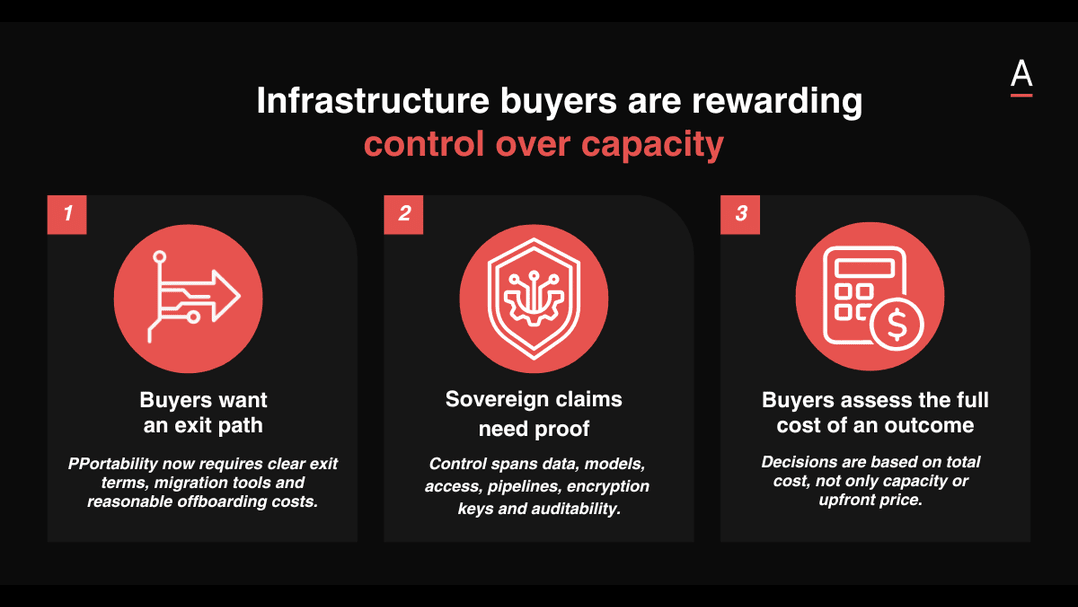
The report found that private cloud infrastructure is preferred for many enterprises looking to scale AI securely.
It found that public cloud environments are increasingly failing to address three forces – cost, complexity and control – that are critical for production AI at scale.
The data shows that 56% of respondents are running or planning to run production AI inferencing on private cloud infrastructure, while public cloud use for the same workload dropped 15 percentage points year-over-year.
ADAPT’s data tells a similar, but more nuanced, story: 28% of Australian infrastructure execs surveyed for Cloud & Infrastructure Edge in July say they intend to repatriate cloud services, up from 17% in 2025 and just 10% in 2020.
But there is a gap between intent and action: the average percentage of public workloads being repatriated has fallen from to 13% from 21% in 2025.
More than half of respondents still expect public cloud services to absorb the next wave of compute demand.
Huntley says cloud repatriation doesn’t happen the moment token costs begin to sting.
It happens once organisations can see a clear mathematical crossover, where variable AI token and cloud pricing begins to overtake the fixed hardware and operational costs of on-premise deployments.
At this point, some organisations will start investing in their own infrastructure to support existing and future AI use cases.
“Generally, what I’ve found is that organisations will hit this cap. They’ll get to a point where there are one or two high value [AI] use cases, then they look at the token spend, they look at the cloud spend, and it doesn’t add up”, he says.
Once this threshold is crossed, the economics shift dramatically.
“As soon as you deploy GPUs, you get the operational model right, you can really smash these things as hard as you can, and every token after that is free. That’s where the benefits compound”, says Huntley.
However, none of this repatriation delivers value if the underlying platform can’t support agentic workloads at scale.
Huntley is emphatic that raw GPU power is only part of the equation. Enterprises need a resilient, high-performance architectural layer capable of handling scale securely and economically.
That means rethinking cloud, data, and operating models from the ground up, rather than simply bolting GPUs onto existing infrastructure.
The organisations succeeding at this are the ones treating AI infrastructure as a genuine platform investment, built for compounding returns across many use cases, not just the single workload that justified the initial spend, he says.
Huntley also advises organisations to stop treating inference as something each application team owns and manages independently and start handling it as core infrastructure.
“I sort of think of this as a new type of infrastructure that we have to manage in the same way that the IT team provides IT services to the rest of the business”, he says.
Unifying that fragmented inference layer, Huntley argues, improves performance, governance and cost efficiency.
But the transition isn’t uniform across the market.
“It’s a mixed bag. Some organisations have platform teams or an IT team equipped to deliver on-prem style cloud services, while others don’t, so they struggle with it.”
Frontier AI and the new cyber security reality
As organisations build out AI capabilities, there are also facing new cyber security challenges.
Frontier AI models like OpenAI’s GPT 5.6 and Anthropic’s Mythos pose high-level security risks.
They can accelerate cyber attacks at unprecedented speeds and enable sophisticated autonomous attack agents capable of causing serious damage with minimal human intervention.
Broadcom is a founding member of Anthropic’s Project Glasswing, an initiative to secure the world’s most critical software. Broadcom has had access to Anthropic’s Mythos model for several months.
“It’s a really big ‘zero to one’ moment for the software landscape and cyber security in general. We were integrating it [Mythos] with our security standard practices, and it was ok. But where it really started to shine was when we treated it like another cyber security researcher, red team-style.”
“What it was capable of, frankly, is alarming. All of the headlines you read about it are true”, he says.
The result across the software industry has been a wave of vulnerability disclosures.
“You can see it from other software vendors across the board. [There’s] a lot of patching coming…a long tail of vulnerabilities that have been sitting in software for decades.
Huntley is clear this isn’t a one-off shock that the industry can simply push through.
“I don’t think it’s going to be just one wave. I think there will be a big wave, but beyond that, there will be a new normal. The recent joint statement from the Five Eyes and the ASD [Australian Signals Directorate] is that the time from vulnerability to exploit has essentially collapsed.”
 Byron Connolly
Head of Programs & Value Engagement at ADAPT
Byron Connolly
Head of Programs & Value Engagement at ADAPT
Byron is a highly experienced technology and business journalist, editor, corporate writer, and event producer.
Prior to joining ADAPT, he was the editor-in-chief at CIO Australia and associate editor at CSO Australia. He also created and led the well-known CIO50 awards program in Australia and The CIO Show podcast.
Byron creates valuable insights for our community of senior technology and business professionals that help them reach their organisational and professional goals. He has a passion for uncovering stories about the careers and personal philosophies of Australia’s top technology and digital executives.
When he is not working, Byron enjoys hot yoga, swimming, running and spending time with his family. He completed the North Face 100km ultra marathon in the NSW Blue Mountains in 2012 and 2013.
Less Sean Huntley
Executive AI Architect for APJ at Broadcom
Sean Huntley
Executive AI Architect for APJ at Broadcom
As Broadcom’s Executive AI Architect for APJ, Sean partners with CTOs, Infrastructure Leaders, and Application Teams to translate AI strategy into production systems for Global Fortune 500 companies and large Government Agencies. Through deep, hands-on engagements with customers, he helps define roadmaps, de-risk adoption, add governance, and scale Private AI Services. With almost a decade in IT and 4 years in R&D on Private AI, he brings a sharp understanding of enterprise infrastructure, developer workflows, and execution at scale. Named on more than 20 patents, Sean provides pragmatic guidance on adopting and optimising AI infrastructure and applications.
Less Join the ADAPT
 Insider Community
Get the latest A/NZ market research and insights on the core trends impacting leaders.
Join the ADAPT Insider Community
Get the latest A/NZ market research and insights on the core trends impacting leaders.