














Why The Cheesecake Shop’s CIO is calling a 34-year-old business a startup as it rebuilds for AI
In this interview with ADAPT’s Byron Connolly, The Cheesecake Shop's CIO Brad Dight explains why AI starts with fixing data, systems, and risk.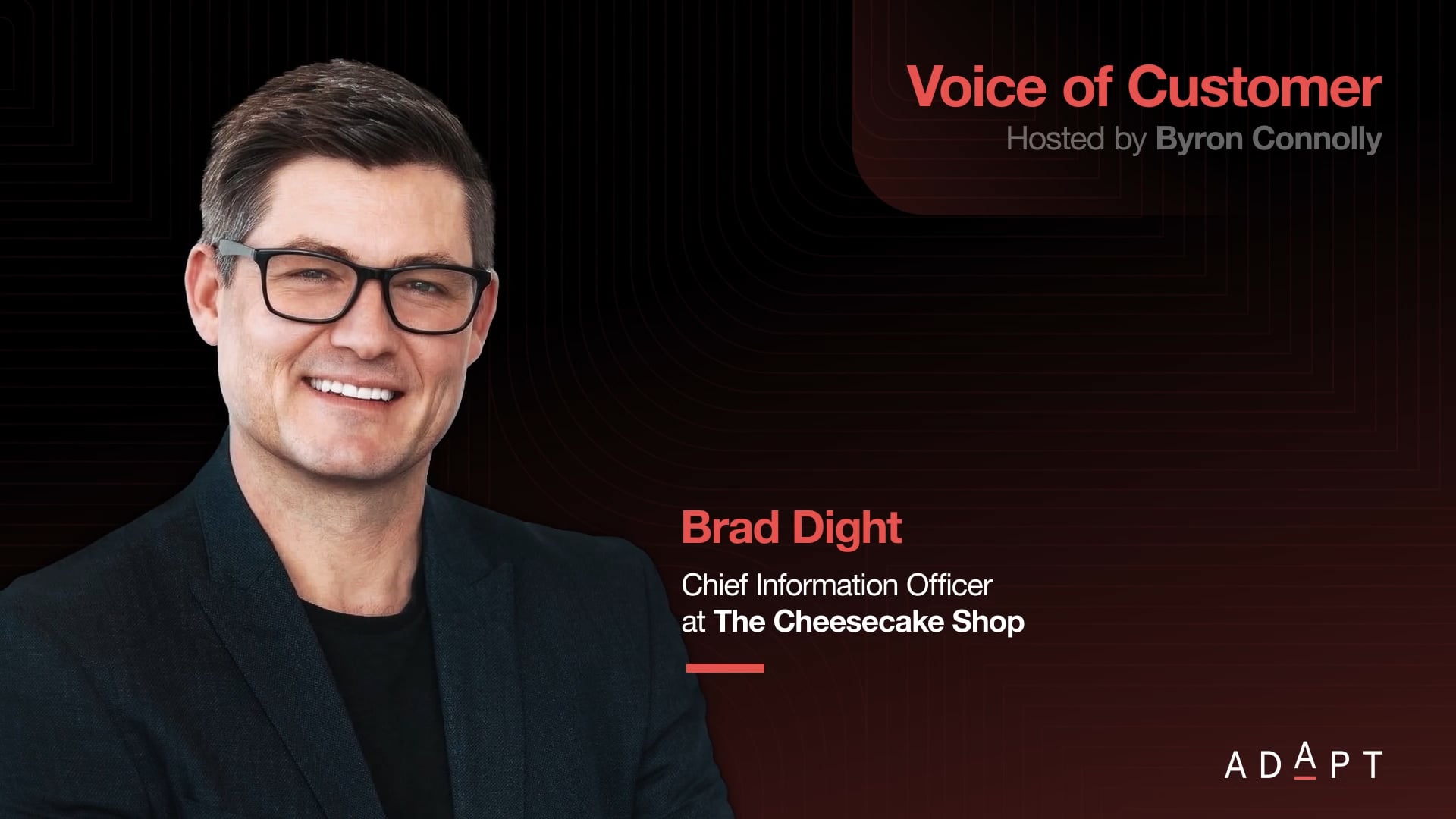


 Published Apr 20, 2026 in
Peer Insights
Strategic Business Initiatives
Contributors
Byron Connolly
Brad Dight
Published Apr 20, 2026 in
Peer Insights
Strategic Business Initiatives
Contributors
Byron Connolly
Brad Dight
Retail is being redefined by intelligent systems, from edge analytics and AI-enabled networks to modular tech stacks and predictive infrastructure.
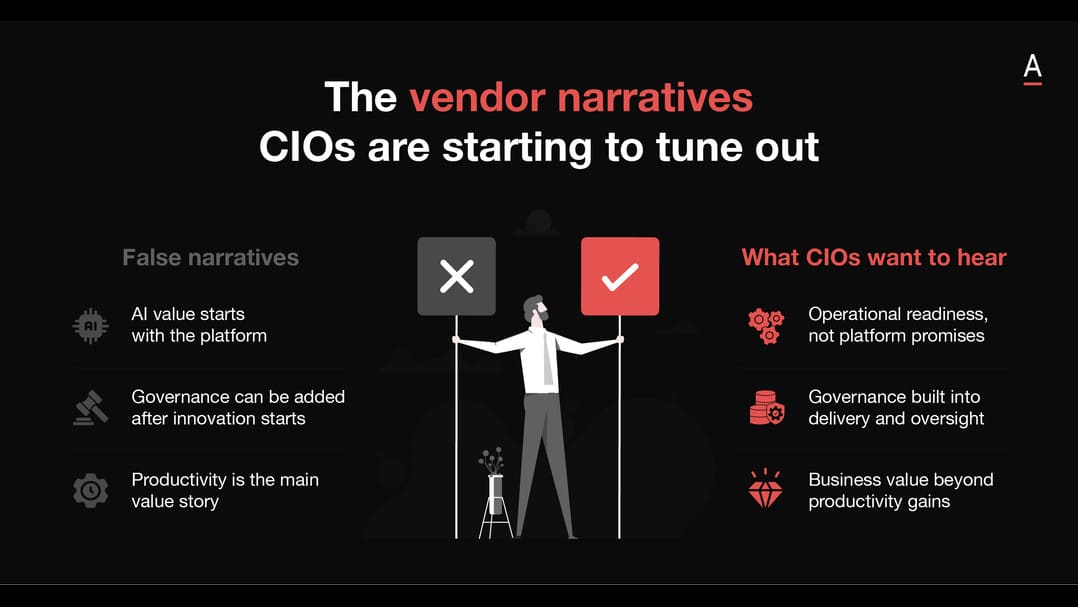
But ADAPT’s research shows that legacy tech stacks remains a significant constraint on innovation and AI scaling across the sector.
Many retailers continue to struggle with fragmented, ageing stacks that limit their ability to integrate customer, supply chain, and operational data, an essential foundation for personalisation and omnichannel optimisation.
One organisation addressing this challenge is Australian retailer, The Cheesecake Shop.
Established in 1991 and now operating 250 locations, the business has been held back by legacy systems and unstructured data. It is now building a foundation to modernise and make use of AI technologies.
CIO Brad Dight tells ADAPT that the retailer’s platforms were entirely custom-built, with little deployed ‘out-of-the-box.’ Some tools, he says, were implemented in ways that ultimately failed to deliver business value.
“We’re taking this business and treating it as a 34-year-old startup pretty much, so trashing everything [tongue in cheek]. Not to say that predecessors [implemented] the wrong systems, it’s just that we’ve outgrown them and now we really need to enable the business”, he says.
Dight explains that the organisation relied on a single database with no redundancy, creating a major point of failure. A single change on its intranet could have brought down the whole franchise network.
To address this, the retailer is investing in new data warehouses and cleaning up its data structure before introducing AI capabilities.
“There’s no point trying to overlay AI and…getting the wrong outputs. What we are not trying to do is create these really big tools and implement AI platforms to streamline the business. We’ve just got to get everything clean under the hood before we apply [AI].”
Streamlining customer feedback and complaint processes
Dight says CEO, Scott Bush, is now challenging every department to identify practical AI use cases. One priority area is customer feedback and complaints management.
“Every retail business does [receive] customer complaints; that’s part of the business whether you like it or not. We’ve partnered with HubSpot to look at that side of the business.
“One of the key things we need to focus on is speed to turn that around because [legislation dictates] that we’ve got to reply [to complaints] within a certain time. It’s about using AI not as a chatbot but being really intuitive to how it actually works.”
For example, AI could automatically retrieve allergen information from the retailer’s website and send it directly to a customer, reducing manual effort and response times.
“That streamlines the process and allows the complaints team to focus on the bigger issues”, he says.
An agentic future
ADAPT’s data shows that agentic AI adoption in Australia is concentrated in operational automation, IT/security workflows, and data-driven decision-making.
Most use cases remain in early-stage pilots or narrow production deployments rather than fully scaled autonomy.
While AI tools are increasingly used for software development, true agentic coding (where autonomous agents identify, fix, test and deploy code changes), remains limited and mostly experimental.
Dight says his tech team is ‘super lean’ and being able to identify software issues and automatically remediate them with agentic tools is the way forward.
“Instead of engineers trawling through logs, the goal is self-solving systems”, he says. “We’ve got really smart people working on platforms. They can find what [the problem is], auto remediate it, test it and deploy it so they can get on with [higher value tasks].”
 Byron Connolly
Head of Programs & Value Engagement at ADAPT
Byron Connolly
Head of Programs & Value Engagement at ADAPT
Byron is a highly experienced technology and business journalist, editor, corporate writer, and event producer.
Prior to joining ADAPT, he was the editor-in-chief at CIO Australia and associate editor at CSO Australia. He also created and led the well-known CIO50 awards program in Australia and The CIO Show podcast.
Byron creates valuable insights for our community of senior technology and business professionals that help them reach their organisational and professional goals. He has a passion for uncovering stories about the careers and personal philosophies of Australia’s top technology and digital executives.
When he is not working, Byron enjoys hot yoga, swimming, running and spending time with his family. He completed the North Face 100km ultra marathon in the NSW Blue Mountains in 2012 and 2013.
Less Brad Dight
Chief Information Officer at The Cheesecake Shop
Brad Dight
Chief Information Officer at The Cheesecake Shop
 Join the ADAPT
 Insider Community
Get the latest A/NZ market research and insights on the core trends impacting leaders.
Join the ADAPT Insider Community
Get the latest A/NZ market research and insights on the core trends impacting leaders.