









Why AI spending is repeating the mistakes of early cloud: Pepperstone’s Erin Burke
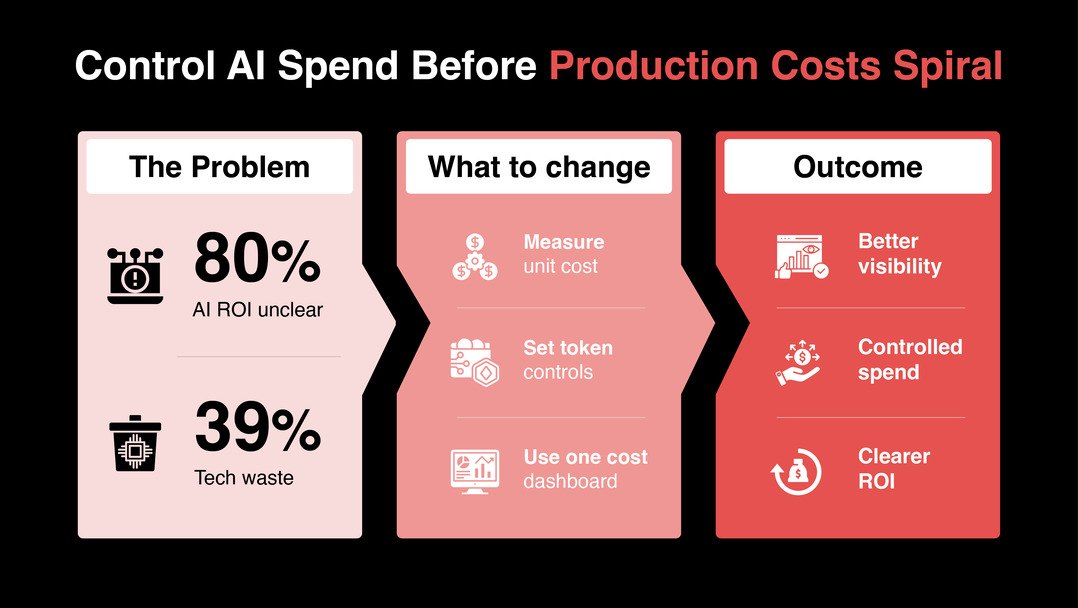
In this interview with ADAPT, Pepperstone’s Global Head of Procurement Erin Burke sets out how to control AI spending and measure its value.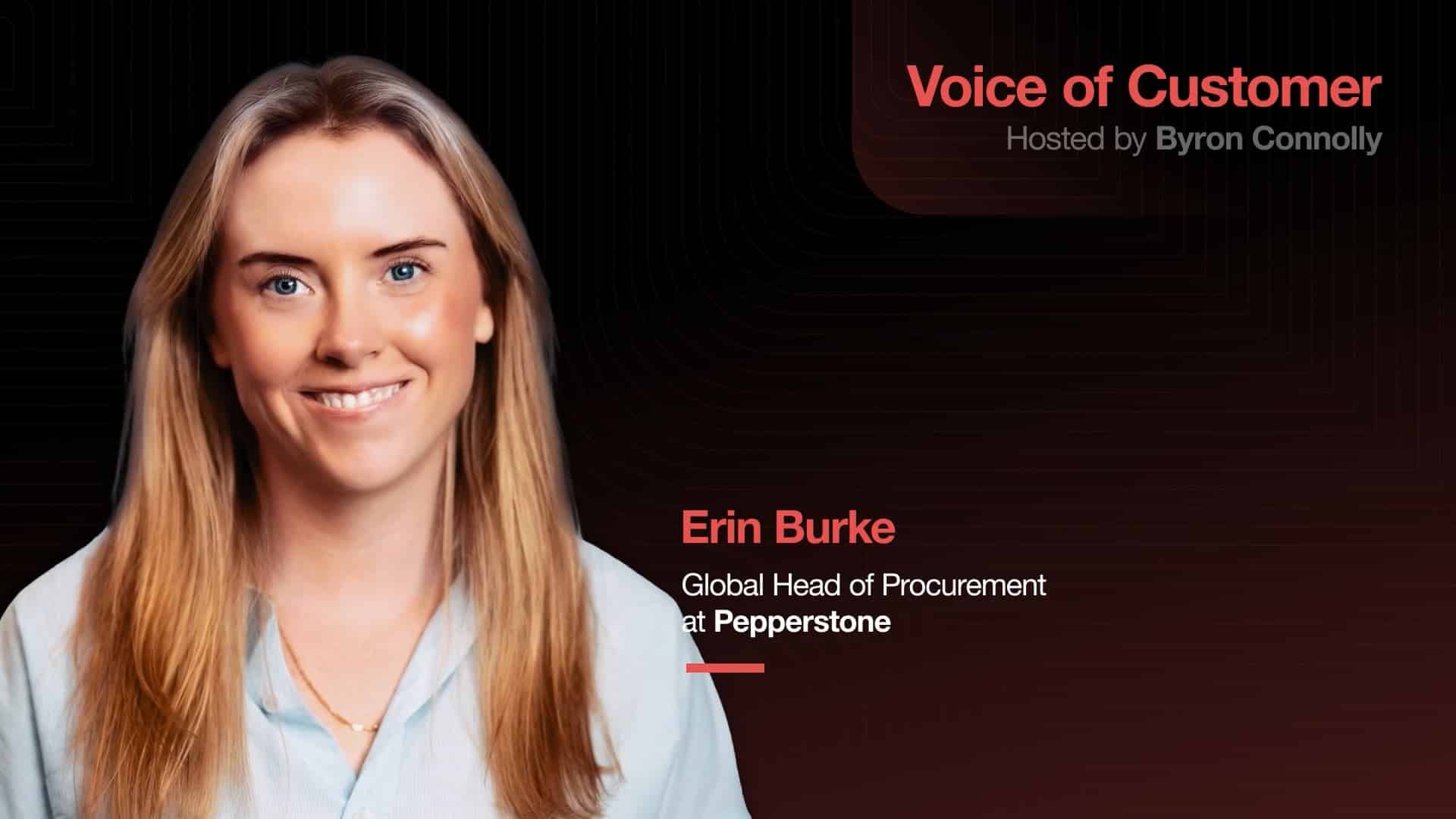


 Published Nov 5, 2026 in
Peer Insights
Finance
Contributors
Byron Connolly
Erin Burke
When cloud computing arrived, fear of missing out drove much of the buying.
Pepperstone’s Global Head of Procurement, Erin Burke, says the same instinct is now driving AI spending.
Organisations are committing funds before they understand the cost, the governance required or the outcomes they expect.
Burke has spent more than three years building the Australian fintech’s procurement strategy, third-party vendor governance, contract architecture and asset management functions.
She has described token costs as ‘cloud costs with better PR’, a deliberate comparison.
Burke was early in her career during the first wave of cloud adoption.
“I was lucky enough to be in the room when decisions were being made, but I certainly wasn’t part of those decisions”, she tells ADAPT.
These days, Burke is in the room making those decisions and she sees a familiar pattern.
“I remember very distinctly it was this fear of missing out that was driving adoption. That excitement drove people to want to adopt [cloud services] without fully understanding the cost, how they would support them, or what outcome they expected”, she says.
In some cases, Burke says, it made more sense to ‘sweat your data centre’ for a year or two or before moving to the cloud.
That approach might have helped organisations avoid the ‘cottage industry’ of consultants who late emerged to help right-size cloud environments that didn’t have the right governance in place from the start.
“You didn’t need to gold-plate every cloud instance you set up, and you needed to educate your teams on how to do it properly. That’s what I’m seeing with AI as well”, she says.
The difference this time is speed. Burke says that six months ago, the market was describing AI as being in its “golden age”.
She points to public disclosures from Uber and Microsoft about exceeding AI budgets less than a quarter into the year.
She also cites reports of engineering work being quietly brought back in house because AI-generated code wasn’t up to standard, as well as the rise of AI slop.
“People have cottoned on a lot sooner that the cost of AI only makes sense if you see the benefits and the return. You have to clearly articulate what that return is going to look like for your organisation, not what someone else’s return needs to look like”, she says.
“It’s good to see that people are realising that sooner. But you can feel that there’s still that fear of missing out and being left behind if you don’t do something. But doing something that’s not the right thing is not always going to get you a positive outcome. It could just get you a giant bill.”
Some of that pressure comes from the top.
Board members and executives hear peers at networking events say they have switched on AI for everyone, and a “keeping-up-with-the-Joneses” mentality creeps in, Burke says.
Commercial leaders need the trust and confidence to push back.
“If you can’t challenge your leadership, or have robust conversations, you’ve got a trust issue that you need to work on, because they don’t know what they don’t know”, she says.
Burke’s advice is to slow down before switching anything on enterprise-wide.
An organisation wouldn’t give everyone access to Adobe Pro if only three people needed it, she says.
“You’re actually better to take a breath, take a few months and figure out your use cases and then turn those tools on”, she says.
She also cautions against long contract commitments while the use cases are still unclear.
“Every supplier listening to this won’t be happy with what I’m about to say. Where you can do 12-month deals or go month-to-month, don’t lock yourself into a contract when you don’t know where you’re going or what you’re doing.
“Give yourself the flexibility to adapt and change as you need. Yes, you might pay a slightly higher price in the first couple of months, but you won’t be locked into a three-year deal, paying far more for something you’re not getting value out of”, she says.
Measure what already matters
Most AI rollouts are still judged on adoption: logins, prompts and active users. Burke says the better measure is already available in the business.
“How do you know whether your business is successful today? The metrics you use should improve if you’ve implemented AI well. AI is a value enabler. It doesn’t fundamentally change what your business does; it changes how you deliver it.”
That means setting an expected uplift before the money goes out the door.
“If we’re going to invest $1 million, $2 million, whatever it may be, what is the expected uplift, and how do we measure that?”
Burke uses her own team to show why usage tells only part of the story.
Her procurement team at Pepperstone uses Microsoft Copilot heavily but that doesn’t necessarily mean they building agents or using the tool as efficiently as possible.
“Is that an ROI metric? Probably not at a business level, but it [Copilot] certainly enables my team to do more procurement activities.
“Take engineering as another example. Are you tracking how many changes you have to roll back after code releases? Is that one of your SLAs that you look at today? Has it increased since you’ve used AI? That’s not a good sign that your AI has been used efficiently”, she says.
Burke says starting with a modest target is reasonable and the gains compound.
A license-based tool such as Microsoft Copilot is an easier place to begin because there is no token consumption to track, compared with usage-priced tools such as Anthropic’s Claude.
Fifteen minutes saved a week adds up over a year, and it grows as people learn, she says.
Every morning, Burke starts with a prioritised list built from the emails and Slack messages that arrived overnight from Pepperstone’s international teams.
“I’m not spending the first 30 minutes of my day trawling through all of that to determine what I need to prioritise in the first few hours.”
She is careful about how she describes and cautions companies against encouraging their teams to ‘turn off their brains.’
“I’m very conscious about using value enablement language rather than resource replacement. AI couldn’t replace me in a contract negotiation. But it could help me prepare baseline comparative data faster”, she says.
Speed, accuracy and risk
Burke frames every use case as a trade-off between speed, accuracy and risk, and what the organisation is willing to pay for each.
At Pepperstone, the stakes go well beyond the money invested.
“This is really important client data that must be protected at all costs. It’s your unique positioning in the market; it’s your trusted brand. That’s the risk, which is far more important than the cost. So, if you start from the basis of protecting client experience and data, what’s important here, speed or accuracy? It’s accuracy.”
Lower risk work, such as compiling meeting notes, can be treated differently.
Business analysts may spend a large share of their time writing them up, and a small error is rarely serious unless the record is needed for regulatory reasons.
“You don’t need invest in making sure that’s perfect every time”, she says.
Public-facing work is different. Accuracy and managing risk has to be a priority and it’s worth taking the time to get that right because agents are going rogue.
“Because the technology is adapting, evolving and coming to market so fast, you’re not going to miss out if you take a month or two to make sure it’s right.”
The same discipline applies to Burke’s own work. AI drafts large parts of her documents, but she still reads every one.
“The number of times it’s decided I’m the head of engineering! I’m not the head of engineering. It’s a technology. It’s not a human. It still makes mistakes. You cannot blindly trust it”, she says.
At Pepperstone, AI decisions are made through an AI transformation program with representation from across the business.
Burke brings the commercial lens: cost impact, exit options and how to scale up or down. Tooling is matched to need rather than switched on everywhere.
Burke is currently rolling out an AI-native procure-to-pay solution that suits the procurement team but would be of little use to engineering or sales.
Spend controls then sit around the experimentation, she says.
“You want people to keep playing, learning and developing their skills with it. So, you have to give enough rope that they get that opportunity to have a bit of a play, but in a financially safe way that delivers the benefit without overexposing your cost base.”
Already signed? Three moves for the next 90 days
For CIOs and CFOs who have already signed a large AI contract and are starting to feel the pressure, Burke recommends three steps.
First, go back to the contract.
“Do you know what you’re paying for and the full scope of what you’re entitled to? Are you talking with the partner that sold you this to make sure that they’re enabling you on your journey?”
Suppliers have their own reasons to help and cynically, if nothing else, they want that agreement renewed, she says.
“So, it’s in their best interest for this to be a positive experience. Leverage that.”
Second, put cost controls and outcome measures in place. If not everyone in the organisation needs a particular tool, switch on control to manage access.
“Make sure you’ve got a mechanism to look at the outputs you’re getting. Are they linked to the expected outcomes you expected? If you haven’t defined those outcomes, or the ROI, take the time to define that”, she says.
Third, keep watching.
“This is not set and forget. You can’t sign a contract, put it in a cupboard and forget about it until renewal. The technology is still in its infancy, and so much is changing rapidly. You have to be prepared and able to pivot as the technology changes.”
With new capabilities arriving almost weekly, Burke says organisations should stay focused on their own goals rather than the market noise.
“The technology is always going to change. You can’t stop that. But what is the goal that you are working towards? That has to be your shining light. Just because something is new, or someone in the media calls it a game changer, it doesn’t mean it makes sense for your business. If it doesn’t, it’s a wasted investment.”
 Byron Connolly
Head of Programs & Value Engagement at ADAPT
Byron is a highly experienced technology and business journalist, editor, corporate writer, and event producer.
Prior to joining ADAPT, he was the editor-in-chief at CIO Australia and associate editor at CSO Australia. He also created and led the well-known CIO50 awards program in Australia and The CIO Show podcast.
Byron creates valuable insights for our community of senior technology and business professionals that help them reach their organisational and professional goals. He has a passion for uncovering stories about the careers and personal philosophies of Australia’s top technology and digital executives.
When he is not working, Byron enjoys hot yoga, swimming, running and spending time with his family. He completed the North Face 100km ultra marathon in the NSW Blue Mountains in 2012 and 2013.
Less Erin Burke
Global Head of Procurement, Pepperstone
Erin Burke is an experienced global procurement expert with a focus on IT. With extensive experience in commercial negotiations, vendor and stakeholder management and procurement best practice, Erin brings a considered and right-sized approach to the whole procurement lifecycle. She has over ten years’ experience across commercial and finance roles in government, not-for-profit and private organisations.
Less Join the ADAPT
Insider Community
Get the latest A/NZ market research and insights on the core trends impacting leaders.
Join the ADAPT Insider Community
Get the latest A/NZ market research and insights on the core trends impacting leaders.