










How should CFOs fund AI when the economics are still volatile?
CFOs from Sydney Opera House, the AFL and Latitude compare how they test value, manage risk and build workforce capability at CFO Edge.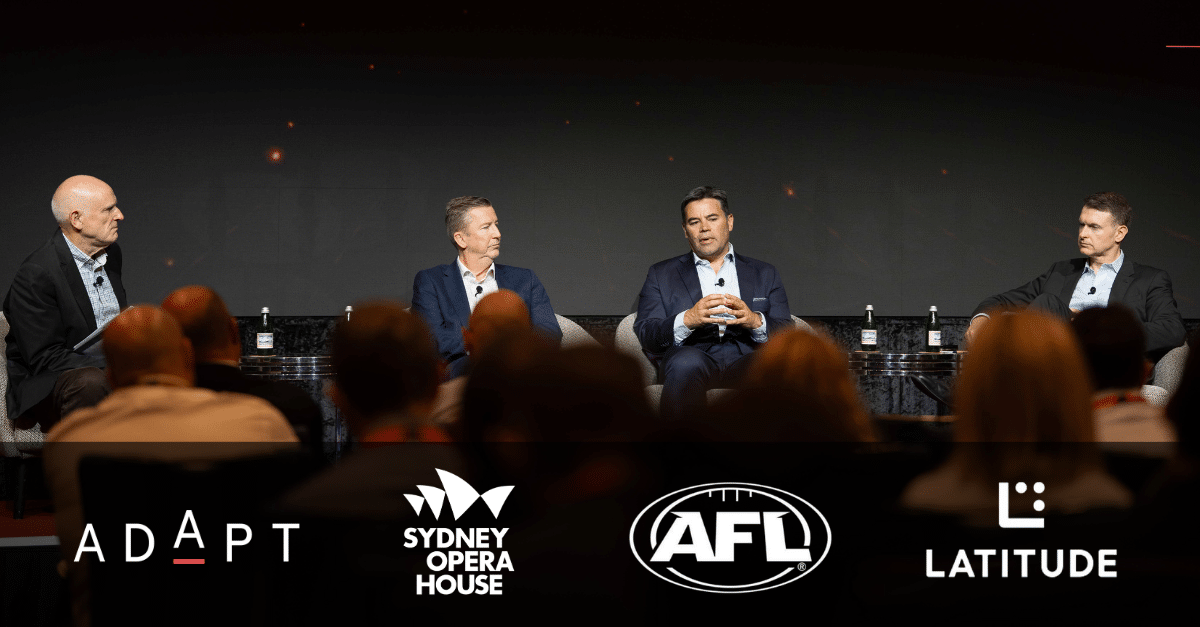


 Published Nov 24, 2026 in
Expert Presentations
Finance
Contributors
Peter Hind
Jon Blackburn
Matthew Chun
AI investment decisions look very different when costs, returns and organisational readiness are still moving.
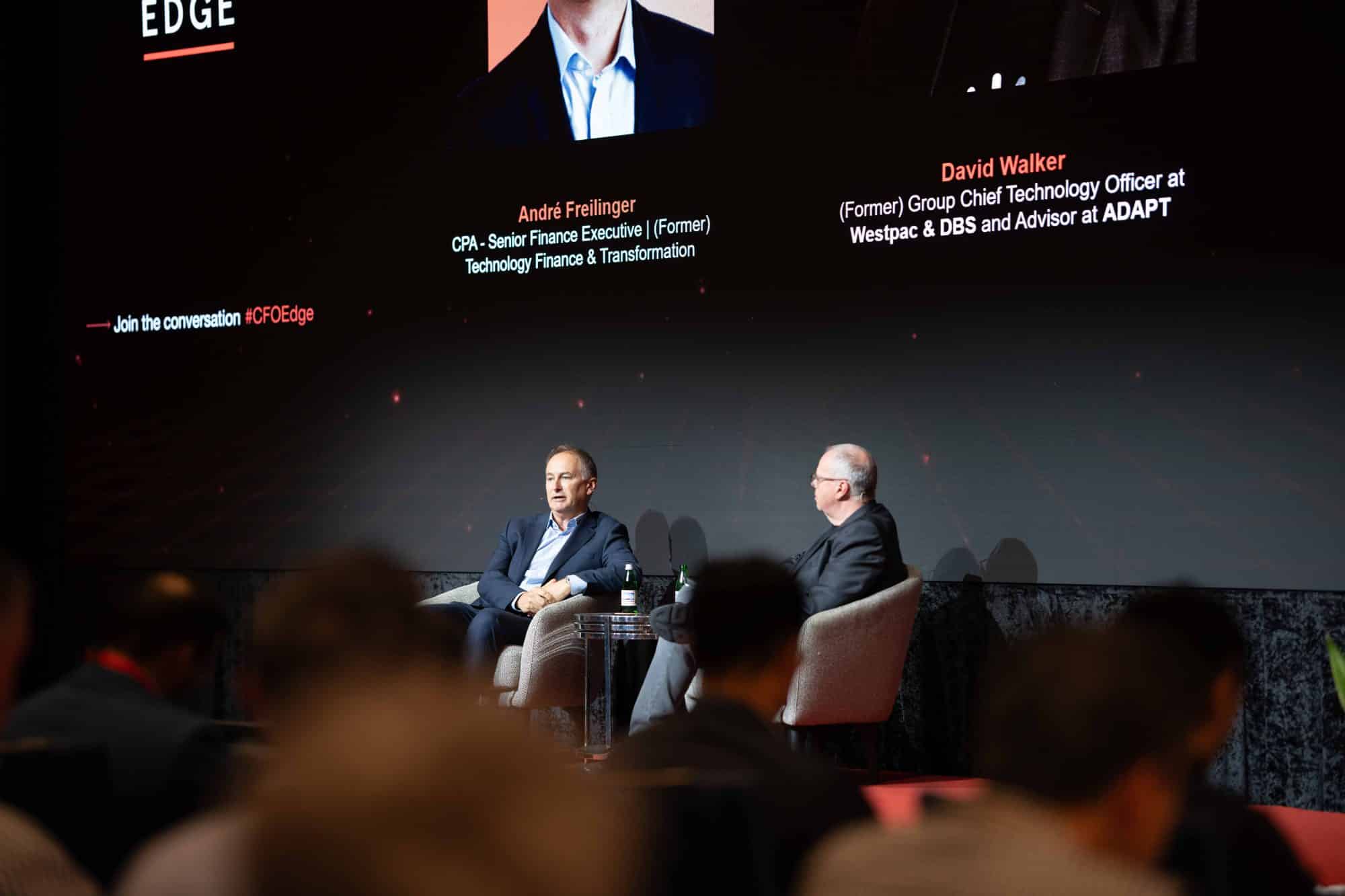
At CFO Edge, Jon Blackburn, CFO at Sydney Opera House; Matthew Chun, CFO at the AFL; and Guillaume Leger, CFO at Latitude Financial, joined Peter Hind, Principal Research Analyst at ADAPT, to compare how they are testing value, managing risk and deciding how quickly to invest.
Key takeaways:
-
- Match the pace of investment to data readiness, risk and workforce capability.
- Test AI against real work and measure the result before scaling further.
- Budget for training, safeguards and the human expertise needed to oversee the technology.
The right starting point differs by organisation
AI investment does not need to follow one standard path.
Sydney Opera House is moving incrementally, focusing first on data readiness, cyber security and governance.
It is using existing tools and controlled environments to build capability before embedding AI into new finance and procurement systems.
The AFL has gone broader, providing Microsoft Copilot to around 1,000 staff and matching the licence investment with training.
After at least three days of training, 97% of staff were using the tool daily.
Guillaume adds another factor to the investment case: the cost of waiting.
Customer and investor expectations are changing, so finance leaders need to weigh the risk of acting against the risk of standing still.
Real work gives CFOs a better test of value
Licence uptake tells finance very little about whether the technology improves performance.
The panellists are testing AI against actual work instead.
At the AFL, staff use it for research and repetitive tasks, with the aim of reducing consultant spend and freeing employees for higher-value work.
One example involved using AI to help prepare the AFL’s complex fixture list before a consultant completed the final work.
Latitude used a controlled comparison between an AI collections tool and its existing human process to see whether the new approach improved results.
Guillaume also used Copilot to build a complex financial model in five hours, compared with a task that had previously taken months.
These tests give CFOs something more useful than adoption data: evidence of where performance improves, where it does not and which measures should determine further investment.
Training and human expertise belong in the budget
Technology costs are only one part of the investment.
The AFL paired its Copilot rollout with training and positioned the tool as a way to augment employees’ work.
Sydney Opera House is taking a slower approach to workforce adoption in an environment where change can face resistance, while Latitude shares both successful and unsuccessful experiments with its board.
The panellists also raised the need to monitor consumption costs and exposure to a small number of AI providers.
Human expertise remains important when tools fail, costs rise or outputs need checking.
For CFOs, that means the business case needs to account for the people, controls and oversight required to keep the technology useful after deployment.
 Peter Hind
Principal Research Analyst at ADAPT
Peter Hind has spent the last 25 years as an analyst and commentator on the ICT industry.
His primary areas of interest are the potential of technology to transform the way organisations operate, the change management obstacles executives encounter in realising this potential, as well as the tactics and techniques leaders have deployed to overcome these difficulties.
Peter now takes on multiple roles within ADAPT including the moderation of private events and roundtables, interviewing business executives about the strategies they are pursuing and assisting with the structuring of delegate surveys.
He also interrogates and analyses ADAPT’s treasure trove of end-user and C-suite data.
Less Jon Blackburn
CFO & Executive Director Corporate Services at Sydney Opera House
Less
 Matthew Chun
CFO at AFL
Matthew Chun is the Executive General Manager – Finance, Broadcast and Infrastructure at the Australian Football League (AFL). In this role, he is responsible for the AFL’s financial performance and long-term financial sustainability, as well as overseeing key operational areas including broadcast, and infrastructure assets.
Matthew leads the finance function across the AFL and plays a central role in strategic planning, commercial decision-making, capital investment and risk management. His portfolio includes responsibility for major infrastructure projects, stadium operations and broadcast-related activities that support the delivery and growth of Australian football nationally.
With extensive executive leadership experience, Matthew works closely with the AFL Executive and Commission to ensure the organisation maintains a strong financial position while continuing to invest in the growth of the game. His responsibilities span revenue optimisation, cost management, capital allocation and operational performance across critical AFL assets and venues, including Marvel Stadium where he is also Chair of the Board (Melbourne Stadium Limited who manage the stadium)
Matthew is focused on balancing financial discipline with strategic investment to support the AFL’s long-term objectives, enhance fan experiences and strengthen the league’s position as Australia’s leading sporting code.
Less Join the ADAPT
Insider Community
Get the latest A/NZ market research and insights on the core trends impacting leaders.
Join the ADAPT Insider Community
Get the latest A/NZ market research and insights on the core trends impacting leaders.