










Why CFOs should treat AI as a business asset before scaling it
ADAPT Head of Strategy Joey Meynink shares what CFOs need to know about AI economics, investment ownership and risk from CFO Edge.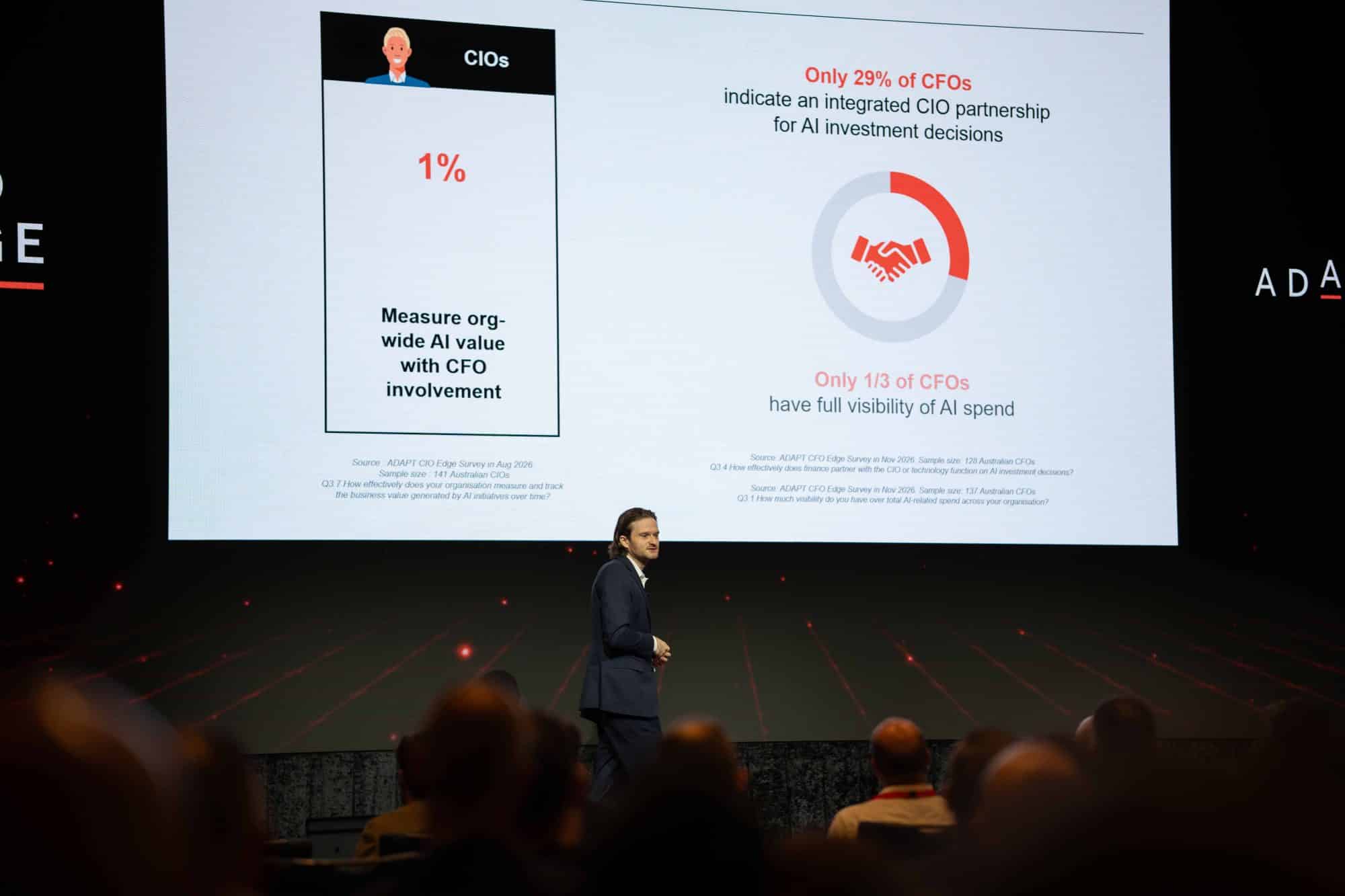


 Published Nov 23, 2026 in
Expert Presentations
Finance
Contributors
Joey Meynink
Finance teams need a clearer view of what each use case costs, what it returns and who owns the risk when it scales.
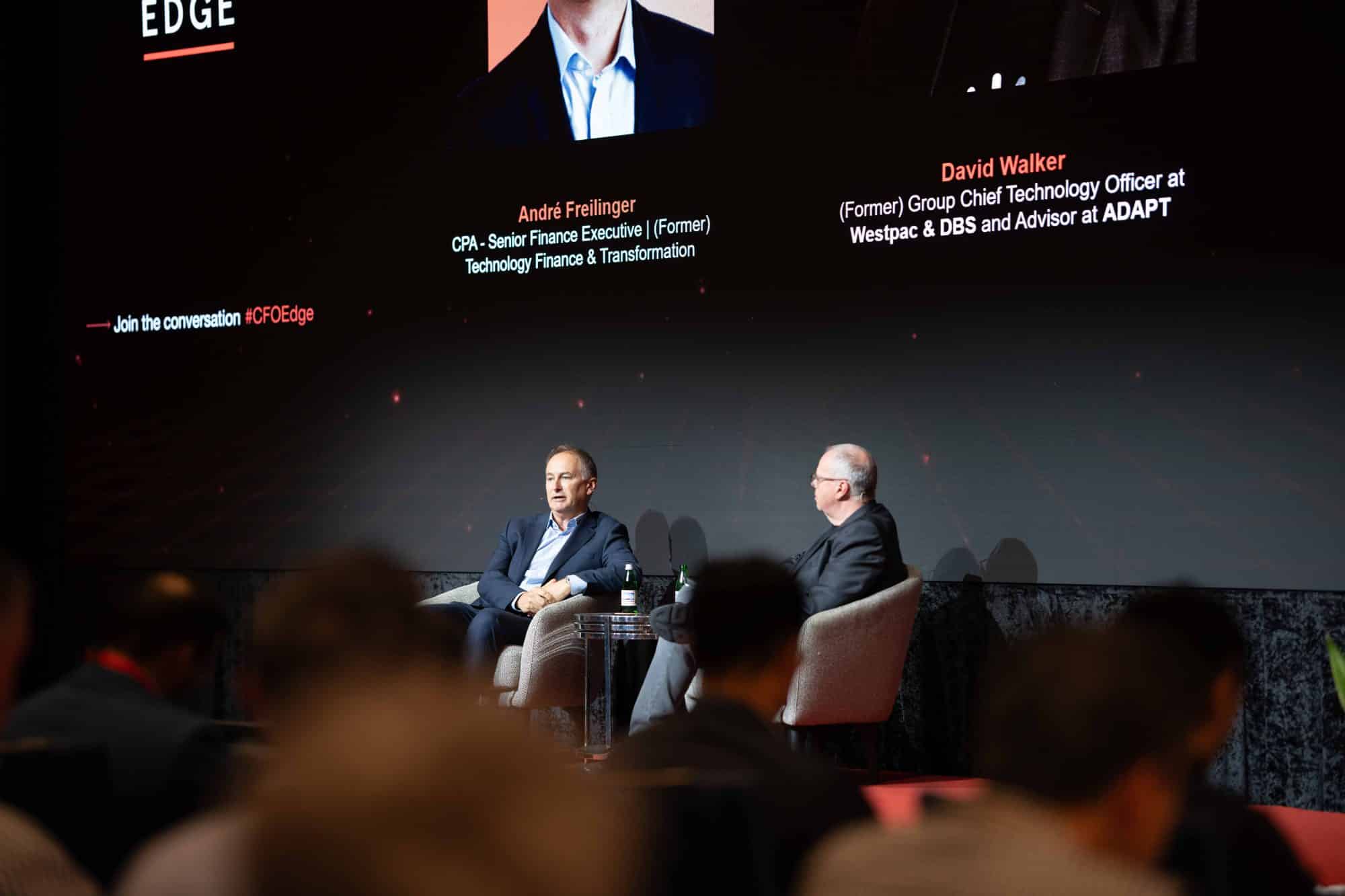
Sharing insights at CFO Edge, Joey Meynink, Head of Strategy at ADAPT, focused on the financial discipline needed as AI spending grows: tighter CIO-CFO alignment, measures tied to business value and clear accountability for risk.
Key takeaways:
- Make AI investment decisions jointly across finance, technology, strategy and legal.
- Measure cost per task and successful outcome before increasing volume.
- Give AI risk a named owner, defined risk appetite and clear response when systems fail.
Joint investment decisions give finance a clearer view of spend
Paid AI products are entering organisations quickly, making costs and investment choices harder to track across functions.
Just 1% of surveyed CIOs measured organisation-wide AI value with CFO involvement, while only 29% of attendees reported an integrated partnership with their CIO on AI investment decisions.
Around a third had full visibility of AI spending.
Xero’s central AI decision hub offers one model for bringing those decisions together.
Finance, technology, strategy and legal leaders review investments jointly, manage employee access to company-wide tools and monitor spend.
That gives CFOs and CIOs a shared view of what is being funded and where further investment should go.
Cost per successful outcome exposes weak economics
Usage and deployment measures can show whether a tool is active without showing whether the economics hold up.
ADAPT research found 60% of surveyed data and AI leaders were not being asked for formal business use cases.
Joey argues for measuring AI as a business asset, including the cost per task, token and successful outcome.
One financial services example shows why.
An AI agent completing a customer-facing task cost around $1.40 per successful outcome, compared with $0.08 for the human process.
Across 200,000 tasks, the estimated cost increased from $16,000 to $280,000 when the agent moved from pilot to production.
Those economics give finance a much stronger basis for deciding whether a use case should scale, change or stop.
Material AI risk needs a named owner
Risk ownership remains unclear as organisations give agents more authority.
Half of surveyed leaders had no accountability framework for AI agents, while 94% of surveyed CISOs said they were not prepared to govern them.
CBA classifies AI as a material risk, sets risk appetites, assigns executive accountability and logs incidents to an owner.
The bank also has measures to shut down a model if it misbehaves.
Risk ownership belongs in the investment decision from the outset, alongside the expected return and cost of scaling.
 Joey Meynink
Head of Strategy at ADAPT
Joey leads ADAPT’s Strategy function, working closely with business and technology leaders to help build more agile, innovative and resilient organisations.
Joey has led key client engagements including:
- Kyndryl, Executive Dinner: AI & Global Resiliency with CIOs & Chief Data Officers, co-hosted with Kyndryl CEO Martin Schroeter
- ServiceNow Vivid Experience: AI Enabled Customer & Employee Experience with Heads of Strategy & Customer Experience – customer and VP interview and panel
- AWS, Redhat & Apptio Executive Lunch: Controlling Cloud Costs, Enabling Efficiency & Unlocking AI with Heads of Cloud & Infrastructure – event moderation
- Led Roundtables for: Rimini Street, Octopus Deploy, LivePerson, Redactive, Netskope, MicroStrategy, Diligent, Akamai and more.
Prior to ADAPT, Joey led strategic and technology implementation initiatives at Accenture, focused on financial services clients and Generative AI. 7 years in strategy, research and product roles at Gartner Australia and the UK and held business service analysis roles at Bain & Co.
Less Join the ADAPT
Insider Community
Get the latest A/NZ market research and insights on the core trends impacting leaders.
Join the ADAPT Insider Community
Get the latest A/NZ market research and insights on the core trends impacting leaders.