












Palmerston North City Council & ServiceNow HR leaders on how they’re applying AI across workforce design and operations
In this interview, HR leaders Sarah Morris and Peyton Caffey discuss how their organisations are applying AI to workforce planning, operations, and employee experience.


 Published Dec 17, 2025 in
Peer Insights
Data & AI Strategy
Contributors
Byron Connolly
Sarah Morris
Peyton Caffey
Published Dec 17, 2025 in
Peer Insights
Data & AI Strategy
Contributors
Byron Connolly
Sarah Morris
Peyton Caffey
In this interview, HR leaders Sarah Morris and Peyton Caffey discuss how their organisations are applying AI to workforce planning, operations, and employee experience.
Artificial intelligence (AI) and machine learning (ML) technologies are transforming how organisations recruit, retain and manage talent.
In many cases, these technologies help teams sift through job applications and eliminate repetitive data entry tasks, freeing HR leaders to focus on higher value activities.
When used responsibly and ethically, AI can help redesign roles and create pathways to close skills gaps. But when deployed hastily, they can have a negative impact on an organisation’s brand.
In one recent case, a young Australian man endured two AI interviews for a role at a retail giant only to be rejected without speaking to a single human.
ADAPT recently hosted HR executives at a roundtable luncheon in Auckland, New Zealand to discuss how their organisations were deploying AI tools across their departments.
Among them was Sarah Morris, GM, People and Capability at the highly-regulated and unionised Palmerston North City Council (PNCC).
The council has built an AI-driven foundational knowledge base that gives staff access to relevant forms and contextual answers to HR policy questions. AI is used with its external learning platform to improve and provide a more consistent onboarding experience for new staff.
AI is also helping with high-level functional design activities. In August, the council announced that it was adopting a Water Services Delivery Plan, developed with Horowhenua and Rangitīkei District Councils, which outlines how water services will be managed in the future.
“We are setting up a water services entity here in Palmerston North and it’s been really helpful to be able to use AI to do things that would have taken three to six months’ worth of effort and external consultants just to get basic foundation understanding done,” Morris tells ADAPT.
One of these tasks is sifting through publicly available documents to craft a framework for the new water entity rather than relying on a consultant, she says.
A key area where AI will have the most impact at PNCC over the next few years is in workforce planning, which is built on the back of a skills framework, says Morris.
“That is our ‘must have’ piece of work and it will be heavily reliant on AI to hold and manipulate data and give us some insights.”
Morris says there will be a point in the future when the council will have to prove that it has been consistent in its application of employee relations rules.
“It’s no longer good enough to say, ‘we’ve followed our process.’ They’re going to want proof, and proof is going to be sitting in [our] systems. So, I think that being aware of setting up the agent support for our ER [employee relations] processes and outcomes is going to be important.”
Morris also wants to deploy what she refers to as an ‘interview bot.’
“If I need to extract from 750 people’s heads some information about their role in water services, how do I do that at speed and with consistency in a way that’s not difficult for people to engage with the process?
“As far as I’m concerned, that’s an agent [playing that role], asking for five markers, or whatever it might be. The [interviewee] can talk as much as [they] like, but the agents are pulling back the information that I know I need and it’s scalable. I think there are many applications for that kind of agent”, she says.
Flywheel of AI impact
AI is “fundamentally changing” ServiceNow’s organisational design by automating or eliminating human work, improving employee experiences and generating content faster than before, says the software organisation’s HRBP Director, Peyton Caffey.
“With these capabilities, we are thinking about how we engage in more high value work more often using AI as our digital workforce or ‘running mate,’” he says.
Caffey says that after analysing every role at ServiceNow globally, AI augmentation is expected to provide a 20% capacity improvement within the next five years.
“We’ve been able to create a 25 FTE (full time equivalent) capacity through some of the work we did in 2024 within our people operations team by reinvesting capacity and doubling down on AI use cases.”
Caffey says this has created a “flywheel of AI impact” as ServiceNow reskills its workforce in areas that match its employees’ career aspirations as well as the ambitions of the organisation.
Central to this is ServiceNow University, a free online learning and development platform launched earlier this year that provides the organisation’s staff, customers and partners with on-demand courses and assessments to build skills as AI influences their jobs.
Meanwhile, PNCC has developed clear messaging around how AI may impact job roles, says Morris.
“We constantly use the word ‘relevant.’ You are still relevant [but] what you do might change. If you are ‘doing the doing’, that’s going to change but if you know the doing, it’s probably not.”
Morris says PNCC has also invested in voluntary AI uptake where staff are given access to tools to determine how they may apply them to their roles. She describes some staff as “excited bunnies” when they see the potential of some of these tools.
“They’ve really transformed some of their own desktop issues, if you like, into a much better work experience by using a tool confidently”, she says.
AI for onboarding/offboarding
ServiceNow’s Caffey says AI is helping organisations navigate diverse regulatory requirements for the onboarding and offboarding of staff. He says ServiceNow learnt some key lessons around staff onboarding during the COVID pandemic, which have informed its current processes.
He says that redesigning ServiceNow’s workflows and having IT, HR and workplace services and payroll applications integrated helped drive a more consistent and improve experience for staff.
“That’s one of our major areas of focus, ‘how do we get that right level of employee experience from day one that’s also in line with the relevant compliance and regulatory checks?’
“So, using AI across the interviewing and screening process [is useful] but [we need to ask], ‘what does that actually look like once our employees are on board and how do we deliver and elevate that experience? I think that’s a real point of interest for our customers at the moment”, he says.
 Byron Connolly
Head of Programs & Value Engagement at ADAPT
Byron Connolly
Head of Programs & Value Engagement at ADAPT
Byron is a highly experienced technology and business journalist, editor, corporate writer, and event producer.
Prior to joining ADAPT, he was the editor-in-chief at CIO Australia and associate editor at CSO Australia. He also created and led the well-known CIO50 awards program in Australia and The CIO Show podcast.
Byron creates valuable insights for our community of senior technology and business professionals that help them reach their organisational and professional goals. He has a passion for uncovering stories about the careers and personal philosophies of Australia’s top technology and digital executives.
When he is not working, Byron enjoys hot yoga, swimming, running and spending time with his family. He completed the North Face 100km ultra marathon in the NSW Blue Mountains in 2012 and 2013.
Less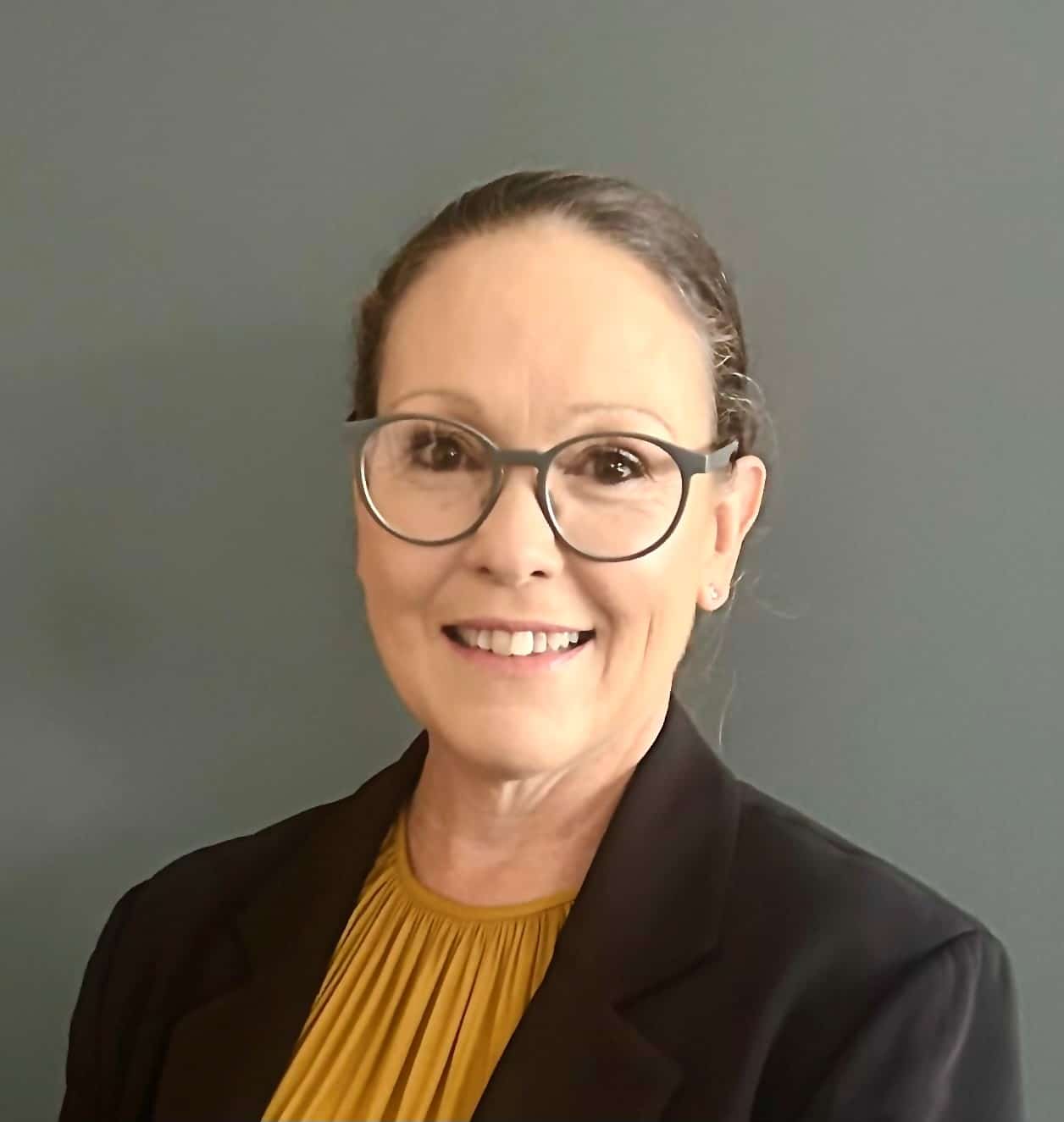 Sarah Morris
GM People & Capability at Palmerston North City Council
Sarah Morris
GM People & Capability at Palmerston North City Council
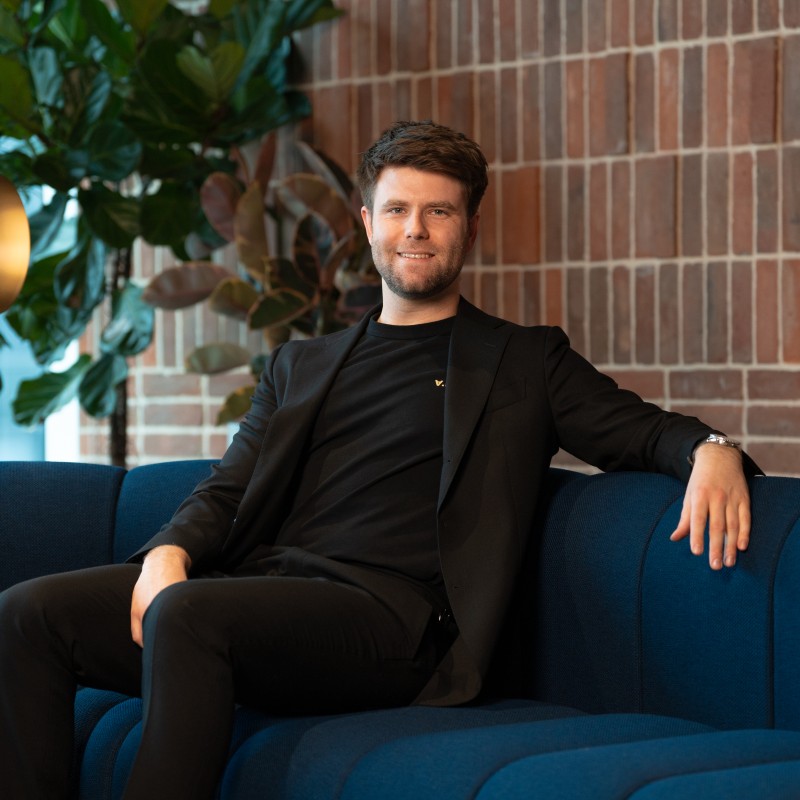 Peyton Caffey
Director of Global People at ServiceNow Australia & New Zealand
Peyton Caffey
Director of Global People at ServiceNow Australia & New Zealand
Peyton Caffey is the Director of Global People for ServiceNow in Australia & New Zealand. He is responsible for delivering ServiceNow’s people strategy for employees in both countries by collaborating with leaders across the business to meet organisational goals that support, grow, and develop the team.
One key area of focus for Peyton and the wider global people team is to bring the ServiceNow People Pact to life, which aims to create an industry-leading employee experience by helping the team do their best work, live their best life, and fulfil our purpose together. In Australia, this has led to multiple workplace awards from Great Place to Work and the LinkedIn Top Companies to Grow Your Career list.
Having held multiple roles at ServiceNow, including as a generalist in human resources (HR), an international manager of generalist teams, and business partner to multiple functions, Peyton is passionate about cross-generational leadership, the future of work, and supporting customers with digital transformation in HR.
Less Join the ADAPT
 Insider Community
Get the latest A/NZ market research and insights on the core trends impacting leaders.
Join the ADAPT Insider Community
Get the latest A/NZ market research and insights on the core trends impacting leaders.