















Aussie CIOs cite data foundations as the top constraint on scaling agentic AI
At ADAPT’s 29th CIO Edge in Sydney, leaders tackled AI governance, data foundations, cyber security, and ROI discipline to reset operating models now.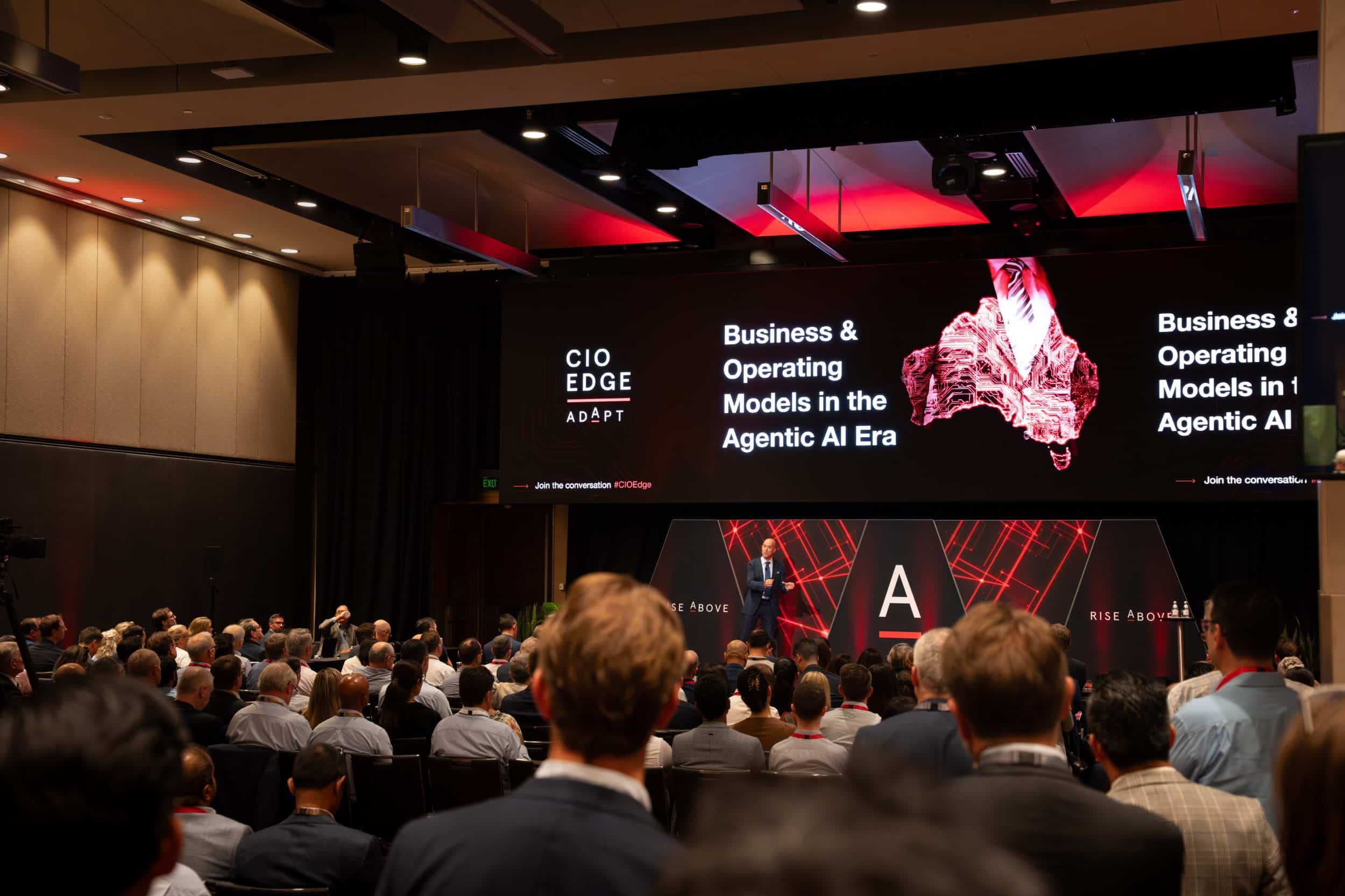


 Published Feb 25, 2026 in
Articles
Digital Transformation
Contributors
Justina Uy
Published Feb 25, 2026 in
Articles
Digital Transformation
Contributors
Justina Uy
At ADAPT’s 29th CIO Edge in Sydney, leaders tackled AI governance, data foundations, cyber security, and ROI discipline to reset operating models now.
The conversation unfolded against a harder economic edge than in previous years.
Growth expectations are rising across both public and private sectors, yet capital remains tightly governed and productivity gains have been uneven.
Agentic AI has entered executive language as a lever for acceleration, but its promise collides with structural realities inside data estates, governance forums, and funding models.
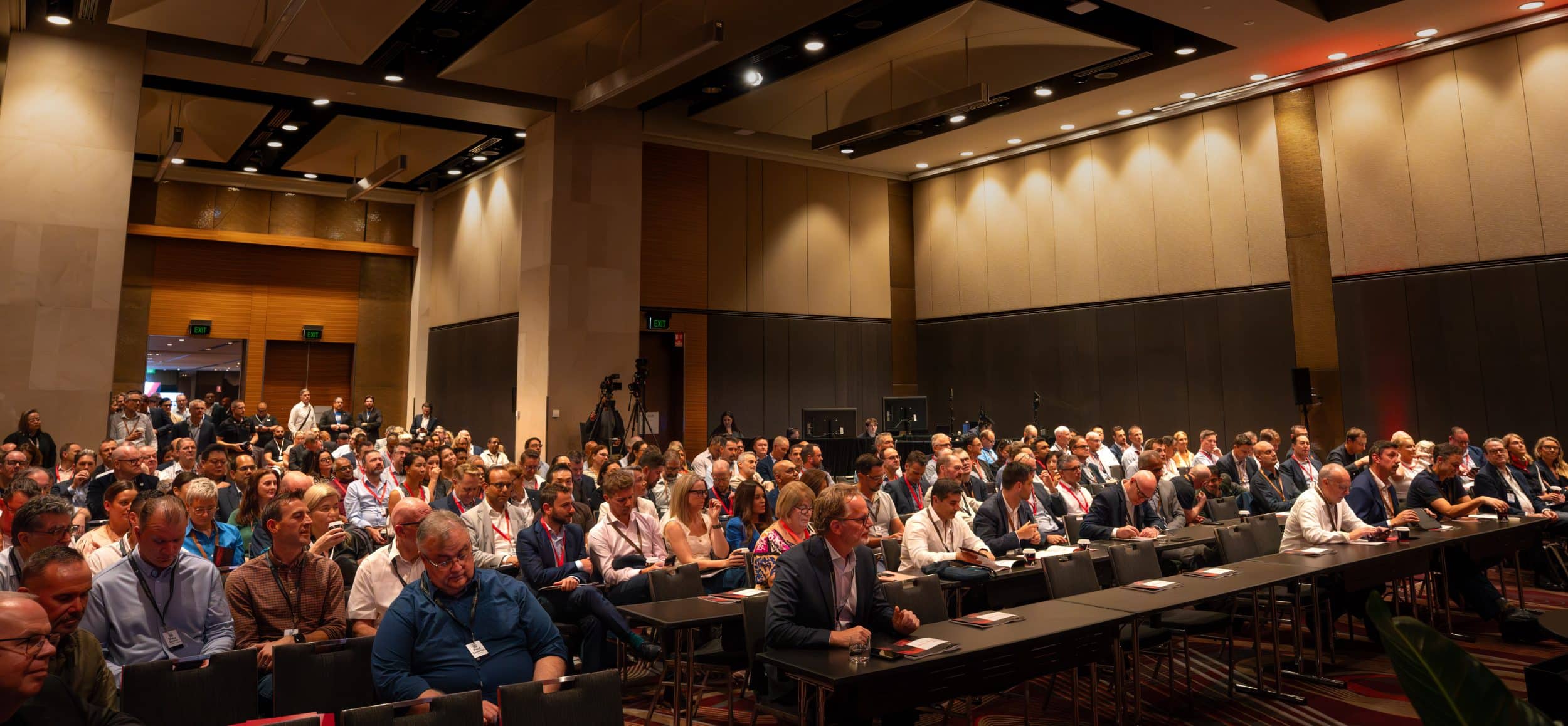
More than 220 senior technology and digital leaders gathered at The Hilton Sydney, representing organisations that collectively account for roughly a quarter of national GDP and employ 1.7 million Australians.
In his opening speech, Jim Berry, ADAPT CEO & Founder, framed the event around a simple tension.
Demand for growth and efficiency is compounding, yet budgets are not.
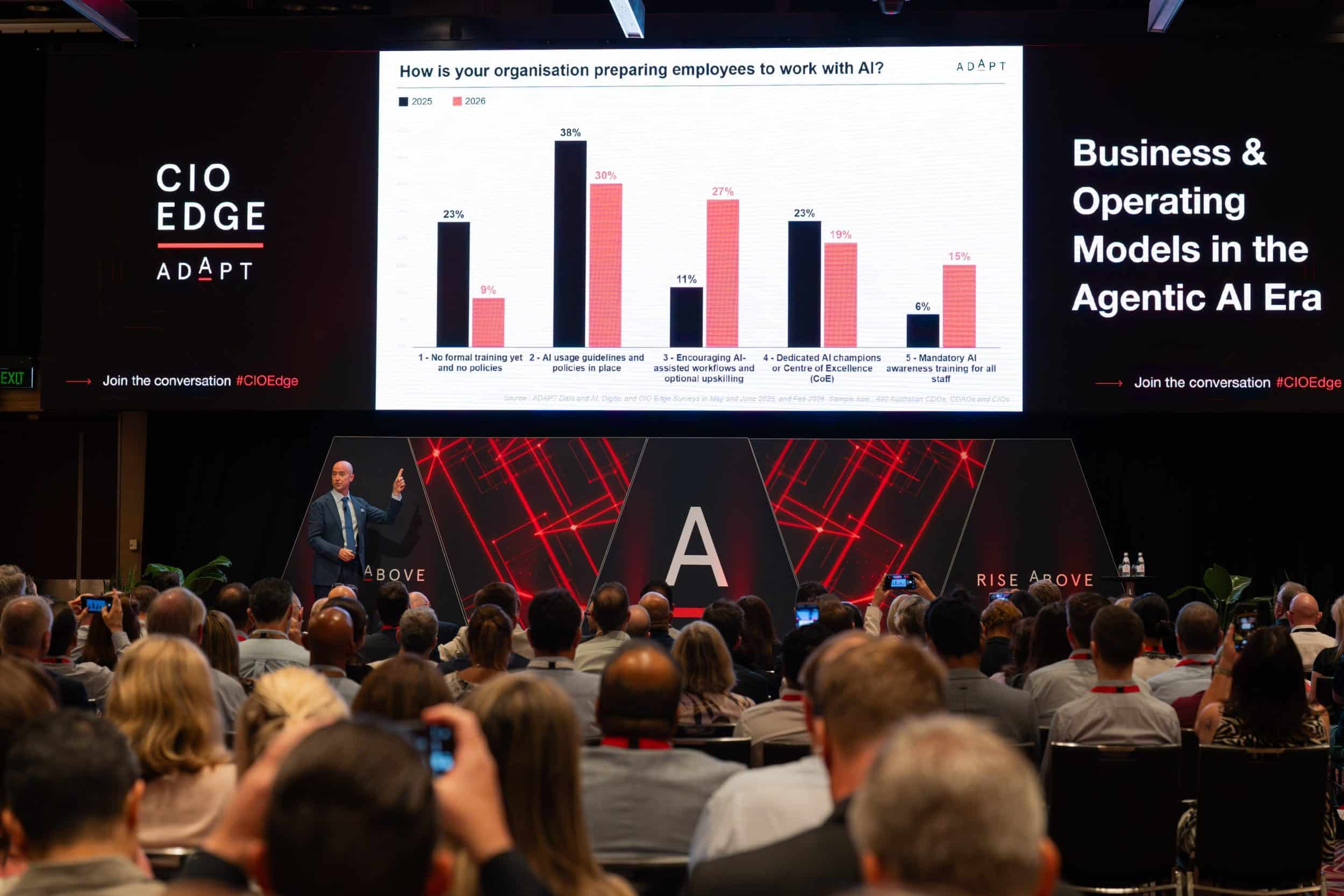
The question is whether leaders can architect value now, redesigning business and operating models so that AI is democratised safely while technology foundations remain resilient and accessible.
From the discussions and presentations of senior technology leaders across leading enterprise and government agencies, several priorities emerged that define how Australia’s enterprise and public sector leaders are building the next phase of digital transformation.
Rebuild data foundations before scaling autonomy
Gabby Fredkin, Head of Analytics and Insights at ADAPT, grounded the discussion in evidence drawn from more than 5,000 executive interactions and 1,000 detailed surveys with CIOs, CISOs, CFOs, CTOs, and digital leaders across the region.
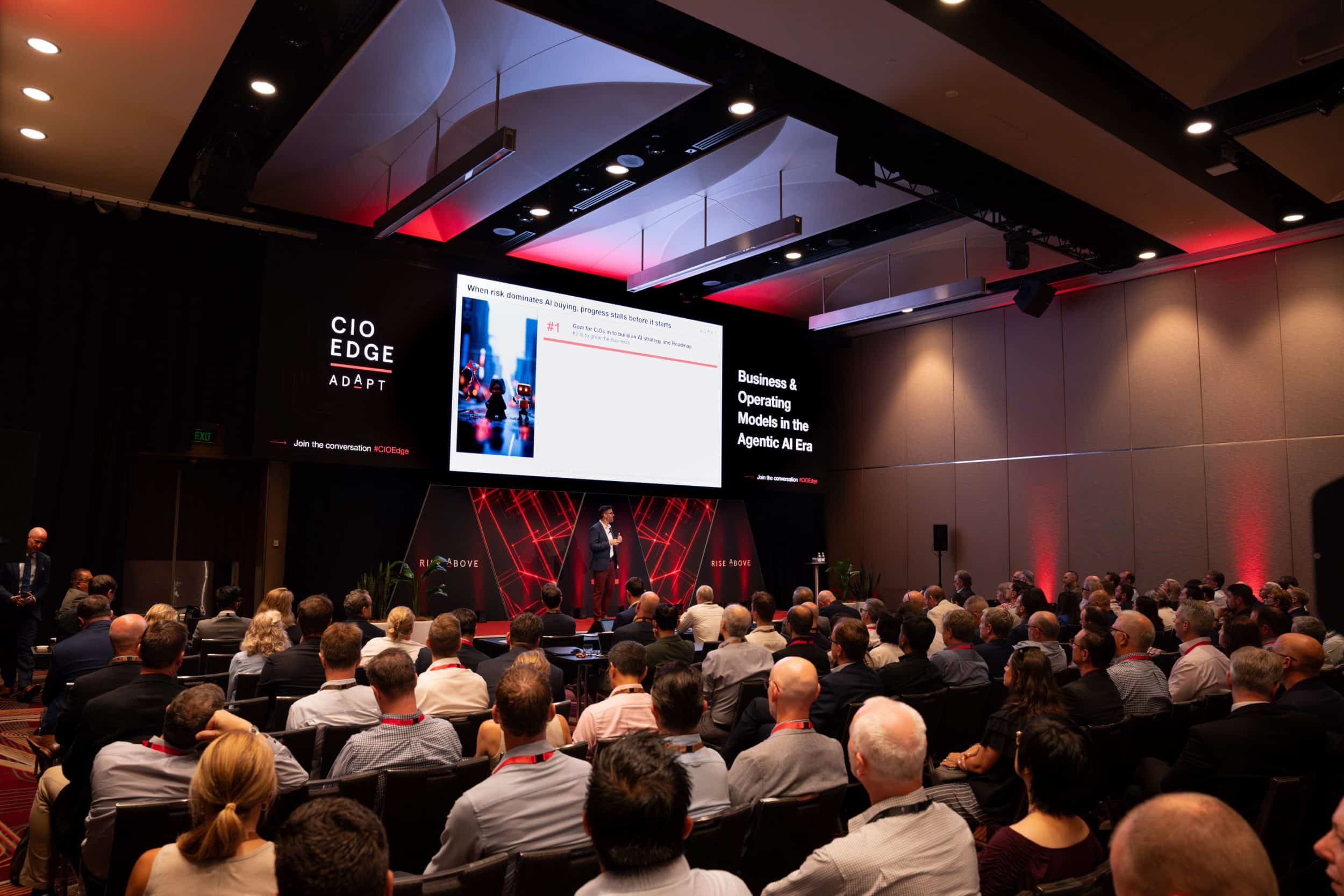
The data showed that 40% of Australian CIOs identify data foundations as the number one constraint to scaling agentic AI.
Investment intent is high, yet structural maturity lags.

This gap reframes AI from a tooling conversation to a systems conversation.
Agentic capabilities act on context, transact on behalf of users, and influence operational outcomes. Without trusted, well governed data products, autonomy amplifies inconsistency.
Peter Weill, Chairman and Senior Research Scientist at MIT CISR and ADAPT Senior Advisor, extended that logic into business model design. He argued that the agentic era shifts enterprises from informing customers to acting for them.
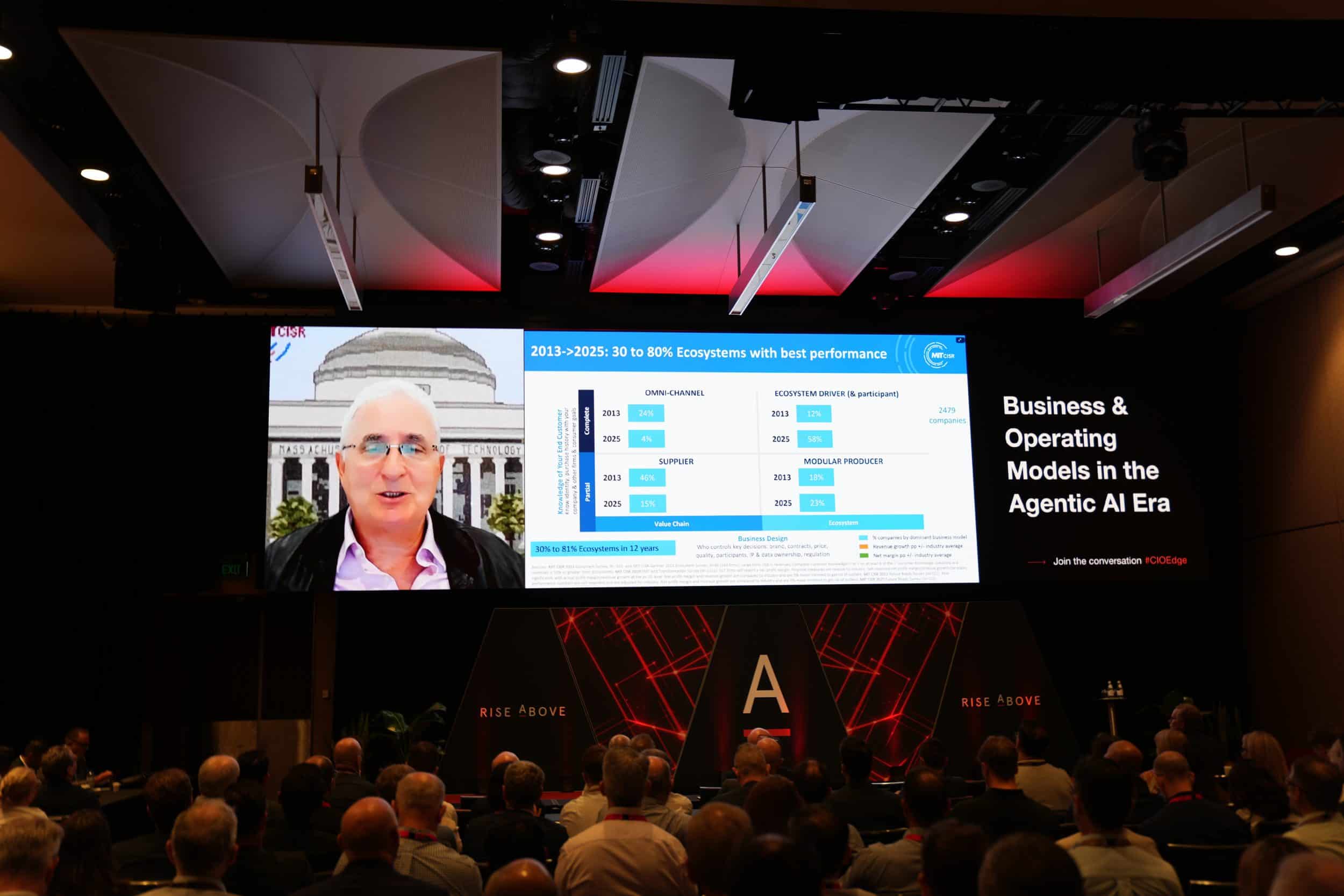
That shift requires deep knowledge of customer context, integrated data across silos, and clarity on who owns the resulting decisions.
Data fragmentation therefore becomes a revenue constraint rather than a technical inconvenience.
On the CIO Edge panel, Jeremy Hubbard, Chief Technology and Data Officer at Rest, described foundations as the difference between layering AI onto complexity and embedding it into coherent architecture.
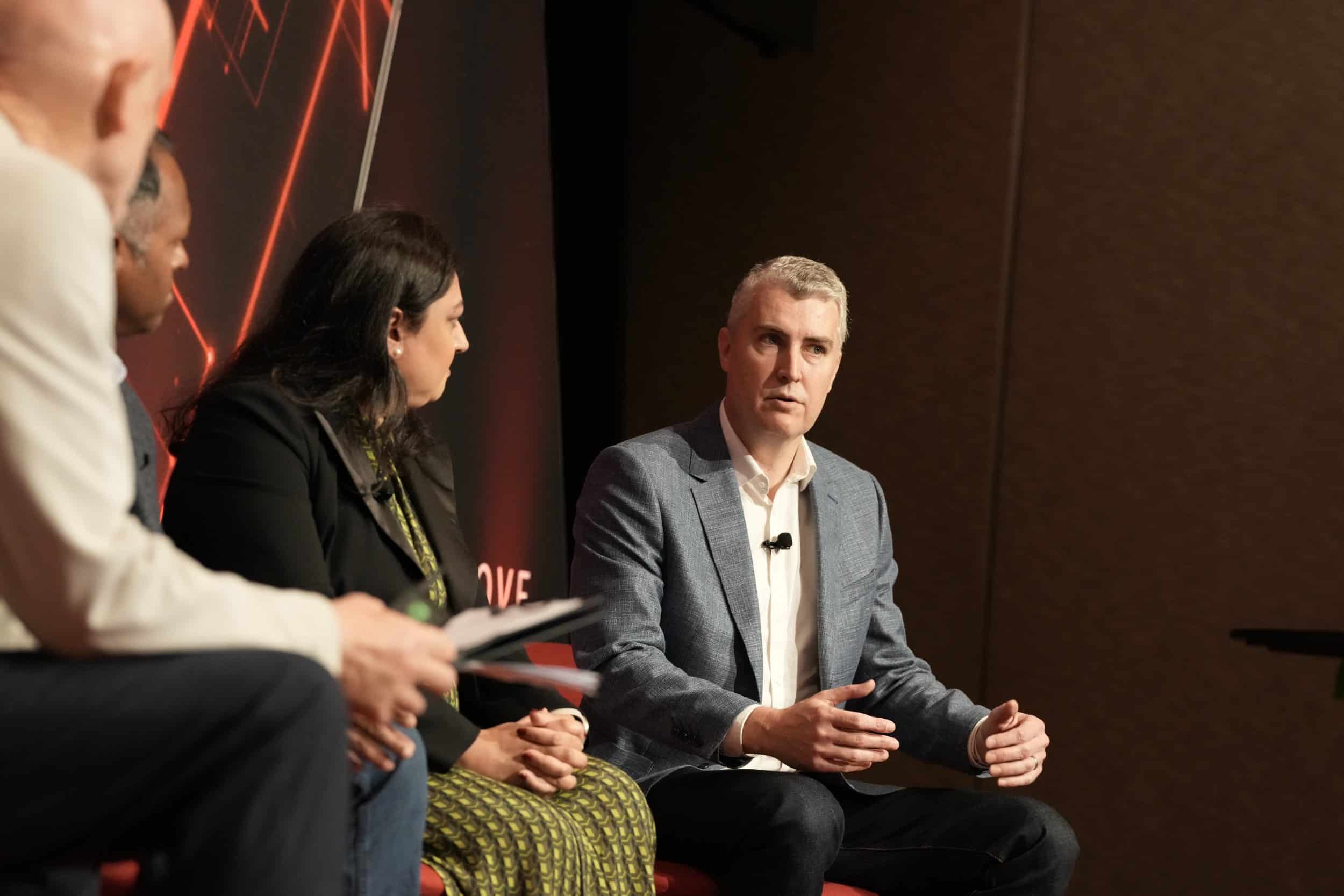
Product aligned data ownership and lifecycle accountability determine whether experimentation can mature into enterprise capability.
Simon Reiter, Chief Technology Officer at CareSuper, illustrated the operational consequences.
As CareSuper pilots AI internally, agents are treated as registered assets with identity and oversight.
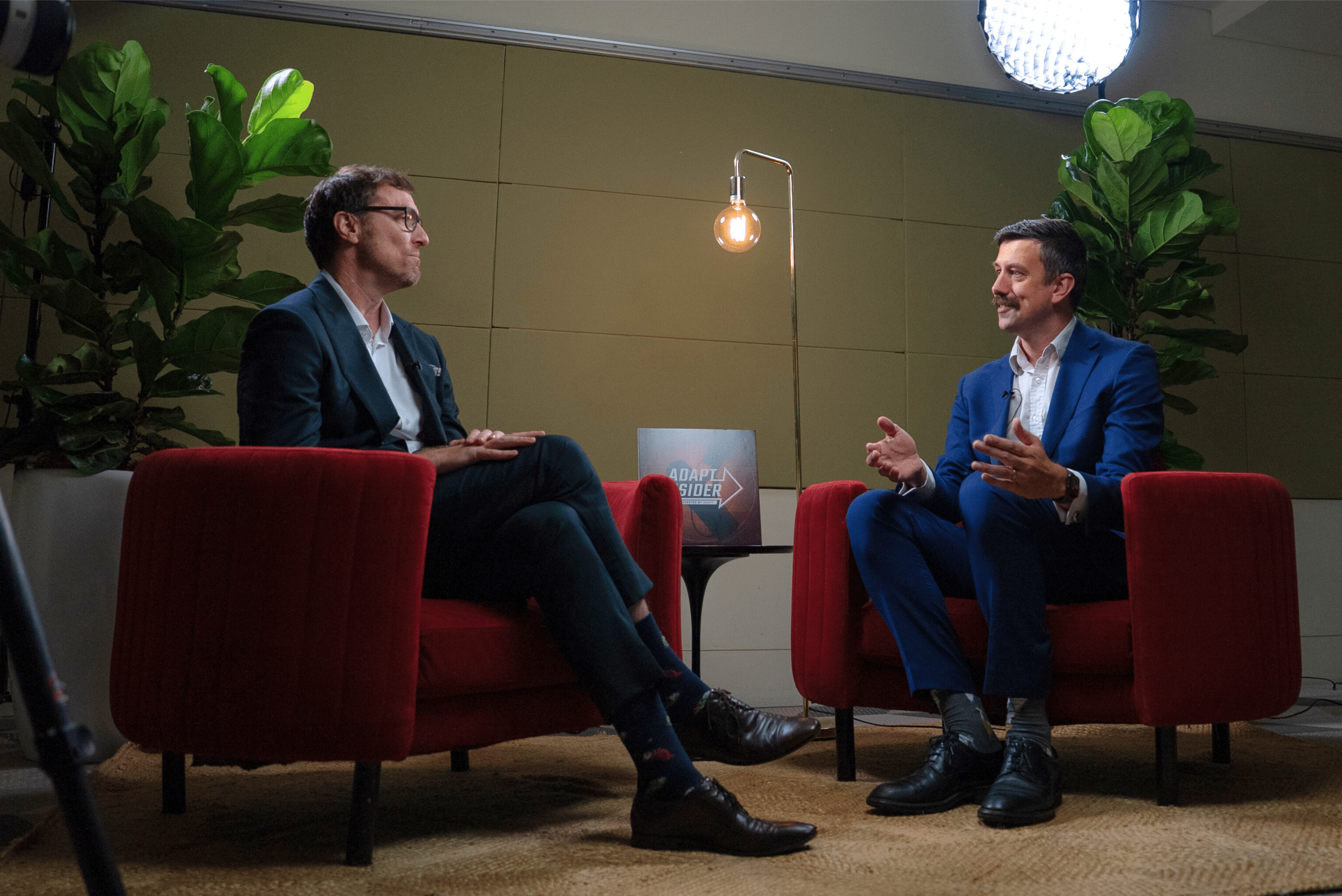
That model depends on disciplined data lineage and access controls. Governance becomes executable only when data flows are visible and attributable.
Across sectors, leaders converged on sequencing.
Early wins matter, yet scaling autonomy into core processes without rebuilding data stewardship increases risk exposure and erodes trust.
Govern AI through accountable control systems
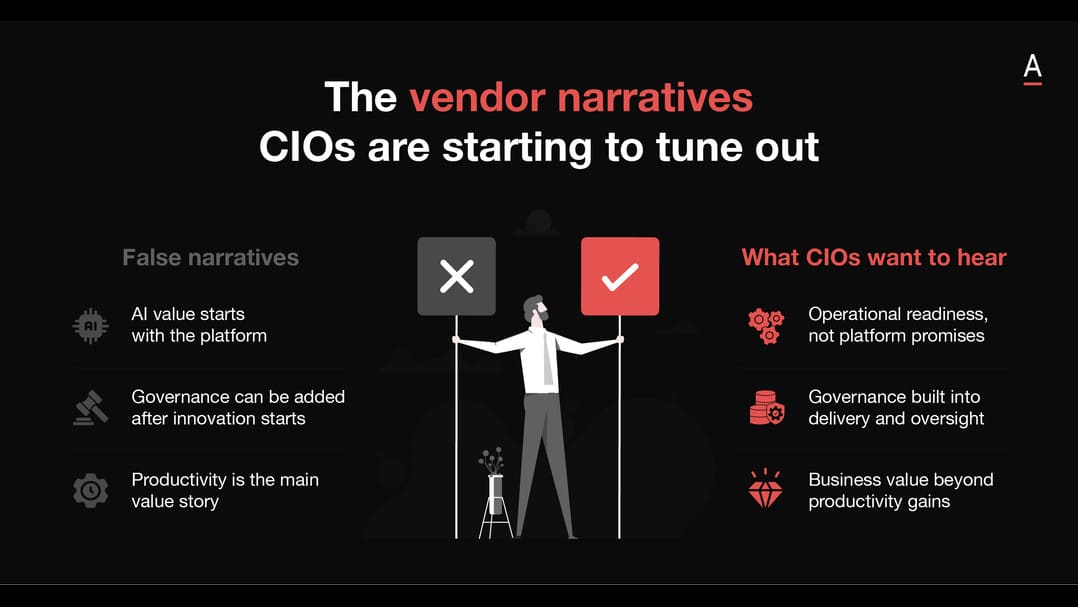
ADAPT’s research indicates that only 7% of Australian CIOs report enterprise wide AI governance with board involvement.
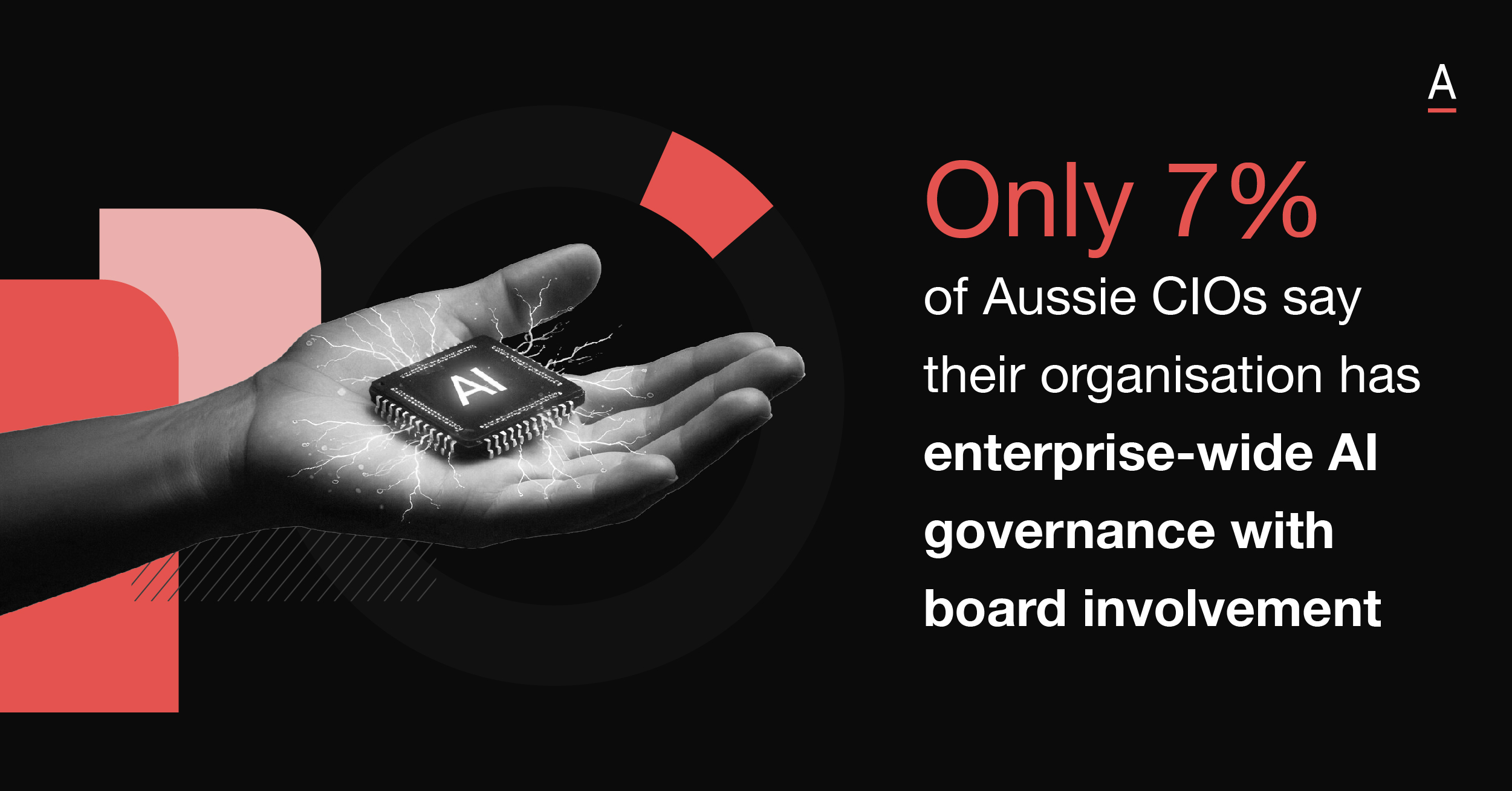
The majority are still translating experimentation into formal oversight.
On the panel, Aarti Joshi, Chief Information Officer at the Department of Customer Service, described tiered governance aligned to risk.
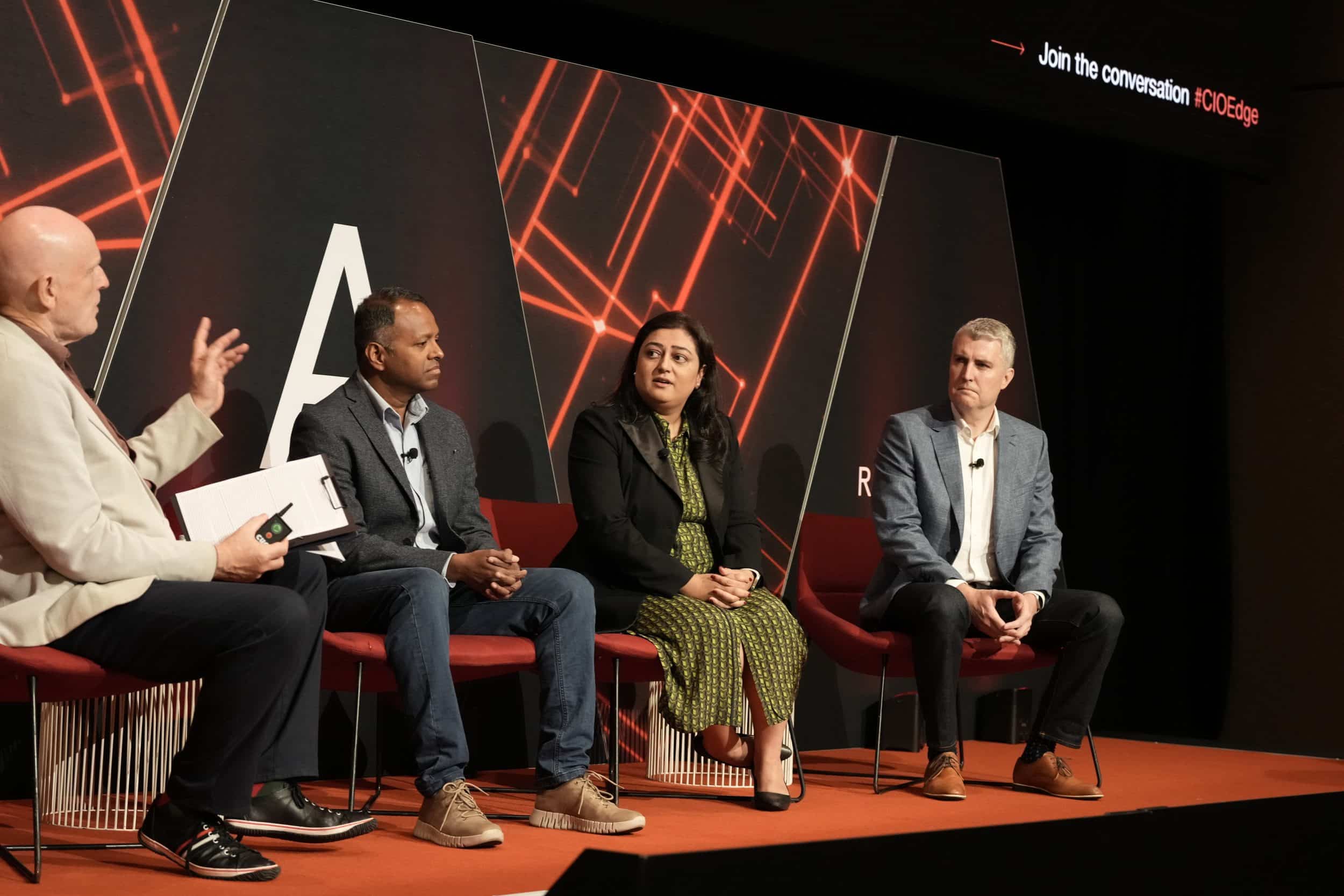
High impact use cases undergo structured scrutiny, while lower risk productivity tools move through streamlined pathways.
The design principle is proportionality. Oversight must protect citizens and customers without freezing innovation.
Arul Arogyanathan, Chief Information Officer at Village Roadshow, linked governance to executive positioning.
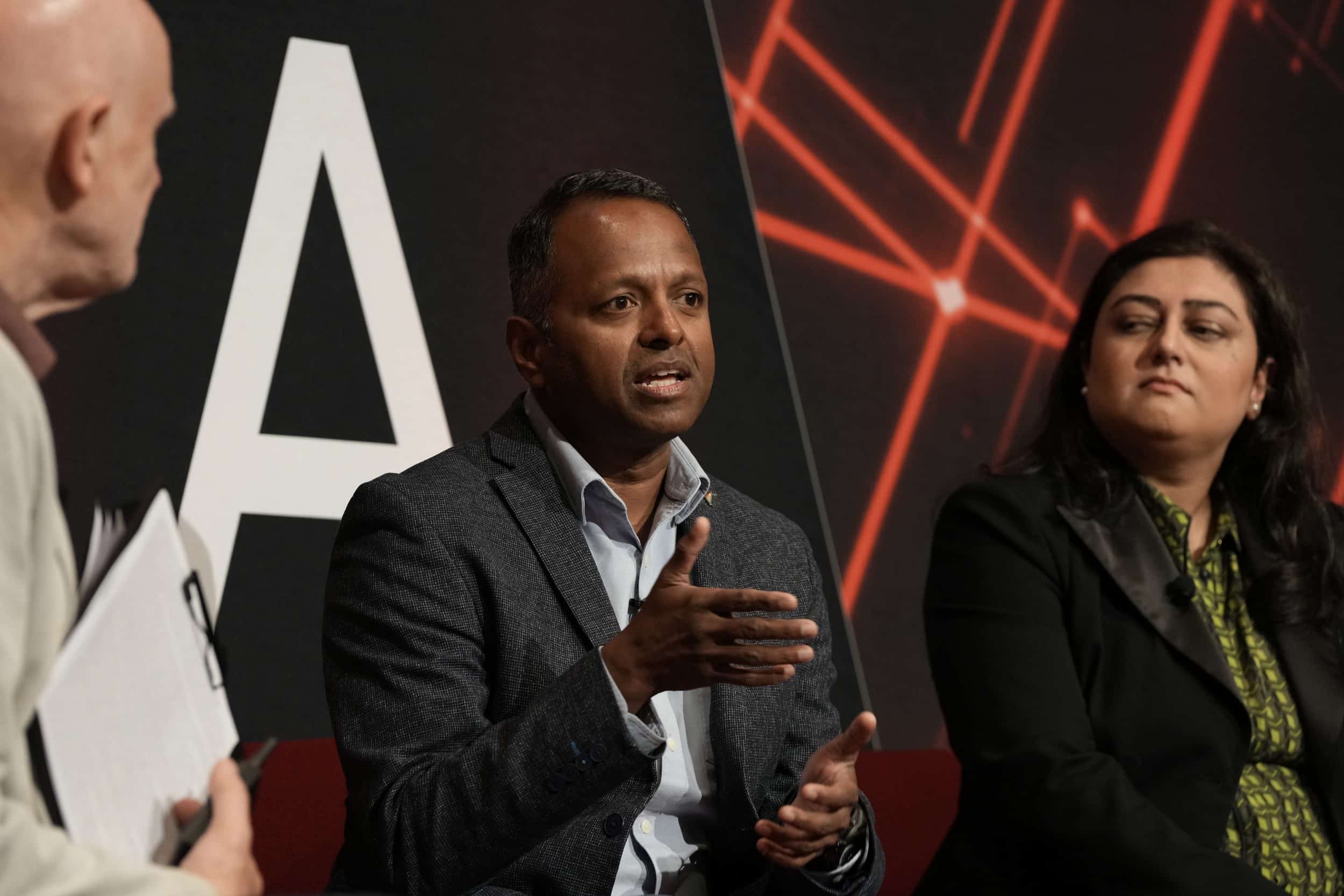
Reporting into the CEO shifts AI from an IT initiative to a strategic design question.
Boards engage when discussions focus on growth, resilience, and operating leverage rather than technical configuration.
ADAPT Advisors sharpened the board dimension.
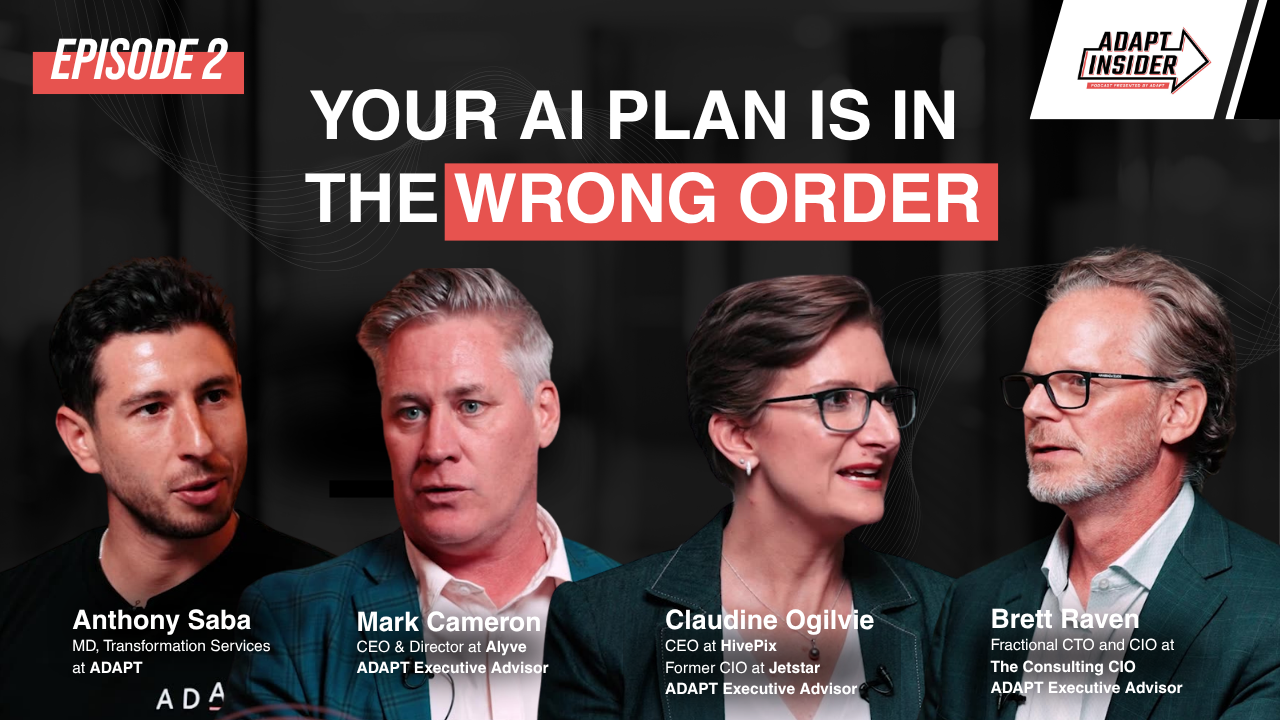
Mark Cameron, CEO and Director at Alyve, Claudine Ogilvie, CEO at HivePix, and Brett Raven, Fractional CTO and CIO at The Consulting CIO observed that many organisations have principles for responsible AI but lack explicit policy and risk appetite definitions.
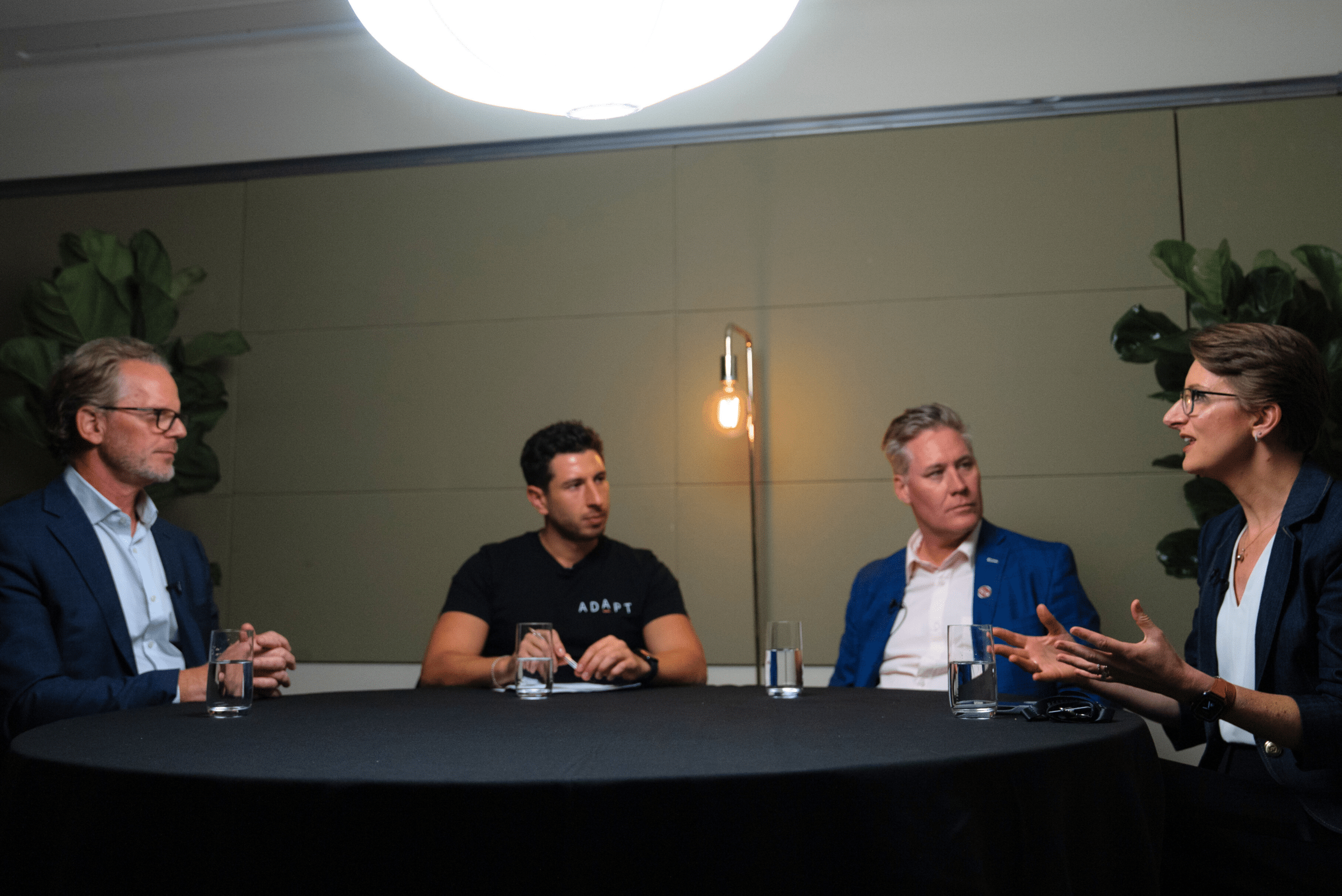
Agentic systems complicate accountability because they introduce delegated decision making. Without clear boundaries around authority and liability, governance frameworks remain abstract.
Kerry Holling, Interim CIO at the University of Sydney, described embedding responsible AI self assessment into program delivery, developed in partnership with legal teams.
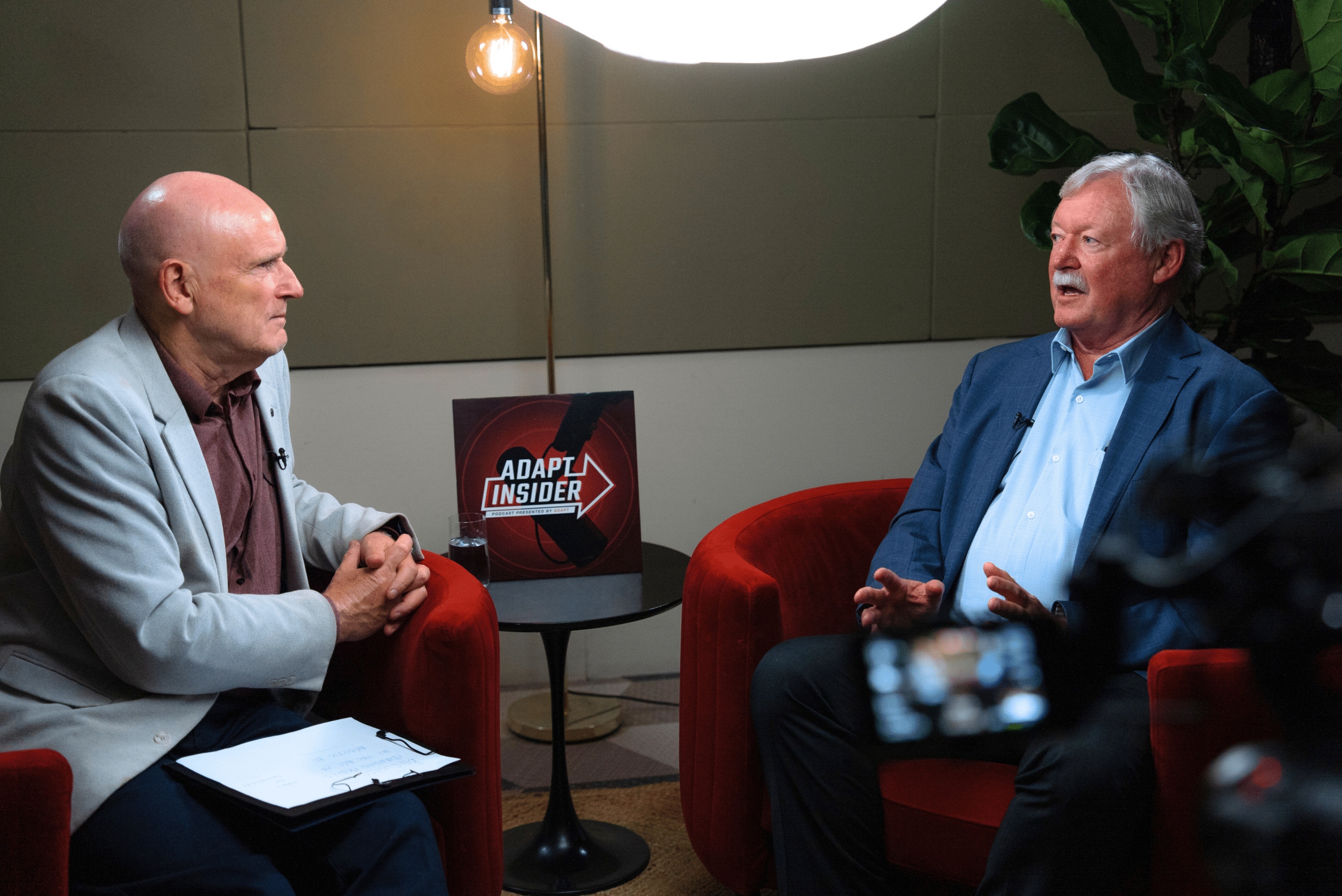
In research intensive environments, intellectual property, sovereignty, and academic integrity shape oversight.
Governance is therefore operationalised within workflows rather than confined to policy documents.
The common thread is that governance maturity depends less on written guidance and more on embedding control systems into architecture, funding approval, and executive review cycles.
Prove value in CFO language
Gabby’s findings also revealed that 40% of CFOs cite unclear ROI as the primary blocker to securing technology investment.
Capital is available, yet it is conditional on disciplined articulation of impact.
In his keynote session, David Walker, former Group Chief Technology Officer at Westpac and DBS and ADAPT Advisor, argued that value must be observable in process performance.

Permission to experiment creates learning, but scale requires measurable redesign of workflows.
He described hub and spoke operating models that concentrate expertise while enabling domain teams to execute, supported by observability to provide executives with confidence in outcomes.
Peter’s business model lens complements that approach.
Agentic capabilities can alter cost structures, increase share of wallet, and open new service pathways.
However, leaders must define how these mechanisms generate economic return before committing to scale.
Andrew Dome, Chief Digital and Information Officer at Uniting, offered evidence from frontline deployment.
The AI assistant Buddy delivered measurable productivity uplift across care teams.
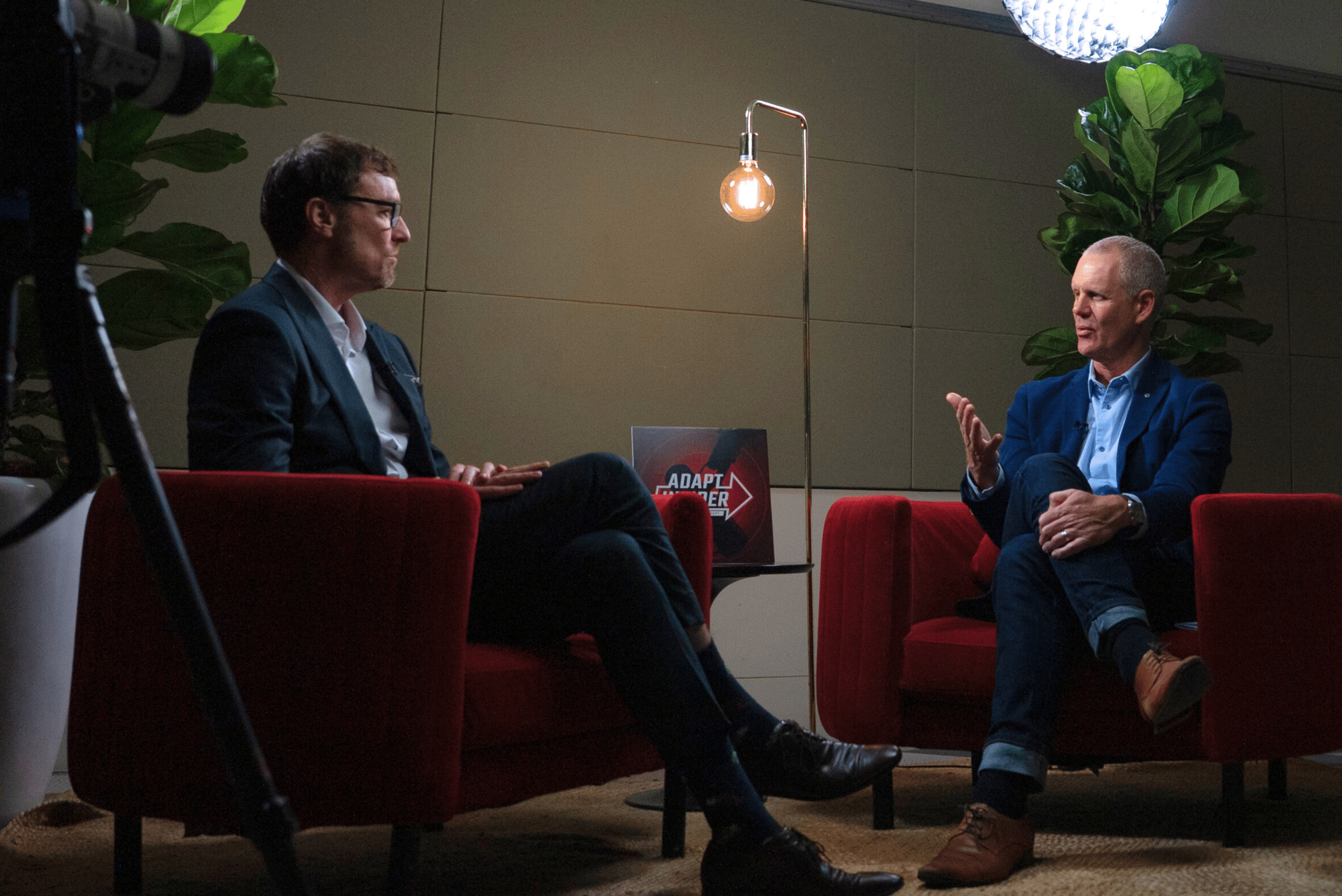
Board education evolved alongside implementation, linking workforce efficiency to service quality and sustainability.
Daniela Polit, Director of Strategic Programs at the NSW Department of Customer Service, reframed ROI in public value terms.
Trust, transparency, and equitable access are performance metrics. Investment cases therefore integrate citizen impact alongside cost discipline.

AI initiatives secure sustained funding when they translate technical capability into financial, operational, or mandate aligned performance indicators that resonate at board and executive level.
Redefine the CIO as enterprise architect
The shift to agentic systems redistributes accountability.
On the panel, Jeremy described the CIO mandate expanding into business architecture, where data, process, and technology converge.
Arul reinforced that executive reporting lines shape strategic influence.
When the CIO is positioned alongside growth leaders, AI becomes a lever for operating redesign.
Alan Thorogood, Research and Engagement at MIT CISR, in conversation with Innovation and Growth Leader Maile Carnegie, examined the constraints facing Australian listed organisations.
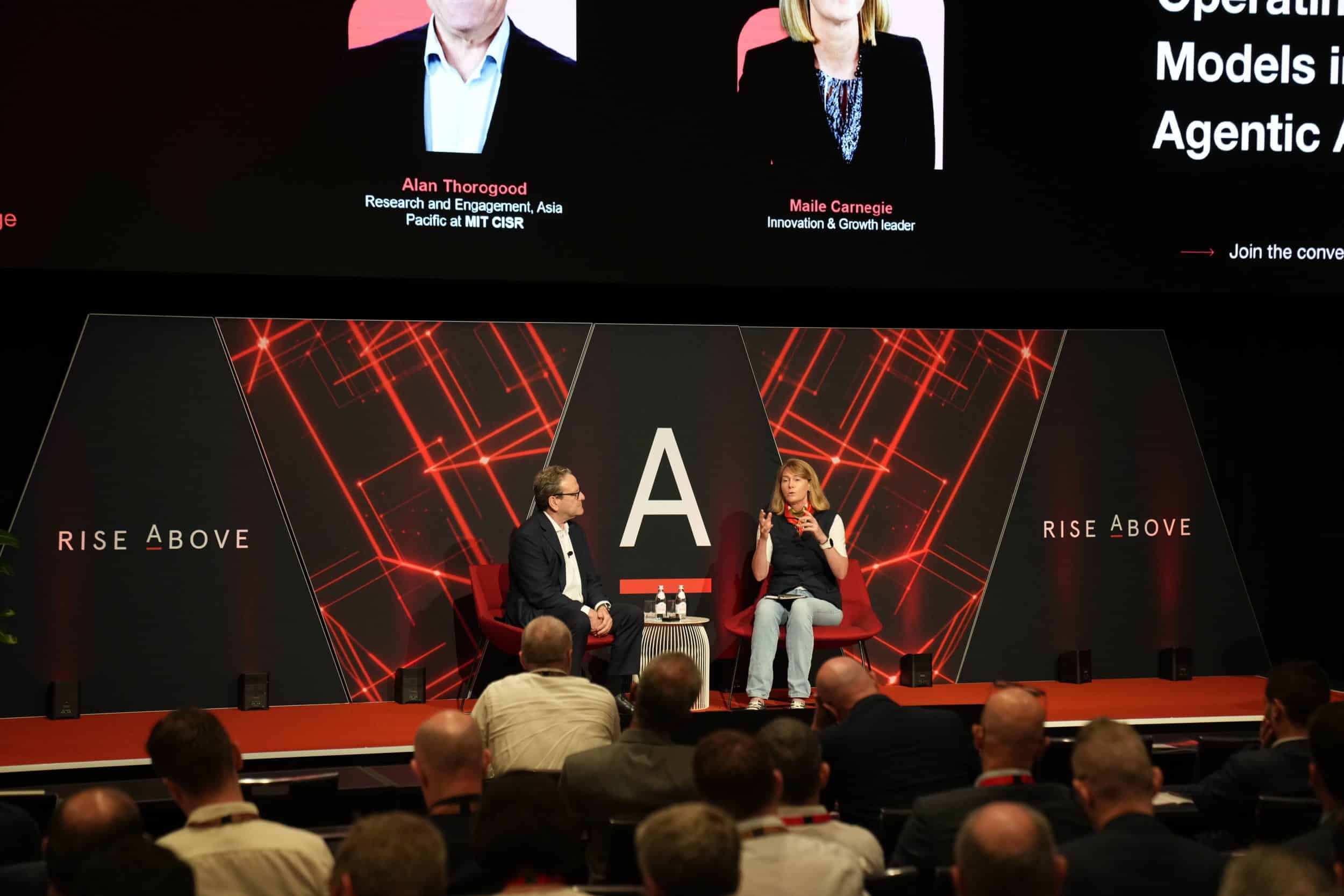
Risk appetite, capital discipline, and short term performance pressures require technology leaders to structure change into coherent capability increments.
Boards respond to clarity of sequencing and measurable progress.
Solly Brown, Partner at McKinsey and Company and Leader of QuantumBlack ANZ, advanced an agent first operating model.
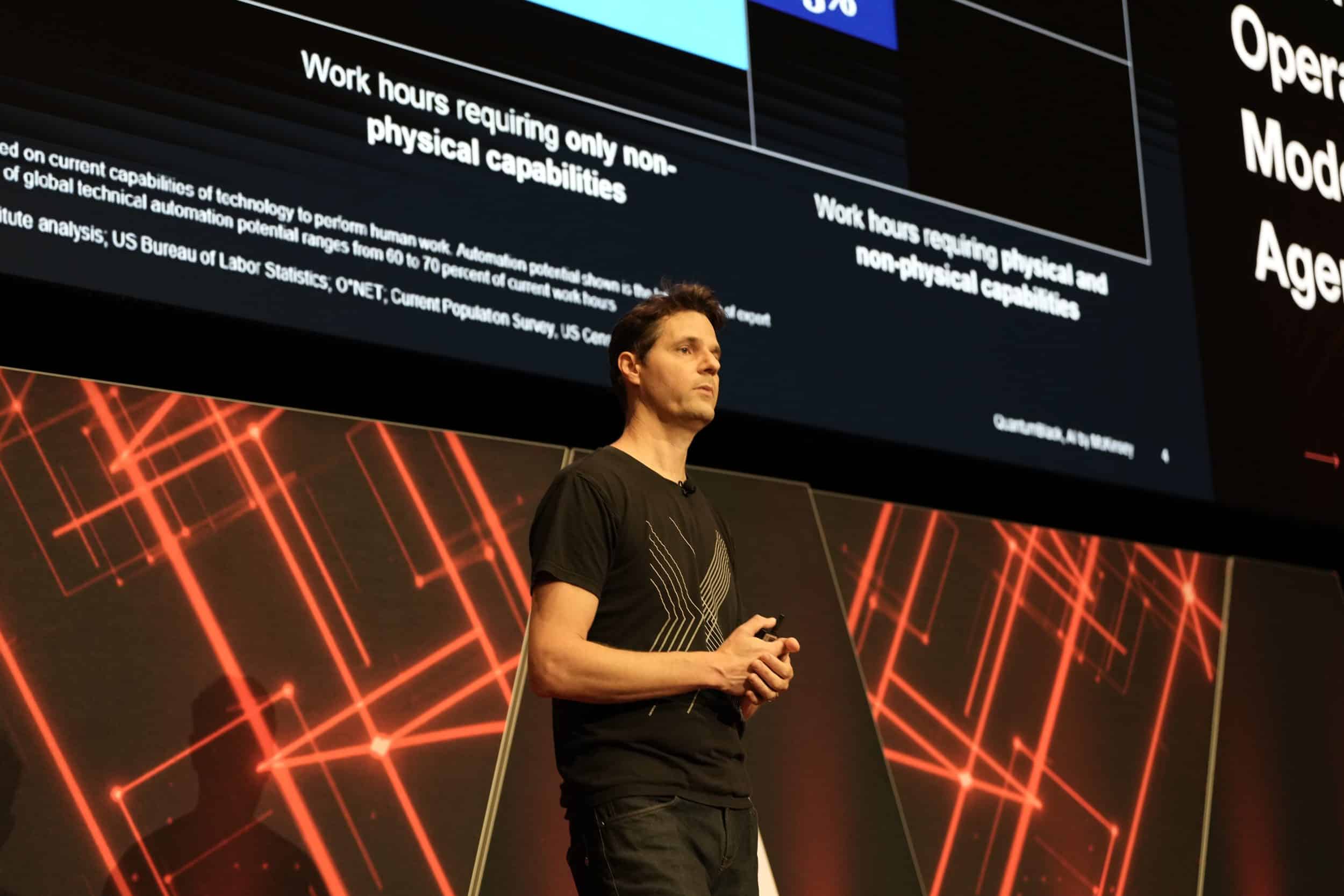
Across the software development lifecycle, agents support design, testing, and documentation.
Productivity gains accrue where human and machine capabilities are orchestrated deliberately.
The CIO role therefore evolves from system custodian to orchestrator of hybrid capability.
This redefinition positions technology leadership at the centre of enterprise adaptability.
Architecture, governance, and value articulation intersect within the CIO mandate.
Industrialise change through capability and discipline
Technology deployment without change capacity stalls. David emphasised that fluency in process redesign and empowered teams are prerequisites for scale.
Hub and spoke structures accelerate diffusion when accountability is clear.
Solly’s description of agent factories across engineering environments illustrates how experimentation can be systematised.
Productivity improvements emerge when AI is embedded into standards, training, and performance metrics.
Simon’s experience at CareSuper showed that encouraging staff to surface use cases builds engagement, provided oversight mechanisms maintain visibility to executives.
Andrew’s phased rollout at Uniting demonstrated that board confidence grows alongside tangible impact.
The advisor panel cautioned against tool led adoption.
Roadmaps, policy clarity, and executive sponsorship anchor experimentation within strategic intent.
Across all sessions, industrialisation emerged as a capability challenge.
AI scale depends on workforce fluency, structured experimentation, and leadership commitment to redesigning processes rather than layering tools onto legacy structures.
Recommended actions for enterprise and public sector CIOs
- Strengthen data ownership, lineage, and product accountability before expanding autonomous use cases
- Formalise AI governance with explicit board level engagement and defined risk appetite
- Quantify AI impact using financial, operational, and citizen or customer aligned metrics
- Align operating models to product and capability centric design
- Embed identity, access control, and asset registration for agents within cyber security frameworks
- Invest in workforce fluency and structured experimentation embedded in delivery standards
- Sequence transformation into measurable capability increments aligned to executive priorities
ADAPT’s 29th CIO Edge reflected a shift from exploration to structural redesign.
Australian leaders are investing in AI, yet the differentiator lies in foundations, governance maturity, and disciplined value articulation.
Agentic systems heighten both opportunity and exposure. They demand clarity of data stewardship, accountability, and economic logic.
What distinguished the discussions in Sydney was pragmatic resolve.
Leaders are confronting constraints directly, redefining mandates, and embedding control systems that match autonomy with responsibility.
The next decade of Australian digital transformation will favour organisations that coordinate execution across data, governance, finance, and culture, building adaptability into the core of their operating models.
 Justina Uy
Content Marketing Manager
Justina Uy
Content Marketing Manager
Justina Uy is a data-driven content marketer that thrives on democratising elite know-how to empower Australia’s underdogs.
Skilled at translating complex ideas into a compelling story across formats and channels, she shifts seamlessly between writing long-form articles, creating viral social media posts, and producing thumb-stopping videos.
Since 2015, Justina executes her vision through a sophisticated understanding of the rapidly evolving digital and business landscape to serve entertaining and educational insights to the executive community.
Less Join the ADAPT
 Insider Community
Get the latest A/NZ market research and insights on the core trends impacting leaders.