
















Australia’s AI infrastructure future depends on power, policy and community trust, says Infrastructure Masons Founder
In this interview with ADAPT, Dean Nelson discusses why power, policy and community engagement will determine Australia’s ability to scale digital infrastructure for the AI era.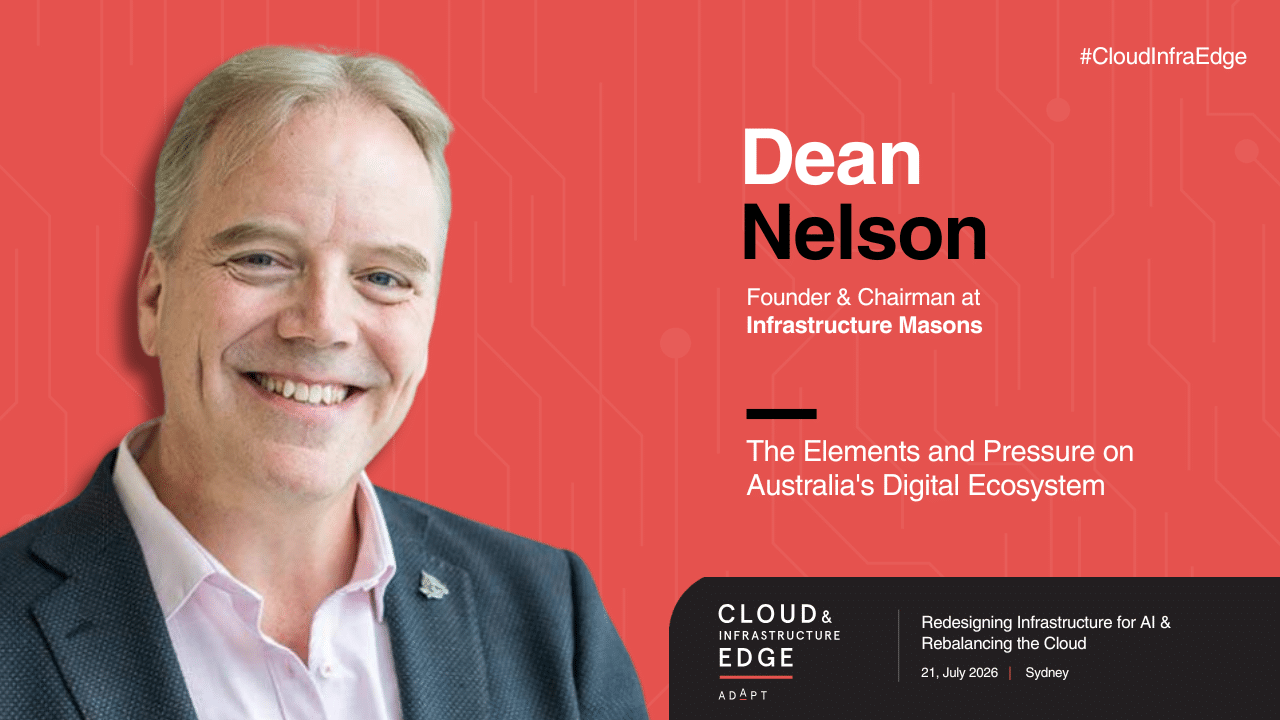


 Published Jun 22, 2026 in
Peer Insights
Cloud & Infrastructure
Contributors
Dean Nelson
Matt Boon
Published Jun 22, 2026 in
Peer Insights
Cloud & Infrastructure
Contributors
Dean Nelson
Matt Boon
As artificial intelligence drives unprecedented demand for digital infrastructure, Australia faces a critical challenge: translating opportunity into execution.
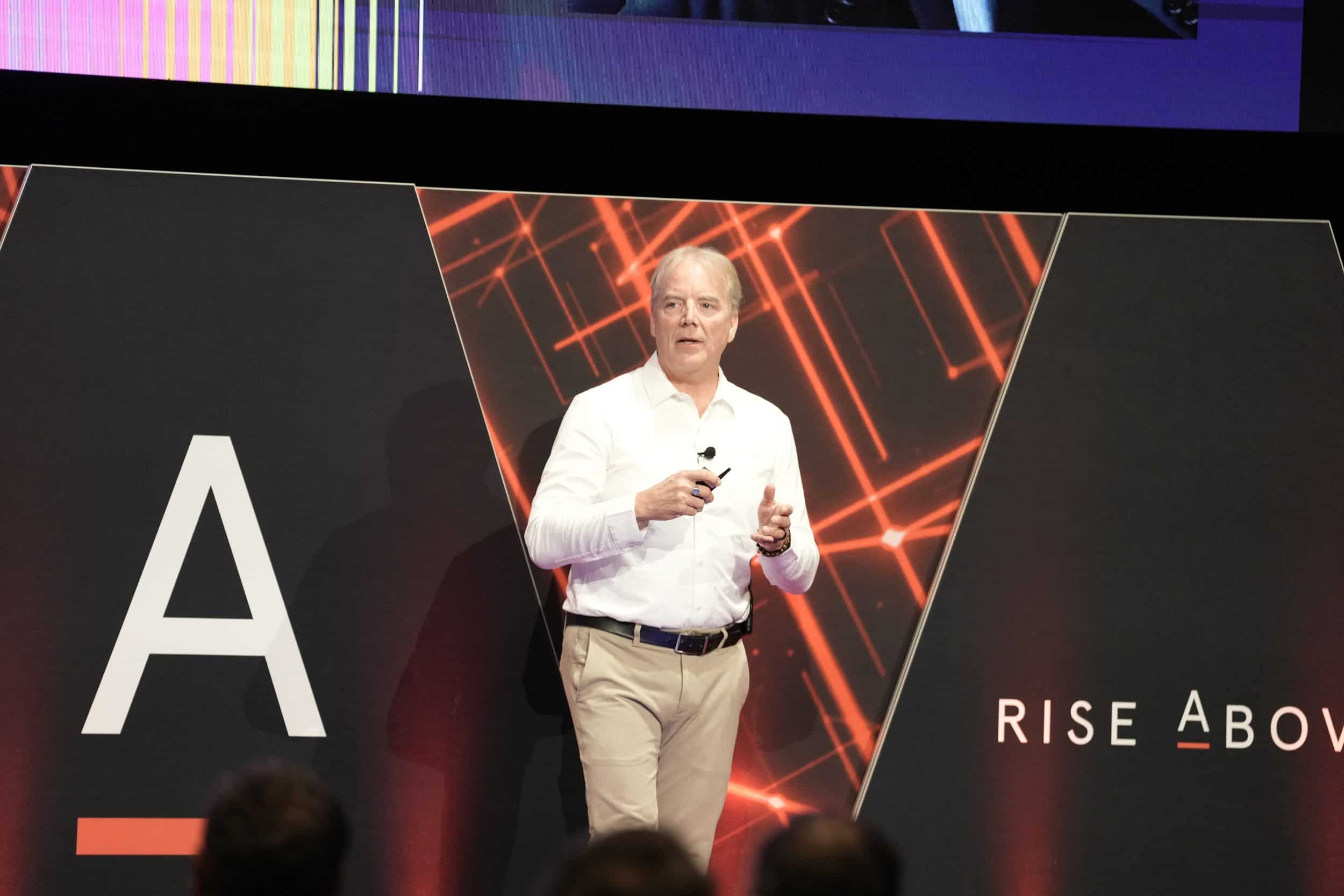
Infrastructure Masons Founder & Chairman Dean Nelson spoke with ADAPT Senior Research Director Matt Boon about the forces reshaping digital infrastructure globally, why power has become the defining constraint on AI growth, and what Australia must do to remain competitive in the next wave of infrastructure investment.
At Cloud & Infrastructure Edge this July, Dean will unpack the findings of the 2026 iMasons report and explore the pressures shaping Australia’s digital ecosystem, from power availability and policy alignment to community engagement and sovereign AI capability.
Key takeaways:
- Power availability is becoming the primary constraint on digital infrastructure growth, making faster access to energy a critical competitive advantage.
- Policy alignment plays a central role in attracting investment and enabling infrastructure development at the scale required for AI adoption.
- Community engagement is increasingly important as organisations seek support for new infrastructure projects and long term digital expansion.
- Australia’s digital future will depend on balancing infrastructure demand with energy availability, effective policy and public trust.
Power is becoming the deciding factor
For Dean, access to power has emerged as the single most important factor influencing digital infrastructure development.
As organisations race to deploy AI capabilities and expand compute capacity, the ability to secure and deliver power quickly is becoming a key differentiator between regions competing for investment.
While technology innovation continues at pace, infrastructure deployment ultimately depends on the availability of reliable energy resources.
This shift is forcing governments, utilities and industry leaders to rethink how they plan and prioritise future infrastructure projects.
The regions that can reduce delays and accelerate power delivery will be better positioned to support growing demand and attract long term investment.
Policy must support infrastructure growth
Alongside power availability, Dean believes policy alignment will play a critical role in determining Australia’s digital future.
Infrastructure projects increasingly require coordination across government, regulators, utilities and private industry.
When policies are disconnected from infrastructure requirements, deployment timelines become longer and investment opportunities become harder to secure.
As AI adoption accelerates, governments face growing pressure to create frameworks that support infrastructure growth while balancing broader economic and social priorities.
Long term competitiveness will depend on how effectively policy enables investment, innovation and infrastructure delivery.
Community engagement is becoming essential
Dean also highlighted the growing importance of community engagement as digital infrastructure expands.
Data centres and supporting infrastructure are becoming more visible components of local communities, bringing greater scrutiny from residents, businesses and stakeholders.
Successful projects increasingly depend on organisations building trust and demonstrating how infrastructure investments create value beyond their own operational needs.
Community support is becoming an important factor in determining whether infrastructure projects can progress efficiently.
Organisations that engage early and communicate clearly are likely to be better positioned to secure support for future development.
Australia’s digital ecosystem must balance competing priorities
Looking ahead, Dean sees Australia’s digital infrastructure challenge as one of balancing multiple pressures simultaneously.
Power requirements continue to increase, communities expect greater transparency, policy frameworks must evolve, and organisations face growing pressure to build sustainable infrastructure while maintaining competitiveness.
Rather than addressing these challenges individually, leaders must recognise how closely connected they have become.
Decisions about energy, infrastructure, policy and community engagement increasingly influence one another.
Australia’s ability to support future AI growth will depend on how effectively it can align these priorities and create the conditions needed for long term digital infrastructure investment.
 Dean Nelson
Chairman & Founder of Infrastructure Masons
Dean Nelson
Chairman & Founder of Infrastructure Masons
Dean Nelson is the Founder and Chairman of Infrastructure Masons, an independent industry group of executive and technology professionals entrusted with building and operating the physical and logical structures of the Digital Age.
Dean has led $10B in infrastructure projects in 9 countries. His extensive architecture, engineering and operations experience includes 29 years in Hardware, 22 years in Network, 17 years in Infrastructure Software and 17 years in Data Centers. He has produced numerous award winning innovations in mission critical facilities and compute environments. He also holds four US patents.
Until 2019, Dean was Head of Uber Compute, at Uber. His team is responsible for Metal as a Service (MaaS) technical infrastructure (data center, compute, storage, network and infrastructure software) and business functions serving Uber’s global leading ridesharing business, as well as UberEats, UberFreight, UberHealth, UberForBusiness, and Autonomous vehicle and UberAir development.
Prior to Uber, Dean worked at Ebay Inc for 6 ½ years as the Vice President of Global Foundation Services, which served over 300 million active users enabling over $250Bn of enabled commerce volume annually. At end of his tenure at ebay, his team successfully integrated, then split ebay and paypal infrastructures into two independent internet companies. Prior to ebay, Dean worked at Sun Microsystems for 17 years in various technical, management and executive leadership roles in Manufacturing, Engineering, IT and Real Estate. His final project was the consolidation of Sun’s multi-billion dollar global technical infrastructure portfolio of over 1,000 facilities.
Dean is creator of the Digital Service Efficiency methodology, the first miles per gallon measurement for technical infrastructure, used to measure ebay.com as a single system. He served as the Chair of the Technology Business Management Council High Tech Workgroup, and Chairman & Founder of Data Center Pulse in 2009 – an exclusive datacenter owner community with over 9,000 members in 100 countries. In 2016, Dean founded Infrastructure Masons, an industry association where infrastructure professionals connect, grow and give back. Dean was identified by SearchDatacenter.com as one of the top five people who changed the data center. Dean is also the recipient of Sun’s prestigious Innovation Award, Modular DC Deployment award and Best DC Design award from Uptime Institute as well as the Operational Excellence and Infrastructure Trailblazer awards from The TBM Council and Outstanding Contributions to the Data Center Industry award from Data Center Dynamics.
In his personal time he gives back by building schools and dorms providing access to education for impoverished children through his Mother and Son Just Let Me Learn Foundation. He also enjoys spending time with his wife and performing with his daughter.
 Matt Boon
Senior Research Director at ADAPT
Matt Boon
Senior Research Director at ADAPT
Matt Boon is the Senior Director for Strategic Research at ADAPT, responsible for directing and developing research content and positions.
For over 30 years, Matt has worked in research and advisory, including senior leadership roles at Gartner as Principal Analyst, Research Director, and Managing Vice President, where his 18 year history included working with Dell, Microsoft, and many others.
Throughout his career, Matt has been a sought after and highly respected authority on the local and global IT landscape. He interacts with executives daily, bringing together groups of C-suite leaders to discuss and prepare for the challenges and opportunities they face.
At ADAPT, Matt hosts numerous industry-leading business and technology events which Matt chairs, including the yearly Security Edge conference, delivering unique market trends and white-papers, advising executives across the technology provider landscape to make informed IT decisions.
When he is not working, Matt enjoys walking the many trails of the NSW Southern Highlands, travelling and listening to music. He is also partial to a good steak and nice glass of red wine.
Less
Join the ADAPT
Insider Community
Get the latest A/NZ market research and insights on the core trends impacting leaders.
Join the ADAPT
Insider Community
Get the latest A/NZ market research and insights on the core trends impacting leaders.