


















Organisations do not scale AI by layering it onto old workflows, says former Westpac & DBS Group CTO
In his CIO Edge presentation, David Walker, Former Group Chief Technology Officer at Westpac and DBS, shares how CIOs move past pilots by resetting skills, process, governance.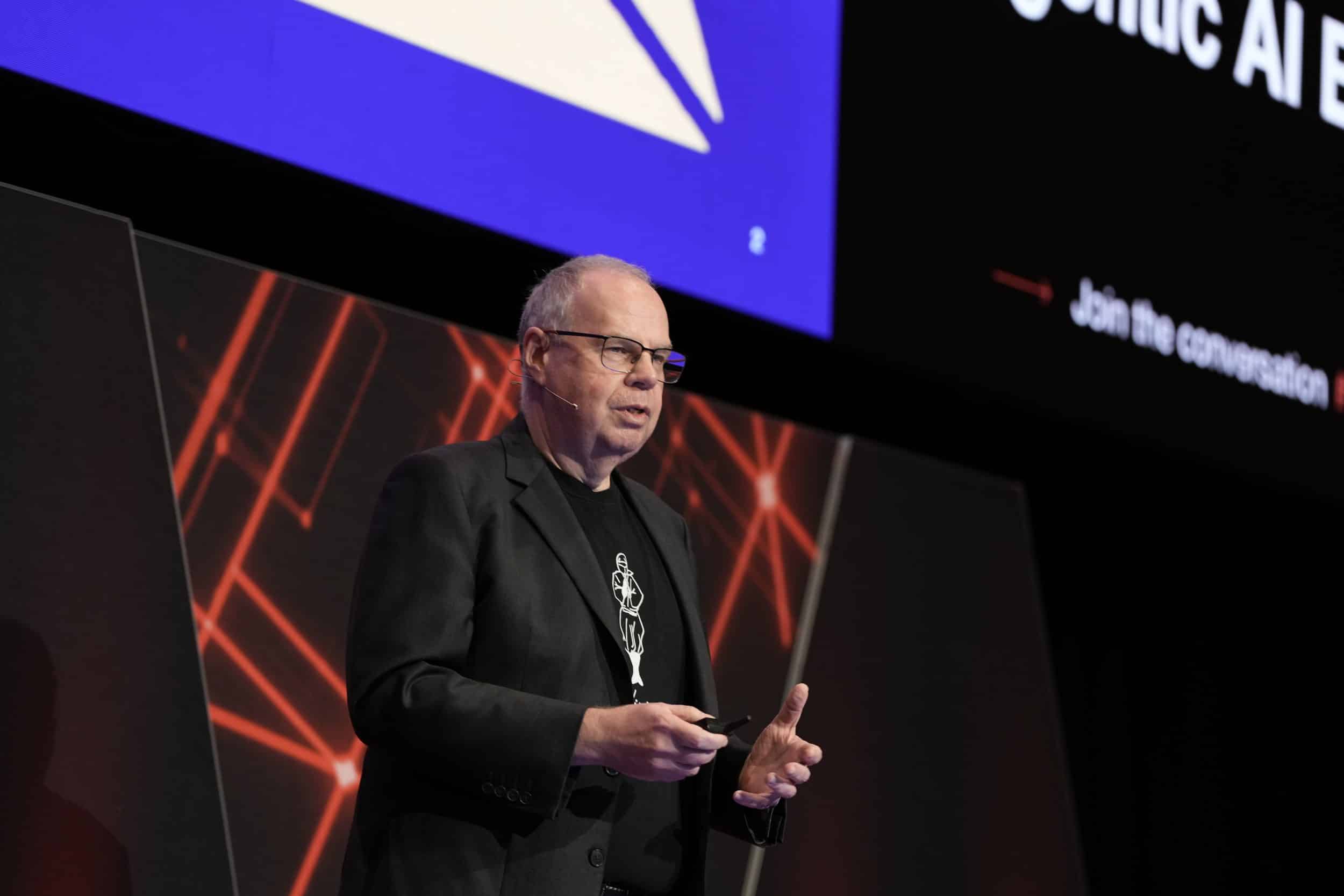


 Published Mar 9, 2026 in
Expert Presentations
Digital Transformation
Contributors
David Walker
Published Mar 9, 2026 in
Expert Presentations
Digital Transformation
Contributors
David Walker
At CIO Edge, David Walker argued that the real barrier to AI scale is organisational, not technical.
As conversational interfaces, agents, and new risk environments begin reshaping enterprise operations, CIOs need to do more than sponsor experimentation.
They need to prepare the business for a different way of working, one that depends on stronger governance, redesigned workflows, rebuilt skills, and leadership that understands the shift firsthand.
Key takeaways:
- Most organisations fail to scale AI because they try to place it on top of unchanged workflows, weak governance, and underprepared teams.
- CIOs need to respond to a broader operating shift shaped by agents, changing interfaces, and continuous technological change.
- Hands on fluency, stronger governance, and workflow redesign are becoming the foundations for AI scale.
AI is reshaping more than the technology stack
He makes clear that AI should be viewed as part of a much broader shift.
Conversational interfaces, agents, and looming quantum related risks are all changing the environment CIOs are operating in.
He also points to changing internet traffic patterns as users remain inside AI ecosystems, forcing leaders to rethink assumptions about digital strategy, platform dependence, and how organisations reach customers.
That is why he argues CIOs need to think more like futurists.
Leaders should define target states by characteristics rather than tying strategy too tightly to current platforms, because the technology is moving too quickly for fixed plans.
AI is a general purpose technology with consequences that run across the enterprise, and that demands a broader leadership response than most organisations are currently making.
AI stalls when organisations try to scale it on top of old processes
He warns that fewer than one in ten organisations move beyond pilots.
In his view, that reflects a failure to prepare the organisation around the technology.
ADAPT data reinforces the point. Half of AI pilots still lack formal governance frameworks, while 62% of data leaders report only minimal or basic data controls, leaving lineage, traceability, and model evaluation unclear.
His argument is that these weaknesses expose a larger operating model issue.
Organisations cannot scale AI by layering it onto existing workflows and expecting meaningful change.
They need to reimagine how work is done, rebuild skills at scale, and give teams room to test, adapt, and operate differently.
Where that wider reset does not happen, pilot success stays contained and scale never arrives.
CIOs need to lead enterprise readiness
His advice to CIOs is direct.
Leaders need to rethink technology, delivery, and risk together, while also getting hands on with agents themselves.
AI fluency at leadership level is becoming essential because credible judgement depends on direct understanding of how these systems behave, where they create value, and how they change work in practice.
He also places the challenge in a broader economic context.
With Australia’s productivity flat, scaling AI effectively becomes more than an internal efficiency exercise.
It becomes part of how organisations improve performance and remain competitive.
The businesses that move ahead will be the ones that treat AI as an enterprise redesign effort early enough, aligning governance, skills, and workflows before experimentation runs out of room.
As an ADAPT Executive Advisor, David works with technology leaders to assess the organisational readiness, operating model changes, and capability shifts required to capture value from AI at scale.
 David Walker
(former) Group Chief Technology officer at Westpac & DBS and Chair of the AI Council at UNSW
David Walker
(former) Group Chief Technology officer at Westpac & DBS and Chair of the AI Council at UNSW
David Walker was appointed Westpac Group’s Chief Technology Officer in August 2019. He led Westpac through its technology transformation – simplifying and merging the bank, building 4th gen cloud-native applications, establishing and operating evergreen platforms, leading Westpac’s AI technology, and building a culture of passionate and forward-thinking tech and emerging talent.
David began his technology career in 1987 as a software engineer, focusing on coding complex systems. After a decade of evolving his software engineering craft, David founded a data science consulting. Over the following decade, it became the number one expert data insights company in Australia and Southeast Asia.
For the last 15 years, David has held executive roles in large, complex organisations across the APAC region. Prior to joining Westpac, David was part of the leadership team of Singaporean bank, DBS. In his ten years there, David helped transform DBS from a traditional bricks and mortar bank with little brand presence or recognition outside Singapore, to being recognised as the ‘Best Bank in the World’ and the ‘Best Digital Bank in the World’ by leading global financial publication Euromoney.
Less Join the ADAPT
 Insider Community
Get the latest A/NZ market research and insights on the core trends impacting leaders.
Join the ADAPT Insider Community
Get the latest A/NZ market research and insights on the core trends impacting leaders.