








When AI moves at machine speed, accountability has to stay human, says CBA Data and AI Leader
At Government Edge, CBA Data and AI Leader Desmond Seeley shares a practical model for redesigning work, automating controls and governing AI at speed.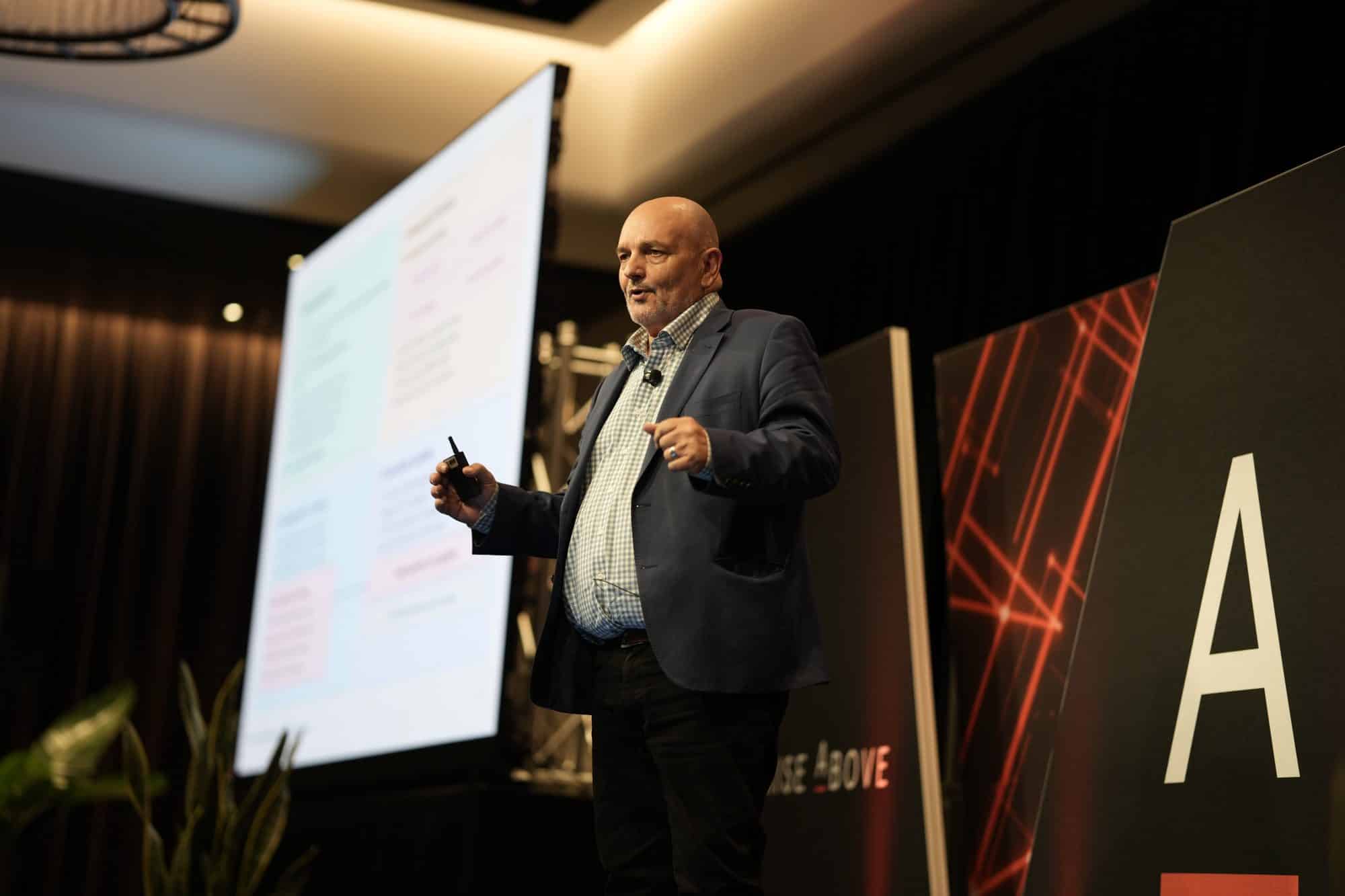


 Published Nov 19, 2026 in
Expert Presentations
Data & AI Strategy
Contributors
Desmond Seeley
When vulnerabilities can be weaponised within 24 hours while patches take an average of 43 days to resolve, manual governance becomes a bottleneck.
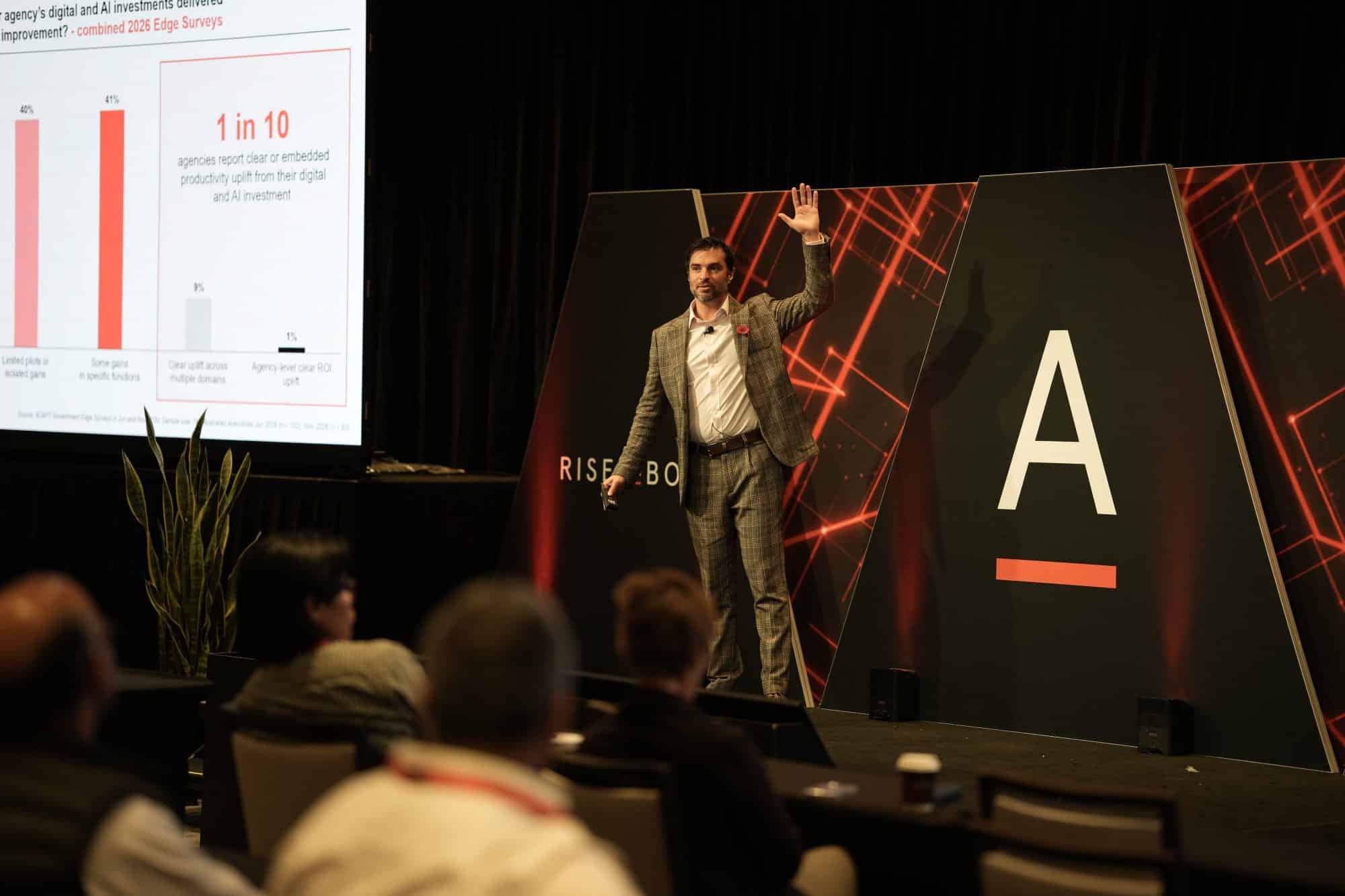
At Government Edge, Desmond Seeley, Data and AI Leader at Commonwealth Bank of Australia, used engineering and control-testing examples to show how teams can rethink roles, processes and governance.
Key takeaways:
-
- Break roles into repetitive, accountable and creative work before deciding what to automate.
- Automate controls that cannot keep pace with machine-speed risk, then continuously test their performance.
- Assign a named person to steer every AI system and remain accountable for its outcomes.
Map the work before changing the role
Work redesign begins with understanding what people actually do.
Desmond separates work into repetitive tasks, decisions that carry accountability and activities requiring creativity or judgement.
Teams can then eliminate work that adds little value, automate suitable tasks and redesign what remains with the employees doing the work.
In one engineering example, around 70% of a line-one operations role consisted of manual activities such as reviewing logs, restarting jobs and reporting.
Desmond describes combining operations, service management and engineering into a full-cycle engineering role after automating much of that routine work.
Around three-quarters of the resulting workload could be automated, allowing the redesigned role to cover more of the system lifecycle.
The process has to change with the role. Adding automation while retaining the same hand-offs and responsibilities leaves much of the existing friction in place.
Automated controls can close the gap between risk and remediation
Security, risk and compliance reviews can become the slowest part of a process once the rest of the workflow accelerates.
Desmond contrasts vulnerabilities that can be weaponised within 24 hours with an average 43 days to resolve a patch.
His approach is to automate individual control tests and embed them directly into the workflow.
In a prototype demonstrated during the session, Desmond built an automated test against a control in a matter of hours.
Each new change triggered the test in seconds, with the system identifying issues and automatically producing an audit trail.
Automation still needs active oversight.
When Desmond changed the test conditions, the prototype missed issues he knew should have been detected.
Teams therefore need to monitor performance, test for drift and understand the limits of what an automated control can detect.
Every AI system needs a named human owner
Faster processes make clear accountability more important.
Desmond’s stewardship model begins with a named person who owns the system, actively steers its performance and puts controls around how it operates.
As he told the audience, “you can’t take an agent to a disciplinary hearing.”
Someone still needs to understand how an outcome was produced and answer for it when something goes wrong.
That responsibility also includes monitoring, explainability, reuse and the ability to detect, decide and correct problems at the speed risk emerges.
Accountability cannot be deferred to a committee after an incident. It has to be built into the process from the beginning.
A person must remain accountable for every AI-driven outcome, however fast the system operates.
 Desmond Seeley
Data and AI Leader at Commonwealth Bank of Australia
Desmond Seeley leads AI and Engineering at the Commonwealth Bank, directing the AI and engineering transformation of its Finance Services division and leading more than 100 engineers across Australia and India. Over six years at CBA he has moved through strategy and delivery transformation, treasury and regulatory reporting technology, and now AI and engineering, building the internal developer platform behind the bank’s “guardrails not gates” approach – embedding compliance into the toolchain so teams ship faster inside a heavily regulated environment. His workshop applies cybernetic methods, reinforcing feedback loops for continuous improvement, to how large and accountable organisations reshape work and adopt AI tooling safely.
 Join the ADAPT
Insider Community
Get the latest A/NZ market research and insights on the core trends impacting leaders.
Join the ADAPT Insider Community
Get the latest A/NZ market research and insights on the core trends impacting leaders.