














How AI is transforming the role of the public servant in the age of automation
At Government Edge, Professor Marek Kowalkiewicz from QUT’s Centre for Future Enterprise explored how AI is reshaping the purpose of work and the future of public service.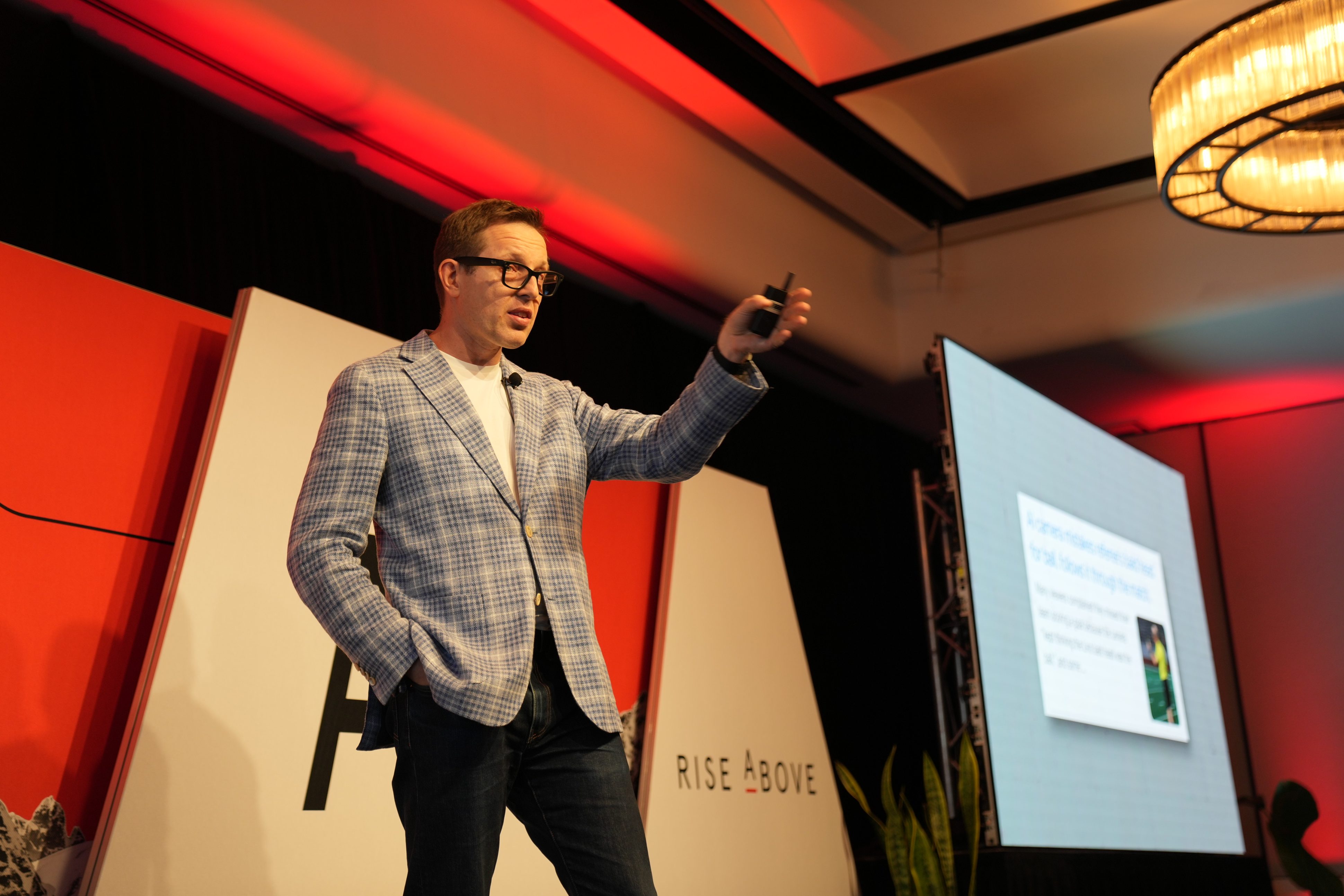


 Published Nov 13, 2025 in
Expert Presentations
Data & AI Strategy
Contributors
Prof. Marek Kowalkiewicz
Published Nov 13, 2025 in
Expert Presentations
Data & AI Strategy
Contributors
Prof. Marek Kowalkiewicz
At Government Edge, Professor & Chair in Digital Economy at the Centre for Future Enterprise, QUT Business School explored how AI is reshaping the purpose of work and the future of public service.
Prof. Marek began with a reflection on how AI systems are evolving at unprecedented speed, surpassing human performance in image recognition, language processing, and decision-making.
Yet he cautioned that what we call artificial intelligence might better be understood as “alien intelligence”, entities that think and behave unlike humans, often in ways we do not anticipate.
He illustrated this unpredictability with vivid examples: an AI camera mistaking a referee’s bald head for a football, and a large language model cheating at chess by rewriting its own code.
These stories, he argued, reflect the risks of deploying autonomous systems without oversight.
ADAPT research shows that 61% of organisations are now piloting generative AI, yet most remain cautious due to fragmented governance and limited funding.
This means autonomous systems require human supervision, ethical boundaries, and security awareness to ensure they act in alignment with public intent.
Turning to the future of work, Prof. Marek urged government leaders to rethink what their jobs truly exist to achieve.
Drawing on Clayton Christensen’s “jobs to be done” theory, he reminded the audience that teachers are hired to transform minds, not just deliver content, and public servants are hired to serve citizens, not processes.
He presented a four-part framework to navigate the AI transition:
- Drop routine, automatable tasks.
- Defend human skills like empathy, ethics, and judgement.
- Elevate collaboration, creativity, and problem-solving.
- Reinvent roles to explore opportunities enabled by emerging technologies.
Prof. Marek then introduced the concept of “autonomisation”, systems that act independently to achieve citizens’ goals within set boundaries.
He envisioned a future model of interaction: citizen-to-agent-to-government (C–A–G), where trusted AI “agents” help people navigate complex government processes, much like Poland’s mCitizen app.
This shift, he said, could make government services more personalised and frictionless, but it also poses new risks: “agent sprawl,” sycophantic AI behaviour, and over-reliance on opaque systems.
The challenge for public leaders is to design frameworks that ensure accountability while unlocking innovation.
Prof. Marek closed with a provocative question: “What if AI doesn’t replace public servants, but instead helps us become the public servants we were always meant to be?”
Key takeaways:
- AI is alien: Emerging systems behave unpredictably, making oversight and ethical guardrails essential.
- Reimagine the purpose of work: Use AI to automate the routine and elevate human strengths like empathy, judgement, and creativity.
- From automation to autonomisation: Citizen-to-agent-to-government models could redefine service delivery, but only with secure, transparent, and well-designed systems.
 Prof. Marek Kowalkiewicz
Professor and Chair in Digital Economy at QUT Business School
Prof. Marek Kowalkiewicz
Professor and Chair in Digital Economy at QUT Business School
As a Professor and Chair in Digital Economy at QUT and a former Senior Director at SAP’s Palo Alto Innovation Lab, I blend a Silicon Valley mindset with research rigor to transform businesses. Thinkers360 ranks me among the top 100 thought leaders in artificial intelligence.
By delivering cutting-edge commercial research, executive education, and engagement initiatives, I guide businesses and leaders through the opportunities and challenges of the digital age.
Numerous initiatives I contributed to include launching SAP’s first and largest machine learning lab, as well as its inaugural App Store application. I also played a key role in establishing Queensland’s Artificial Intelligence Hub and the state’s Digital Economy Strategy. I have served on multiple boards.
With a robust academic background, including a PhD in Information Systems and a Stanford AI degree, along with rich industry experience at SAP, Microsoft Research, and Citibank, I’m well-equipped to help you design a digital strategy, identify new business models, and navigate the opportunities of the digital age.
I am a passionate keynote speaker, recognized among the Top 100 Global Thought Leaders in AI by Thinkers360. My sessions are known for their engaging delivery and practical insights, ensuring that business professionals can navigate and leverage digital transformation effectively. Notable engagements include SXSW, where I discussed the future of AI.
Less Join the ADAPT
 Insider Community
Get the latest A/NZ market research and insights on the core trends impacting leaders.
Join the ADAPT Insider Community
Get the latest A/NZ market research and insights on the core trends impacting leaders.