
















With only 6% reporting measurable gains, how can agencies close the AI productivity gap?
At the 2nd Government Edge, 160+ APS leaders explored how trusted AI can turn productivity mandates into leaner, more effective public services.


 Published Jun 11, 2026 in
Articles
Digital Transformation
Contributors
Justina Uy
Published Jun 11, 2026 in
Articles
Digital Transformation
Contributors
Justina Uy
The pressure on government agencies has become increasingly contradictory.
Leaders are being asked to improve service delivery, modernise ageing environments, strengthen governance, prepare their workforce for AI, and deliver measurable productivity improvements, all within tighter fiscal constraints.
Opening ADAPT’s 2nd Government Edge in Canberra, where 160+ public sector technology and digital leaders gathered, ADAPT CEO and Founder Jim Berry argued that the challenge facing the Australian Public Service has shifted beyond technology adoption.
AI has moved from an emerging technology discussion to a productivity and operating model challenge.
The question is no longer whether agencies should invest in AI.
It is whether those investments can translate into measurable outcomes.
ADAPT’s latest research suggests that remains a significant hurdle.
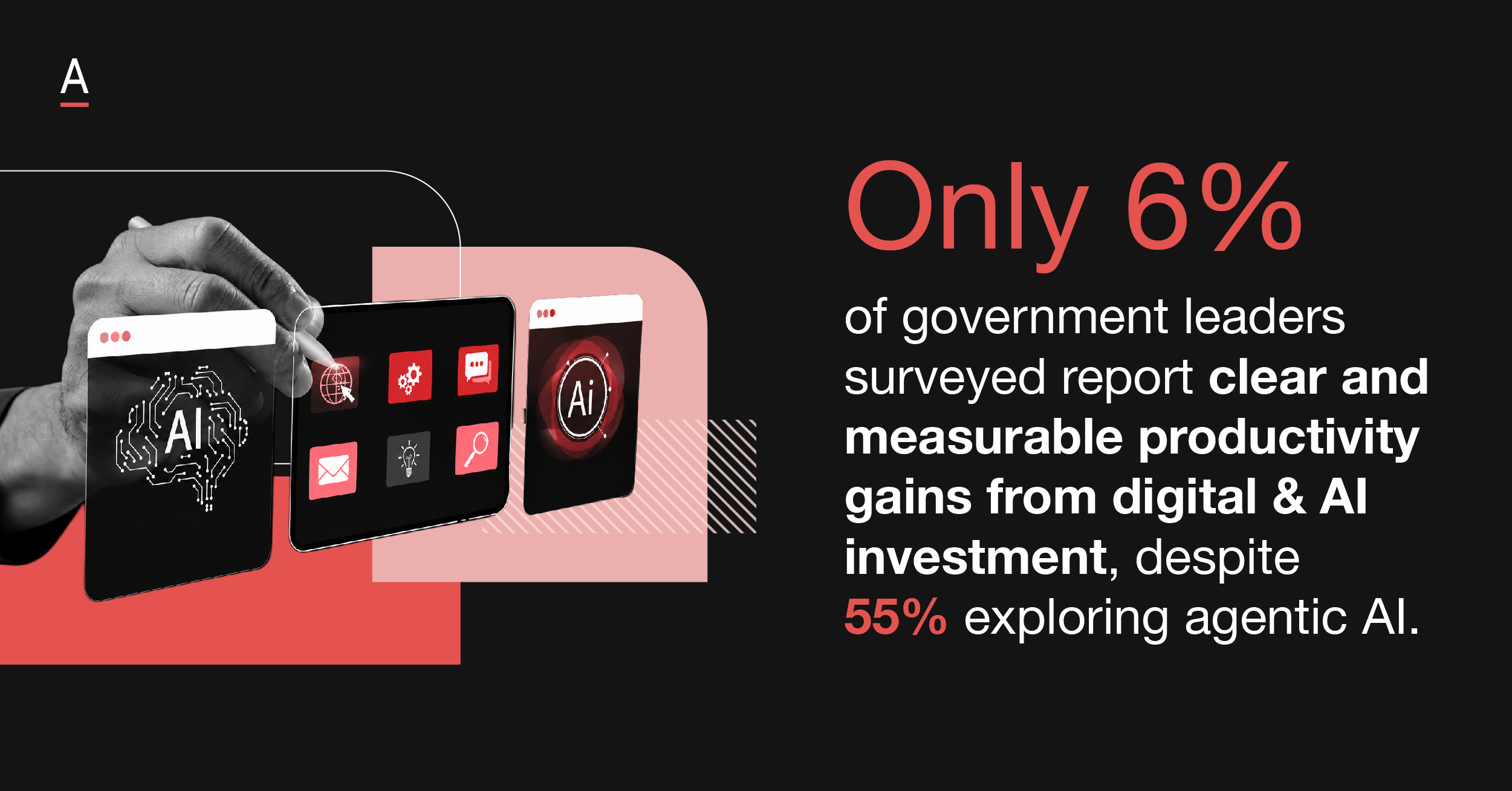
While 55% of government leaders are exploring agentic AI, only 6% report clear and measurable productivity gains from digital and AI investments.
That gap shaped discussions throughout Government Edge.
Across sessions featuring leaders from the Australian Digital Health Agency, Department of the Prime Minister and Cabinet, Department of Defence, Services Australia, the Office of the Australian Information Commissioner, MIT CISR and the banking sector, a consistent theme emerged.
Government’s biggest barriers to productivity are becoming organisational rather than technological.
Workforce readiness, governance, collaboration, capability reuse and operating model design featured more prominently than conversations about models, platforms or tools.
Measure productivity through service outcomes
Productivity in government cannot be measured by the number of AI tools deployed, the number of pilots launched, or the volume of staff given access to new platforms.
It must be measured by whether services become faster, decisions become better, work becomes easier, and citizens experience less friction.
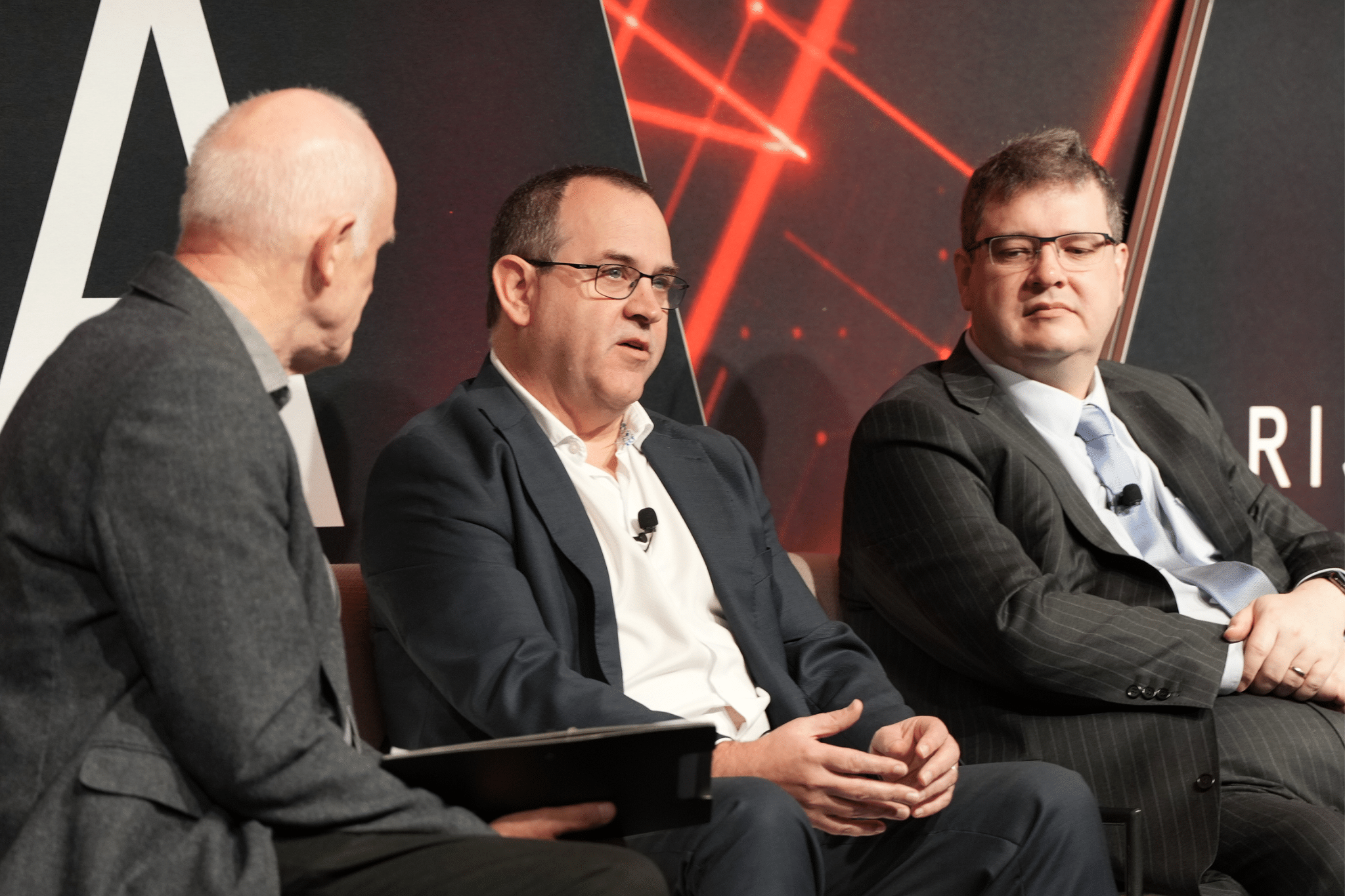
In a panel discussion with fellow government digital leaders, Peter O’Halloran, Chief Digital Officer at the Australian Digital Health Agency, framed productivity through the experience of clinicians and patients rather than internal agency efficiency.

He talked about the information gaps that slow treatment, duplicate effort, and add avoidable cost across the health system.
Peter also pointed to pathology and diagnostic imaging as practical examples.
When a patient arrives at an emergency department, clinicians often need recent test results before they can treat the patient effectively.
If those results already exist from a community test conducted days earlier, making them visible at the point of care can reduce duplicate testing, shorten waiting times, and improve clinical decisions.
His example reframes digital productivity where the value does not sit inside the agency’s own workflow.
It sits in the avoided delay, the avoided duplicate test, and the clinician’s ability to act with better information.
For his part, Justin Keefe, First Assistant Secretary, Digital and Security at the Department of the Prime Minister and Cabinet, extended this argument by urging government leaders to look beyond their own agencies and sectors.
Productivity challenges in the public service are part of a broader national productivity challenge.
Government can learn from other industries, provided agencies adapt those lessons to their operating realities rather than treating public sector complexity as a reason to stand apart.
For technology leaders, this changes the starting point.
AI programs should begin with the service outcome, decision point, or operational bottleneck being improved.
The first question should be what work changes, what delay is removed, what decision improves, and what capacity is returned.
This is also where agencies need sharper metrics.
A proof of concept that demonstrates technical possibility is useful, but it is not productivity.
A measurable reduction in processing time, clinical duplication, committee preparation, procurement ambiguity, or service backlog is productivity.
ADAPT analysis suggests the next stage of public sector AI maturity will depend on whether agencies can move from activity metrics to outcome metrics.
Counting pilots will mask the gap.
Measuring returned capacity will expose whether AI is changing work or simply adding another layer to already complex environments.
Prepare the workforce to absorb AI at scale
Government leaders ranked workforce readiness as the number one constraint to scaling AI.
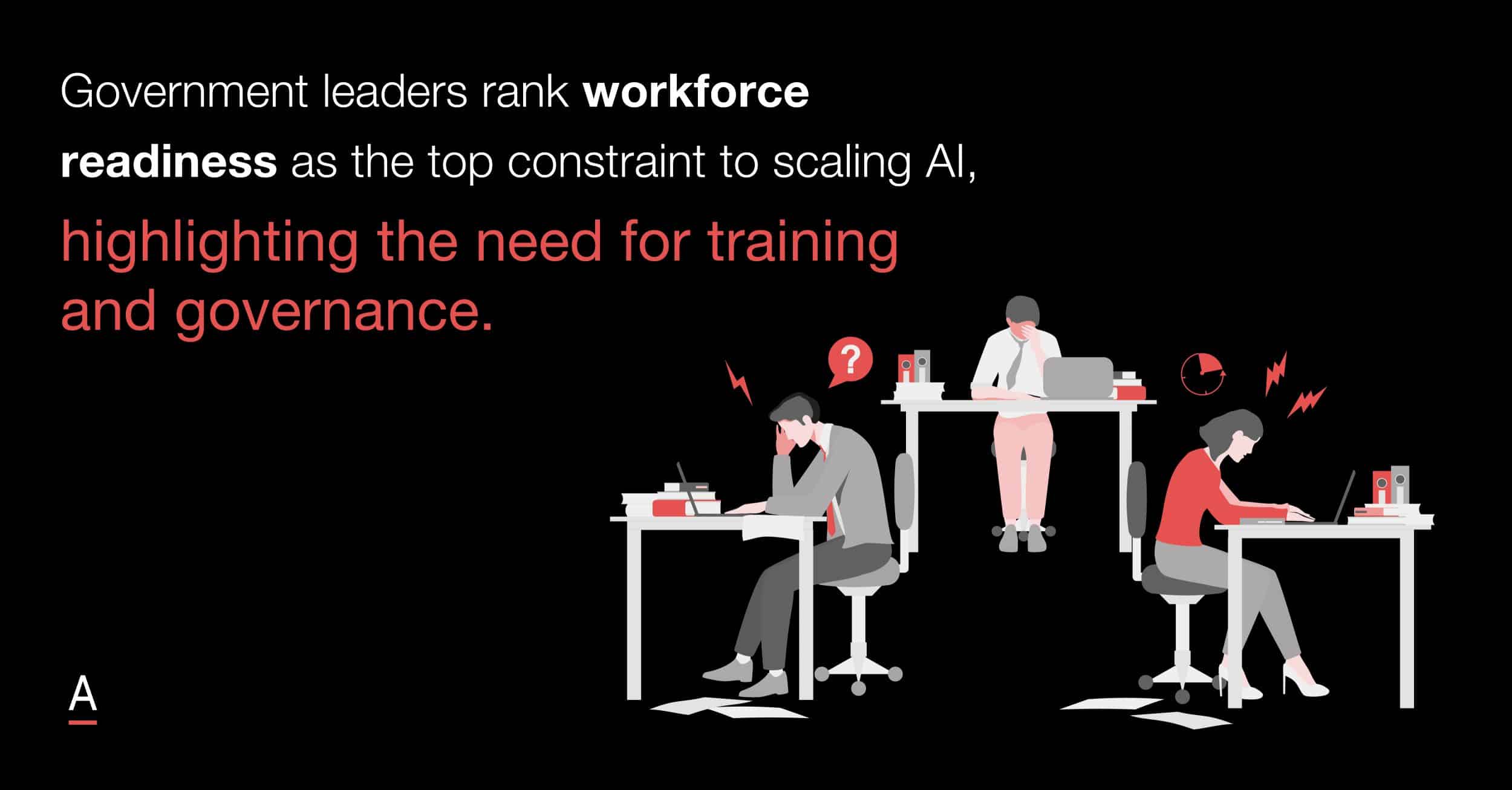
That finding reflects a broader shift occurring across the public sector.
The challenge is becoming less about technology access and more about organisational capability.
ADAPT Senior Research Director Matt Boon‘s revealed that agencies continue to invest in AI, yet many remain in the early stages of embedding it into day to day work.

Policies and governance frameworks are becoming more common while operational adoption remains uneven.
Emily Hilder, First Assistant Secretary Digital Capability at the Department of Defence, highlighted this tension.
She described how teams within Defence have already achieved significant productivity improvements through tools such as Copilot, particularly when employees develop stronger prompting and workflow skills.

At the same time, she cautioned against uncontrolled experimentation that creates fragmented tools, duplicated effort and inconsistent governance.
The challenge for large organisations is balancing innovation with standardisation.
Defence’s approach illustrates a broader lesson for government agencies.
Productivity gains are difficult to sustain when every team builds its own tools, processes and operating practices.
Enterprise platforms, shared guardrails and clear governance provide the conditions for scaling successful initiatives across larger workforces.
Justin Keefe also stressed the importance of continuous learning.
As AI becomes embedded within government operations, leaders will increasingly be expected to understand both its opportunities and limitations.
Workforce readiness therefore extends beyond training programs, requiring leaders, managers and frontline employees to continuously adapt how they work and make decisions.
The agencies making the most progress are treating workforce readiness as a transformation program rather than a technology rollout.
Build trust before scaling AI across government
Trust emerged as one of the defining themes of Government Edge.
For public sector organisations, trust is closely linked to transparency, accountability and evidence.
These requirements become even more important as AI begins to influence decisions, recommendations and service delivery.
Australian Information Commissioner Elizabeth Tydd argued that transparency remains the foundation.

Government agencies already operate within legislative frameworks that require them to explain how decisions are made, how information is used and what safeguards are in place.
Those expectations do not disappear in an AI environment.
Trust therefore becomes an operational discipline rather than a communications exercise.
Charles McHardie, Chief Information and Digital Officer at Services Australia, connected trust directly to service delivery. For agencies that interact with millions of citizens, trust is built through secure, reliable services and consistent outcomes.

AI initiatives must strengthen that relationship rather than create uncertainty around how services are delivered.
Peter O’Halloran described a similar dynamic within healthcare.
Clinicians, patients and governments need evidence that AI can improve outcomes safely before more advanced use cases can be expanded. Early wins matter because they create confidence for future investment.
David Walker, former Group Chief Technology Officer at Westpac and DBS and Chair of the AI Council at UNSW, reinforced this point through lessons from highly-regulated banking environments.
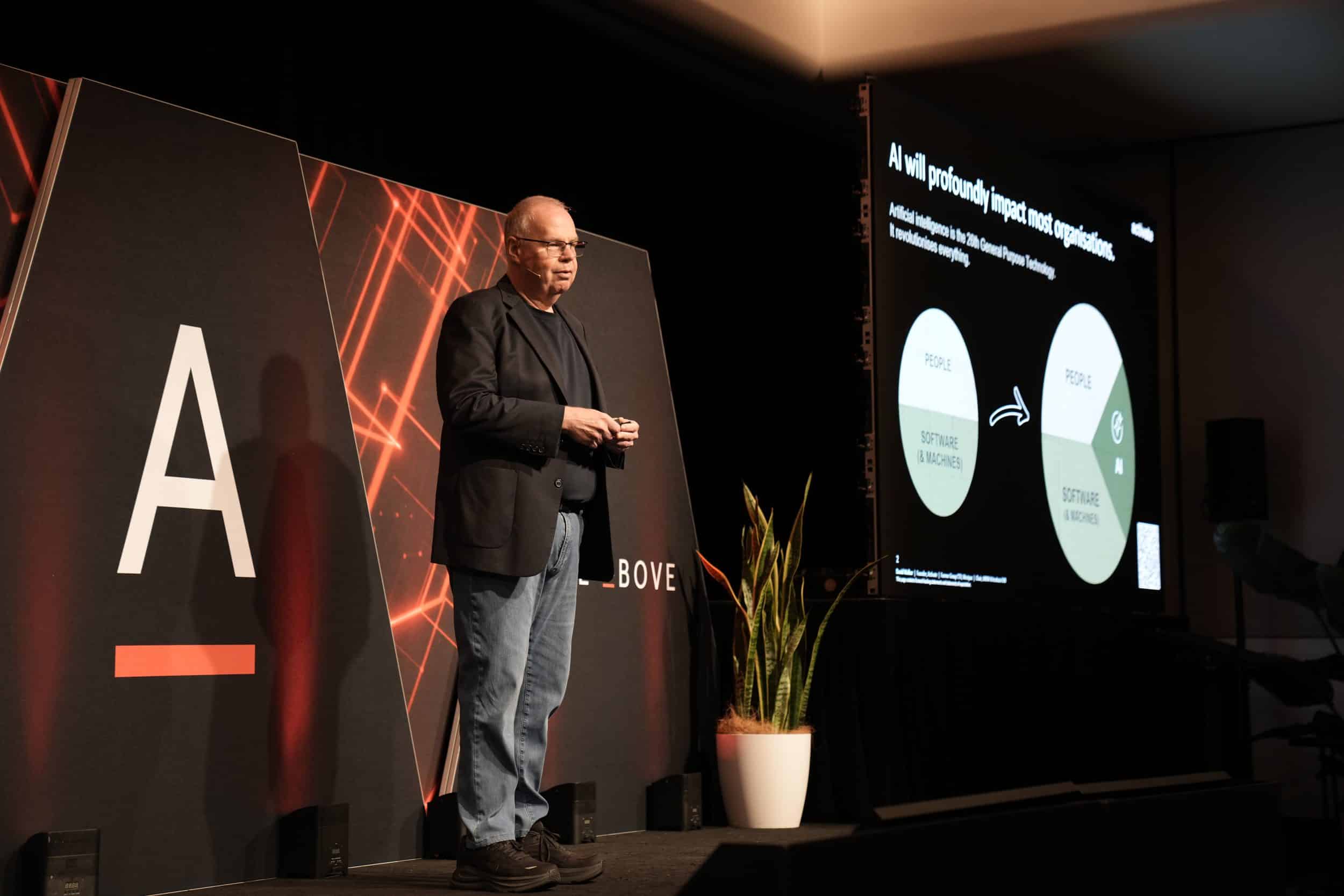
Successful AI adoption depends on governance, accountability and organisational readiness.
These factors determine whether AI can be deployed consistently and responsibly across large institutions.
Across both public and private sectors, trust is increasingly becoming the prerequisite for scale.
Reuse capabilities to accelerate government delivery
Only 25% of government leaders classify themselves as mature in the reuse of technology platforms to accelerate delivery and interoperability.
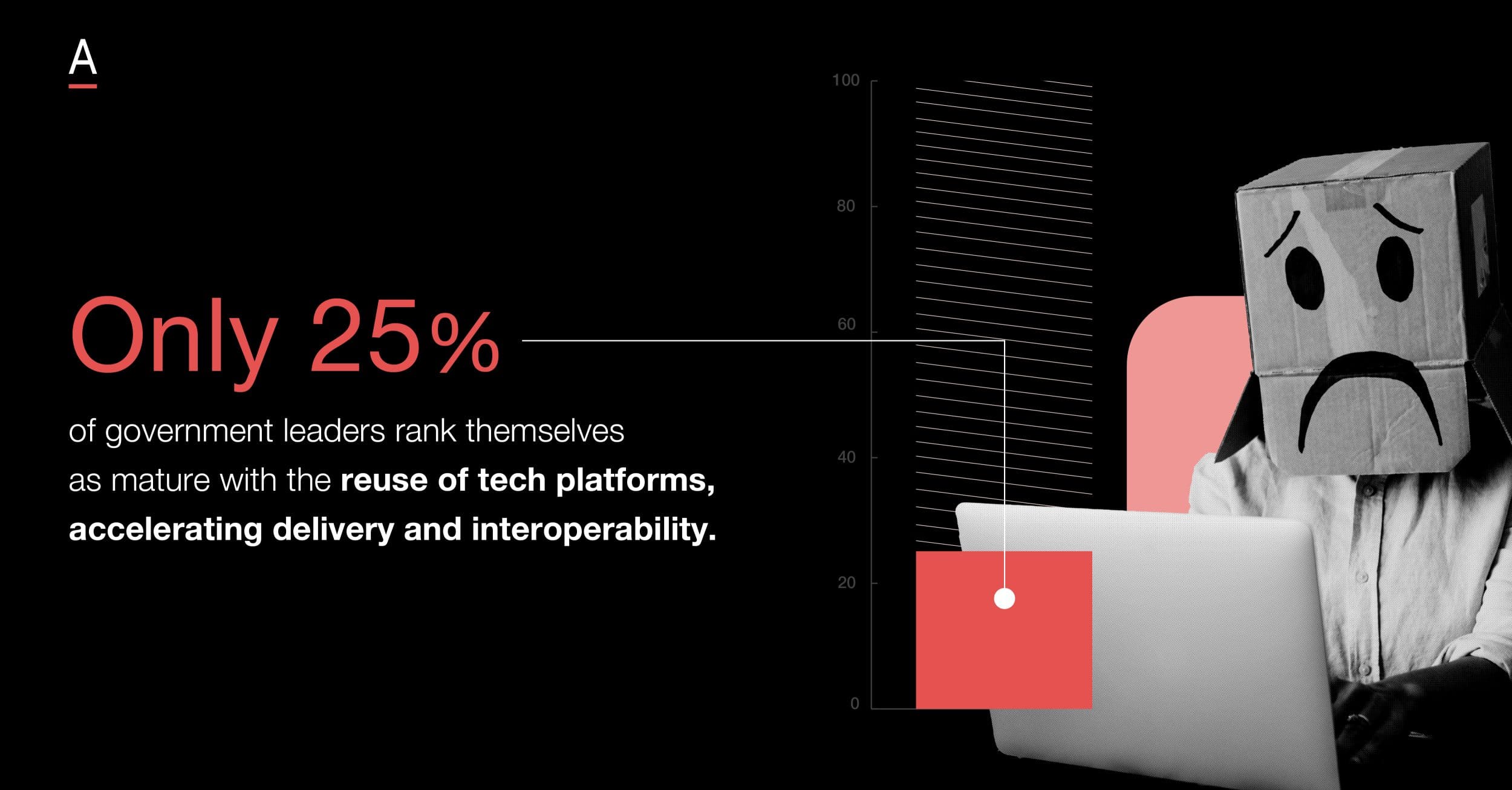
That highlights a productivity opportunity that received significant attention throughout the event.
Government agencies continue to solve many similar problems independently.
They manage comparable governance challenges, develop overlapping capabilities and invest in technology that often serves related objectives.
Justin Keefe argued that agencies must work together more effectively if government is to capture the full value of AI.
Sharing lessons, approaches and capabilities should become standard practice rather than exceptional practice.

Peter O’Halloran provided an international perspective through the Australian Digital Health Agency’s participation in the Global Digital Health Partnership.
By sharing evaluation methods, governance approaches and implementation lessons with other nations, agencies can reduce duplication and accelerate progress.
Emily Hilder identified similar opportunities closer to home.
Defence is exploring ways AI can simplify complex processes such as procurement, helping employees navigate policy requirements more efficiently.
Many of these challenges are shared across government, creating opportunities for common solutions rather than separate investments.
The discussion moved beyond technology reuse alone.
Knowledge, governance models, training approaches, procurement patterns and implementation lessons are all assets that can be shared.
Agencies that improve reuse across these areas are likely to accelerate delivery while reducing duplication and risk.
Redesign operating models to unlock AI productivity
The strongest message from Government Edge was that AI alone will not solve the productivity challenge.
Alan Thorogood, Research and Engagement at MIT CISR, sharpened the event’s core message: AI productivity depends on how work is organised, governed and funded.

He argued that agencies need clearer decision rights, stronger alignment between business and technology teams, and governance built into execution rather than added after experimentation.
Without that shift, AI improves isolated tasks while the broader organisation stays slow.
Jim Berry set up this challenge in his opening, framing AI as a productivity and operating model issue rather than a technology question.

That perspective was reflected in ADAPT’s research, which shows only 6% of government leaders report clear and measurable productivity gains from digital and AI investments.
David Walker brought the regulated industry lens.
His lesson from banking was that AI scales when leadership, risk, funding, governance and process design move together.
Advanced tools alone do not create enterprise value.
The next productivity gains will come from redesigning workflows, simplifying decision making and placing capability closer to where work happens.
Recommended actions for government technology leaders
The next phase requires agencies to move from AI activity to disciplined execution.
These actions focus on turning investment, capability and governance into measurable productivity gains.
- Define productivity outcomes before selecting AI solutions
- Prioritise decision quality, service improvements and reduced duplication over deployment metrics
- Treat workforce readiness as an organisational capability challenge
- Establish enterprise guardrails that support innovation while preventing fragmentation
- Build trust through transparency, accountability and evidence based adoption
- Increase reuse of platforms, governance approaches and implementation lessons
- Create clear ownership for AI outcomes, risk management and decision making
- Redesign operating models to support AI enabled ways of working
Government Edge highlighted a public sector that is aligned on the opportunity AI presents.
The challenge ahead is execution.
While agencies continue to invest in new technologies, the organisations generating measurable productivity gains will be those that strengthen workforce capability, build trust, improve reuse and redesign how work gets done.
Closing the gap between AI activity and productivity outcomes has become one of the defining leadership priorities for the Australian Public Service.
 Justina Uy
Content Marketing Manager
Justina Uy
Content Marketing Manager
Justina Uy is a data-driven content marketer that thrives on democratising elite know-how to empower Australia’s underdogs.
Skilled at translating complex ideas into a compelling story across formats and channels, she shifts seamlessly between writing long-form articles, creating viral social media posts, and producing thumb-stopping videos.
Since 2015, Justina executes her vision through a sophisticated understanding of the rapidly evolving digital and business landscape to serve entertaining and educational insights to the executive community.
Less
Join the ADAPT
Insider Community
Get the latest A/NZ market research and insights on the core trends impacting leaders.