















How digital leaders are turning AI investment into impact when only 14% can absorb change at AI pace
160+ leaders gathered at Digital & AI Edge to explore how unified data, governed agentic workflows and outcome metrics turn AI into impact.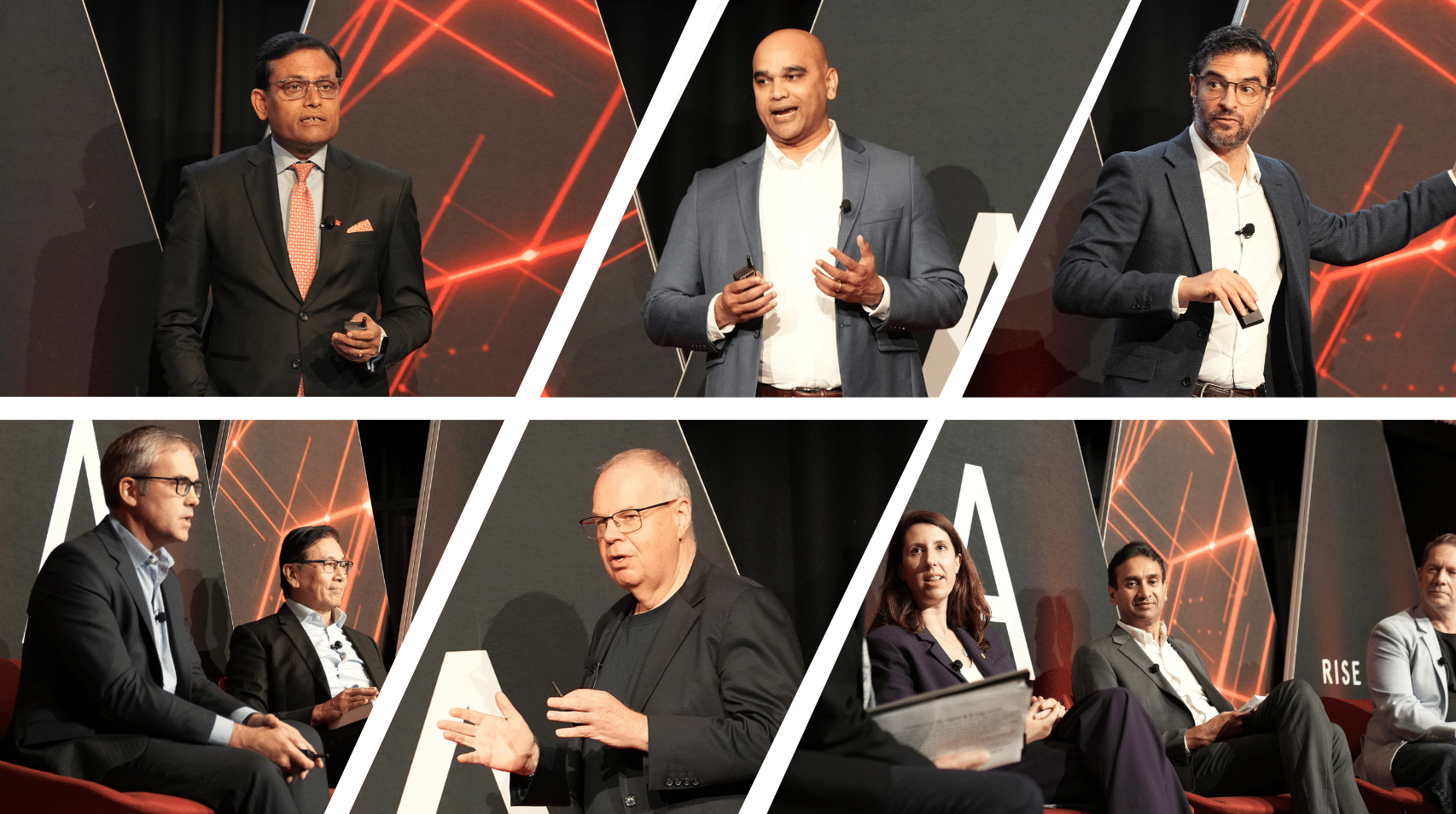


 Published Jun 17, 2026 in
Articles
Digital Transformation
Contributors
Justina Uy
Published Jun 17, 2026 in
Articles
Digital Transformation
Contributors
Justina Uy
Digital leaders are being asked to turn AI investment into measurable business change before their organisations are fully ready.
Boards want productivity gains. Customers expect more personalised experiences.
Employees are rapidly adopting new tools.
Yet many organisations are still constrained by fragmented data, legacy operating models, governance gaps, and uneven workforce capability.
ADAPT research shows the tension clearly.
AI strategy is now the top organisational priority, scaling AI is the leading digital and CX priority, and seven of the top ten planned investments are AI related.
Yet while 77% of Chief Digital Officers plan to invest in agentic AI, only 14% believe their organisations can absorb change at AI pace.
This challenge shaped ADAPT’s 11th Digital & AI Edge, where more than 160 Chiefs of Product, Customer, CX, Digital, Technology, and Strategy explored how to create unified experiences, operationalise intelligence, and prepare for agentic ways of working.
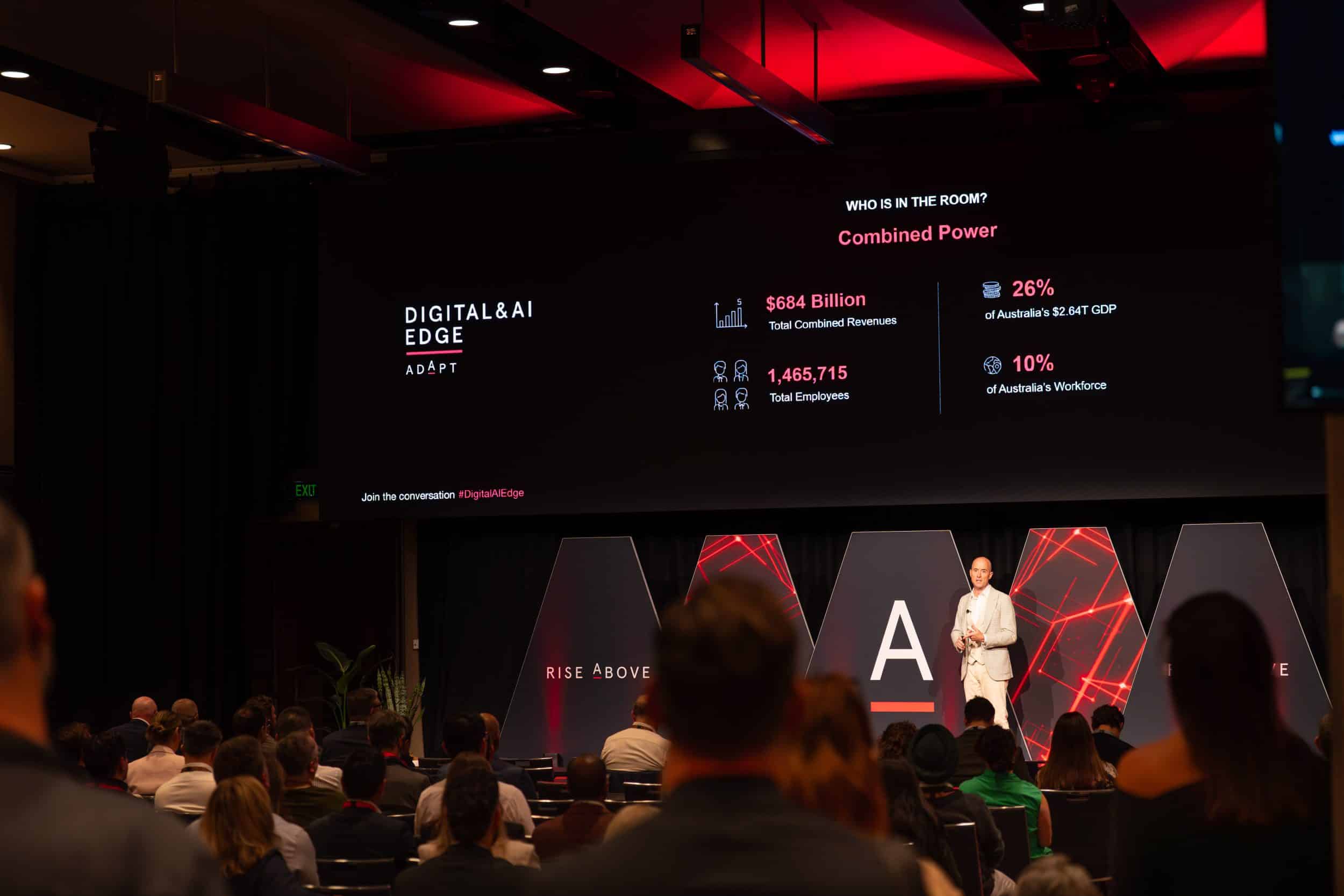
Opening the day, ADAPT CEO and Founder Jim Berry framed this as the shift to AI economics.
Boards are moving from asking where AI is being used to asking what has changed because it is being funded.
That is where the execution gap appears.
Three quarters of digital leaders rate their ability to use data to improve CX as moderate or worse.
AI will not fix fragmented context, disconnected journeys, or unclear ownership. It will inherit them.
Across the day’s discussions, AI adoption was accelerating, but organisational adaptation was becoming the constraint.
Scale AI through governed agentic workflows, not isolated pilots
Investment appetite is strong, but operational readiness is lagging.
While 77% of Chief Digital Officers plan to invest in agentic AI, data readiness remains the biggest barrier to scale.
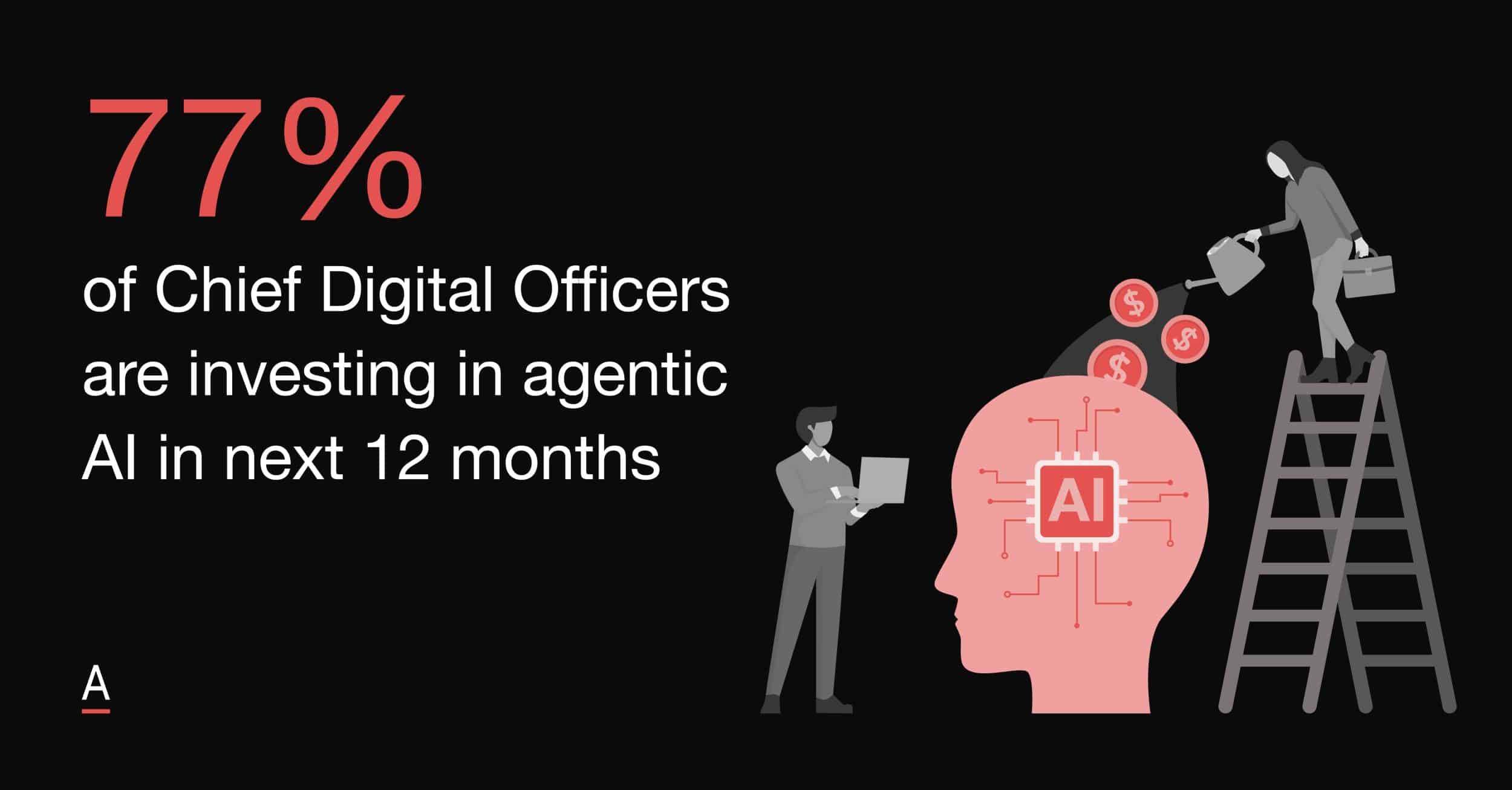
Organisations are pursuing greater autonomy while still grappling with fragmented data, unclear ownership, and inconsistent governance.
As ADAPT Head of Analytics & Insights Gabby Fredkin observed, technology adoption is often moving faster than operating model change.
Organisations are introducing new capabilities before the foundations required to support them, including governance, decision rights, accountability structures, and information architecture, are ready.
Many organisations have launched copilots and pilots. The challenge now is turning those experiments into repeatable business outcomes.
AI pilots can demonstrate capability, but scaling them requires organisations to redesign how work is measured, governed, and executed.
Vijayan Seenisamy, Group Transformation Lead at Woolworths Group and Author of The Pilot Trap | Enterprise AI Delivery, argued that many organisations underestimate the operational complexity of agentic AI.
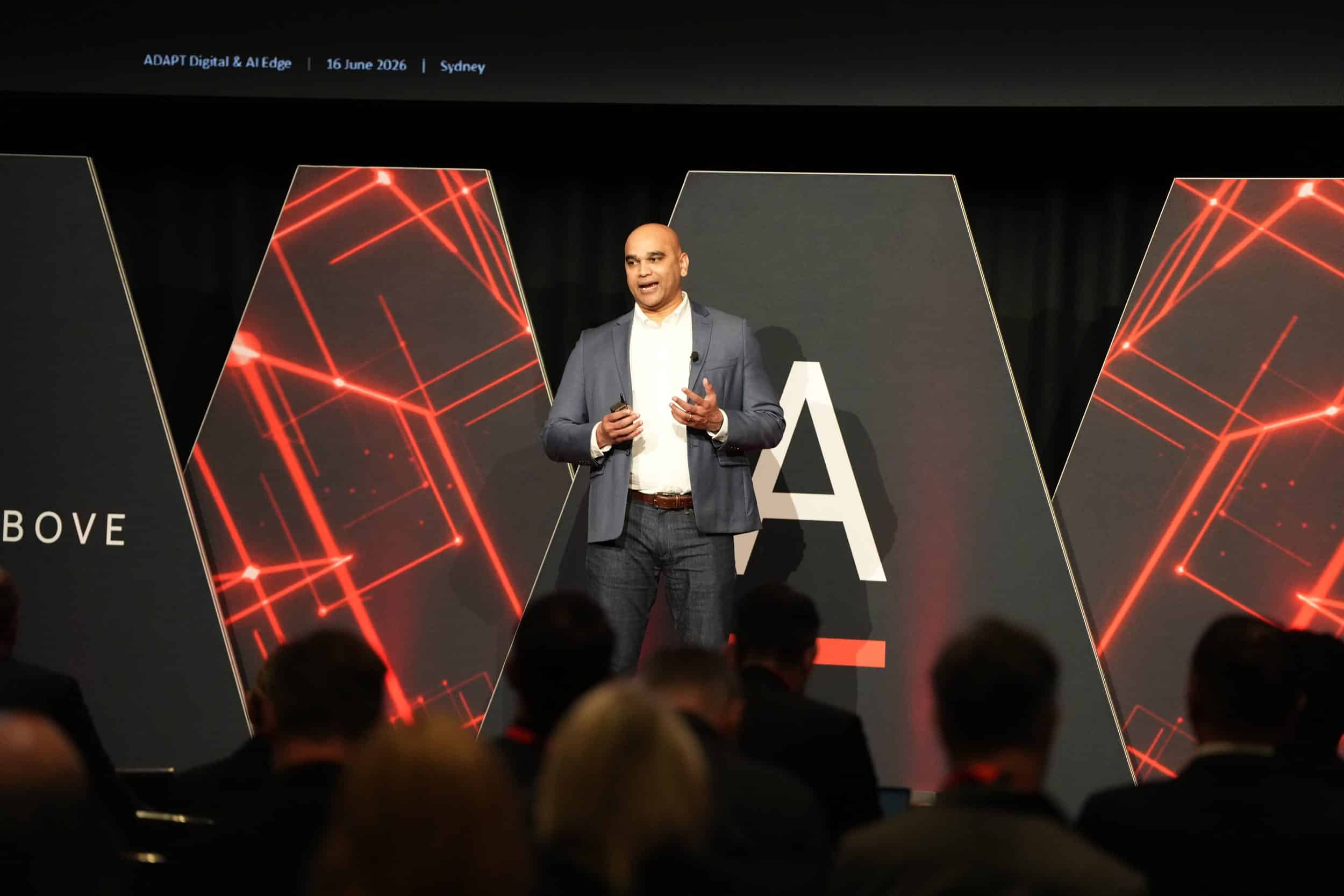
Pilots often demonstrate technical capability, but real value depends on how those capabilities perform within live business environments.
An agent may automate a task successfully.
That does not necessarily mean the overall workflow becomes more effective.
Vijayan challenged leaders to focus on the cost of successful outcomes rather than the cost of individual activities.
Once governance, exception handling, oversight, and operational support are considered, the economics can look very different from the original business case.
Agentic AI creates a decision problem before it creates a technology problem.
Before agents move into production, leaders need to know which workflows are worth changing, which risks require human oversight, who owns the outcome, and what evidence justifies continued investment.
The executive panel brought that decision problem into sharper focus.
Bhaskar Katta, General Manager at Westpac, showed why process intelligence needs to come before autonomy.
Jen French, General Manager AI Acceleration at CommBank, reinforced that leaders should start with the target outcome and redesign the process before deciding where AI fits.
Simon Kriss, ADAPT Executive Advisor and CEO at Sovereign Australia AI, added the governance lens, warning that true agentic AI carries a different risk profile because decisions may occur with less direct human involvement.
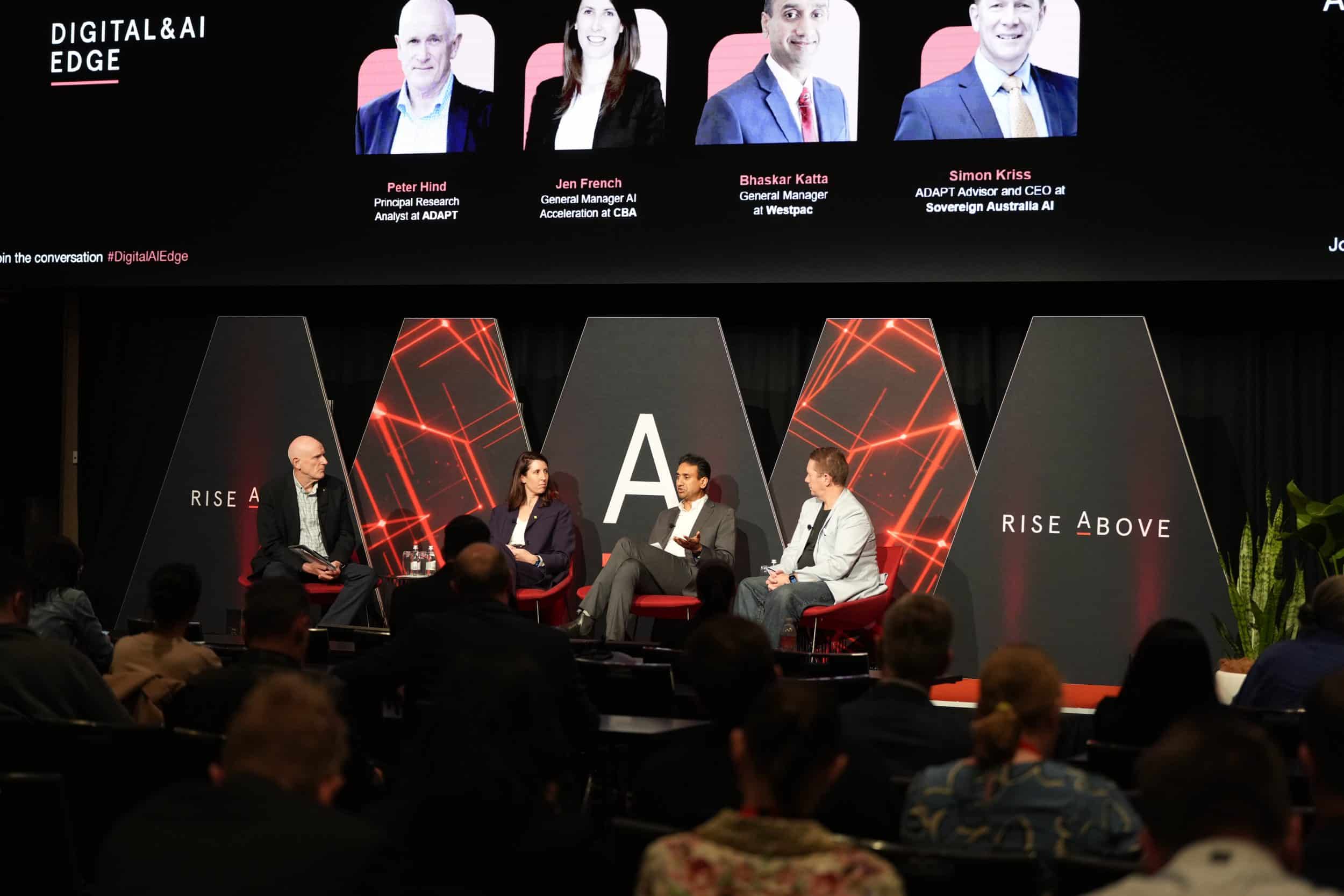
Agentic AI should not be scaled from enthusiasm alone.
It needs process evidence, outcome clarity, and a governance path before it becomes part of live customer, employee, or operational workflows.
The discussion focused less on the capabilities of agents and more on the conditions required for them to create value. Process understanding, governance, ownership, and business context repeatedly emerged as prerequisites for successful adoption.
Align leaders around outcomes, not AI activity
Another finding from ADAPT’s research helps explain why many AI initiatives struggle to gain momentum.
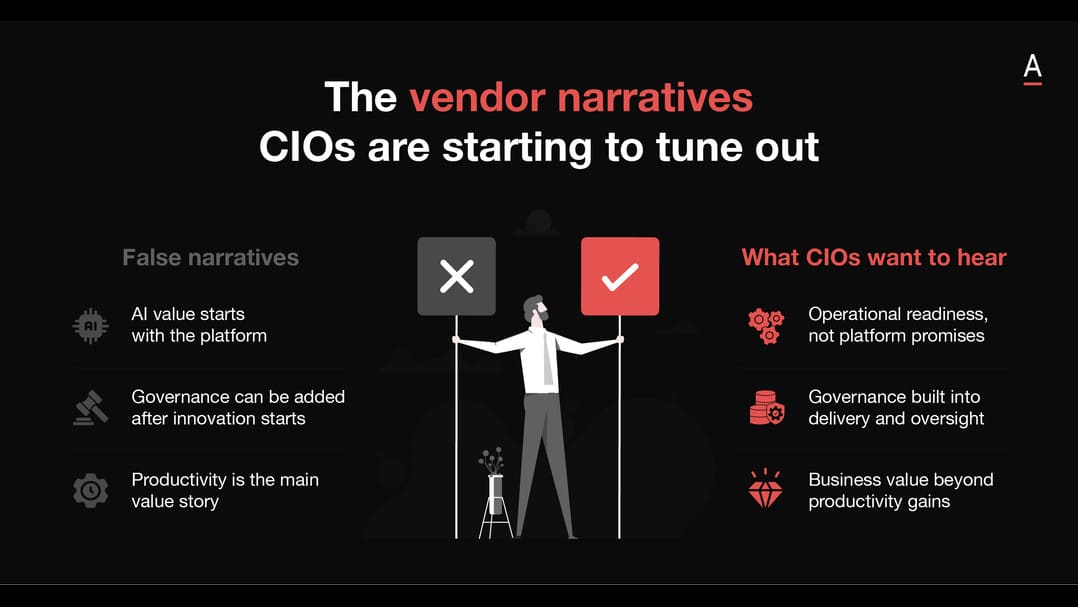
80% of digital leaders say vendor outreach is ineffective.

While this appears to be a vendor challenge on the surface, it reveals something more significant about how executives are evaluating technology decisions.
Digital leaders inundated with AI messaging are increasingly filtering out technology narratives in favour of evidence, benchmarks, and measurable business outcomes.
The same scrutiny is now being applied to internal AI programs.
What is increasingly difficult to find is evidence of measurable business impact.
Leaders are looking for commercial relevance, operational proof, and practical examples of transformation at scale.
The same expectation now applies internally.
AI initiatives are increasingly being judged by outcomes rather than activity.
Dawid Naude, CEO of Pathfindr, touched on this challenge briefly, noting that many organisations have spent the last year producing strategies, attending workshops, and trialling tools without materially changing how work gets done.
The next phase requires organisations to move from AI activity to AI execution.
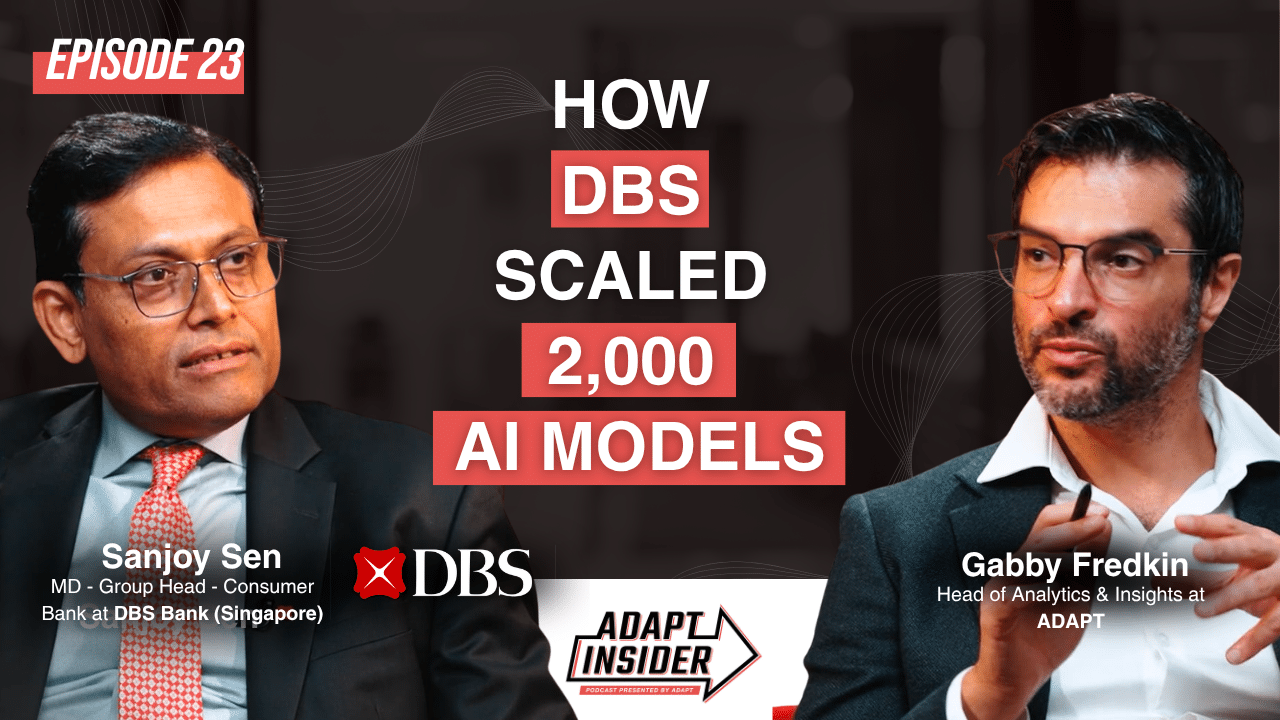
Sanjoy Sen, Managing Director and Group Head of Consumer Banking at DBS Bank, provided one of the strongest examples of this mindset.
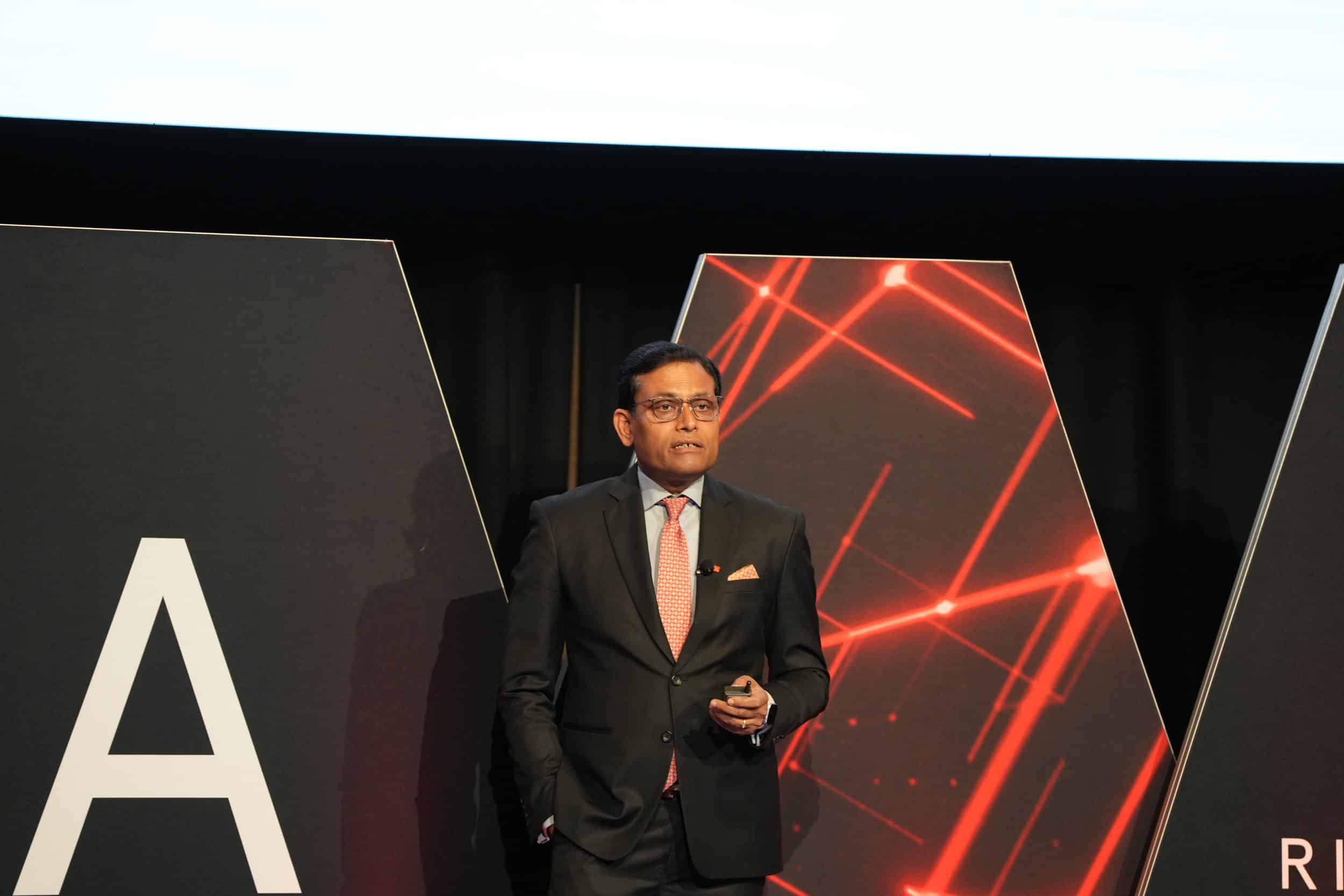
DBS has embedded AI across hundreds of use cases spanning customer engagement, operations, risk management, and service delivery.
Yet the focus remains on customer outcomes, productivity gains, and business value rather than technology deployment.
That distinction is becoming increasingly important.
Many organisations can demonstrate AI activity.
Fewer can demonstrate how AI has changed customer behaviour, improved decision quality, increased productivity, or reduced operational friction.
This creates an alignment challenge across the leadership team.
Technology leaders may focus on deployment. Business leaders focus on outcomes. Risk leaders focus on governance. Finance leaders focus on return on investment.
Without shared definitions of success, AI programs can quickly become fragmented.
The organisations making the most progress are establishing outcome measures before scale begins.
They are aligning executives around business value rather than technology activity.
Build organisations that can absorb change at AI pace
The most significant finding presented at Digital & AI Edge was not the level of AI investment.
It was the fact that only 14% of organisations believe they have the DNA to absorb change at AI pace.
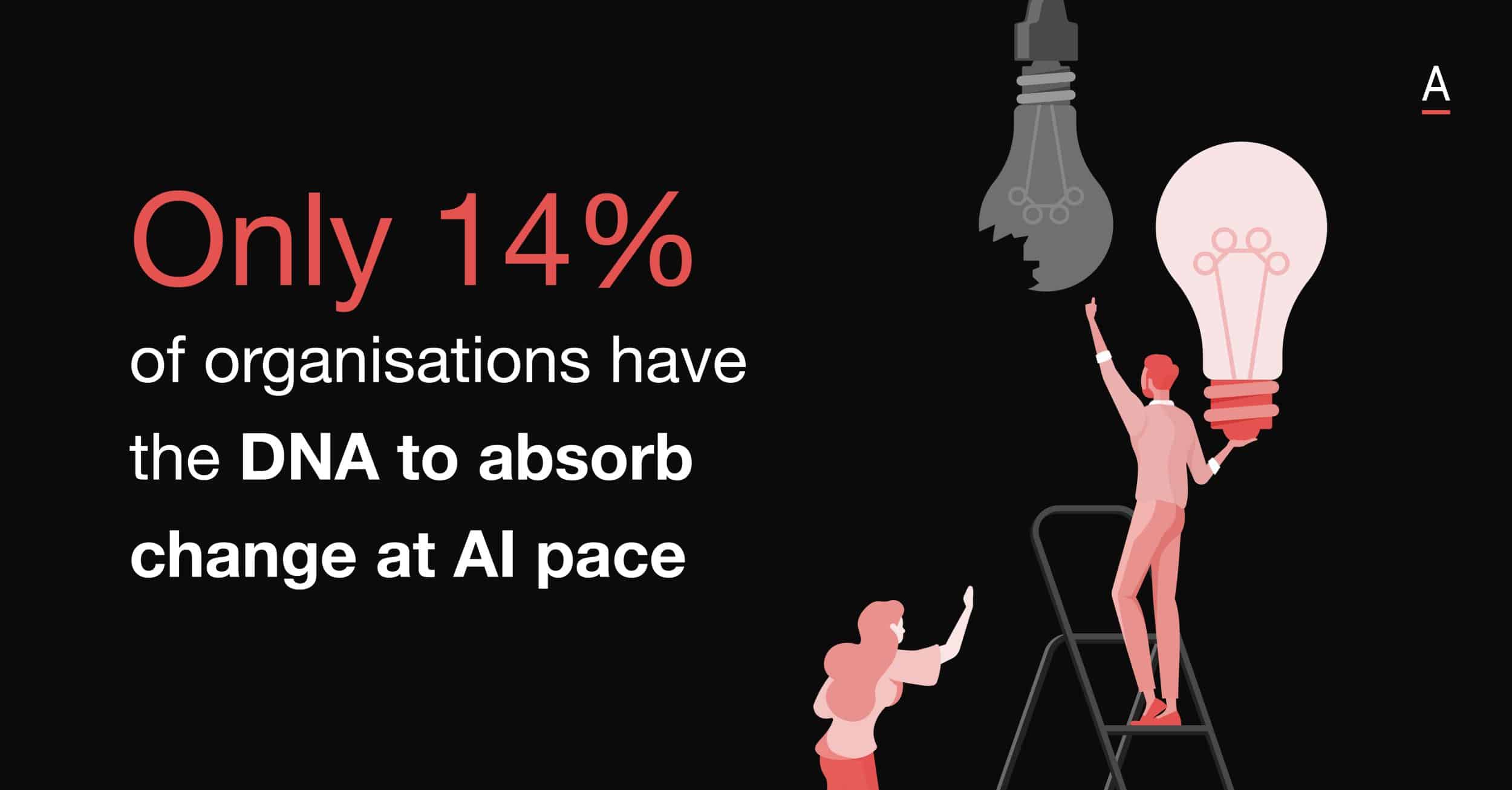
This shifts the discussion away from technology readiness and towards organisational readiness.
AI introduces continuous change, requiring organisations to adapt to new capabilities, evolving workforce expectations, changing governance requirements, and emerging risks and opportunities at the same time.
Many organisations remain structured around transformation models designed for slower technology cycles.
AI rewards organisations that can adapt continuously.
Gabby Fredkin highlighted clear differences between maturity groups.
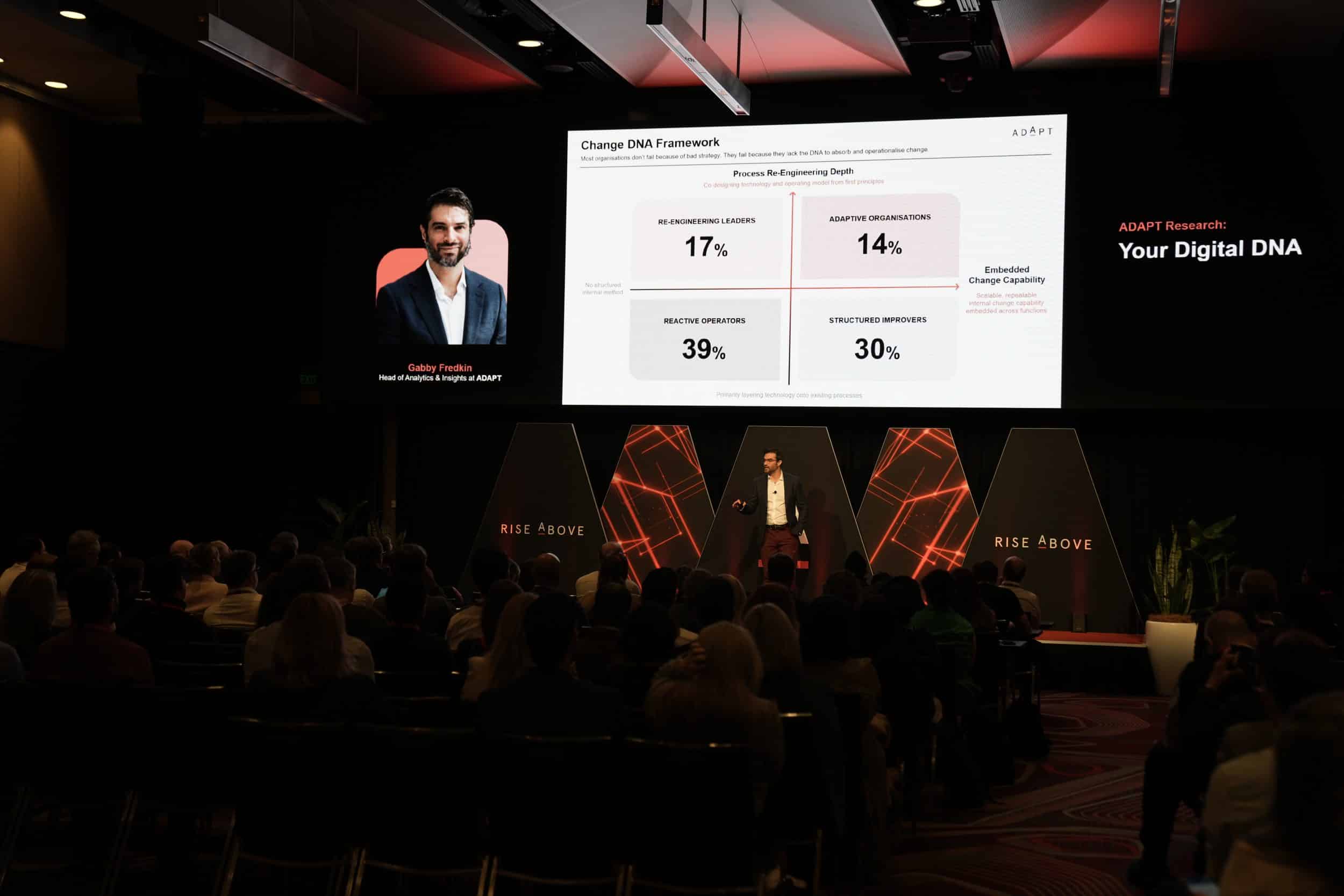
His analysis identified four distinct organisational archetypes.
Reactive organisations struggle to secure buy in and funding.
Structured improvers invest heavily in workforce readiness and governance but often struggle to prove ROI.
Re-engineering leaders redesign processes effectively but fail to scale change consistently across the enterprise.
Adaptive organisations combine all three capabilities, redesigning workflows while building governance, leadership alignment, and workforce capability in parallel.
The highest performing organisations are not simply investing more in AI.
They are building the capabilities required to absorb change repeatedly and at scale.
David Walker, former Group Chief Technology Officer at Westpac and DBS and Chair of the AI Council at UNSW, argued that this shift is creating opportunities for organisations that can learn and adapt faster than larger competitors.

Historically, scale was a powerful competitive advantage.
Today, learning velocity and organisational agility are becoming equally important.
David pointed to characteristics shared by successful organisations during periods of disruption, including strong leadership ownership, customer relevance, experimentation, and the ability to move quickly when opportunities emerge.
His experience at DBS demonstrated that AI maturity is often the result of broader organisational maturity.
The technology creates value because the organisation is designed to absorb it.
Vijayan Seenisamy reinforced this point from a transformation perspective.
Many organisations continue to deploy AI through delivery models originally designed for traditional software projects.
Agentic systems behave differently. They require ongoing optimisation, governance, monitoring, and ownership.
Organisations cannot treat AI as another technology implementation.
They need operating models capable of evolving alongside it.
Enable agentic execution through trust and governance
As organisations increase autonomy, governance becomes a strategic capability rather than a compliance requirement.
Traditional software follows instructions.
Agentic systems increasingly interpret context, make decisions, initiate actions, and coordinate workflows.
This changes the nature of risk.
Questions around accountability, transparency, oversight, and trust become more important as autonomy increases.
These issues featured prominently in both the executive panel and the event’s closing session.
Jim Boehm, Expert Partner and Chief Digital Risk Officer at McKinsey & Company, alongside ADAPT Advisor and influential CISO David Gee, explored how organisations can continue accelerating innovation while maintaining trust and resilience.

Their discussion highlighted the growing convergence between AI strategy, cyber security, governance, and operational performance.
Organisations that treat governance as a final stage activity often struggle to scale confidently.
Those that embed governance into transformation from the outset create stronger foundations for growth.
This becomes particularly important as AI systems become embedded within critical workflows and customer interactions.
Trust becomes difficult to rebuild once confidence is lost.
The organisations creating sustainable advantage are designing accountability, observability, and governance into their operating models before scale introduces complexity.
Recommended actions for digital leaders
To operationalise intelligence at scale:
- Build unified data foundations before expanding agentic workflows.
- Define business outcomes before selecting AI use cases.
- Measure successful outcomes rather than deployment activity.
- Align business, technology, finance, and risk leaders around common value metrics.
- Redesign workflows before automating them.
- Invest in organisational adaptability alongside technology capability.
- Establish governance models that support continuous optimisation.
- Embed trust, resilience, and observability into every stage of AI adoption.
AI investment is now moving faster than the systems built to govern, measure and absorb it.
The organisations that progress will be the ones that treat AI as an operating model reset, not a portfolio of tools.
They will know which workflows should change, what a successful outcome costs, who owns the agent in production, and where human judgment must remain.
That is where advantage is moving.
Not to the organisation with the largest AI pipeline, but to the one that can turn intelligence into lower friction, faster decisions, clearer accountability and measurable business value.
 Justina Uy
Content Marketing Manager
Justina Uy
Content Marketing Manager
Justina Uy is a data-driven content marketer that thrives on democratising elite know-how to empower Australia’s underdogs.
Skilled at translating complex ideas into a compelling story across formats and channels, she shifts seamlessly between writing long-form articles, creating viral social media posts, and producing thumb-stopping videos.
Since 2015, Justina executes her vision through a sophisticated understanding of the rapidly evolving digital and business landscape to serve entertaining and educational insights to the executive community.
Less Join the ADAPT
 Insider Community
Get the latest A/NZ market research and insights on the core trends impacting leaders.