















Why Hunter Water’s Executive Manager, Digital Jenny Francis changed her mind about IT
In this interview with ADAPT's Byron Connolly, Jenny Francis reflects on leaving IT behind, then returning to modernise services, systems, and AI.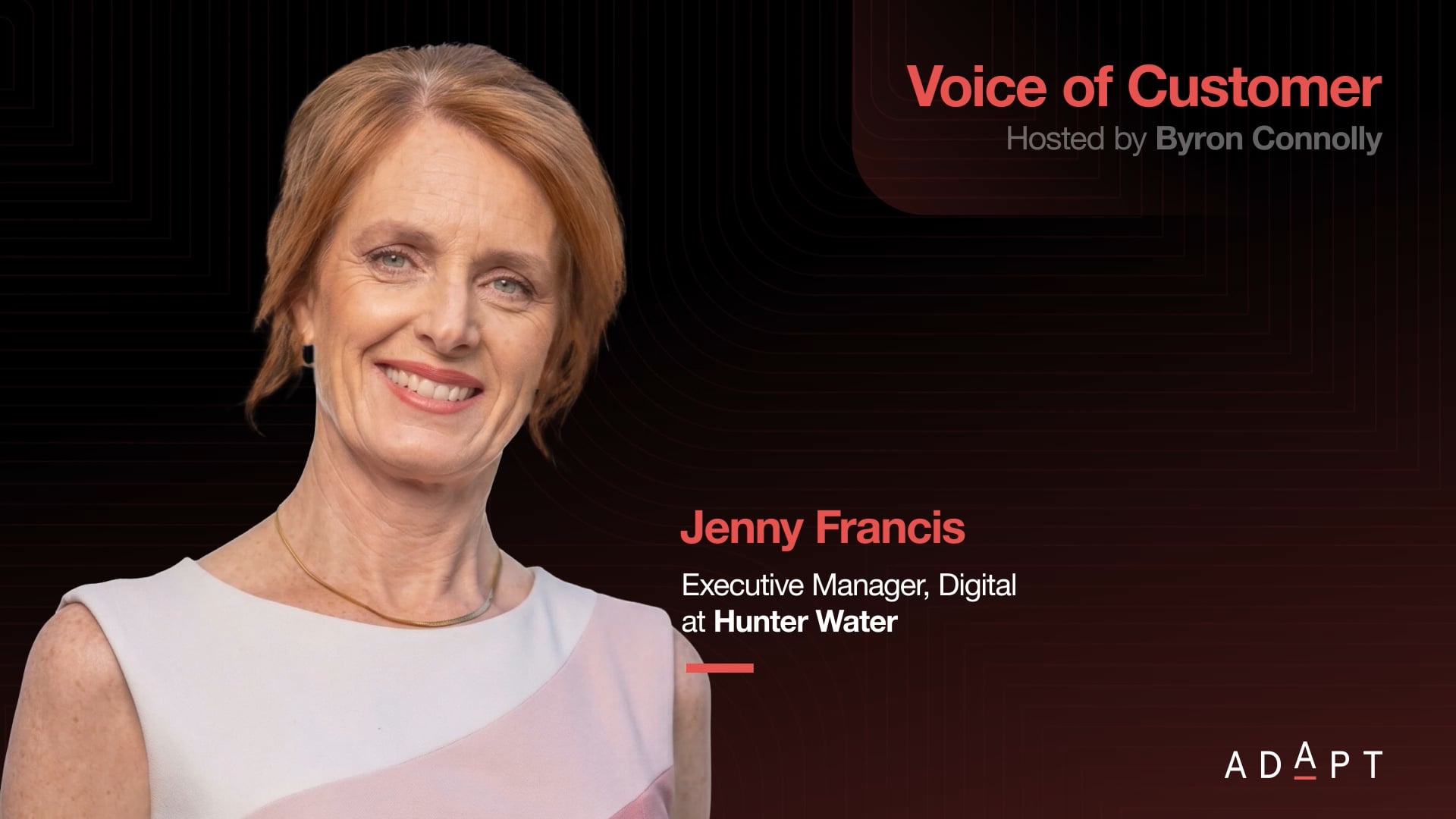


 Published Apr 14, 2026 in
Peer Insights
Strategic Business Initiatives
Contributors
Jenny Francis
Byron Connolly
Published Apr 14, 2026 in
Peer Insights
Strategic Business Initiatives
Contributors
Jenny Francis
Byron Connolly
Jenny Francis’s career path, from walking away from computer science to leading digital modernisation at Hunter Water, offers a grounded view of how better systems, stronger service, and practical AI create value in essential services.
She dropped out of her first-year computer science studies at the University of Newcastle in the late 1980s, finding the course “too dry and boring.”
This was despite Francis having an aptitude for technology. She helped set up her family’s business using a Macintosh Plus computer that her “trailblazing” mother had purchased.
“I was doing a science degree, and they had this brand-new course called ‘computer science.’ I [thought], ‘that’s more of what I’ve been doing at home; problem solving using tech. So, I signed up but found out quickly that it was very theoretical. I wanted more of the problem-solving stuff, so I dropped out”, she says.
The following year, Francis picked up a Psychology Neuroscience major during the days of MS-DOS, WordPerfect and green screen displays.
“Using a Mac Plus, I could [produce] better assignments quicker. I used to go to the university help desk, and I’d solve all of the Macintosh problem tickets they had in the queue. I always used to say half-jokingly, ‘when I finish, you’ll have to give me a job.’ And they did.”
In the 1990s, Francis held IT program management roles at the financial firm Lazard, as well as London Electricity, National Grid Company and Compel PLC before returning to Newcastle, NSW and landing an IT management role at Port Waratah Coal Services.
Since then, Francis has remained in Newcastle, working in numerous senior tech roles at the Hunter Valley Coal Chain Logistics Team, Pacific National, Asciano and Hunter Valley Coal Chain Coordinator, before joining Hunter Water in 2019.
Francis’ human-centred approach to problem solving has become a common thread throughout her career, as it has for many of her female colleagues.
“Perhaps young women see [IT] as a technical thing, [they’ve] got to be programmers or working on a rack of computers. We probably need to do a better job; I probably need to do a better job of showcasing my journey.”
Francis’ digital team at Hunter Water is a 50% split between women and men.
“It’s fantastic and diverse group. You need all types of roles, including the dry technical ones. You need people to do that. It’s probably [an industry] marketing problem. The capability clearly is there [but] how do we capture the interest?” she says.
No water competition, digital co-operation
Francis is currently Executive Manager, Digital at Hunter Water, a utility that provides water services to 500,000 people in the Lower Hunter region of NSW. She is a member of the organisation’s executive team and is accountable for digital strategy, enterprise architecture, cyber, data and AI governance and delivering tech transformation programs.
Francis points out that organisations in the water industry “do not compete with each other” and, through the Water Services Association of Australia, providers collaborate on key problems facing the sector.
“These businesses, maybe 10 to 15 years ago, were all facing technology debt; systems that were a couple of decades old”, she says.
When Francis stepped into the role at Hunter Water, she inherited the tail end of a billing system modernisation project. Supported by a MD with digital aspirations, she built a strategy to better serve consumers through digital channels.
Under this program, systems supporting field and asset operations have been modernised.
“People fixing pipes out in the field were using a system that was implemented when the Nokia 9110 [pocket laptop device] came out over 20 years ago.
“We’re now embedding a modern system on a [worker’s] phone that provides job [information], helps us optimise the way we plan the work, capture data, perform reporting and, importantly, better look after our customers. That has been a very significant journey”, she says.
A second program involved creating a GIS ‘virtual factory’, which went live last year. This geographic information system maps thousands of kilometres of pipes, helping the organisation gain a more granular view of plumbing across its network.
Francis says she is currently focused on modernising the organisation’s data and AI capabilities, supported by the Databricks and Snowflake data platforms.
“It is important for us to know exactly where our data is and to manage cyber security [issues]. We’re a critical infrastructure business so the cyber uplift is massive.”
AI helping reduce leakage
On the AI front, Francis says Hunter Water has delivered strong value from several “fantastic pilots” using traditional AI tools to reduce water leakage across its network of pipes.
Engineers and data scientists within the organisation’s operations team place sensors in pipes to detect leaks. Data gathered from these sensors is analysed using machine learning algorithms, helping teams identify leakage patterns so issues can be addressed before a full pipe burst occurs.
This saves the organisation both time and money by enabling earlier intervention and keeping the network running effectively.
“Like government, we’re in the trust business; [consumers] don’t get to choose their water provider…so it’s absolutely incumbent on us to really respect and understand we’re a monopoly. We need to be as efficient as possible because…all of this infrastructure operation and build is recovered through customer bills”, she says.
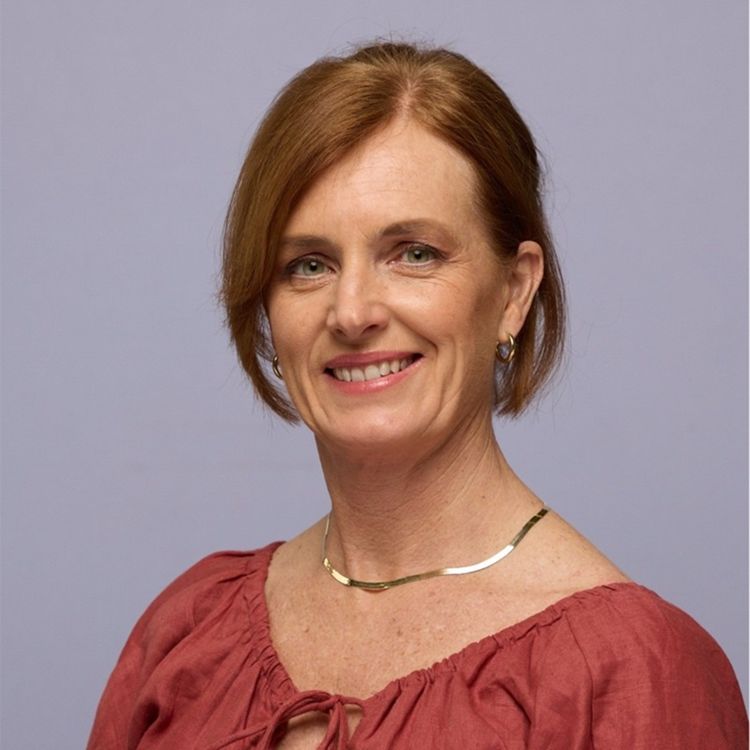 Jenny Francis
Executive Manager, Digital at Hunter Water
Jenny Francis
Executive Manager, Digital at Hunter Water
I never set out to be a CIO. I dropped out of first year Computer Science finding it too dry and boring. Yet, after discovering my passion for aligning technology to business strategy, I’ve realised that being a CIO or CDO is exactly where I’m meant to be.. the place I can truly make an impact.
I thank my mother, who bought our family a MacPlus computer when I was at Uni. I discovered I had a real aptitude for using technology to make my life easier and my uni assignments better.
Today, yes, I am a proud early adopter of technology to serve my personal life… I love it. In business, my “thing” has been demystifying technology and driving business improvement with the right combo of people, process and tech change. It’s never about the technology.. it must always start with the outcome you’re seeking and work back from there.
With over 25 years of senior and executive leadership experience, I’ve led LEAN business improvement, customer centricity programs, and digital transformation across industries including banking, transport logistics, supply chain and utilities, from government owned to listed in the ASX50. I strive to create teams where people feel empowered, valued, and motivated to do their best work. By fostering trust, giving autonomy, and recognizing achievements, I aim to build an open, fun, and supportive culture where everyone can thrive.
Less Byron Connolly
Head of Programs & Value Engagement at ADAPT
Byron Connolly
Head of Programs & Value Engagement at ADAPT
Byron is a highly experienced technology and business journalist, editor, corporate writer, and event producer.
Prior to joining ADAPT, he was the editor-in-chief at CIO Australia and associate editor at CSO Australia. He also created and led the well-known CIO50 awards program in Australia and The CIO Show podcast.
Byron creates valuable insights for our community of senior technology and business professionals that help them reach their organisational and professional goals. He has a passion for uncovering stories about the careers and personal philosophies of Australia’s top technology and digital executives.
When he is not working, Byron enjoys hot yoga, swimming, running and spending time with his family. He completed the North Face 100km ultra marathon in the NSW Blue Mountains in 2012 and 2013.
Less Join the ADAPT
 Insider Community
Get the latest A/NZ market research and insights on the core trends impacting leaders.
Join the ADAPT Insider Community
Get the latest A/NZ market research and insights on the core trends impacting leaders.