














Personalisation at scale raises the stakes on trust and governance, says Village Roadshow’s cyber lead
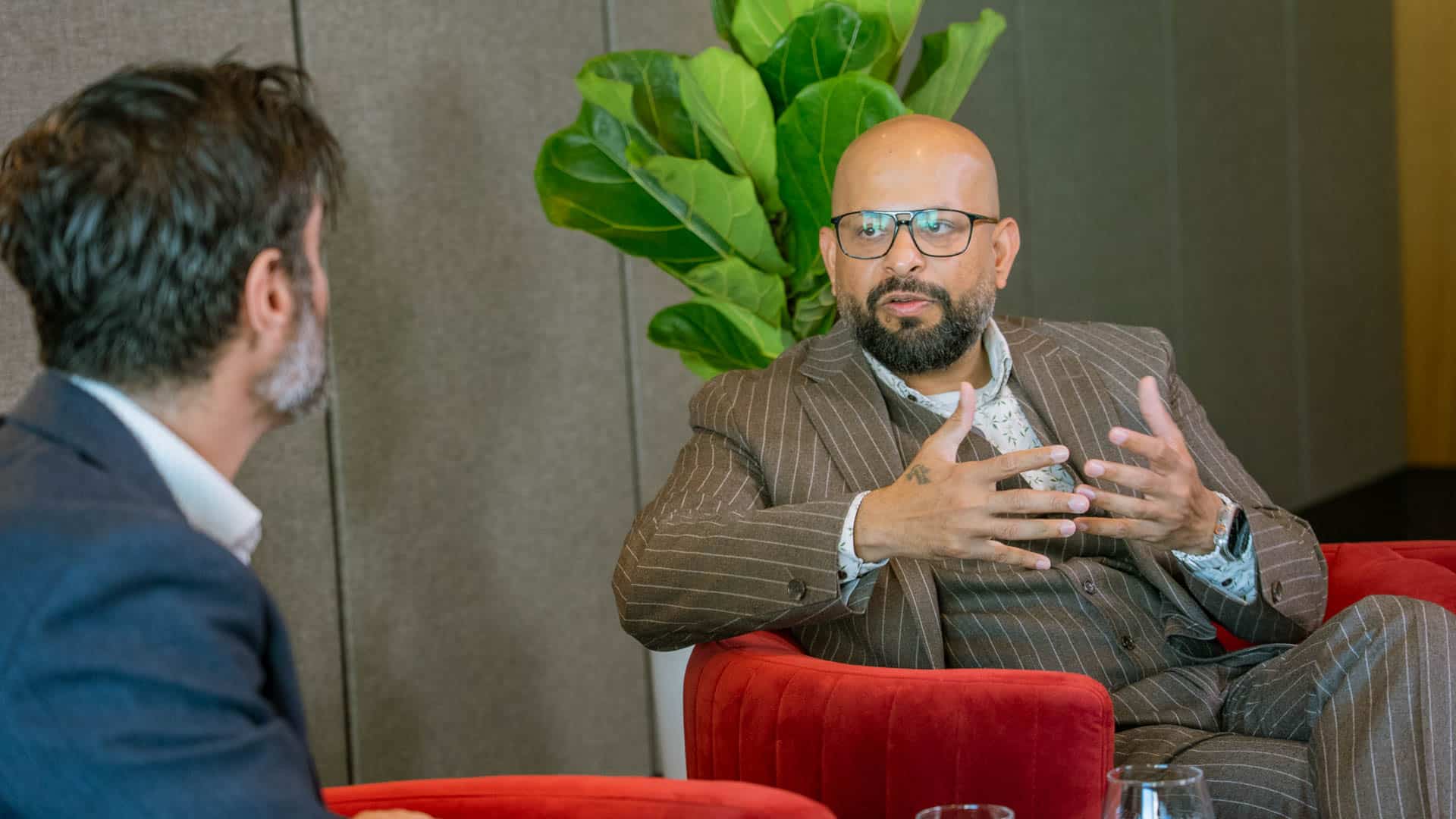
In this ADAPT Insider episode, Village Roadshow’s Keyur Lavingia explains how the business is balancing data, AI use, and customer trust across very different customer journeys.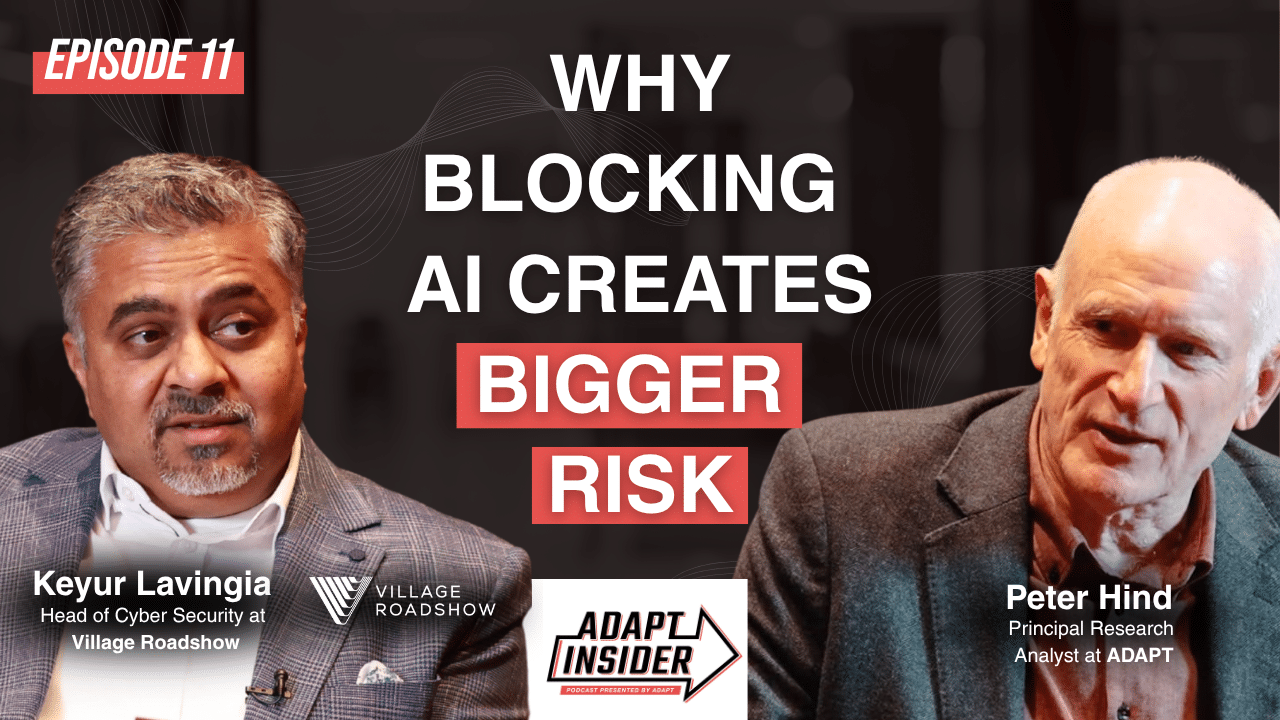


 Published Jul 16, 2026 in
Podcast
Security
Contributors
Keyur Lavingia
Peter Hind
Published Jul 16, 2026 in
Podcast
Security
Contributors
Keyur Lavingia
Peter Hind
Customer experience, data strategy, and resilience do not operate the same way across every business model.
At Village Roadshow, the challenge is sharper because cinemas, theme parks, and film distribution each run on different customer expectations, planning cycles, and technology needs.
Keyur Lavingia, Head of Cyber Security at Village Roadshow, outlined how the organisation is trying to tailor experience and innovation to each part of the business without creating fragmented governance or inconsistent trust.
Listen to the full episode on Apple Podcasts, Spotify, and YouTube.
Key takeaways:
- Tailor digital and operational decisions to each business model without letting governance drift.
- Data-driven personalisation is creating customer value, but it is also making trust and privacy more central to resilience.
- AI adoption is more likely to scale when organisations give employees simple, visible guardrails instead of heavy restrictions.
Different business models create different resilience demands
Village Roadshow operates across businesses with very different customer journeys.
Cinema attendance is often spontaneous, while theme park visits are planned further in advance, with families saving and organising around a bigger commitment.
Film distribution brings another operating model again, with its own systems, partners, and timing pressures.
That changes how transformation has to be approached.
A single digital model cannot be applied evenly across the group.
The task is to adapt data, engagement, and operational decisions to each business without letting governance drift or the customer experience become disjointed.
Personalisation gets more valuable as data responsibility rises
With around 13 million customers each year and roughly 90% of interactions happening digitally, Village Roadshow relies heavily on data to shape customer experience.
That creates obvious opportunities to personalise moments more effectively, whether through loyalty recognition, targeted rewards, or more relevant engagement.
It also raises the stakes on trust.
The more customer data an organisation uses to improve experience, the more carefully it has to handle privacy, consent, and protection.
Trust becomes part of the experience customers have with the brand.
AI adoption works better when guardrails are clear and usable
Village Roadshow’s approach to AI has focused on making adoption easier rather than trying to control every use case upfront.
The view is that AI only creates value when people actually use it, but that wider use still needs boundaries people can understand and follow.
Keyur described an internal AI assessment model built around a traffic light system, green for approved use, amber for limited use, and red for blocked use.
Designed with input from legal, business, and technology teams, the framework gives employees a simple way to understand what is acceptable without forcing them through heavy process each time.
The goal is to let people use AI without exposing sensitive data or creating unnecessary risk.
 Keyur Lavingia
Head of Cyber Security at Village Roadshow
Keyur Lavingia
Head of Cyber Security at Village Roadshow
A passionate technology leader with over 20 years’ experience in strategic and tactical cyber operations, controls implementation and management spanning Identity and Access, IT Risk, Governance, Compliance, and Business Resilience functions and portfolios, delivering to NIST and ISO standards. A valued senior trusted adviser to Executive and Senior leaders across large global organisations. Highly effectively and articulate interpersonal skills. Direct leadership of 16 team members overseeing operational delivery of strategic business outcomes to secure leading global organisations within the telecommunications and tertiary education sectors.
Less Peter Hind
Principal Research Analyst at ADAPT
Peter Hind
Principal Research Analyst at ADAPT
Peter Hind has spent the last 25 years as an analyst and commentator on the ICT industry.
His primary areas of interest are the potential of technology to transform the way organisations operate, the change management obstacles executives encounter in realising this potential, as well as the tactics and techniques leaders have deployed to overcome these difficulties.
Peter now takes on multiple roles within ADAPT including the moderation of private events and roundtables, interviewing business executives about the strategies they are pursuing and assisting with the structuring of delegate surveys.
He also interrogates and analyses ADAPT’s treasure trove of end-user and C-suite data.
Less Join the ADAPT
 Insider Community
Get the latest A/NZ market research and insights on the core trends impacting leaders.
Join the ADAPT Insider Community
Get the latest A/NZ market research and insights on the core trends impacting leaders.