















New security leaders should observe before they intervene, says Bank Australia’s security operations manager
In an interview at Security Edge, Kunal Makwana discusses why effective security leadership requires restraint.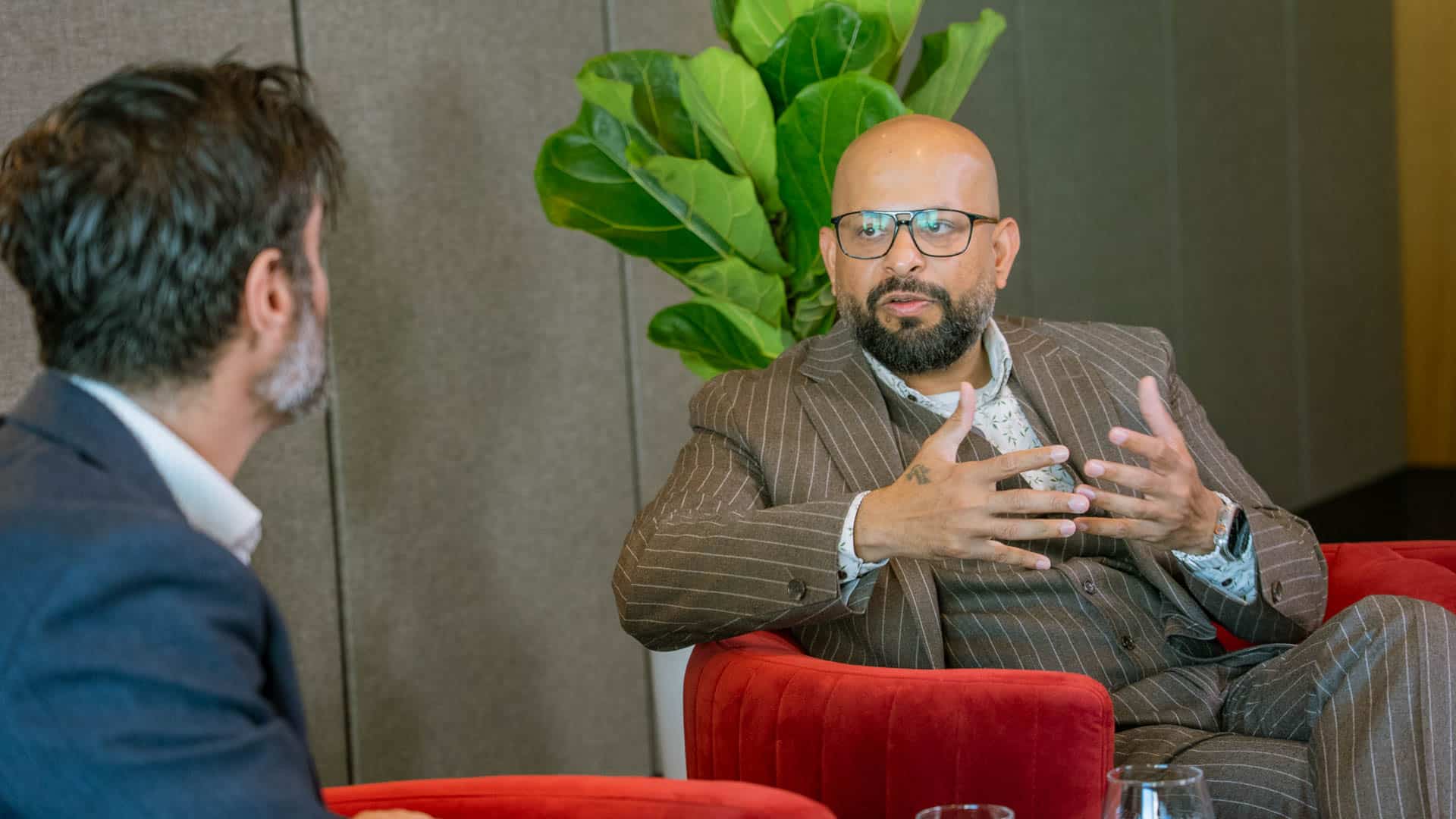


 Published Oct 9, 2026 in
Peer Insights
Security
Contributors
Kunal Makwana
Gabby Fredkin
Published Oct 9, 2026 in
Peer Insights
Security
Contributors
Kunal Makwana
Gabby Fredkin
Arriving with ready-made answers can erode trust before a leader understands how the organisation actually works.
In an interview at Security Edge, Security Operations Manager Kunal Makwana joins ADAPT’s Head of Analytics & Insights Gabby Fredkin to discuss why effective leadership requires restraint.
Listening first helps leaders understand the organisation, make complexity usable and keep accountability with the people making business decisions.
Key takeaways:
- Listen and observe before setting expectations or importing assumptions from a previous organisation.
- Standardisation begins with a shared understanding of how recurring problems should be addressed.
- AI can support decisions and productivity, while accountability remains with the people and business applying it.
Listening earns the right to set priorities
New leaders often arrive with experience, established methods and an early view of what should change.
Those assumptions can obscure how the organisation’s processes, technology, culture and relationships shape the problem.
Similar security challenges may require different responses across different businesses.
Kunal compares joining an organisation to entering a new family.
A leader must understand how people communicate, how decisions are made and where their contribution will be useful before trying to change the dynamic.
That period of observation helps identify the right priorities and prevents people from being treated as extensions of teams from a previous role.
It also builds the credibility required to introduce change later.
Shared understanding makes security repeatable
Standardisation creates value when people agree on the right way to address a recurring problem.
Kunal compares this to knowing where the light switch is.
Everyone understands the direction and expected outcome, even while the supporting process, documentation or technology continues to develop.
This shared understanding matters in security, where fragmented approaches can create duplicated effort, inconsistent controls and blind spots.
Once teams agree on the desired way of working, leaders can determine which people, processes and technologies will make it repeatable across the organisation.
AI can support decisions without owning them
AI creates value when it addresses a defined business problem within agreed boundaries.
Kunal sees a role for targeted, purpose-built models supported by clear governance around sensitive data, access and the actions AI can take.
Trusted advisers can help business teams understand those boundaries and apply the technology appropriately.
The same principle applies when AI supports security operations or wider business decisions.
It can recommend, automate and accelerate activity.
Accountability remains with the people and business acting on its output.
 Kunal Makwana
Security Operations Manager at Bank Australia
Kunal Makwana
Security Operations Manager at Bank Australia
I am a cyber security executive with more than 15 years of experience helping organisations manage cyber risk, strengthen resilience and build high-performing security capabilities across financial services, critical infrastructure and government.
Throughout my career, I have led enterprise cyber security initiatives spanning Security Operations, Incident Response, Threat Intelligence, Detection Engineering, Governance and Regulatory Assurance. My focus is on translating cyber security into practical business outcomes by balancing risk, operational resilience and commercial priorities.
In my current role, I lead QBE’s global Cyber Defence capability across Australia, Europe and North America. I am accountable for cyber security governance, enterprise security controls supporting ISO 27001, regulatory assurance, major incident leadership and the development of security capabilities that improve organisational resilience.
Outside my corporate role, I founded ThirdEye Intel, where I explore the future of cyber security, AI and intelligence-led decision making through independent research, publications and educational content.
I enjoy working with executives, boards and operational teams to solve complex security challenges, build trusted relationships and create security functions that enable organisations to achieve their objectives.
Less Gabby Fredkin
Head of Analytics & Insights at ADAPT
Gabby Fredkin
Head of Analytics & Insights at ADAPT
As the Head of Analytics and Insights at ADAPT, Gabby Fredkin’s primary role is managing analysis to produce ADAPT’s actionable insights to identify trends supporting organisations in Australia.
With a passion for creating stories with data, Gabby is consistently rated as one of the top speakers at ADAPT’s events. In roundtable discussions, he specialises in using statistics to initiate thought-provoking discussions, enabling ADAPT’s customers to become more data-driven.
Using modern data science techniques, he provides ADAPT and its customers with confidence in the accuracy and validity of the information used for ADAPT’s research, advisory and events.
Working across artificial intelligence, machine learning, AI ethics, DevSecOps, end-user behaviour, and human-centred design, Gabby’s vast experience continues to grow, supported in part by a Master of Business Analytics from Deakin University.
Less Join the ADAPT
 Insider Community
Get the latest A/NZ market research and insights on the core trends impacting leaders.
Join the ADAPT Insider Community
Get the latest A/NZ market research and insights on the core trends impacting leaders.