








AI-speed attacks are raising the stakes for OT at scale and governing agents, says Coates’ Cyber Chief
In an interview at Security Edge, Mohamed Omran shares how faster detection, recovery planning and shared ownership strengthen cyber resilience.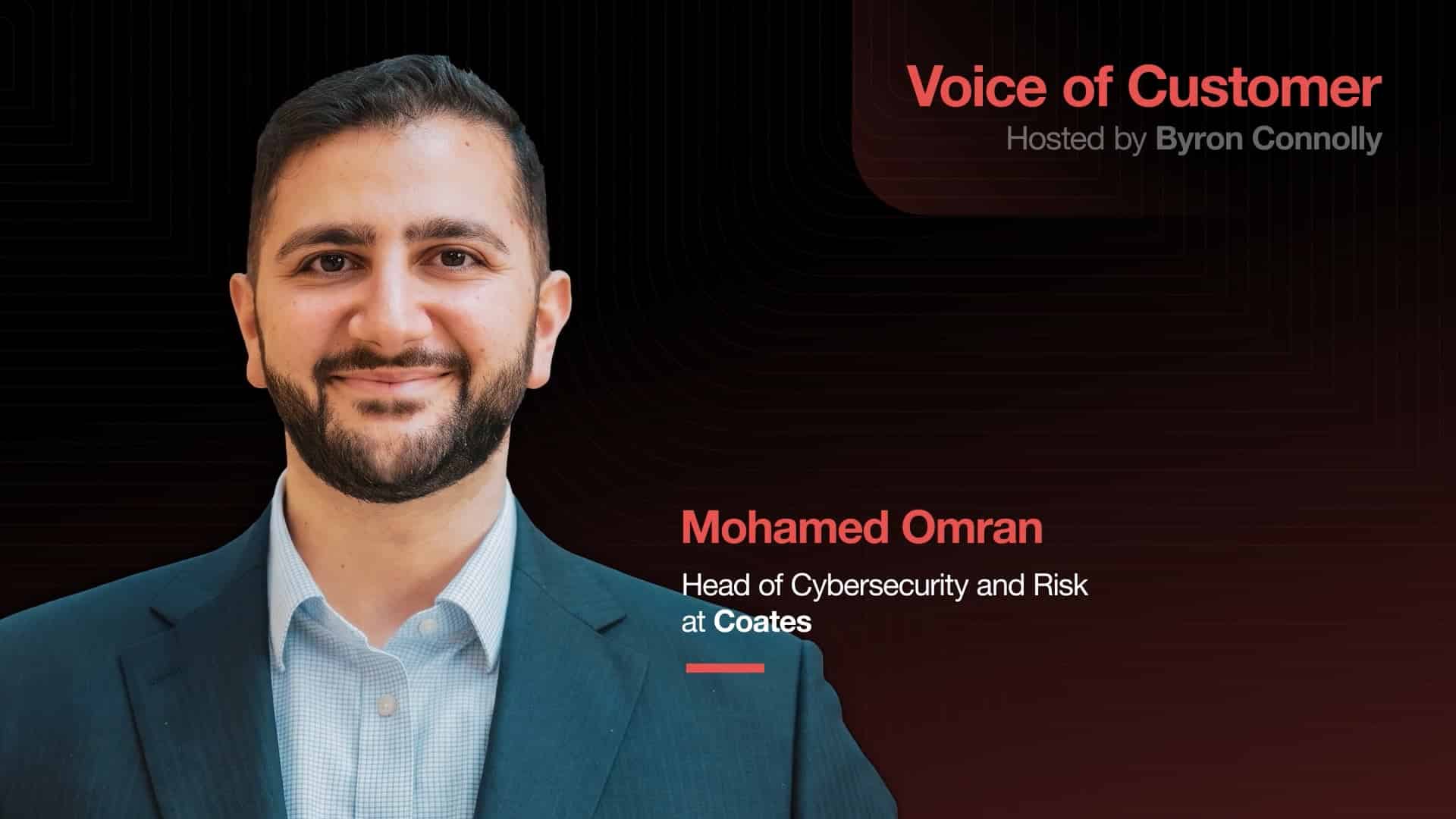


 Published Nov 2, 2026 in
Peer Insights
Security
Contributors
Mohamed Omran
Byron Connolly
Business email compromise and phishing top the list of cyber-attacks targeting general and industrial equipment hire company, Coates.
They are the easiest vectors to exploit in a business that is built on being reachable.
“Coates is a hire company that responds to customers. It needs to be available, it needs to click on emails and respond to tenders of different types”, Mohamed Omran, Head of Cyber Security and Risk at Coates tells ADAPT.
“So, it’s about understanding what the environment is and then helping their business [execs] conduct their business securely.”
That reality shapes Omran’s approach. Rather than pouring budget into an ever-thicker perimeter, he plans for the possibility that an attack will get through.
“It’s not just the controls aspect. It’s not stopping every email and every phishing event that comes through. It’s about the detection, the response and the recovery that you need to plan for”, he says.
Coates has multiple forms of strong authentication and several email detection gateways in place. But Omran’s focuses on what happens if an attacker slips past them: how quickly the team detects the intrusion, locks the attacker out, limits access, and then resolves the incident and learns from it.
The same thinking applies to the second most common threat: attacks on Coates’ external attack surface, including its websites, services and APIs.
“Everybody expects that’s going to be attacked. The correct thing to do is to properly plan for attack, and that planning is to understand what environment or what data is at risk. Then you have resilience against those attacks, just as much as you keep those controls active”, he says.
AI has changed the speed of attack
Omran says both the volume and complexity of attacks have risen sharply, driven in part by AI. The speed and efficiency of attacks are “absolutely insane”, he says. AI has also been democratised, allowing less skilled actors to carry them out.
Where his team once relied on intelligence about specific toolkits and phishing campaigns, now anyone can access a jailbroken model.
Omran notes that a typical conversation with an AI runs at around 20 tokens per second, while attack tooling operates at hundreds or thousands of tokens per second.
“If [an organisation] gets compromised, you’re seeing multiple concurrent actions being taken, whereas previously, it was just one automation script, one person behind a computer poking holes in your infrastructure. So, the pressure to detect and contain at speed is massive”, he says.
That puts enormous pressure on teams to detect and contain attacks, whether they come through phishing, the network perimeter or infrastructure.
Coates is using AI to fight back, though Omran is careful not to over-rely on it.
The payoff is in analysing large volumes of data and correlating patterns far faster than people can.
He credits major security vendors for embedding AI in their tools.
Coates combines custom tools built for its environment with the latest capabilities from its partners.
One practical edge has come from joining vendors’ private previews.
“As an enterprise customer, if you can devote a little bit of time to testing product and giving feedback, you get access to great defence models, just as hackers get access to great attack models. This helps you prepare for the attacks to come in the following months”, he says.
Securing 150 sites and tens of thousands of connected assets
Coates runs a highly distributed business, with around 150 branches across Australia, including some in very remote locations.
Sites open and close depending on where projects and clients are. Information needs to be available because much of it relates to people’s safety.
“People need to know how to operate their machines. They need the manuals, they need the safety data sheets for any chemicals, and they need systems to manage their risk”, Omran says.
Keeping networks consistent across that footprint also means containing problems.
If something happens at one site, it can’t be allowed to spread to the others or bring down shared infrastructure.
Then there’s the operational technology (OT) estate.
Coates has tens of thousands of internet-enabled devices, and customers rely on the data they produce to plan their work.
If a generator or a light is switched on where it shouldn’t be, that can come at a significant cost to the customer, Omran says.
Equipment such as generators and HVAC units sits on customer sites and people physically work with it.
That makes security a safety issue in both a physical and digital sense.
Omran describes OT security as a partnership. Coates secures its perimeter, machines and platforms as far as it can, but relies on manufacturers and platform providers for the telemetry and connectivity that link its devices.
“It’s really about choosing the right partners to build your systems, host your systems and expose these systems to your customers and stakeholders”, he says.
Coates keeps equipment patched and scrutinises its purchasing decisions, while expecting manufacturers to keep firmware current and devices properly connected.
Third-party risk starts with the contract
With a supply chain spanning logistics, asset management and fleet mobilisation, Coates deals with many vendors and integrations.
Omran says managing that exposure is a team effort well before it becomes a cyber problem.
“Before we speak about the cyber component, this is about setting expectations at the contract level, the architecture level and the build level. Making sure that everybody is aware of their responsibilities from a developer to an engineer.
“Whoever is involved in that project and vendor relationship needs to know access methods, how to actually deploy code, how to deploy a solution and who to involve in change management”, he says.
Legal and procurement help set those expectations, while security is involved early in architecture and requirements, he adds.
From there, Coates secures its environment and identities. But Omran is clear that controls won’t prevent every incident.
“It’s almost inevitable that one of your vendors, if not multiple, is going to have a cyber security incident. The question is what you actually do to learn from it.”
He draws on his experience as a motorcyclist.
“If I ever have a near-miss on the road, I can’t always assume it’s the other person’s fault. If I don’t learn something from that incident, I should probably hand in my licence”, he says.
After an incident, Coates works with the vendor to identify shortcomings.
Was the data and access secured properly? Did the controls work? Could it have been detected or prevented sooner?
The process helps Coates build closer, better-vetted relationships with vendors.
Vendors have been receptive, particularly boutique providers.
Omran raises concerns through project and account managers, and says tone matters because Coates relies on its partners to support rapid digital transformation.
“It can’t be, ‘why did you do this, how could you let this happen?’ This can happen to anybody. If you don’t learn properly from that incident, even if you get rid of that third party and someone else comes in, the same mistake is going to happen”, he says.
Governing agents without blocking innovation
AI agents add another layer of exposure. ADAPT’s Security Edge research found only 7% of cyber executives have defined controls and ownership in place to govern agents and non-human identities.
Coates runs a public-facing agent that handles customer enquiries, helping manage the volume of enquiries a business of its size receives.
Omran’s governance starts with the business case, what could go wrong and the impact if it did.
That threat modelling sets the controls and guardrails needed.
Clear risk ownership comes next, along with a human in the loop.
This might mean escalation paths, or other interventions to prevent the agent from making decisions or leaking data that it shouldn’t.
Security is involved in the architecture principles, identity security and testing.
On non-human identities, Omran sees two sides. Coates controls authentication and needs to know where its data lives.
Sometimes, that means telling the business that an AI product will require data governance work first.
“On the other hand, there’s an expectation that the AI platforms will enable you with the right tools to govern your identities properly”, he says.
Everyone is trying to get ahead of the ‘unknown unknowns’, he says, such as a bot saying something the business doesn’t like or pulling in a dangerous package.
With many organisations already questioning whether token costs are matched by ROI, security also has to earn its place.
Extra monitoring adds cost, and not all telemetry is useful, he says.
Security leaders need to be pragmatic and allow people to develop Omran says. Someone who wants to experiment can do so in a sandbox.
Someone releasing an internal tool can commit it through a repository, where the code and packages can be scanned.
“It’s always about saying yes now, but how do we do this securely?” Build that into the cost and ensure that in the event of an incident, you’re resilient. You’ve got those detective controls and you can recover very effectively if something does go wrong.”
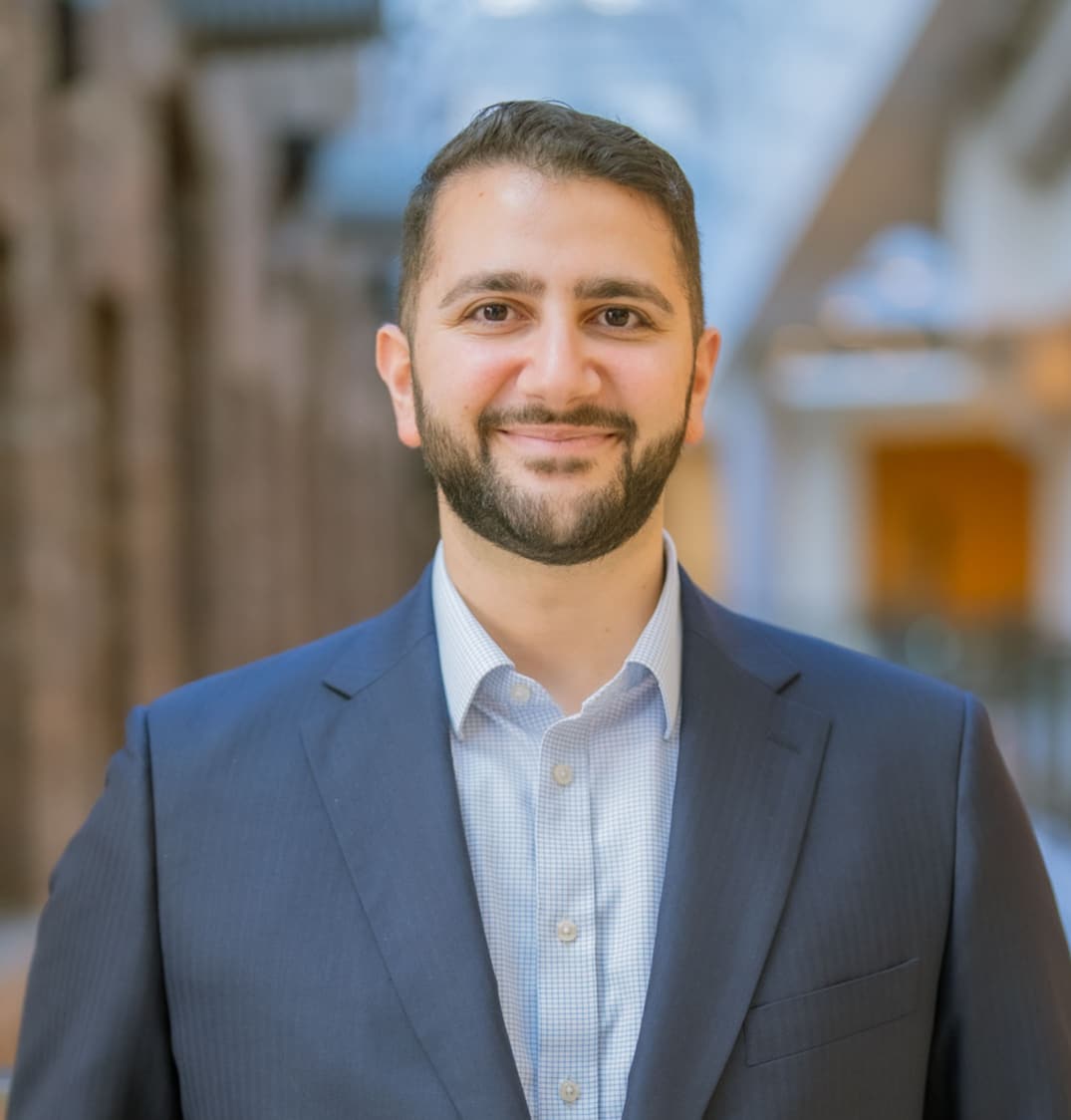 Mohamed Omran
Head of Cybersecurity and Risk at Coates
Mohamed has experience across international consulting, fintech, retail, and large enterprise environments.
A former digital forensics and incident response specialist, he has formally led teams and investigations through some of Australia’s largest ransomware cases. He brings frontline breach leadership into the design and engineering of resilient security and risk functions.
Mohamed focuses on strengthening organisations under pressure, identifying structural weaknesses across governance, controls, and operating models, and stabilising environments after major incidents. His work centres on converting crises into durable uplift: clearer accountability, integrated system design, and response capabilities that hold under real-world stress.
He approaches cybersecurity as a structured enterprise discipline, aligning governance, architecture, and operational readiness into cohesive and defensible operating models.
Less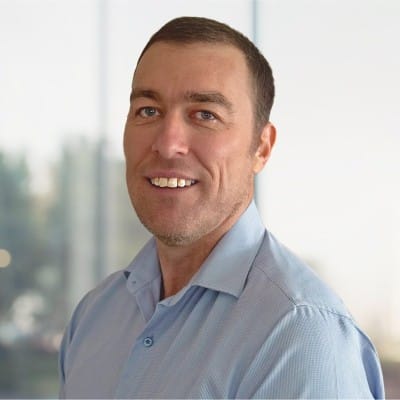 Byron Connolly
Head of Programs & Value Engagement at ADAPT
Byron is a highly experienced technology and business journalist, editor, corporate writer, and event producer.
Prior to joining ADAPT, he was the editor-in-chief at CIO Australia and associate editor at CSO Australia. He also created and led the well-known CIO50 awards program in Australia and The CIO Show podcast.
Byron creates valuable insights for our community of senior technology and business professionals that help them reach their organisational and professional goals. He has a passion for uncovering stories about the careers and personal philosophies of Australia’s top technology and digital executives.
When he is not working, Byron enjoys hot yoga, swimming, running and spending time with his family. He completed the North Face 100km ultra marathon in the NSW Blue Mountains in 2012 and 2013.
Less Join the ADAPT
Insider Community
Get the latest A/NZ market research and insights on the core trends impacting leaders.
Join the ADAPT Insider Community
Get the latest A/NZ market research and insights on the core trends impacting leaders.