












A project can stay on budget while losing value, says Planview’s ANZ Country Head
Planview ANZ Country Head Martin Dubé discusses capital planning, portfolio oversight and investment decisions in the AI economy at CFO Edge.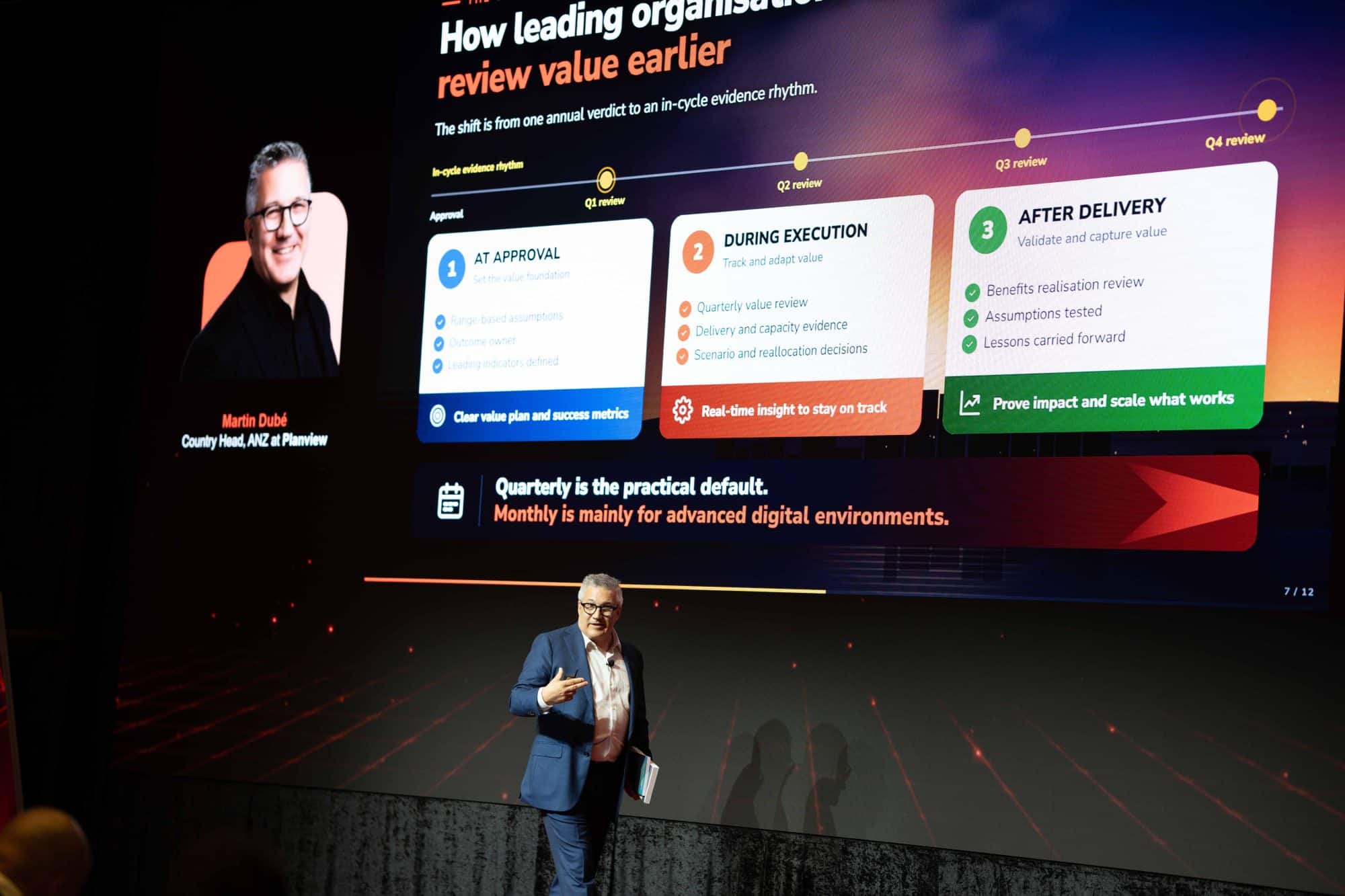


 Published Nov 26, 2026 in
Expert Presentations
Finance
Contributors
Martin Dubé
Between business case approval and project completion, falling adoption, rising costs and delivery delays can go unnoticed when finance and project teams report separately.
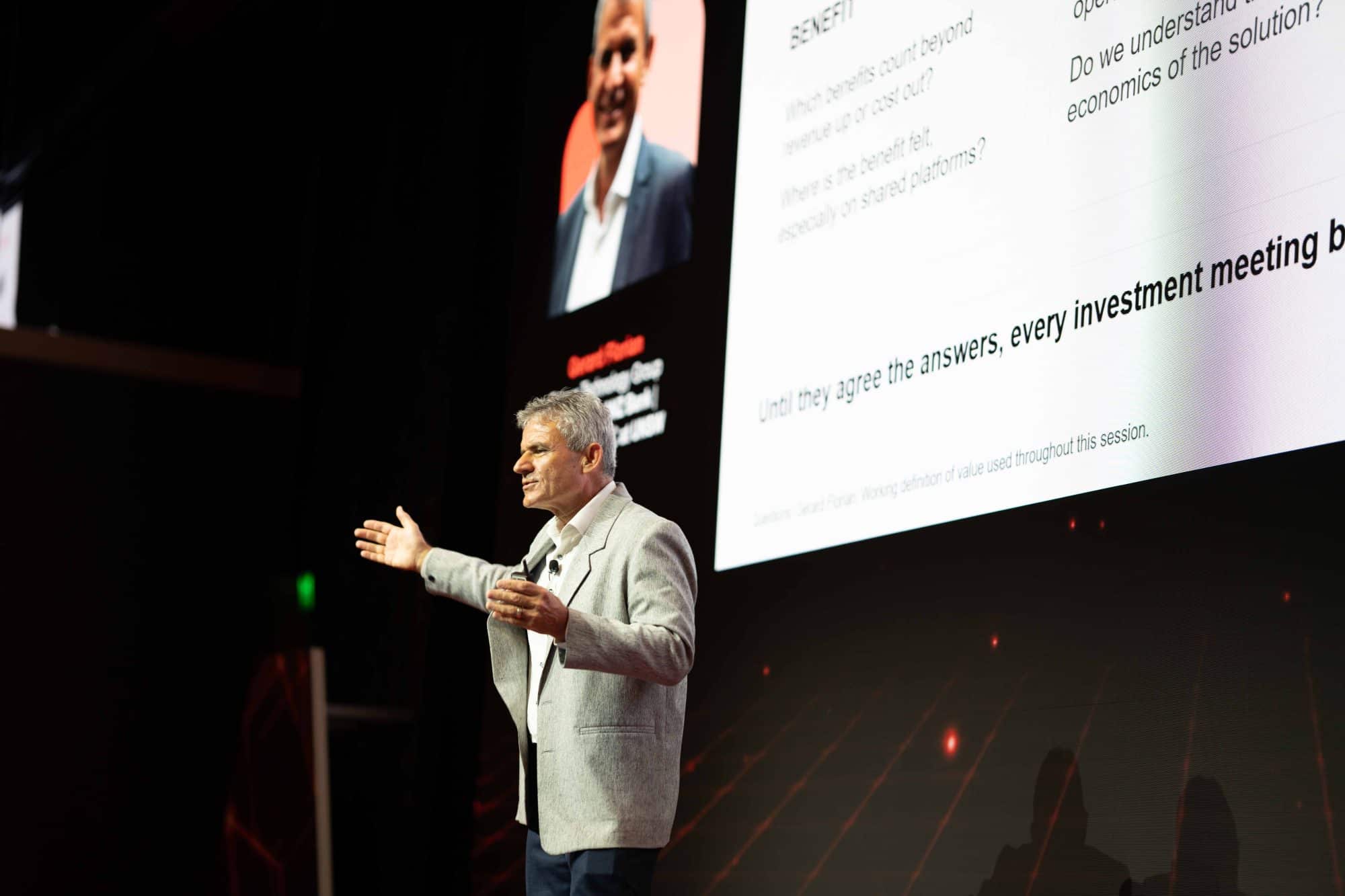
Martin Dubé, Country Head for Australia and New Zealand at Planview, addressed this gap at CFO Edge, outlining how finance leaders can monitor investment performance and intervene while work is still underway.
Key takeaways:
- Connect strategy, project delivery, capacity and outcomes in a shared portfolio view.
- Set investment review cycles according to the speed and risk of each project.
- Use early performance indicators to redirect capital, adjust resources or stop underperforming work.
Investment oversight extends beyond business case approval
Finance, project delivery and business performance information often sit in separate systems, making it difficult to assess whether an investment is delivering its intended outcomes.
A project may be meeting its budget and delivery milestones while adoption is falling or expected benefits are diminishing.
Without visibility across these measures, organisations may continue funding projects that are losing value or cut those delivering important business benefits.
Martin recommends connecting strategy, capacity, delivery and outcomes so finance leaders can assess whether the original investment case still holds.
Fast-moving AI projects warrant more frequent reviews
Investment review cycles should reflect how quickly costs, risks and business assumptions can change.
Martin suggests quarterly reviews may suit some portfolios, while monthly oversight is more appropriate for fast-moving AI projects.
Finance leaders can use these reviews to track running costs, adoption, delivery capacity, cyber security requirements and changes to the assumptions underpinning the business case.
Regular reviews give CFOs time to adjust plans, shift resources or reconsider funding before more value is lost.
Early performance indicators inform capital allocation
Portfolio reporting should give finance leaders enough information to intervene when an investment begins to underperform.
Martin outlines five practices for improving investment oversight:
- Define the intended business outcome.
- Establish leading indicators of performance.
- Connect delivery capacity and project dependencies.
- Review value throughout delivery.
- Adjust investment decisions based on the evidence.
Access to connected information helps CFOs identify where delivery is blocked, which projects warrant additional resources and where capital could be better allocated.
Early intervention gives finance leaders an opportunity to protect investment value while there is still time to change the outcome.
 Martin Dubé
Country Head, ANZ at Planview
Martin Dube is an experienced technology and transformation executive with extensive leadership experience across Asia Pacific and Japan, spanning enterprise software, cloud services, AI and strategic partnerships. As Country Head for ANZ at Planview, he brings a strong focus on aligning technology investment with business value, operational performance and commercial outcomes. His previous leadership roles at Blue Yonder, Microsoft, Oracle and Rackspace include regional revenue responsibility, full P&L accountability and large scale go to market transformation. Martin offers CFOs a valuable perspective on driving profitable growth, optimising enterprise technology investments and translating transformation strategies into measurable business results.
 Join the ADAPT
Insider Community
Get the latest A/NZ market research and insights on the core trends impacting leaders.
Join the ADAPT Insider Community
Get the latest A/NZ market research and insights on the core trends impacting leaders.