



















Legacy Wi Fi cannot carry AI and automation at industrial scale, says Ericsson Enterprise Wireless APAC CTO
In this CIO Edge presentation, Ericsson Enterprise Wireless APAC CTO John Hopping, explains how modern connectivity struggles to meet today’s digital demands.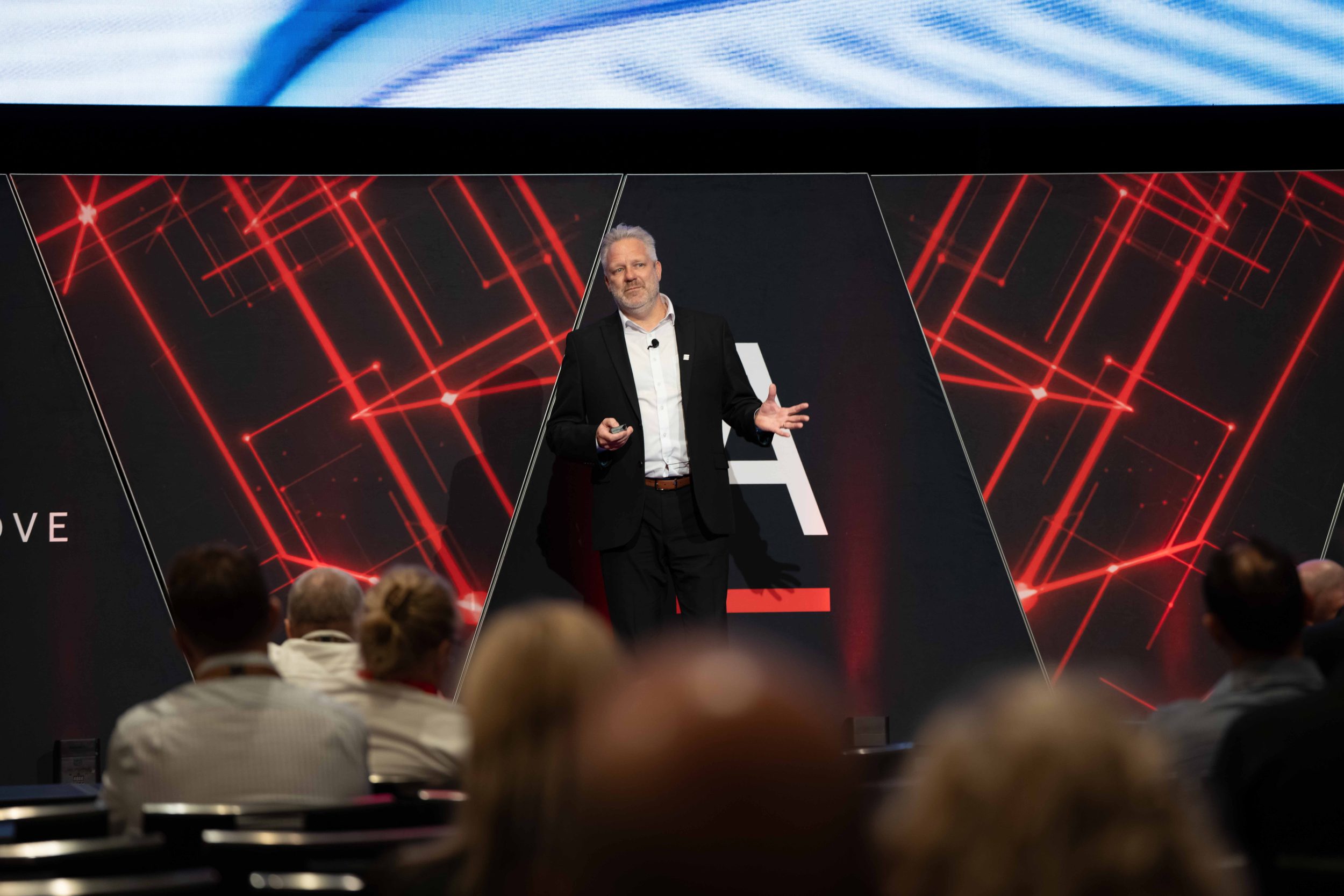


 Published Mar 5, 2026 in
Expert Presentations
Digital Transformation
Contributors
John Hopping
Published Mar 5, 2026 in
Expert Presentations
Digital Transformation
Contributors
John Hopping
Connectivity had become a harder operational constraint as organisations pushed further into AI, automation, and remote operations.
In this CIO Edge presentation, Ericsson Enterprise Wireless APAC CTO John Hopping argued that many existing wireless environments were not built for the coverage, resilience, and control that modern industrial workloads demanded.
For CIOs, the issue is whether the network could support robotics, autonomous equipment, real time decision making, and always on operations without interference, dropouts, or loss of control.
Key takeaways:
- Legacy Wi Fi struggled in mission critical environments where AI, robotics, and remote operations depended on resilient and consistent connectivity.
- Private cellular could materially improve operational performance, as shown by Newmont’s gains in coverage, productivity, and daily material movement.
- AI ready operations needed AI ready networks, with stronger reliability, edge processing capability, and tighter security built into the wireless foundation.
Legacy wireless infrastructure broke under industrial AI and automation demands
John Hopping made clear that traditional Wi Fi struggled in mission critical environments, especially where organisations relied on robotics, automation, and remote machinery. In these settings, connectivity failure was not a minor inconvenience.
It disrupted operations, limited scale, and created risk in environments where reliability mattered most.
He positioned private cellular as a stronger alternative for industries such as mining, ports, logistics, and manufacturing because it offered broader coverage, stronger reliability, and tighter operational control.
As AI adoption shifted from experimentation to continuous deployment and adaptation, that infrastructure question became more urgent. The network had to keep pace with systems that were constantly learning, responding, and operating in the field.
Better connectivity changed operational performance
He illustrated the point through Newmont’s gold mine in New South Wales.
Under its earlier Wi Fi environment, only a limited number of remote controlled dozers could operate, with interference and dropouts constraining performance.
After moving to a private cellular network, coverage expanded from 100 metres to 3,000 metres.
Productivity doubled, and daily material movement increased by 25%.
That example reinforced his broader point that wireless modernisation was not simply a technical upgrade. It changed what operations could support reliably at scale.
He also noted that 44% of Australian organisations were using 5G for AI, while wireless WAN technology could reduce WAN downtime events by 60%.
This makes connectivity architecture a direct enabler of uptime, automation, and AI performance.
AI ready operations needed AI ready networks
John Hopping also outlined how Ericsson was building platforms around this shift.
These included predictive AI for fault detection, generative AI tools, and agentic AI capabilities that supported more automated decision making.
He also highlighted new edge AI hardware designed for real time processing in vehicles and emergency environments, where latency and resilience were critical.
His message was that connectivity strategy now sat much closer to business performance and operational design than many organisations still assumed.
With zero trust adoption reaching 80% in organisations and Ericsson holding 25% of the global enterprise wireless market, he framed enterprise wireless as a strategic foundation for next generation digital operations.
CIOs looking to scale AI and robotics would need infrastructure that was built for reliability, control, and constant responsiveness, not just access.
 John Hopping
CTO APAC at Ericsson Enterprise Wireless
John Hopping
CTO APAC at Ericsson Enterprise Wireless
John Hopping is an accomplished technology leader with nearly 30 years of experience in the IT and telecommunications industry. As Director of Sales Engineering for Enterprise Wireless Solutions at Ericsson, he oversees technical strategy and solution design across the Asia Pacific region, helping enterprise clients unlock the power of advanced wireless networks.
John’s extensive career spans leadership and architectural roles across major global organisations. Serving as served as Principal Architect and CTO for APAC at Ericsson, he has led enterprise network transformation initiatives for nearly eight years. He has also held key technical positions at Optus, BT, Procter & Gamble, and Bristol-Myers Squibb, with a strong background in network design, architecture, and enterprise IT infrastructure across both ANZ and EMEA markets.
Less
Join the ADAPT
Insider Community
Get the latest A/NZ market research and insights on the core trends impacting leaders.
Join the ADAPT
Insider Community
Get the latest A/NZ market research and insights on the core trends impacting leaders.