















Why agentic AI pilots fail in the real world, according to Woolworths Group’s transformation lead
At Digital & AI Edge, Woolworths Group’s Vijayan Seenisamy shares why successful agentic AI programs are managed as ongoing business capabilities rather than technology projects.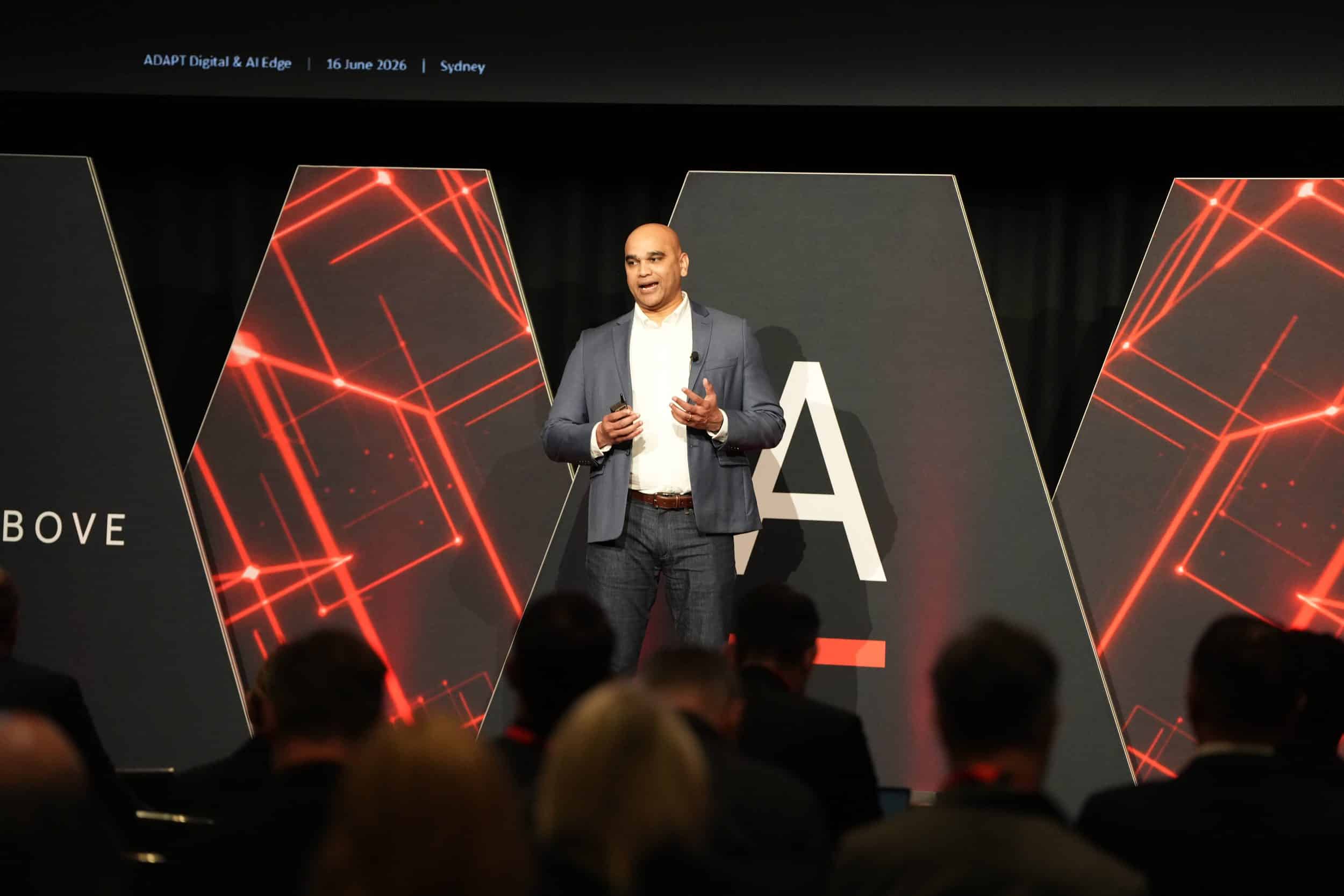


 Published Jun 23, 2026 in
Expert Presentations
Data & AI Strategy
Contributors
Vijayan Seenisamy
Published Jun 23, 2026 in
Expert Presentations
Data & AI Strategy
Contributors
Vijayan Seenisamy
AI pilots often look impressive in controlled environments.
Many struggle once they are exposed to real customers, operational complexity and changing conditions.
At Digital & AI Edge, Woolworths Group’s Group Transformation Lead and Author of The Pilot Trap | Enterprise AI Delivery, Vijayan Seenisamy, explored why many agentic AI initiatives struggle to move from boardroom ambition to business impact. His argument was straightforward: the biggest challenge is rarely building AI.
It is creating the operating model required to run it successfully at scale.
Key takeaways:
- Agentic AI requires operating models designed for probabilistic systems, with clear ownership beyond the build phase.
- Success needs to be measured through end to end outcomes and economics, rather than isolated task performance.
- AI systems require continuous management, monitoring and governance once they enter production.
Agentic AI needs a different operating model
95% of agentic AI initiatives fail because organisations are designed for the wrong type of system.
Most organisations treat AI like traditional software projects, funding, building and deploying them with deterministic assumptions.
Agentic systems behave differently.
They are probabilistic, evolving and inherently unpredictable.
Many organisations are now deploying probabilistic systems using operating models built for deterministic software.
That mismatch helps explain why pilots perform well in controlled environments while production deployments struggle with variability, drift and complexity.
The gap between a successful pilot and a successful production system is often organisational rather than technical.
Successful outcomes matter more than successful tasks
AI systems rarely fail all at once. Value tends to erode gradually through declining reliability, increasing costs and reduced trust.
Unlike traditional software, agentic workflows compound errors as they scale.
Small inaccuracies at each step can produce significantly worse outcomes across an end to end process.
Several common failure patterns emerge:
- Demo God effect: Systems appear highly effective during demonstrations but perform poorly across real customer journeys. A model achieving 92% accuracy across five separate steps can still produce only around 66% end to end success.
- Negative unit economics: AI appears cheaper than human effort during pilots, but retries, escalations and oversight costs can make production deployments more expensive.
- Silent drift: Systems continue to show positive operational metrics while actual business value declines over time.
These dynamics change how organisations need to measure success.
The critical metric becomes cost per successful outcome rather than cost per task.
Without that shift, leaders can easily overestimate the value their AI systems are delivering.
Control towers help organisations manage AI at scale
The organisations creating value from AI treat it as a continuously managed system rather than a one time deployment.
AI requires ongoing coordination, ownership and governance, more akin to air traffic control than project delivery.
Without those mechanisms, systems drift, costs increase and accountability becomes unclear.
Vijayan introduced the concept of a control tower, a function responsible for continuously monitoring value, economics, risk and performance.
Its role is to identify drift before customers experience it, manage interactions between systems and maintain visibility into outcomes over time.
Clear ownership is equally important:
- The CIO or CTO needs to understand whether the system can run reliably
- The CFO needs to understand whether it is creating economic value
- Business leaders need confidence that it is improving customer and operational outcomes.
Without all three, AI initiatives can become orphaned after the pilot phase, with no single function responsible for long term performance.
Agentic AI creates value when organisations can operate it with the same discipline they used to build it.
The businesses that escape the pilot trap will be those that treat AI as a continuously managed capability, with ownership, economics and accountability designed in from the start.
 Vijayan Seenisamy
Author of The Pilot Trap and Founder at Enterprise Agentic AI Delivery Publishing
Vijayan Seenisamy
Author of The Pilot Trap and Founder at Enterprise Agentic AI Delivery Publishing
Vijayan Seenisamy is a transformation leader focused on building the discipline of Enterprise Agentic AI Systems Delivery, the methodology, governance, and role clarity required to move AI agents from pilot to reliable production at enterprise scale. His work is grounded in two proprietary frameworks: AI ROF, which redesigns role accountability so humans and AI agents operate with clear ownership, decision rights, and escalation paths, and ICE, or Intelligence Centred Enterprise, an operating model that treats intelligence as a practice rather than a product, built around the loop of Sense, Reason, Act, Learn.
He is the author of The Pilot Trap which examines why most enterprise AI pilots fail to reach production and identifies the category errors and operating disciplines behind that gap. He also wrote The AI Delivery Manager Blueprint, the first book to define the role between AI engineering and business outcomes. Alongside two white papers on enterprise AI role evolution and intelligence centred operating models, he has introduced concepts such as Agent Coaching, System Stewardship, the Demo God Curse, and Negative Unit Economics.
Vijayan publishes ongoing thinking through The AI Delivery Discipline, a biweekly newsletter read by more than 2,000 senior practitioners, and works as Group Transformation Lead at Woolworths Group, one of Australia’s largest organisations.
Less Join the ADAPT
 Insider Community
Get the latest A/NZ market research and insights on the core trends impacting leaders.
Join the ADAPT Insider Community
Get the latest A/NZ market research and insights on the core trends impacting leaders.