

















What leaders in disrupted industries need to redefine first, according to Southern Cross Media’s Director of Data and Growth
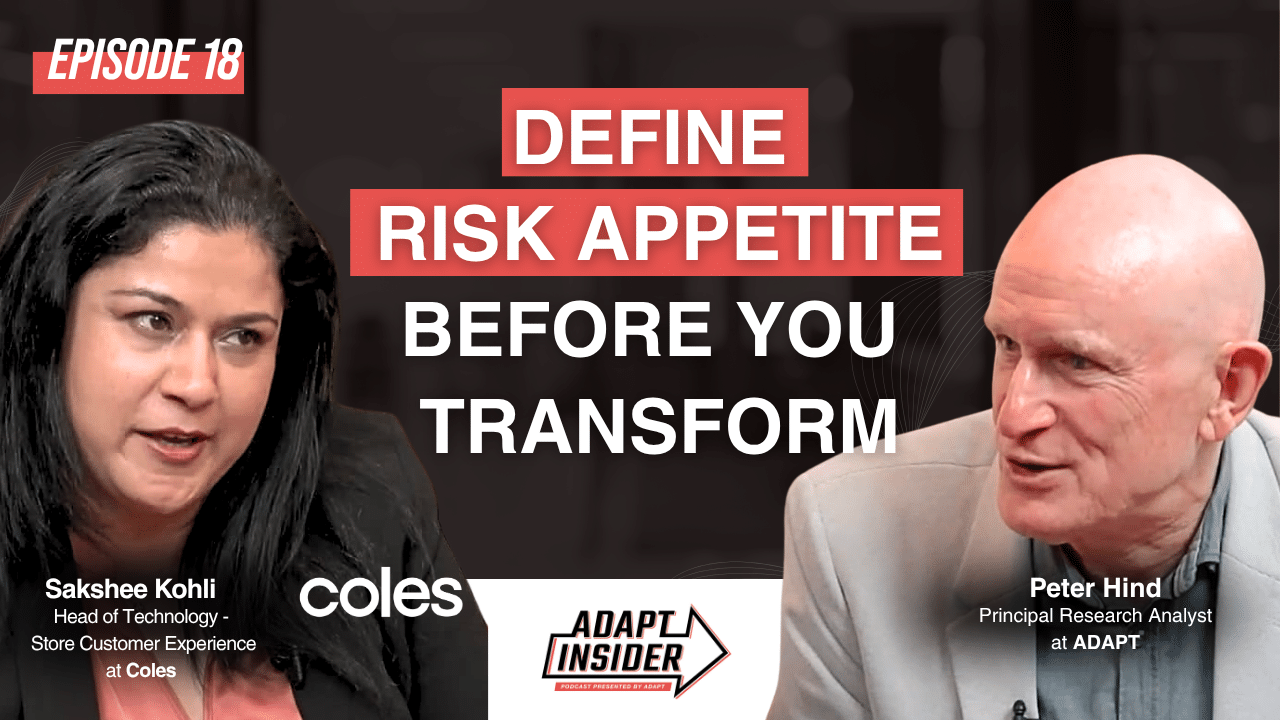
In this ADAPT Insider episode, Andrew Brain shares how leaders in disrupted industries create momentum by expanding where value comes from.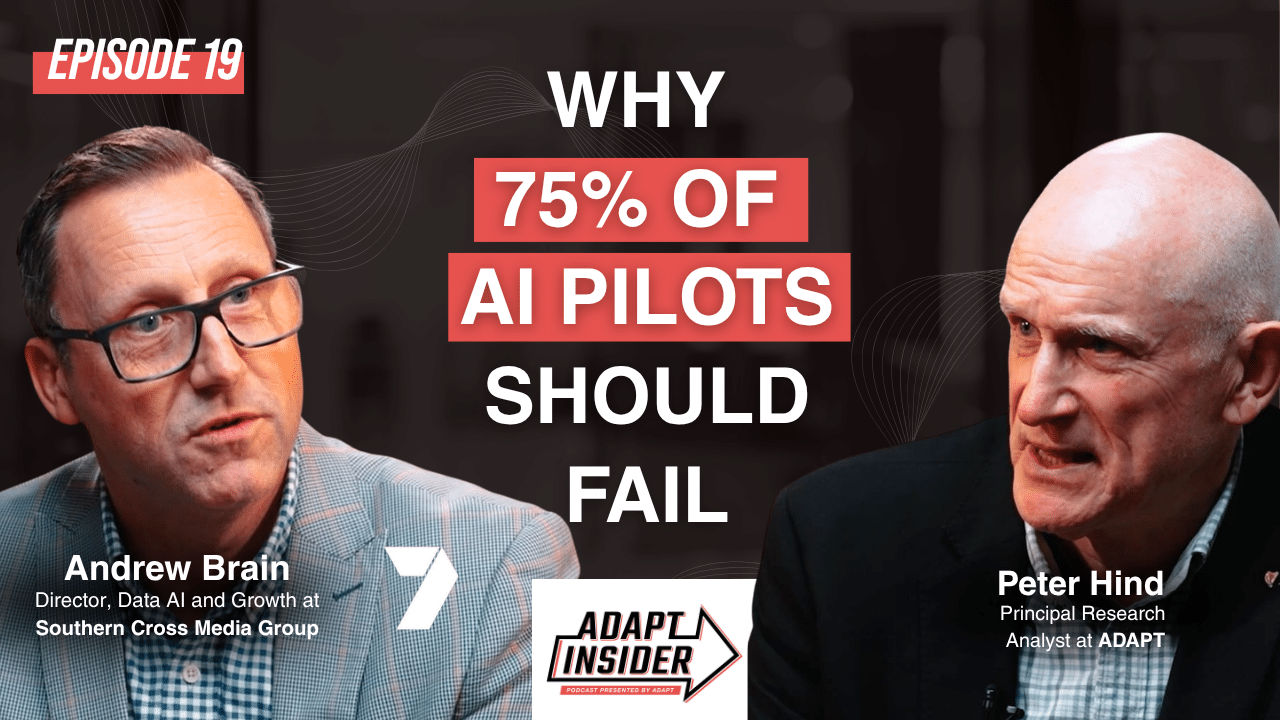


 Published Aug 10, 2026 in
Podcast
Digital Transformation
Contributors
Andrew Brain
Peter Hind
Published Aug 10, 2026 in
Podcast
Digital Transformation
Contributors
Andrew Brain
Peter Hind
Disruption puts pressure on more than revenue. It puts pressure on how people inside the business understand value, relevance, and their own future in it.
In this ADAPT Insider conversation, Andrew Brain, Director of Data and Growth at Southern Cross Media, argues that leadership in disrupted industries starts with helping teams and stakeholders see where the next version of the business can grow, rather than anchoring everything to the part already under pressure.
Listen to the full episode on Apple Podcasts, Spotify, and YouTube.
Key takeaways:
- Leadership in disrupted industries starts with helping teams and stakeholders see where new value can come from.
- Data and AI create more impact when they support forward decisions tied to audience, customer, or revenue outcomes.
- Capability building, sharper priorities, and modern tools help people stay engaged through change.
Disruption changes the conversation leaders have to lead
Andrew’s experience has been shaped by businesses moving through digitisation again and again, from publishing to out of home, audio, and streaming.
A legacy model comes under pressure, people worry about what is being lost, and the business has to decide whether it will defend the old definition of value or broaden it.
In media, that means moving the discussion beyond linear television alone and toward the value of total TV across broadcast and streaming. For teams and stakeholders, that shift creates a more useful frame.
It helps people understand where the business can grow, how new channels support the commercial model, and why the work still matters in a changing market.
Data becomes valuable when it helps shape the next decision
Andrew’s approach to data and AI starts with a simple question: what decision becomes possible when you stop only reporting what happened yesterday?
At Seven, that meant using machine learning to forecast audience behaviour across devices and days ahead, then acting on those signals before audiences dropped away.
That shift changed the value of the data function.
Instead of producing hindsight, the team could help shape programming, re-engagement, audience growth, and advertising outcomes.
The use cases then became easier to prioritise because they were connected to a commercial goal.
For a broadcaster, that meant audience scale and revenue. In other sectors, the shape may differ, but the principle holds. Data matters more when it changes what the business does next.
Capability and focus help people stay with the change
Andrew is also clear that transformation depends on whether people can see the commercial value of their work and build skills that keep them relevant.
That is why his teams were encouraged to challenge work that had no clear business outcome, focus on initiatives that could move the organisation forward, and learn through modern platforms that expanded their own career value.
That matters in disrupted businesses because pressure can easily turn into anxiety or drift.
Clarity around priorities, visible links to commercial outcomes, and investment in better tools all help give people a stronger reason to stay engaged.
In that environment, transformation becomes easier to sustain because it creates both business momentum and individual growth.
 Andrew Brain
Director of Data and Growth at Southern Cross Media
Andrew Brain
Director of Data and Growth at Southern Cross Media
Andrew Brain is a Director, Data & Growth at Southern Cross Media based in Western Australia.
Previously, Andrew was a Growth Director, Audience Development at Seven Network and also held positions at Seven West Media, Australian Radio Network, HT&E, Bauer Media, News Corp Australia, IDG Communications, Future Publishing
Less Peter Hind
Principal Research Analyst at ADAPT
Peter Hind
Principal Research Analyst at ADAPT
Peter Hind has spent the last 25 years as an analyst and commentator on the ICT industry.
His primary areas of interest are the potential of technology to transform the way organisations operate, the change management obstacles executives encounter in realising this potential, as well as the tactics and techniques leaders have deployed to overcome these difficulties.
Peter now takes on multiple roles within ADAPT including the moderation of private events and roundtables, interviewing business executives about the strategies they are pursuing and assisting with the structuring of delegate surveys.
He also interrogates and analyses ADAPT’s treasure trove of end-user and C-suite data.
Less Join the ADAPT
 Insider Community
Get the latest A/NZ market research and insights on the core trends impacting leaders.
Join the ADAPT Insider Community
Get the latest A/NZ market research and insights on the core trends impacting leaders.