














Most AI efforts stall without business alignment, says former Alteryx’s CDAO
In this Data & AI Edge keynote, Alan Jacobson explains why AI adoption breaks down when organisations chase tools ahead of business problems, underinvest in education, and fail to track value over time.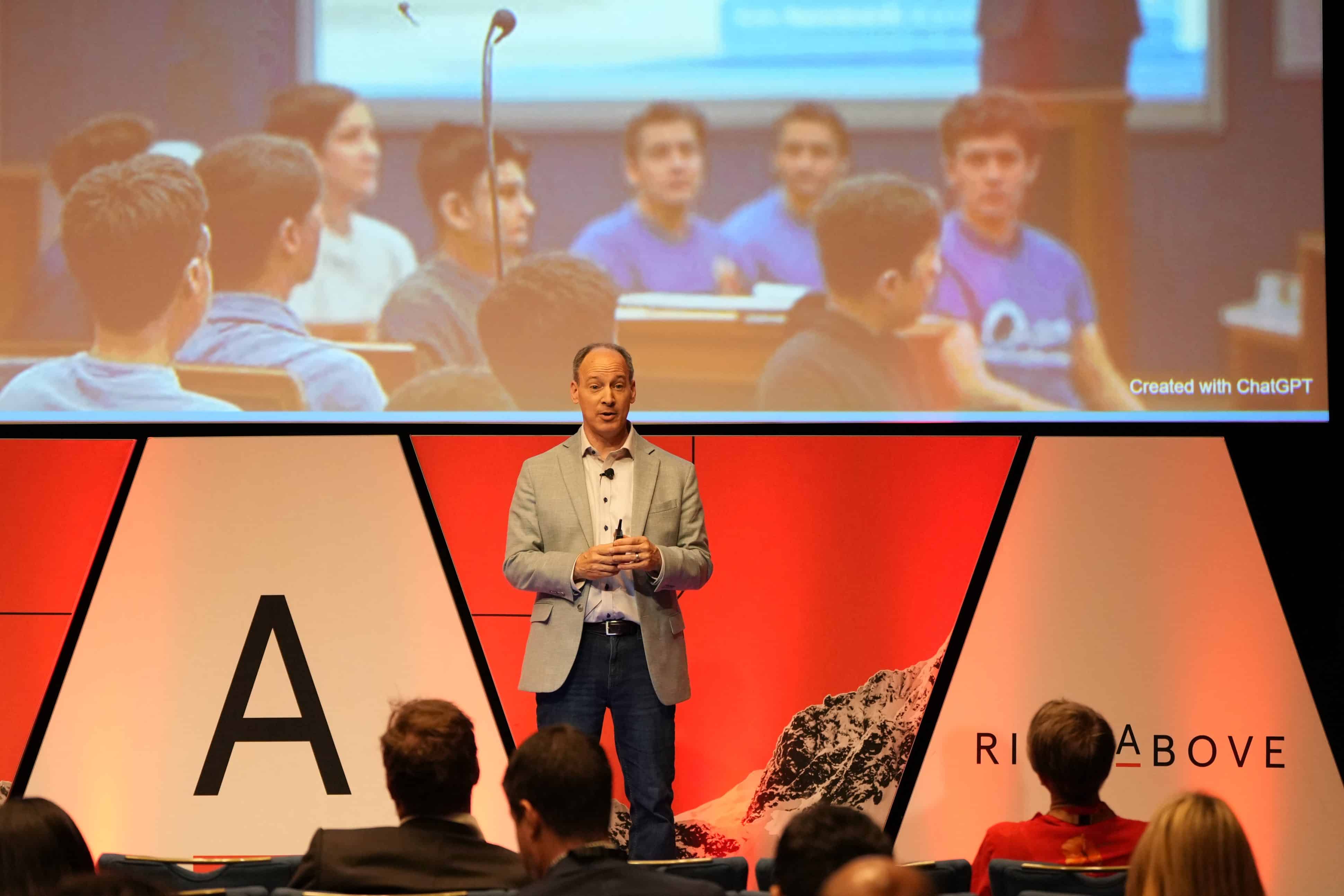


 Published Jun 11, 2025 in
Expert Presentations
Data & AI Strategy
Contributors
Alan Jacobson
Published Jun 11, 2025 in
Expert Presentations
Data & AI Strategy
Contributors
Alan Jacobson
Key takeaways:
- AI success depends on leadership, not just technology: Successful AI initiatives are not about having more data scientists or better tools, but about leadership aligning teams around clear, measurable business outcomes; a point reinforced by the 87% of CIOs who say their AI efforts are still not delivering expected results.
- Proving AI’s long-term value is a major hurdle: 50% of CIOs struggle to measure ongoing AI benefits, and 40% of CFOs believe deployed technologies often fail to deliver expected value, underscoring the need for better ROI tracking and validation frameworks.
- Strategic alignment, not scale, drives success: Only 13% of CIOs consider their AI efforts successful, with winning organisations focusing on aligning AI with business goals and embedding it effectively, rather than relying solely on technical resources or executive ownership.
 Alan Jacobson
Former Chief Data and Analytics Officer at Alteryx
Alan Jacobson
Former Chief Data and Analytics Officer at Alteryx
Formerly the chief data and analytics officer (CDAO) of Alteryx, Alan Jacobson drove key data initiatives and accelerating digital business transformation for the Alteryx global customer base. As CDAO, Jacobson led the company’s data science practice as a best-in-class example of how a company can get maximum leverage out of its data and the insights it contains. He was responsible for data management and governance, product and internal data, and use of the Alteryx Platform to drive continued growth.
Prior to joining Alteryx, Alan held a variety of leadership roles at Ford Motor Company across engineering, marketing, sales and new business development; most recently leading a team of data scientists to drive digital transformation across the enterprise. As an Alteryx evangelist at Ford, Alan spent many years leveraging the Alteryx Platform across the company and witnessed first-hand the impact a culture of analytics can have on the bottom line and what it takes to succeed as a data-driven enterprise. Alan will extend his role as an evangelist to customers, helping data workers and business leaders alike foster a culture of analytics and deepen their investments in digital transformation strategies.
Alan was recognized as a top leader in the global automotive industry as an Automotive Hall of Fame Leadership & Excellence award winner and an Outstanding Engineer of the Year by the Engineering Society of Detroit and works with the National Academy of Engineering and other organizations as an advisor on data science topics.
Alan earned his bachelor’s degrees in engineering from the University of New Hampshire and received his master’s degree in mechanical engineering from Virginia Tech.
Less Join the ADAPT
 Insider Community
Get the latest A/NZ market research and insights on the core trends impacting leaders.
Join the ADAPT Insider Community
Get the latest A/NZ market research and insights on the core trends impacting leaders.