



Agenda

Tuesday, 21 July 2026

“Redesigning Infrastructure for AI & Rebalancing the Cloud”

Please note that 1:1 meetings will be running throughout the day.

07:45 - 08:30

Registration & Check-In

Jim Berry

CEO & Founder

About

Jim founded ADAPT with a vision to help Australia thrive commercially, now and for the future.  To enable that, Jim leads ADAPT’s mission to connect, inform and equip our local business and tech leaders.

Leading the development of ADAPTs agenda’s and content strategy whilst also advising executive leadership teams from global technology service providers, Jim is uniquely experienced to be the voice of the end-user, the customer and the vendor.

Bringing his deep knowledge of the local market, Jim regularly presents “Know your Customer” webinars and guides the world’s largest vendors with their G-T-M and content strategies.

Through entrepreneurial product development and a servant leader mentality with his team and clients, ADAPT grows annually with clearly differentiated value for all stakeholders.

08:30 - 08:50

Welcome to the 14th Cloud & Infrastructure Edge: "Redesigning Infrastructure for AI & Rebalancing the Cloud"

Jim Berry - CEO & Founder Read More

Many organisations are still operating infrastructure designed for a pre-AI world – not for sustained, high-density, intelligent workloads.

AI is now forcing a shift. Compute demand is rising, architectures are being redesigned, and decisions about where workloads run are becoming strategic.

ADAPT’s local research shows this clearly: a new infrastructure investment cycle is underway, with growing pressure on capacity, cost, and operating models.

We kick off Cloud & Infrastructure Edge with Australia’s infrastructure leaders to navigate this shift – rebalancing cloud, scaling AI-ready platforms, and securing the foundations for AI at scale.

Gabby Fredkin

Head of Analytics & Insights at ADAPT

About

Gabby’s primary role is managing ADAPT’s overall strategy for Data Analytics. He has extensive experience in using data to identify trends in technology that help shape Australian organisations. Utilising modern Data Science techniques, he provides ADAPT and their customers with confidence in the accuracy and validity of the information used for ADAPT’s Research, Advisory, and Events.​

With a passion for creating stories with data, Gabby is consistently rated as one of the top speakers at ADAPT Events. In round table discussions, he specialises in using statistics to initiate thought-provoking discussions. Gabby is effective in translating information into insights, enabling ADAPT’s customers to become more data-driven.​

Gabby’s primary areas of expertise are: ​

  • Advanced AI and ML practices, including AI ethics.​
  • Building models to benchmark and predict IT performance.​
  • End-user behaviour and human-centred design.​
  • Cross-functional team design and value, such as DevSecOps.​
08:50 - 09:10

ADAPT Insights: The State of AI & Digital Infrastructure in A/NZ

Gabby Fredkin - Head of Analytics & Insights at ADAPT Read More

ADAPT’s Research and Advisory team reveal the latest data-driven insights from senior Cloud and Infrastructure leaders across Australia, representing organisations responsible for a significant share of national economic activity.

Drawing on aggregated pre-event survey data, this session benchmarks how organisations are responding to AI-driven infrastructure demand — and where the next wave of enterprise compute will be deployed.

Key insights include:

– Where the next wave of compute will sit: cloud, hybrid, colocation, or private infrastructure
– The extent to which AI is driving infrastructure redesign and new investment cycles
– Where AI workloads are being deployed and how GPU strategies are evolving
– The key constraints to scaling infrastructure: power, capacity, integration, and cost
– How AI readiness varies across organisations and where gaps remain
– The impact of sovereignty and data residency on AI and infrastructure decisions

Helping you benchmark your position and validate your strategy, ADAPT distils the most important signals from the community — highlighting what’s changing, what’s working, and where leaders are focusing next.

Shannon Barry

Senior Community Success Manager at ADAPT

About
09:10 - 09:15

Get an Edge: Making the Most of Your Day

Shannon Barry - Senior Community Success Manager at ADAPT Read More

Dean Nelson

Founder and Chairman at Infrastructure Masons

About

Dean Nelson is the Founder and Chairman of Infrastructure Masons, an independent industry group of executive and technology professionals entrusted with building and operating the physical and logical structures of the Digital Age.

Dean has led $10B in infrastructure projects in 9 countries. His extensive architecture, engineering and operations experience includes 29 years in Hardware, 22 years in Network, 17 years in Infrastructure Software and 17 years in Data Centers. He has produced numerous award winning innovations in mission critical facilities and compute environments. He also holds four US patents.

Until 2019, Dean was Head of Uber Compute, at Uber. His team is responsible for Metal as a Service (MaaS) technical infrastructure (data center, compute, storage, network and infrastructure software) and business functions serving Uber’s global leading ridesharing business, as well as UberEatsUberFreightUberHealthUberForBusiness, and Autonomous vehicle and UberAir development.

Prior to Uber, Dean worked at Ebay Inc for 6 ½ years as the Vice President of Global Foundation Services, which served over 300 million active users enabling over $250Bn of enabled commerce volume annually. At end of his tenure at ebay, his team successfully integrated, then split ebay and paypal infrastructures into two independent internet companies. Prior to ebay, Dean worked at Sun Microsystems for 17 years in various technical, management and executive leadership roles in Manufacturing, Engineering, IT and Real Estate. His final project was the consolidation of Sun’s multi-billion dollar global technical infrastructure portfolio of over 1,000 facilities.

Dean is creator of the Digital Service Efficiency methodology, the first miles per gallon measurement for technical infrastructure, used to measure ebay.com as a single system. He served as the Chair of the Technology Business Management Council High Tech Workgroup, and Chairman & Founder of Data Center Pulse in 2009 – an exclusive datacenter owner community with over 9,000 members in 100 countries. In 2016, Dean founded Infrastructure Masons, an industry association where infrastructure professionals connect, grow and give back. Dean was identified by SearchDatacenter.com as one of the top five people who changed the data center. Dean is also the recipient of Sun’s prestigious Innovation AwardModular DC Deployment award and Best DC Design award from Uptime Institute as well as the Operational Excellence and Infrastructure Trailblazer awards from The TBM Council and Outstanding Contributions to the Data Center Industry award from Data Center Dynamics.

In his personal time he gives back by building schools and dorms providing access to education for impoverished children through his Mother and Son Just Let Me Learn Foundation. He also enjoys spending time with his wife and performing with his daughter.

09:15 - 09:55

The Elements and Pressure on Australia's Digital Ecosystem

Dean Nelson - Founder and Chairman at Infrastructure Masons Read More

Unprecedented AI investment doubled global capacity to 376GW. Dean Nelson unpacks the 2026 iMasons report to navigate Australia’s 30GW pipeline and five critical delivery pressures.

– Navigating the Five Ps crisis: balancing power, pushback, people, planet, and policy.
– Reconciling exponential compute demand with the social accord needed to unlock infrastructure.
– Designing grid-responsive AI data centres capable of pausing workloads to balance supply.
– Will the shift from costly LLMs to secure edge SLMs drive repatriation?
– Charting the next steps for Australia to secure its sovereign AI future.

Flying in from California, Dean Nelson is a respected digital infrastructure pioneer and Founder and Chairman of Infrastructure Masons, the independent industry group for leaders building and operating the Digital Age. He has led more than $10 billion in infrastructure projects across nine countries and holds four US patents. Dean previously led Uber Compute, powering the infrastructure behind Uber’s global platforms, and earlier served as Vice President of Global Foundation Services at eBay, enabling scale and commerce. A former Sun Microsystems executive, award-winning innovator and data centre trailblazer, Dean continues to shape the future of sustainable, mission-critical technology.

09:55 - 10:25

Strategic Insights from Oracle

Thought Leader at Oracle

Read More
10:25 - 10:45

Morning Break

Refreshments, Snacks & Connections

Simon Davies

GM of Core Banking at Commonwealth Bank

About

I lead the team accountable for Australia’s largest core banking estate — evolving it without compromising stability at national scale.

As GM of Core Banking at Commonwealth Bank, I’m responsible for the systems that move billions of dollars and power millions of customer interactions every day. My focus is simple: evolve mission-critical platforms so they are faster, more resilient, and designed for adaptability.

Over the past few years, that has meant leading the large-scale cloud migration and evolution of a core banking environment that most organisations would consider untouchable. We’ve delivered significant performance uplift across both online and batch workloads, aggressively minimised recovery times, strengthened availability, and opened the core to enable richer customer experiences — all while continuing to operate at national scale.

What I’ve learned:

• There is no silver bullet core
• Cloud doesn’t fix culture
• Architecture is an operating model decision
• Momentum beats perfection

The real work of transformation isn’t just technical. It’s aligning architecture, engineering discipline, governance, and the cultural operating system so that progress becomes repeatable — not heroic.

I write and speak about:

• How to evolve a core without destabilising the bank
• Engineering discipline at enterprise scale
• Turning strategy into shipped outcomes
• Bias for action in large organisations
• Designing a lean core that enables innovation at the edge

If you’re working on hard, high-stakes transformation — especially inside a large institution — that’s the conversation I’m interested in.

10:45 - 11:15

Inside CBA’s Core Migration

Simon Davies - GM of Core Banking at Commonwealth Bank Read More

Simon Davies unpacks CBA’s historic AWS core migration, revealing how moving systemic national liquidity unlocked the foundation for 55 million daily AI decisions.

– What it took to move 40% of national liquidity safely.
– How unlocking 90% of data powers 55 million daily AI decisions.
– Evolving cloud foundations to support enterprise-wide generative AI and agentic workloads.
– What’s next?

Farokh Ghadially

VP of Datacentres and IT Business

About

Farokh Ghadially is the Vice President of Secure Power for the Pacific region at Schneider Electric, bringing over two decades of global experience across energy management, data centre infrastructure, and digital power solutions. Based in Australia, he has held multiple senior leadership roles within Schneider Electric, driving innovation and growth across partner ecosystems and critical infrastructure segments. With a strong background in electrical engineering and executive leadership training from INSEAD, Farokh is recognised for his strategic focus on the convergence of digitalisation, electrification, and sustainability. He is passionate about enabling resilient, energy-efficient infrastructure and building high-performing, customer-centric teams in an increasingly digital and AI-driven world.

11:15 - 11:35

AI Density vs Grid Limits: Architecting Sustainable Hybrid Infrastructure

Farokh Ghadially - VP of Datacentres and IT Business Read More

As agentic and GenAI token usage multiplies energy consumption, discover how to confidently scale secure, modular, and sustainable hybrid IT infrastructure.

– Offset massive energy spikes from agentic and GenAI workloads using sustainable designs.
– Deploy modular, AI-ready infrastructure to scale capacity without compromising grid resilience.
– Secure sensitive workloads while deploying generative tools to optimise carbon emissions.

11:35 - 11:55

Australia’s AI Factory: What the Neocloud Era Means for Enterprise Infrastructure

Thought Leader at Sharaon AI

Read More
AI is forcing a new infrastructure opportunity. For business and infrastructure leaders, the question is no longer whether AI matters – it is what performance, sovereignty, transformation and ROI is needed to run it at scale.
– Why the Neocloud was born to solve legacy infrastructure’s AI bottlenecks.
– Accessing sovereign, high-performance compute available to Australian enterprises right now.
– Transforming infrastructure strategies to drive measurable ROI from scaled AI workloads.
12:00 - 13:00

ADAPT Executive Insight Roundtables

Attend your pre-selected roundtable to participate in a peer discussion with confidence under Chatham House Rules moderated by an ADAPT analyst with subject matter experts.

Roundtable 1

Insights from Oracle

A boardroom session moderated by an ADAPT Analyst with Oracle and your peers

Read More

Sean Huntley

Executive AI Architect, Cloud Transformation Office, APJ at Broadcom

About

As Broadcom’s Executive AI Architect for APJ, Sean partners with CTOs, Infrastructure Leaders, and Application Teams to translate AI strategy into production systems for Global Fortune 500 companies and large Government Agencies. Through deep, hands-on engagements with customers, he helps define roadmaps, de-risk adoption, add governance, and scale Private AI Services. With almost a decade in IT and 4 years in R&D on Private AI, he brings a sharp understanding of enterprise infrastructure, developer workflows, and execution at scale. Named on more than 20 patents, Sean provides pragmatic guidance on adopting and optimizing AI infrastructure and applications. 

Roundtable 2

Building the Foundation for Agentic AI: Architecting AI-Ready Cloud Platforms

A boardroom session moderated by an ADAPT Analyst with Sean Huntley – Executive AI Architect, Cloud Transformation Office, APJ at Broadcom and your peers

Read More

The shift toward Agentic AI requires more than just raw GPU power; it requires a resilient, high-performance architectural layer. Join VMware by Broadcom to discuss how to harmonise traditional systems with next-gen AI workloads. We’ll explore the infrastructure shifts necessary for GPU orchestration, high-performance storage, and the deployment of autonomous systems within a secure, sovereign environment.

Andrew Sjoquist

Founder & CEO at WinDC

About

Andrew Sjoquist is a technology entrepreneur with more than 25 years of experience building and scaling companies across cloud, connectivity, cybersecurity and digital infrastructure. Throughout his career he has focused on solving complex infrastructure challenges at the intersection of technology, energy and connectivity. 

As Founder and CEO of WinDC.ai, Andrew is pioneering a new model for AI infrastructure by bringing high-density compute directly to renewable energy generation sites. WinDC.ai develops modular AI data centres designed to convert surplus clean energy into scalable AI compute, helping address the growing global demand for compute while reducing grid constraints. 

Andrew is passionate about enabling the next generation of sustainable digital infrastructure and accelerating the convergence of AI, energy and hyperscale computing. 

Roundtable 3

From Constrained to Competitive: Rethinking AI Infrastructure

A boardroom session moderated by an ADAPT Analyst with Andrew Sjoquist – Founder & CEO at WinDC and your peers

Read More

Enterprise AI plans often assume power, land and build times will keep pace with ambition. This roundtable examines where those constraints are already limiting delivery, and how a faster, distributed model changes what’s actually possible.

– Where power availability is already shaping AI infrastructure decisions.
– When traditional data centre build times become a blocker to ambition.
– How energy access and cost are changing the economics of AI workloads.
– What a distributed, renewable-powered model unlocks in 90 days.
– Which workloads still need to stay central, and which do not.

Roundtable 4

Insights from NEXTDC

A boardroom session moderated by an ADAPT Analyst with NEXTDC and your peers

Read More
13:00 - 13:55

Peer Networking Seated Lunch

13:55 - 14:55

ADAPT Executive Insight Roundtables

Attend your pre-selected roundtable to participate in a peer discussion with confidence under Chatham House Rules moderated by an ADAPT analyst with subject matter experts.

Roundtable 5

Redesigning Infrastructure: Balancing Cloud Economics and AI Governance

A boardroom session moderated by an ADAPT Analyst with Island and your peers

Read More

How must infrastructure leaders redesign their strategies in the advent of AI to balance hyperscale economics with secure, governed access to hybrid workloads?

– Balancing hyperscale and sovereign clouds to optimise AI workload economics.
– Designing adaptable access architectures to securely scale enterprise AI workflows.
– Maintaining essential visibility and data governance without throttling workforce productivity.

Roundtable 6

The Hidden Cost of Tool Sprawl: Simplifying IT Without Losing Capability

A boardroom session moderated by an ADAPT Analyst with NinjaOne and your peers

Read More

Over time, most organisations accumulate overlapping tools that add cost, complexity, and operational friction. This discussion will show how IT leaders are evaluating their current toolsets, identifying duplication, and simplifying their environments while still meeting security, compliance, and operational needs.

During lunch, we shall discuss:

– How did your current toolset evolve, and where do you think complexity has crept in the most?
– How are data sovereignty or residency requirements influencing your tooling decisions?
– Where do overlapping tools create the most friction: cost, visibility, operational effort, or user experience?
– What has stopped you from simplifying so far: risk, internal politics, contract lock-in, or lack of clear ownership?
– How are you measuring the value of each tool today, beyond “we already have it”?
– If you were starting from scratch today, what principles would guide your tooling decisions?

Logan Fraser

Principal Solutions Consultant at Apptio

About

Ed Chung

FinOps Platform Lead at Cloudec

About

Edbert Chung is a FinOps and cloud optimisation specialist with deep expertise in IT financial management, cloud economics, and technology investment strategy. As Presales and FinOps Platform Lead at Cloudec, he helps organisations better understand, govern, and optimise cloud spend to maximise business value. 

With a strong background in technical consulting and solution engineering, Edbert has worked closely with enterprise technology leaders across APAC to navigate cloud cost management, Technology Business Management (TBM), and FinOps best practices. He brings hands-on experience in translating complex technical and financial challenges into practical, measurable outcomes. 

Passionate about helping organisations modernise with confidence, Edbert combines technical depth with commercial insight to support smarter cloud and infrastructure decision-making. 

Roundtable 7

Strategies for Mastering Cloud Cost Allocation with FinOps

A boardroom session moderated by an ADAPT Analyst with Logan Fraser – Principal Solutions Consultant at Apptio, Ed Chung – FinOps Platform Lead at Cloudec and your peers

Read More

Public cloud adoption continues to surge across every industry, making effective cost allocation essential for achieving financial transparency and understanding total cost of ownership (TCO). Yet accurately distributing cloud costs remains complex spanning multiple providers, containerised environments, support charges, and an expanding ecosystem of third-party solutions. Against the backdrop of economic pressure, rising inflation, and ongoing supply chain disruption, the need to optimise cloud economics and control spend has never been greater.

Many stakeholders struggle to access and interpret the cloud cost data that matters to them. Without clear visibility and accountability, costs can escalate quickly, making it difficult to link technology investments to real business outcomes. Cost allocation alone isn’t enough. Organisations must empower teams and individuals with the insights they need to take ownership of their cloud spend, influence behaviour, and drive accountability.

In this session, you’ll learn how to:
– Enable team ownership of cloud spend through flexible, role-specific reporting and analytics
– Help stakeholders clearly connect cloud spend to business value
– Accelerate more informed, strategic decision-making across the enterprise

Roundtable 8

Turning Cloud Spend into Value: Aligning AIOps, FinOps and DevOps

A boardroom session moderated by an ADAPT Analyst with Avocado Consulting and your peers

Read More

Cloud economics only works when engineering, operations and finance share the same view of cost, performance and accountability. This roundtable explores how to reduce waste at build time, automate feedback loops and turn cloud into a real competitive advantage.

– Giving engineers the cost and observability data to self-correct at the point of build.
– Separating provider-side issues from workload-side inefficiencies in real time.
– Using automation to reduce manual effort and improve AIOps outcomes.
– Bringing engineering, operations and finance onto the same operating picture.
– Making cloud economics a driver of performance, not just governance.

14:55 - 15:05

Afternoon Break

Refreshments, Snacks & Connections

Nasa Walton

CTO at Department of Defence

About

Proven experience in information technology, modernising and optimising digital delivery to underpin both the customer and employee experience. Nasa always looks for opportunities where her own values feed directly back to the community “Its about making a difference and more services accessible to everyone”. She has considerable experience helping organisations move forward with a strategic plan that gives them the digital tools they need to help leapfrog the roadblocks and pitfalls that can hold them back.

David Walker

Former CTO at Westpac & DBS and ADAPT Advisor

About

Matt Boon

Senior Research Director at ADAPT

About

As Director of Strategic Research at ADAPT Matt Boon, is responsible for directing and developing ADAPTs research content and positions. In his role at ADAPT Boon advises C-Suite executives across the end-user and technology provider landscape. Boon is also responsible for bringing together groups of C-Suite leaders to discuss and prepare for the myriad of challenges and opportunities they face.

ADAPT host’s numerous industry leading IT focused events annually and Boon is responsible for hosting, chairing and delivering ADAPT independent content and positions to help attendees make informed IT decisions.

15:05 - 15:35

To Cloud or Not to Cloud? The Future of Workload Placement

Nasa Walton - CTO at Department of Defence David Walker - Former CTO at Westpac & DBS and ADAPT Advisor Matt Boon - Senior Research Director at ADAPT Read More

David Walker and Nasa Walton debate whether the next wave of enterprise value will come from locally run SLMs that protect sensitive IP and selected data, or from public cloud platforms that offer greater scale, resilience and faster access to advanced capabilities – and what Infrastructure leaders need to do about either case.

Drawing on leadership experience across Banking and Defence, the conversation will explore how organisations must balance sovereignty, security, innovation speed, operating model complexity and long-term competitive advantage.

Belinda Dennett

CEO at Data Centres Australia

About

Belinda Dennett is a highly respected public policy specialist with more than 20 years experience at the forefront of Australia’s digital economy and technology ecosystem. Most recently Belinda was Head of Government Relations at AirTrunk and previously spent more than a decade leading Microsoft’s Corporate Affairs and Policy team in Australia. Belinda is a former Federal ministerial advisor with a focus on digital economy policy. She has qualifications in law and business.

Dean Nelson

Founder and Chairman at Infrastructure Masons

About

Dean Nelson is the Founder and Chairman of Infrastructure Masons, an independent industry group of executive and technology professionals entrusted with building and operating the physical and logical structures of the Digital Age.

Dean has led $10B in infrastructure projects in 9 countries. His extensive architecture, engineering and operations experience includes 29 years in Hardware, 22 years in Network, 17 years in Infrastructure Software and 17 years in Data Centers. He has produced numerous award winning innovations in mission critical facilities and compute environments. He also holds four US patents.

Until 2019, Dean was Head of Uber Compute, at Uber. His team is responsible for Metal as a Service (MaaS) technical infrastructure (data center, compute, storage, network and infrastructure software) and business functions serving Uber’s global leading ridesharing business, as well as UberEatsUberFreightUberHealthUberForBusiness, and Autonomous vehicle and UberAir development.

Prior to Uber, Dean worked at Ebay Inc for 6 ½ years as the Vice President of Global Foundation Services, which served over 300 million active users enabling over $250Bn of enabled commerce volume annually. At end of his tenure at ebay, his team successfully integrated, then split ebay and paypal infrastructures into two independent internet companies. Prior to ebay, Dean worked at Sun Microsystems for 17 years in various technical, management and executive leadership roles in Manufacturing, Engineering, IT and Real Estate. His final project was the consolidation of Sun’s multi-billion dollar global technical infrastructure portfolio of over 1,000 facilities.

Dean is creator of the Digital Service Efficiency methodology, the first miles per gallon measurement for technical infrastructure, used to measure ebay.com as a single system. He served as the Chair of the Technology Business Management Council High Tech Workgroup, and Chairman & Founder of Data Center Pulse in 2009 – an exclusive datacenter owner community with over 9,000 members in 100 countries. In 2016, Dean founded Infrastructure Masons, an industry association where infrastructure professionals connect, grow and give back. Dean was identified by SearchDatacenter.com as one of the top five people who changed the data center. Dean is also the recipient of Sun’s prestigious Innovation AwardModular DC Deployment award and Best DC Design award from Uptime Institute as well as the Operational Excellence and Infrastructure Trailblazer awards from The TBM Council and Outstanding Contributions to the Data Center Industry award from Data Center Dynamics.

In his personal time he gives back by building schools and dorms providing access to education for impoverished children through his Mother and Son Just Let Me Learn Foundation. He also enjoys spending time with his wife and performing with his daughter.
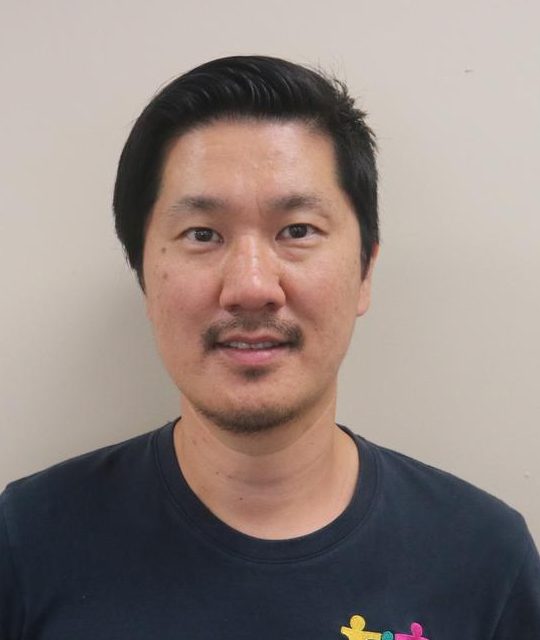
Dr. Amr Hassan

Director of Emerging Technologies at Monash University and Program Director of MAVERIC

About

Dr. Amr Hassan is Director of Emerging Technologies at Monash University and Program Director of MAVERIC, a AU$60 million AI supercomputing initiative setting a new benchmark for sovereign AI infrastructure in the Australian higher education sector. MAVERIC is delivering next-generation, energy-efficient GPU infrastructure to accelerate large-scale research across health, climate science, life sciences, and drug discovery. His work spans AI-enabled research and enterprise transformation, multi-cloud architecture integrating hyperscale and ISO 27001-certified private cloud, high-density GPU platforms underpinning national AI capability, and cybersecurity governance. Amr’s career bridges enterprise IT leadership and research computing, balancing the rigour, scalability, and security of enterprise systems with the agility required to support advanced research and discovery. Over 25 years, he has led teams delivering research computing at national scale, data centre modernisation, enterprise-scale public cloud adoption, and secure enclaves supporting sensitive and regulated workloads.

Greg Boorer

Founder and CEO at CDC Data Centres

About

Greg Boorer is the founder and CEO of CDC Data Centres (CDC).

Since founding the company in Canberra in 2007, and under Greg’s leadership as CEO, CDC has grown from a start-up to become a leading owner, developer and operator of large-scale, highly secure and sovereign data centres across Australia and New Zealand.

Greg’s significant technology and data centre industry experience was gained as a highly successful sales executive working across Europe and the United States and upon returning to Australia in 2006 Greg identified an opportunity to provide purpose-built data centres dedicated to government customers to keep Australia’s digital and data critical infrastructure safe. Now, industries such as government, finance and banking, energy, logistics and retail entrust CDC and leverage its sovereign status to ensure that their data is secure and available.

The success and high regard of CDC as a strategic partner to the most discerning government and critical infrastructure customers can be attributed to Greg’s vision and leadership of a high performing executive team who continuously innovate to deliver ultra-modular, flexible, scalable, sustainable, next generation data centres facilities.

Greg holds a bachelor’s degree in Information Science from the University of Newcastle, Australia, is the Chair of Cricket ACT, the Chair of Canberra charity, Hands Across Canberra, and a member of the Australian Institute of Company Directors. He is the immediate past Chair of the Federal and ACT Council of the Australian Information Industry Association and immediate past President of the Commonwealth Club Canberra.

In 2017 Greg, and his wife Margaret, established their own charity fund, the Boorer Foundation, which provides a broad range of support to the Canberra community.

Andrew Sjoquist

Founder & CEO at WinDC

About

Andrew Sjoquist is a technology entrepreneur with more than 25 years of experience building and scaling companies across cloud, connectivity, cybersecurity and digital infrastructure. Throughout his career he has focused on solving complex infrastructure challenges at the intersection of technology, energy and connectivity. 

As Founder and CEO of WinDC.ai, Andrew is pioneering a new model for AI infrastructure by bringing high-density compute directly to renewable energy generation sites. WinDC.ai develops modular AI data centres designed to convert surplus clean energy into scalable AI compute, helping address the growing global demand for compute while reducing grid constraints. 

Andrew is passionate about enabling the next generation of sustainable digital infrastructure and accelerating the convergence of AI, energy and hyperscale computing. 

Peter Hind

Principal Research Analyst at ADAPT

About

Peter Hind has spent the last 25 years as an analyst and commentator on the ICT industry. He says his primary areas of interest are the potential of technology to transform the way organisations operate, the change management obstacles executives encounter in realising this potential and the tactics and techniques leaders have deployed to overcome these difficulties.

Peter now takes on multiple roles within ADAPT including the moderation of private events and roundtables, interviewing business executives about the strategies they are pursuing and assisting with the structuring of our delegate surveys and the interrogation and analysis of ADAPT’s treasure trove of end-user and C-level data

15:35 - 16:20

Australia’s Generational AI Opportunity: Compute as National Infrastructure

Belinda Dennett - CEO at Data Centres Australia Dean Nelson - Founder and Chairman at Infrastructure Masons Dr. Amr Hassan - Director of Emerging Technologies at Monash University and Program Director of MAVERIC Greg Boorer - Founder and CEO at CDC Data Centres Andrew Sjoquist - Founder & CEO at WinDC Peter Hind - Principal Research Analyst at ADAPT Read More

Capitalise on a $142 billion opportunity to build sovereign AI infrastructure, transitioning Australia from passive technology consumers to global intelligence exporters.

– Will data localisation mandates and security risks accelerate enterprise cloud repatriation?
– Data centres are forecasted to consume 8% of the grid by 2030 – with AI inference driving most of that – canour infrastructure realistically support those AI factory ambitions?
– As AI inference costs surge, can specialised neoclouds disrupt hyperscaler dominance?
– How do we scale AI without destroying corporate net-zero sustainability targets? Call to build sustainable-by-design infrastructure
– What physical and policy investments are required to make Australia a global AI exporter?

16:20 - 16:25

Closing Comments

Read More
16:30 - 17:50

ADAPT Proudly Host the "2026 Infrastructure Masons Australian Chapter Networking Event" – Sponsored by Legrand.

Hilton Zeta Bar – private hire to meet and network with the global leaders of iMasons and your peers over drinks and canapes.

Read More

ADAPT helped the local launch of the global Infrastructure Masons in March 2020 and proudly partner their 6th annual local chapter meeting, sponsored by Legrand.

Established in 2016 in the US, Infrastructure Masons is where technical professionals connect, grow and give back. End User Members are IT and facilities professionals who are directly responsible to design, build and/or operate the physical and logical structures for a company that provides infrastructure services primarily to their internal customers.

The iM Australia Chapter is now under the patronage of Goodman and provides a forum for members to connect and engage in meaningful discussion with their industry peers. As a Member, you are invited to ‘leave your company at the door’ and take advantage of the opportunity to build new connections, gain new knowledge, and generate contributions to the iMasons scholarship fund.

This event will be open to all Edge event attendees, as well as all members of iMasons Australia.

Register your interest

Cloud & Infrastructure Edge