

Agenda
Tuesday, 17 November 2026
“AI Economics: Rethinking Metrics & Operating Models”
Please note that 1:1 meetings will be running throughout the day.
Registration & Check-In
Secure your seat in the keynote room for the day.


Welcome to the 17th CFO Edge: "AI Economics: Rethinking Metrics & Operating Models"
Jim Berry - CEO & Founder at ADAPT
AI investment is accelerating, but its economics are different. Costs can sit centrally while value is distributed, delayed and difficult to attribute. Traditional metrics and business cases are being tested, forcing Finance to rethink how AI is funded, measured and governed.
In this opening address, ADAPT CEO Jim Berry sets the stakes for the day - why the way finance answers the value question over the next 12 months will define which transformations get funded over the next decade, and why the credible frame is now value measured at the point of impact, not cost cut from a line.

What are the Top Performers Doing Differently?
Joey Meynink - Head of Strategy at ADAPT

Get an Edge: Making the Most of Your Day
Shannon Barry - Senior Community Success Manager at ADAPT

Exclusive Keynote: The Geopolitics of AI: Chips, Capital and Canberra
Richard Holden - Professor and Chief Societal Economist at UNSW, Columnist AFR
Drawing on his recent commentary on industrial policy and the US-China race, Richard opens the day with the sovereign-capability question Australian boards, executives and CFOs can no longer defer.
- Why the AI race has become an industrial policy race and where Australia stands.
- Compute, energy and skills as the new balance-sheet risk.
- What geopolitical exposure means for capital allocation and supply chains.
Richard Holden is UNSW’s inaugural Chief Societal Economist and Director of the Manos Institute for Cognitive Economics, and a weekly columnist for the Australian Financial Review. He holds a PhD in economics from Harvard and has held faculty posts at both the University of Chicago and MIT. His research has appeared across every top-tier economics journal - the Quarterly Journal of Economics, American Economic Review, Journal of Political Economy and Review of Economic Studies - as well as Nature, and has been covered by the New York Times, the Financial Times and The Economist. A fellow of the Econometric Society and the Royal Society of New South Wales, he worked in private equity before academia and still advises in the corporate sector.



Fireside Chat: AI Economics - CFOs Rethinking Metrics & Operating Models
Andre Freilinger - Senior Finance Executive | (Former) Technology Finance & Transformation David Walker - (Former) Group Chief Technology Officer at Westpac & DBS and ADAPT Advisor
Every CFO in the room is currently involved in making AI investment calls with incomplete information. They’re deciding how much to invest despite uncertainty in how to effectively govern volatile spend and measure value.
- Move beyond the hype and delve into the practicalities
- How an organisation can build on existing foundations to better understand the value from AI
- What a truly trusted CFO-CIO partnership looks like when the stakes are high.
André Freilinger is a finance executive with more than 30 years of international leadership across financial services, technology, manufacturing and consumer products. Most recently he was CFO, Technology and Data, Digital & AI at Westpac Group, leading the finance function behind one of Australia’s largest technology organisations. Across almost 18 years at Westpac he held senior roles including CFO Technology, Head of Finance for Customer Solutions & Technology, and Group Head of Enterprise Project Finance, working alongside the Group CIO to shape technology strategy and steer multi-billion-dollar transformation portfolios. Earlier, he led IT cost transparency for Stora Enso across Helsinki and Düsseldorf, and ran its Australian timber distribution business as Managing Director. He is a CPA Australia member and holds a Master’s in Business Administration and Computer Sciences from the University of Vienna.


From Insight to Autonomy: Redefining the CFO Operating Model
Shilpa Bhale - Director, Strategy and Product Management at OracleFinance Leader at Oracle
The finance operating model is evolving as organisations rethink how work gets done, decisions are made and value is measured.
Hear senior Oracle leaders explore the path toward autonomous finance, drawing on emerging use cases and Oracle’s own transformation to examine how CFOs can balance greater autonomy with economics, governance and human judgement.
Morning Break
Refreshments, Snacks & Connections

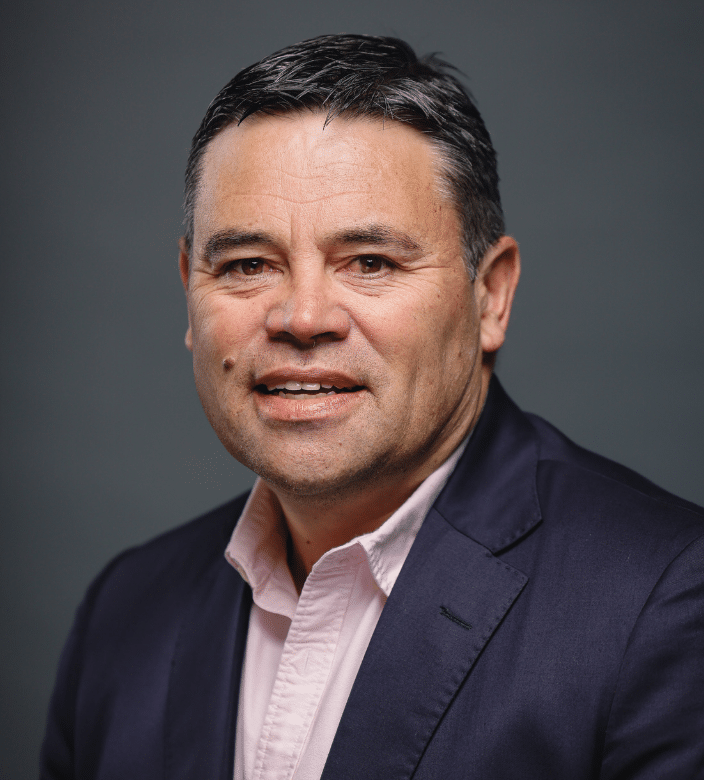


Panel Discussion | How Do You Fund AI when its Economics are this Volatile?
Jon Blackburn - CFO at Sydney Opera House Matthew Chun - CFO at AFL Guillaume Leger - CFO at Latitude Financial Peter Hind - Principal Research Analyst at ADAPT
The hardest calls in AI economics don’t have clean answers yet - how much to spend, how to prove it worked, and how to keep control while the technology shifts underneath you. This panel puts the open questions on the table, candid and unresolved.
- How much to commit to AI, and how fast?
- Finance governs predictable spend - so what happens when the same AI task costs a different amount each run?
- How do you prove AI value the board accepts?
- What happens to finance controls when AI enters the workflow?
- What does a roadmap to AI-native finance function look like?

Technology Budgets Under Fire: How CFOs Make High-Stakes Tech Decisions in Lean Times
Tal Nathan - Regional CTO, Rimini Street ANZ
As cost pressure intensifies, CFOs are being forced to rethink not just how much they spend on technology — but what kind of technology they fund.
This session explores how finance leaders are making disciplined investment decisions in lean times, including how emerging Agentic AI ERP models are reshaping the economics of enterprise systems.
We’ll examine how CFOs are:
- Reassessing legacy ERP cost structures
- Unlocking capital from maintenance-heavy environments
- Evaluating AI-driven automation with measurable ROI thresholds
- Shifting spend from “keeping the lights on” to intelligent, outcome-based systems
A practical look at funding innovation without compromising fiscal control.


The Hidden Storm: Capital Planning in the AI Economy
Martin Dubé - Country Head, ANZ at Planview
Boards want proof that capital is creating value. Few Finance teams can show it with confidence while investment decisions still run through disconnected spreadsheets, with no single view of what is funded, owned or returning.
AI raises the stakes. Costs sit centrally while value is distributed and delayed. The same initiative can look funded in one system and missing in another. Capital gets trapped, commitments are misstated and funding moves too slowly when priorities shift.
For CFOs facing volatile AI economics and growing pressure to prove outcomes, this session shows how a single, governed home for capital planning connects strategy, investment and delivery. The result is capital allocation that is visible, defensible and easy to redirect toward enterprise value.
Key takeaways:
- Know where capital is flowing and what it returns
- Rank investments by return and risk, not instinct
- Reallocate capital quickly without rebuilding the case
ADAPT Executive Insight Roundtables - Share with Confidence Under the Chatham House Rule
Attend your preselected roundtable to participate in a peer discussion moderated by ADAPT analysts with subject matter experts.

The CFO’s Autonomy Agenda: What Would You Trust AI to Run?
A boardroom session moderated by an ADAPT Analyst with Kay Galbraith (FCA) - Business Solutions Director, Shilpa Bhale - Director, Strategy and Product Management at Oracle and your peers
AI is moving beyond insights and recommendations. As agentic capabilities begin to interpret changing conditions, coordinate work and advance finance processes toward defined outcomes, CFOs face a critical question: where should autonomy begin—and where should human judgement remain? Join Oracle and fellow finance leaders for a practical discussion on how to increase autonomy responsibly while balancing value, control and trust.
Discussion points:
- Where autonomy creates value — identify the finance processes where Agentic AI could have the greatest impact, from close and forecasting to collections, cash and payables.
- Where humans stay in control — explore which activities AI could execute independently and where judgement, oversight and intervention remain essential.
- Build trust for autonomous execution — consider the policies, decision rights, evidence and controls required before AI is trusted to take action.
- Redefine value and the finance operating model — examine how CFOs should measure AI through faster decisions, released capacity, working capital and risk reduction and what this means for finance roles and skills.

Cheaper Tokens, Bigger Bills: Owning the True Cost of Agentic AI
A boardroom session moderated by an ADAPT analyst with Luke Bebbington - Strategic Advisor, Financial Services at Workday and your peers
AI is getting cheaper to run, but that doesn’t mean it’s getting cheaper to scale. As Agents proliferate across the enterprise, CFOs face a new cost equation. Consumption grows, models change rapidly, and fragmented data and systems can drive hidden costs through duplication, correction and reconciliation.
With CFOs increasingly co-driving technology strategy, understanding the true economics of agentic AI is becoming a finance priority. This Roundtable will explore how finance leaders can move beyond token costs to understand the total cost and value of AI — including where agents should run, how consumption should be governed, and how to ensure AI investment translates into measurable business outcomes.
Key discussion areas:
- Understanding the true cost-to-serve of AI agents
- Managing consumption as agent adoption scales
- Reducing the cost of fragmented data and systems
- Connecting AI spend to measurable business value



Can Finance Sign Off on AI It Can’t Explain?
A boardroom session moderated by an ADAPT Analyst with Marie Holmes - Country Manager ANZ & Lachlan Nichols - Customer Success Leader, Analystics at Alteryx and your peers
AI is moving rapidly from experimentation into business-critical decision-making, but speed without trust creates a new category of financial and operational risk.
If an AI-generated forecast, recommendation or report cannot be explained, reproduced or audited, should it influence where the business invests?
This CFO roundtable will explore how finance leaders can balance AI innovation with the governance and accountability expected of the finance function. Using the Alteryx VURA framework, we will examine what it takes to make AI-driven processes visible, understandable, repeatable and auditable.
Join fellow finance leaders for a practical discussion on moving beyond disconnected pilots, establishing appropriate controls and building AI-enabled processes that can withstand scrutiny while delivering measurable business value.


AI and the Financial Close: Where Does It Actually Deliver?
A boardroom session moderated by an ADAPT Analyst with Halin Hormozi- Managing Director, ANZ at FloQast and Tom Newell - Account Executive at FloQast and your peers
As AI moves from pilot to practice, finance leaders are facing the same set of questions: where does it actually fit in the close, which use cases hold up under scrutiny, and how do you bring your team along without sacrificing trust or audit readiness?
Join a group of senior finance leaders for an honest, off-the-record conversation shaped by what the room wants to dig into most.
Peer Networking Seated Lunch

Lunch Roundtable: The 20% Capacity Question: Where Should CFOs Reinvest the Value Created by AI?
A boardroom session moderated by an ADAPT Analyst with Moulid Doshi - Head of Financial Reporting and Operations, Toyota Finance Australia and your peers
Moulid Doshi - Head of Financial Reporting and Operations at Toyota Finance Australia
Imagine AI and automation could create 20% more capacity across your Finance organisation tomorrow. Where would you reinvest it?
Finance leaders are under pressure to do more than improve efficiency.
This roundtable explores how CFOs can turn AI-enabled capacity into greater business value, from forecasting and decision-making to risk management, working capital and strategic growth, while laying the foundations for a more autonomous finance function.
ADAPT Executive Insight Roundtables - Share with Confidence Under the Chatham House Rule
Attend your preselected roundtable to participate in a peer discussion moderated by ADAPT analysts with subject matter experts.



Who Holds the Keys? Architecting Governance for Autonomous Financial Agents
A boardroom session moderated by an ADAPT Analyst with Rosie Cairnes - Regional Vice President, Mike Goldsworthy - Director, Solution Advisory at Blackline and your peers
While CFOs are prioritising AI integration, 80% of finance leaders says AI ROI remains unclear and a persistent trust gap prevents many from scaling these technologies safely.
The obstacle isn’t the technology itself, it is the challenge of ensuring transparent governance over the financial record. Trust acceleration in financial operations happens when finance leaders move away from opaque “black box” systems and towards a clear “glass box” architecture. By establishing a robust trust infrastructure, organisations can direct autonomous AI agents while maintaining absolute control and compliance.
Join this roundtable to discuss how you can build a secure, agentic financial operations model.

92 Apps and Counting: How CFOs Can Turn SaaS Sprawl Into Savings
A boardroom session moderated by an ADAPT Analyst with Matt Porta - Director, Solutions Engineering, APJ ANZ at Okta and your peers
The average Australian company now runs 92 business applications — up 3% year-on-year.
Every one of those apps is a login, a licence, and a renewal, and few finance teams can say with confidence how many of those seats are actually being used. For CFOs focused on maximising the ROI on every dollar of technology investment, the real barrier usually isn’t willingness to cut — it’s visibility: nobody wants to switch off access without knowing who depends on it.
This roundtable brings finance and technology leaders together to unpack software rationalisation as a governance problem, not a guesswork exercise — using access certification and identity data to see exactly who has access to what, safely reclaim unused licences, and consolidate overlapping tools with confidence. We’ll explore what’s driving app sprawl in the AI era, and how CFOs can turn SaaS optimisation from an annual scramble into a continuous, defensible process.
Modernising Finance: Where Does Compliance Confidence Actually Start?
A boardroom session moderated by an ADAPT Analyst with Thomson Reuters and your peers
As ERP and finance platforms modernise, tax and statutory reporting rarely keep pace. The work still spans multiple systems, spreadsheets, entities and local teams, creating repeated reconciliation, unclear ownership and inconsistent controls that leave leaders with limited confidence at reporting deadlines. This roundtable brings CFOs and senior finance leaders together to compare where these gaps create the most rework, and how they are sequencing modernisation to close them without disrupting reporting integrity.
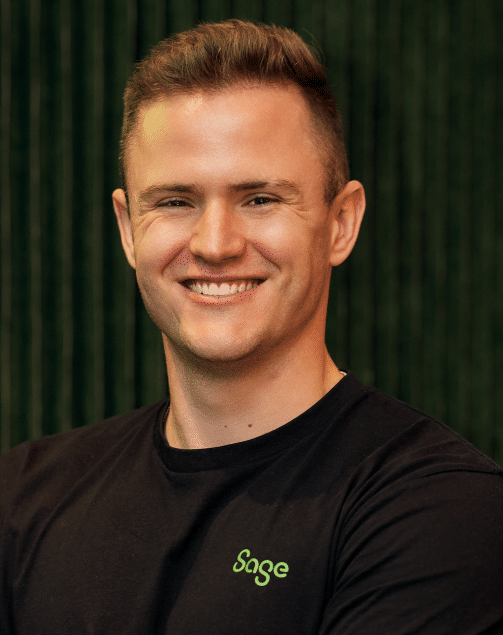
What High-Performance CFOs Are Doing Differently with AI
A boardroom session moderated by an ADAPT Analyst with Wesley Nolte, Solutions Consultant from Sage and your peers
Moving finance from month-end firefighting to faster, forward-looking decisions.
CFOs face no shortage of AI promise. The harder question is where it can create measurable value across finance today.
Drawing on a global study of 1,707 finance leaders, including Australia, this roundtable will explore what high-performing CFOs are doing differently to:
- Give leaders earlier visibility into cash, performance and emerging risk
- Free finance teams from manual work to focus on commercial decisions
- Extend finance’s influence across investment, growth and business performance
- Introduce AI without compromising trust, compliance or accountability
- Leave with a Practical Playbook to start small, demonstrate value quickly and scale what works
This will be a practical, peer-led conversation about where AI is genuinely improving finance performance, where expectations remain ahead of reality, and what CFOs should prioritise next.
Afternoon Break
Afternoon Break: Refreshments + Snacks
The Global Playbook for AI Economics
An outside-in perspective on where AI economics is heading - the global picture, what leading organisations are doing, and what it means for finance.


AI-Powered Productivity: Mastering AI to 10x Your Impact
Dr Amantha Imber - Organisational Psychologist and Workforce Futurist at Inventium.AI
We’ve been sold the dream: AI will save us time, boost productivity, maybe even think for us.
The reality? Most of us are still flailing around, typing vague prompts and crossing our fingers for genius.
This keynote is your permission slip to stop treating AI like a magic oracle and start working with it like the brilliant, bizarre, occasionally infuriating collaborator it actually is. Because if you’re still playing prompt roulette, you’re missing the point entirely.
Dr Amantha Imber (organisational psychologist, founder of Inventium.ai, and 2025 AI Consultant of the Year) isn’t here to talk at you about technology. She’s here to talk about you: how your brain works, where you’re getting stuck, and how to genuinely partner with AI to produce work that’s deeper, sharper, and way less painful.
Walk away with:
- A framework for building a productive (not performative) relationship with AI
- Strategies that cut rework and get you better outputs from the start
- Techniques to sharpen clarity, unlock creativity, and collaborate more effectively using GenAI
- Tools to quiet the noise, reduce decision fatigue, and stop second-guessing yourself
- A delegation method that actually works (yes, for AI too)
- Habits that help you spot blind spots, challenge your biases, and build better outcomes
- The confidence to know when to lean on AI and when to back yourself instead
- You’re not here to prompt harder. You’re here to work smarter.
Closing Comments followed by a Prize Draw
CFO Edge Peer Networking Drinks
An opportunity to stay, mingle and meet other attendees over drinks and food and discuss the day.